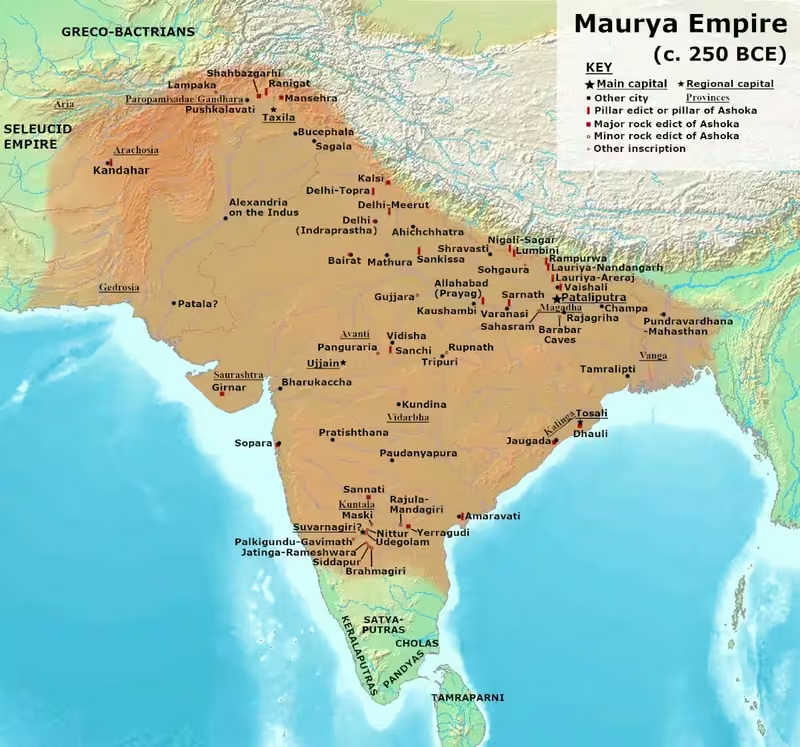

The Choice at the Confluence: Pataliputra's Flood of 250 BCE
The monsoon had been merciless that year.
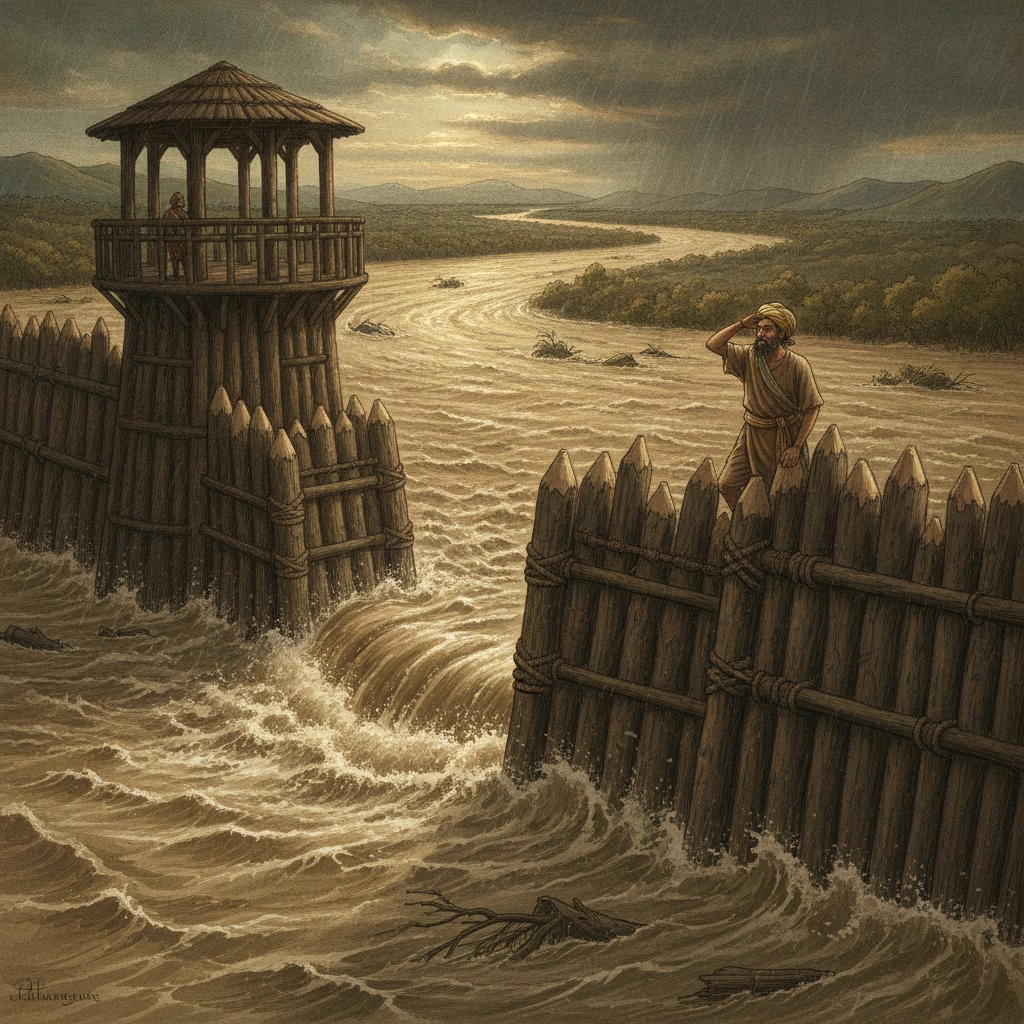
Vishakha had not slept in three days. From his position atop the eastern watchtower—one of 570 that punctuated Pataliputra's wooden palisade walls—the chief engineer watched the confluence with growing dread. Where the Ganges, Son, and Gandhaka rivers met, the waters had transformed from their usual placid brown to a roiling, angry beast.
The city's position at this confluence had always been its greatest strength. The "water fort"—jaldurga as the military texts called it—had made Pataliputra impregnable to conventional armies. The wooden walls, reinforced with massive trusses and extending 33.8 kilometers in a parallelogram shape around the capital, had turned back invaders for generations. The ditch surrounding the fortifications measured 600 feet across and 45 feet deep, an additional moat that had protected the Mauryan Empire's beating heart.
But now that strategic advantage had become an existential threat.
"The water has risen another two feet since midnight," reported Devaka, Vishakha's assistant, climbing the tower stairs with mud-splattered legs. "The wooden trusses on the eastern wall are groaning. The sound—" He paused, searching for words. "Like the city itself is crying out."
Vishakha nodded grimly. He had heard it too. The ancient sal wood beams, some as thick as a man's height, were being tested beyond their design. When King Udayin had established Pataliputra as the capital of Magadha, shifting the seat of power from Rajgriha, the engineers had built for permanence. But they had not built for this.
The rain continued to fall in sheets, adding to the swollen rivers' fury.
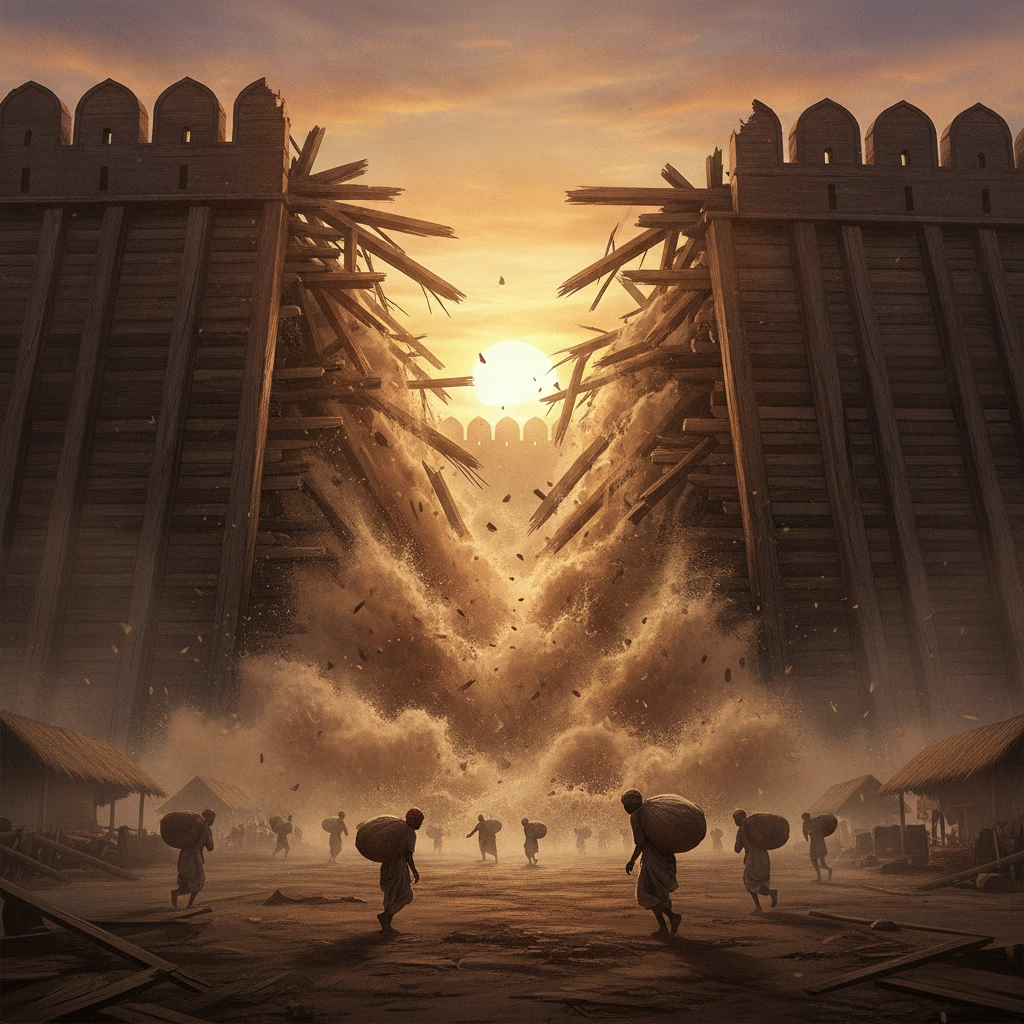
The breach came at dawn, announced by a sound like thunder splitting the earth.
Vishakha was still on the tower when the eastern wall gave way. He watched in horror as the reinforcing wooden trusses—each one carefully fitted and pegged by craftsmen decades ago—splintered under the pressure. The palisade, those massive vertical logs that had stood firm against armies, snapped like kindling.
The Ganges poured through.
Water exploded into the lower city in a brown torrent, carrying debris, uprooted trees, and the shattered remains of the fortifications. Within minutes, the eastern district was submerged. Vishakha could see tiny figures—families, merchants, laborers—fleeing toward higher ground, clutching children and whatever possessions they could carry.
The city of Pataliputra, which stretched ten miles in length and nearly two miles in breadth, which housed between 150,000 and 400,000 souls depending on the season and trade winds, was drowning.
"Sound the alarm!" Vishakha shouted, though bells were already clanging from every tower. "Get me the royal architect and the granary master. Now!"
As he descended the tower, his mind raced through calculations. The city had 64 gates, approximately one every 500 meters along the perimeter. How many were already compromised? How many could be reinforced? The water was moving fast, but it would take hours to fully flood the administrative heart of the city.
Hours. That was all they had.
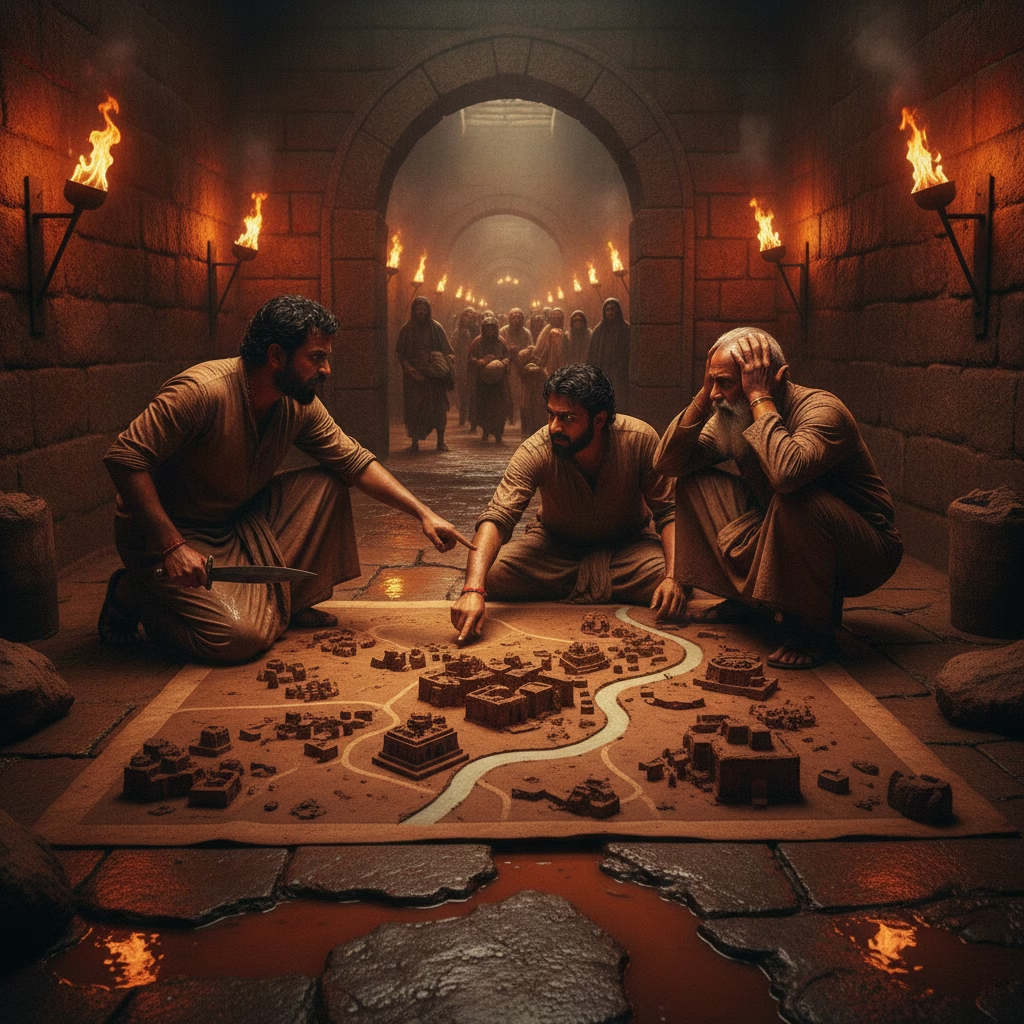
The emergency council convened in a chamber near the palace district, though "convened" was too dignified a word for three soaking wet men shouting over the sound of rain and distant screams.
Raja, the royal architect, spread a clay map of the city across the table. Water was already seeping through cracks in the stone floor. "The palace complex occupies the highest ground," he said, his finger tracing the northern section. "If we direct all available workers and materials there, we can build a secondary barrier. The royal family, the treasury, the administrative records—all can be saved."
"At what cost?" demanded Kumara, the granary master. He was a thick-set man with calloused hands, promoted from the merchant class for his efficiency. "The state granaries hold enough grain to feed this city for six months. If they flood, if the grain spoils, we'll have famine. Not today, but in two months when the next harvest fails. In four months when trade routes are still disrupted. Do you understand? People will starve."
"People will also starve without a functioning government," Raja shot back. "Without the palace, without the administrative apparatus—"
"Enough." Vishakha's voice cut through the argument. Both men fell silent.
The chief engineer studied the clay map, his experienced eye calculating angles of flow, volumes of water, available resources. The mathematics were brutally simple. They had perhaps 200 able-bodied workers who could be mobilized immediately. They had sandbags, timber, rope, and stone. Enough materials to reinforce one district, perhaps two if they were lucky and the rain stopped.
But the rain was not stopping.
"How many people can the palace grounds shelter?" Vishakha asked quietly.
Raja hesitated. "Two thousand, perhaps three if we crowd them."
"And the granaries feed how many?"
"Everyone," Kumara said simply. "All 400,000 at peak population. Every soul in this city depends on those stores."
Vishakha looked at both men. Through the archway behind them, he could see the endless stream of refugees moving through the streets, heading for any high ground they could find. Families. Children. The merchants and intellectuals who had made Pataliputra great, who had come from across India drawn by the city's reputation as a center of learning and commerce.
Pataliputra was more than buildings and walls. According to the Greek ambassador Megasthenes, who had visited during Chandragupta Maurya's reign just decades earlier, this was among the first cities in the world to have a highly efficient form of local self-government. The people governed themselves, participated in their own administration.
What would those people choose?
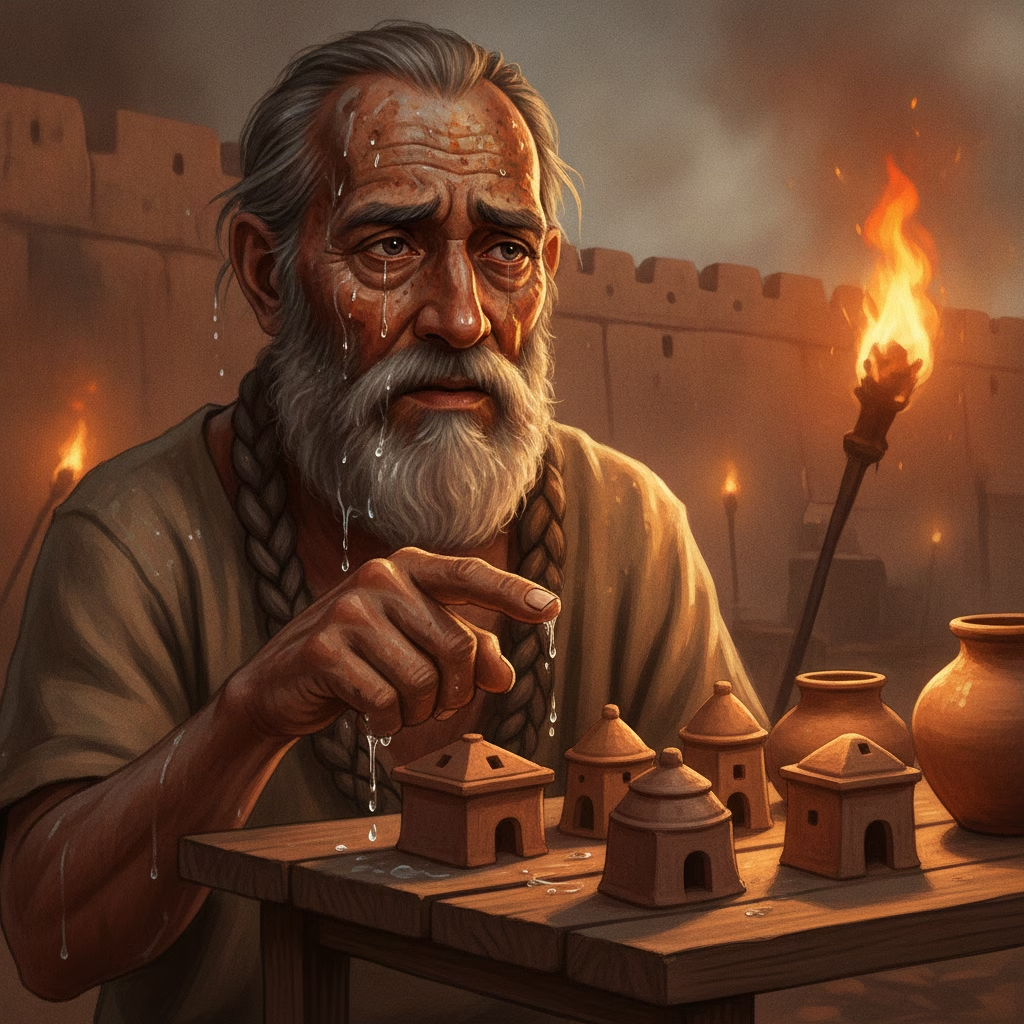
"We save the granaries," Vishakha said.
Raja's face went white. "You cannot be serious. The Emperor—"
"The Emperor is not here," Vishakha interrupted. "He is on campaign in the south. We are here. We must decide."
"This is treason," Raja whispered. "They will have your head."
"Perhaps." Vishakha stood, water dripping from his robes. "But they will have it attached to a body that is not starving. Kumara, mobilize every worker you can find. I want barriers around the granary district within two hours. Double-stack the sandbags. Reinforce every door and window with timber."
"And the palace?" Raja asked, his voice hollow.
"Evacuate it. Move everything portable to higher ground. The building itself..." Vishakha paused, feeling the weight of what he was about to say. "The building itself is wood and stone. It can be rebuilt. People cannot."
Raja stared at him for a long moment, then slowly nodded. "I will help with the evacuation. But Vishakha—when the Emperor returns, I will testify that this was your decision alone. I will not share your fate."
"I would expect nothing less," Vishakha replied.
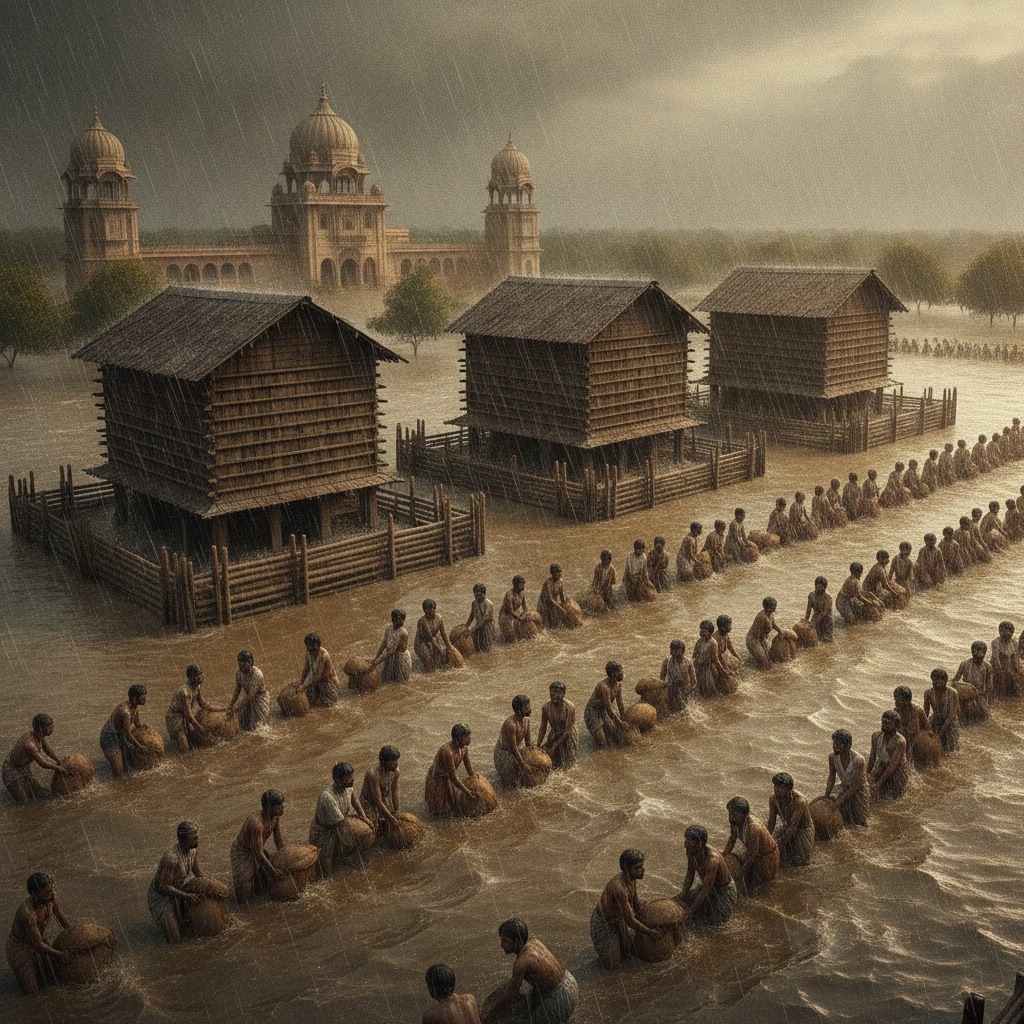
The next six hours were chaos rendered into purpose.
Vishakha stood waist-deep in floodwater, directing human chains of workers who passed sandbags and timber beams hand-to-hand. The granary district, located on a slight elevation in the western quarter, became a fortress. Every opening was sealed, every wall reinforced. The massive timber structures that housed the empire's grain reserves—rice, wheat, barley, pulses—had been built sturdy, but not for this.
"Higher!" Vishakha shouted, directing workers to stack barriers three men tall. "The water will rise another five feet before it crests!"
Kumara worked beside him, his merchant's mind calculating, optimizing, finding efficiencies. "If we angle the barriers this way, we can redirect the flow toward the southern district—it's already evacuated."
"Do it," Vishakha agreed.
Behind them, in the distance, the palace district was drowning. Vishakha tried not to look. Tried not to think about the ornate wooden pillars carved by master craftsmen, the painted murals depicting Mauryan victories, the throne room where Chandragupta himself had once held court. All of it disappearing beneath muddy water.
The rain finally began to ease as afternoon turned to evening, but the damage was done. The Ganges had claimed its prize.
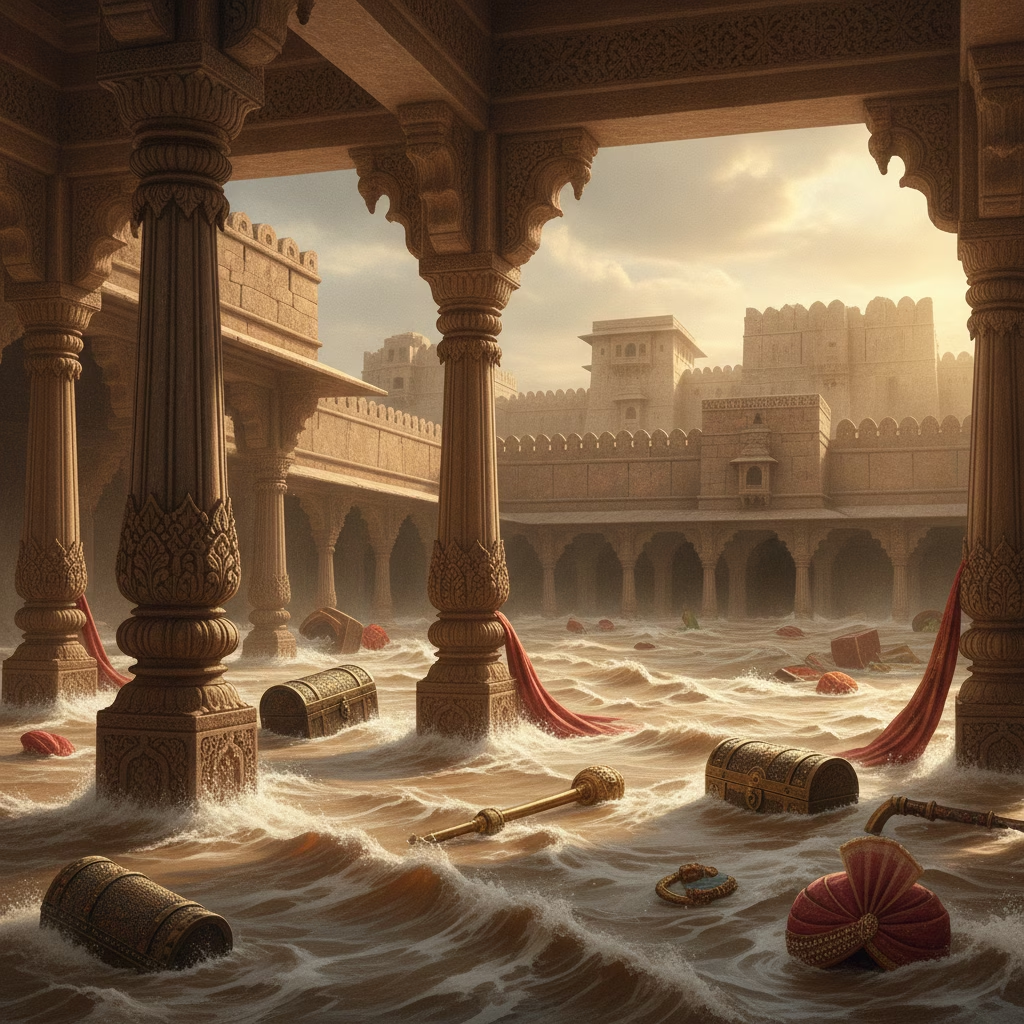
By nightfall, Pataliputra was a city transformed. The eastern and northern districts were lakes. The palace—symbol of Mauryan power, architectural marvel, seat of empire—stood half-submerged, its courtyards filled with churning water, its treasures scattered or ruined.
But the granaries stood dry.
Vishakha walked the perimeter of the barriers one final time, checking every seal, every reinforcement. Water lapped at the sandbags, just inches below the top, but holding. Inside, the grain was safe.
"You've made an enemy of every noble in the city," Devaka said quietly, walking beside him. "They're calling you a traitor. A madman."
"And what are the common people calling me?" Vishakha asked.
Devaka was silent for a moment. "A hero. They're calling you a hero."
Vishakha nodded slowly. "Then I have chosen my allies well."
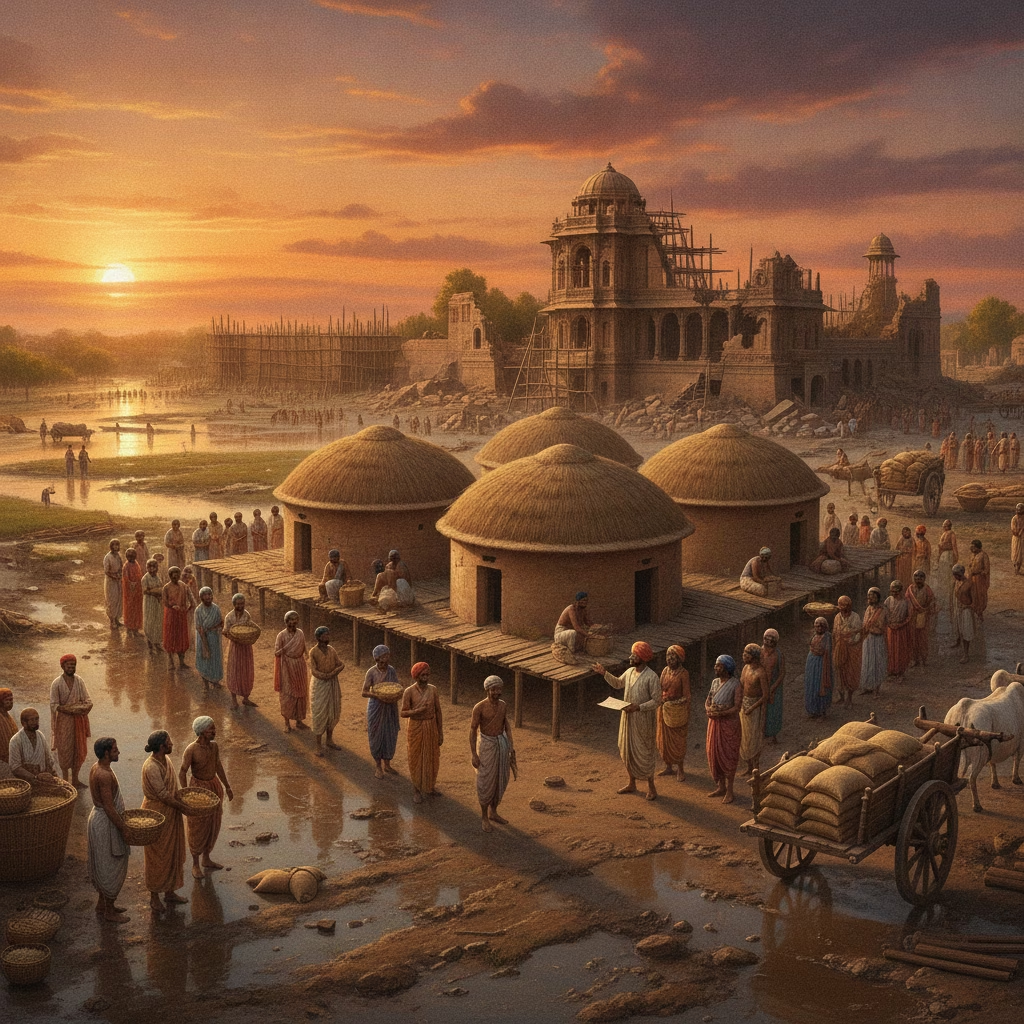
Three weeks later, when the floodwaters finally receded and the Emperor returned from campaign, Vishakha was summoned to give account.
He expected execution. He received commendation.
The Emperor—a practical man who understood that empires were built on full bellies, not empty palaces—had listened to the reports. Had walked through the ruined palace district and the intact granary quarter. Had spoken to the citizens who lined the streets, grateful to receive their grain rations from stores that had survived.
"You defied protocol," the Emperor said, standing amid the ruins of his throne room, open now to the sky. "You made a choice that was not yours to make."
"Yes, Your Majesty," Vishakha replied, head bowed.
"And in doing so, you saved my city." The Emperor's voice softened. "Not the buildings—buildings can be rebuilt, and we will rebuild them stronger. You saved the people. You understood what Pataliputra truly is."
The reconstruction took two years. The palace was rebuilt with stone foundations and better drainage. The wooden palisades were reinforced with new techniques learned from the flood. The eastern wall was strengthened with additional trusses and a more sophisticated water management system.
But the most important change was never recorded in any official document. It lived in the memory of the people, passed down through generations: the story of an engineer who chose to save grain over gold, who valued the many over the mighty, who understood that a city is not its monuments but its people.
Pataliputra would stand for centuries more, capital of the Mauryas and later the Guptas, one of the largest cities in the ancient world. But perhaps its greatest moment came not in victory or prosperity, but in that terrible choice at the confluence—when the floodwaters rose, and one man decided what truly mattered.
The granaries still stand in the archaeological record, their foundations discovered by excavations in the early 20th century. The palace, too, has left its traces. But the real monument to that day in 250 BCE is not found in ruins or artifacts.
It lives in the principle that was established: that those who govern must serve, that power exists to protect the people, not the powerful. In making his impossible choice, Vishakha had defined not just the soul of Pataliputra, but the very idea of what a city—what a civilization—should be.
The waters had risen and receded. The city remained. And in the granaries, the grain that would feed 400,000 souls sat dry and safe, a testament to the value of one good decision in humanity's darkest hour.