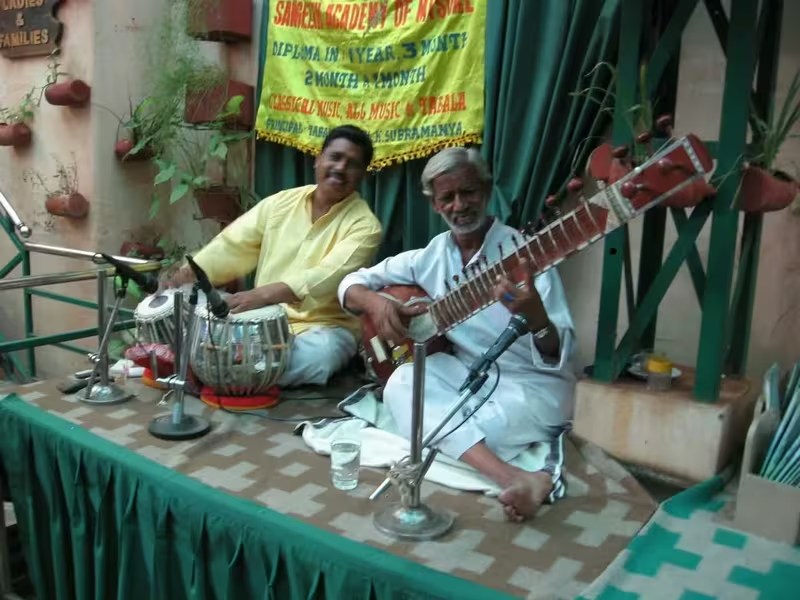
Carnatic Music: The Sacred Sound of South India
Carnatic music, also known as Karnataka sangita, represents one of the two major classical music traditions of India, originating and flourishing primarily in the southern regions of the subcontinent. Characterized by its deeply devotional nature, sophisticated theoretical framework, and emphasis on improvisation within strict parameters, this ancient art form has evolved continuously over millennia while maintaining its essential character. Rooted in Vedic chanting traditions and systematized through Sanskrit texts like the Natya Shastra, Carnatic music distinguishes itself through its complex raga (melodic) and tala (rhythmic) systems, its predominantly devotional repertoire, and its unique balance between composition and improvisation. Today, it continues as a vibrant living tradition, performed in concerts, temples, and festivals throughout India and in diaspora communities worldwide, representing not merely an entertainment form but a spiritual practice and cultural cornerstone of South Indian identity.
Etymology and Meaning
Linguistic Roots
The term "Carnatic" derives from the Sanskrit word "Karnataka," which historically referred to the southern region of India, particularly the Deccan plateau. The term "sangita" in Sanskrit encompasses not just music but a broader concept that traditionally included vocal music, instrumental music, and dance as interconnected arts. Thus, "Karnataka sangita" or "Carnatic music" literally means "the music of the Karnataka region," though it has come to represent the classical music tradition of all of South India, transcending specific regional boundaries.
The alternative designation "South Indian classical music" more explicitly indicates its geographical and cultural sphere, distinguishing it from its northern counterpart, Hindustani classical music. The tradition is also sometimes called "Carnatic sangeet," using the Hindi-Urdu term for music.
Related Concepts
Carnatic music is intimately connected with several key concepts in Indian musical theory and practice. "Raga" refers to the melodic framework that governs the selection and treatment of notes, each raga associated with specific moods, times of day, and emotional content. "Tala" represents the rhythmic cycle that provides the temporal structure for compositions and improvisations. "Manodharma sangita" refers to the improvisational aspects of the tradition, including alapana (raga elaboration), neraval (melodic improvisation on a line), and kalpanaswara (rhythmic improvisational passages).
The concept of "bhakti" or devotion permeates Carnatic music, with the vast majority of compositions dedicated to Hindu deities. The "guru-shishya parampara" (teacher-disciple lineage) represents the traditional mode of transmission, emphasizing direct personal instruction and the importance of lineage in maintaining authenticity.
Historical Development
Ancient Foundations (c. 1500 BCE - 500 CE)
The roots of Carnatic music trace back to the Vedic period, where the chanting of Vedic hymns established foundational principles of pitch, rhythm, and melodic progression. The Sama Veda, in particular, dealt explicitly with musical aspects of Vedic recitation, laying groundwork for later musical developments. The theoretical systematization of music found its first comprehensive expression in Bharata's Natya Shastra (circa 200 BCE - 200 CE), which outlined concepts of sruti (microtonal intervals), swara (notes), and raga, providing the theoretical foundation upon which both Carnatic and Hindustani music would later develop.
During this formative period, music remained closely tied to religious ritual and temple worship, with performances primarily serving liturgical functions rather than existing as independent concert presentations. The development occurred primarily through oral transmission, with musical knowledge passed from teacher to student in an unbroken chain that emphasized memorization and proper execution of traditional forms.
Medieval Systematization (500 CE - 1600 CE)
The medieval period witnessed the gradual systematization and codification of musical concepts that would become distinctive features of Carnatic music. Various musicological texts emerged during this era, further developing theories of raga, tala, and musical aesthetics. The Bhakti movement, which emphasized personal devotional expression, profoundly influenced musical development, encouraging compositions in regional languages rather than exclusively in Sanskrit.
A pivotal figure in this period was Purandara Dasa (1484-1564), often called the "father of Carnatic music," who systematized the teaching methodology that remains in use today. He composed graded exercises (sarali varisai, janta varisai, alankarams) specifically designed for pedagogical purposes, establishing a structured curriculum for training musicians. His approach made musical education more accessible and standardized, ensuring consistent transmission of fundamental techniques across generations.
The Trinity Era (1750-1850)
The late 18th and early 19th centuries marked the golden age of Carnatic music, dominated by three legendary composers collectively known as the "Trinity" of Carnatic music: Tyagaraja (1767-1847), Muthuswami Dikshitar (1775-1835), and Syama Sastri (1762-1827). These three masters, working independently in the Thanjavur region, created vast bodies of compositions that remain central to the Carnatic repertoire today.
Tyagaraja, the most prolific of the three, composed hundreds of devotional songs primarily in Telugu, dedicated to Lord Rama. His compositions, called kritis, exemplified perfect marriage of lyrical devotion and musical sophistication, establishing structural and aesthetic standards that influenced all subsequent composers. Muthuswami Dikshitar, who composed primarily in Sanskrit, brought a more scholarly approach, often incorporating technical musical elements directly into his compositions and systematically exploring various ragas. Syama Sastri, though less prolific, created compositions of extraordinary technical difficulty and emotional depth, particularly devoted to the goddess.
During this period, the modern concert format began to crystallize, with performances moving from purely devotional contexts to include patronage by royal courts and wealthy patrons. The structure of the concert, progressing from invocatory pieces through increasingly complex compositions to a climactic main piece, became standardized during this era.
Modern Era (1900-Present)
The 20th century brought profound transformations to Carnatic music's social context and modes of transmission while maintaining core musical principles. The shift from royal patronage to public concerts required adaptation to new presentation formats and audience expectations. The establishment of music academies and institutions, such as the Music Academy in Madras (now Chennai, founded 1928), created new platforms for performance and discourse about the tradition.
The development of audio recording technology in the early 20th century revolutionized learning methods, allowing students to study performances repeatedly rather than relying solely on oral instruction. This technology also enabled wider dissemination of the music, though it raised questions about balancing innovation with tradition. Radio broadcasting brought Carnatic music to broader audiences, while later, television and digital media further expanded its reach.
The annual December Music Season in Chennai, established in the early 20th century, became the world's largest cultural event dedicated to Carnatic music, attracting thousands of performers and listeners for month-long festivities. This institutionalization helped sustain the tradition even as traditional patronage systems declined.
Contemporary Carnatic music faces both opportunities and challenges: global diaspora communities maintain active practice, international collaborations introduce cross-cultural elements, and women increasingly participate as prominent performers (though gender dynamics remain complex). Digital platforms enable worldwide access to concerts and lessons, while debates continue about balancing tradition with innovation, maintaining standards amid commercialization, and addressing questions of accessibility and inclusion.
Key Principles and Characteristics
The Raga System
The raga constitutes the fundamental melodic framework of Carnatic music, far more complex than a simple scale or mode. Each raga comprises specific ascending (arohana) and descending (avarohana) note patterns, characteristic phrases (sancharas), emphasized notes (nyasa swaras), and ornamentations (gamakas) that together create a distinctive melodic personality. Carnatic music recognizes 72 parent ragas or melakartas, mathematical permutations of the seven basic notes that generate thousands of derived ragas (janya ragas).
Beyond technical structure, ragas carry extramusical associations: particular times of day for performance, seasonal associations, moods (rasas) they evoke, and spiritual significance. The musician's mastery involves not merely executing correct notes but embodying the raga's essence, bringing out its emotional and spiritual dimensions through subtle variations in pitch, timing, and ornamentation. The elaboration of a raga through alapana (unmetered improvisation exploring the raga's characteristics) represents a quintessential Carnatic practice, demonstrating the performer's understanding and creativity within traditional parameters.
The Tala System
Tala provides the rhythmic foundation of Carnatic music, organizing time into recurring cycles of beats. Carnatic music employs seven basic talas in five different speeds (nadais), creating thirty-five primary tala varieties, which can be further subdivided. Each tala consists of laghu (principal beat units of varying length), drutam (two-beat units), and anudrutam (single-beat units), marked through hand gestures during performance.
The tala system's sophistication allows for complex polyrhythmic patterns and mathematical relationships between melody and rhythm. Performers engage in rhythmic improvisation within the tala framework, particularly in compositions like the ragam tanam pallavi, where vocalist and percussionist engage in intricate rhythmic dialogues, demonstrating virtuosity while maintaining precise alignment with the tala cycle. The relationship between syllabic structure of lyrics and rhythmic patterns adds another layer of complexity, as composers carefully craft text to align meaningfully with beats and subdivisions.
Compositional Forms
Carnatic music features numerous compositional types, each with specific structural and functional characteristics. The kriti, the most prominent form, typically consists of three sections: pallavi (refrain), anupallavi (second section), and charanam (verses), with specific sections repeated according to convention. Varnams serve as technical studies and concert openers, incorporating both melodic and rhythmic challenges. Padams and javalis explore romantic or devotional themes with emphasis on lyrical beauty and expressive delivery.
The ragam tanam pallavi represents the most challenging and prestigious form, where the performer presents an extensive raga elaboration (ragam), rhythmic development (tanam), and then a single compositional line (pallavi) subjected to elaborate improvisation in both melody and rhythm. This form showcases comprehensive musicianship, requiring mastery of raga knowledge, rhythmic sophistication, and creative imagination.
Improvisation and Composition Balance
Carnatic music maintains a distinctive balance between fixed compositions and creative improvisation, termed manodharma sangita. While compositions provide the repertoire's foundation, improvisation demonstrates the musician's creativity, knowledge, and spontaneous musical intelligence. Alapana allows unmetered exploration of a raga's characteristics before presenting a composition. Neraval involves selecting a line from a composition and improvising melodically around it while maintaining rhythmic structure. Kalpanaswara presents improvised note sequences within the tala framework, often in competitive exchange between performers.
This improvisational framework distinguishes individual artistry within traditional parameters. Two performers may sing the same composition differently, their interpretive choices reflecting their training lineage, aesthetic preferences, and creative personalities, yet both remain recognizably within tradition if they respect raga grammar, tala structure, and compositional integrity.
Devotional Character
Carnatic music maintains profound connections to Hindu devotional traditions, with the overwhelming majority of compositions functioning as prayers or expressions of devotion to various deities. Texts typically explore theological concepts, narrate mythological episodes, or express the devotee's emotional relationship with the divine, encompassing the full spectrum of bhakti emotions from awe and reverence to intimate love.
This devotional orientation influences performance context and aesthetic values: concerts traditionally begin with invocations to Ganesha (remover of obstacles) and the goddess Saraswati (patron of arts), and the emotional authenticity of devotional expression (bhava) is valued alongside technical virtuosity. The music serves not merely as entertainment but as a form of worship (nada upasana or worship through sound), with the belief that music itself constitutes a path to spiritual realization.
Oral Transmission
Despite the existence of written texts and notations, Carnatic music has been primarily transmitted orally through the guru-shishya parampara (teacher-disciple tradition). Students learn by listening to and repeating after their teachers, memorizing compositions and absorbing stylistic nuances through direct imitation. This method ensures not just transmission of notes but of pronunciation, ornamentation, interpretive choices, and aesthetic sensibilities that resist notation.
The oral tradition creates lineages (banis or styles) associated with particular teachers, with students proudly claiming descent from renowned masters. This system emphasizes personal relationship between teacher and student, often involving years of close association, and values humility, discipline, and dedication to tradition. While modern methods including notation and recording supplement traditional learning, direct guru instruction remains valued as essential for authentic transmission.
Religious and Philosophical Context
Hindu Philosophical Underpinnings
Carnatic music embodies several core Hindu philosophical concepts, particularly the understanding of sound (nada) as a manifestation of divine creative energy. The Upanishadic concept of nada brahman—sound as Brahman or ultimate reality—provides theological foundation for music as spiritual practice. The goddess Saraswati, patron of learning and arts, presides over music, and musicians traditionally invoke her blessings before performances.
The theory of rasa (aesthetic emotion) developed in Indian aesthetic philosophy applies centrally to Carnatic music, with ragas designed to evoke specific emotional states. The nine primary rasas—shringar (romantic), karuna (compassionate), vira (heroic), raudra (furious), hasya (humorous), bhayanaka (fearsome), bibhatsa (disgusting), adbhuta (wondrous), and shanta (peaceful)—provide framework for understanding music's emotional and transformative power.
The concept of sadhanabhakti (devotion as spiritual practice) manifests in musicians' approach to their art as worship rather than mere performance. Many practitioners maintain daily practice routines (sadhana) with ritualistic elements, approaching music as yoga—a discipline leading toward self-realization and union with the divine.
Shaivite and Vaishnavite Influences
The two major Hindu devotional traditions, Shaivism (devotion to Shiva) and Vaishnavism (devotion to Vishnu and his avatars), have both profoundly shaped Carnatic music's repertoire and aesthetic. Tyagaraja's devotion to Rama enriched the tradition with Vaishnavite theological and emotional content, while Muthuswami Dikshitar's compositions often addressed Shiva and various manifestations of the goddess.
The Tamil Shaivite tradition contributed the Tevaram hymns, while Vaishnavite Alvars' compositions in Tamil (Divya Prabandham) represent early vernacular devotional poetry that influenced later musical development. The theological debates and devotional literature of these traditions provided rich textual material for musical setting and continue to inform interpretive approaches to compositions.
Syncretism and Other Traditions
While predominantly Hindu in character, Carnatic music has not remained entirely isolated from other religious traditions in South India. Some composers incorporated Sufi-influenced themes, and the courts of Muslim rulers occasionally patronized Carnatic musicians, creating spaces for cultural exchange. Christian composers in South India have adapted Carnatic musical forms to devotional texts praising Christ, demonstrating the music's potential for expressing diverse devotional sentiments.
However, the tradition's Hindu identity remains central to its self-understanding and practice, with performance contexts predominantly in Hindu temples, homes during religious observances, and concerts that maintain quasi-sacred character through opening invocations and selection of primarily devotional repertoire.
Practical Applications
Historical Practice
Historically, Carnatic music served multiple social functions: accompaniment to temple rituals, court entertainment for royal patrons, and devotional expression in domestic settings. Musicians typically belonged to hereditary professional communities (though exceptions existed), with knowledge passing within families across generations. Performance contexts varied from intimate gatherings in homes to temple festivals to elaborate court presentations.
The musician's social status was complex and ambiguous: honored for their art and spiritual connection yet often relegated to marginal social positions, particularly musicians from non-Brahmin communities. The devadasi system—where women dedicated to temples performed music and dance—represented another significant though controversial aspect of traditional practice, providing women a route to musical expertise while subjecting them to various social vulnerabilities.
Training began in childhood, emphasizing years of foundational exercises before proceeding to compositions. The student-teacher relationship involved not just musical instruction but broader life guidance, with students often residing with teachers and serving them while learning. This apprenticeship model created deep bonds and ensured transmission of not just musical knowledge but ethical and spiritual values associated with the tradition.
Contemporary Practice
Modern Carnatic music practice has undergone significant transformation while maintaining core traditions. The concert or kutcheri format has become standardized: a two-to-three-hour presentation beginning with invocatory pieces, progressing through varnam and lighter compositions, reaching a main piece (often a ragam tanam pallavi or extensive kriti), and concluding with devotional pieces. The December Music Season in Chennai exemplifies this modern concert culture, with hundreds of performances daily for a month, attended by thousands.
Music academies and institutions now supplement traditional guru-shishya learning, offering structured curricula, examinations, and certificates. This institutionalization has democratized access while raising questions about standardization potentially reducing stylistic diversity. Recording technology and digital platforms enable self-study and access to a vast repository of performances, though teachers emphasize that these cannot entirely replace direct instruction.
Women increasingly participate as prominent performers, though gender dynamics remain complex, with debates ongoing about equal opportunity and recognition. The tradition has expanded globally, with active Carnatic music communities in North America, Europe, and Australia, where diaspora musicians maintain practice and teach younger generations.
Contemporary musicians navigate tensions between tradition and innovation, with some exploring fusion with other musical styles while others advocate for strict traditional adherence. Collaborations with Western classical, jazz, and other musical traditions have created new musical possibilities while sometimes generating controversy about diluting classical purity.
Regional Variations
Linguistic Diversity
Carnatic music encompasses compositions in multiple South Indian languages, each contributing distinctive characteristics. Telugu predominates in the repertoire, largely due to Tyagaraja's prolific output in that language, followed by Sanskrit, Tamil, Kannada, and Malayalam. Each linguistic tradition brings particular poetic conventions, rhythmic patterns from language prosody, and regional aesthetic preferences.
Tamil compositions, including ancient Tevaram and Divya Prabandham, emphasize devotional intensity and direct emotional expression. Kannada compositions, particularly those of Purandara Dasa and the Haridasa tradition, often feature simpler, more accessible language and melodies designed for group singing. Sanskrit compositions tend toward more complex poetic constructions and philosophical content, while Malayalam compositions reflect Kerala's unique cultural synthesis.
Stylistic Schools
Different regional centers and teaching lineages have developed distinctive stylistic characteristics, creating what musicians term "banis" or schools. The Tanjavur (Thanjavur) style, associated with the Trinity's legacy, emphasizes structural elegance and devotional expression. The Mysore style developed its own characteristics under royal patronage in Karnataka. Chennai emerged as the modern center, synthesizing various influences and establishing contemporary concert conventions.
Individual guru lineages maintain characteristic approaches to ornamentation, tempo preferences, and interpretive choices. Some emphasize virtuosic display, others prioritize devotional feeling, and still others stress grammatical purity and compositional fidelity. These differences, while subtle to casual listeners, represent important identity markers within the tradition.
Instrumental Variations
While vocal music represents Carnatic tradition's core, instrumental adaptations have developed distinctive characteristics. The violin, introduced in the 18th century, became fully integrated, with instrumentalists developing techniques to replicate vocal gamakams. The veena, India's ancient stringed instrument, holds special prestige as closest to the human voice in expressive capability. Flute, gottuvadyam, and other melodic instruments each bring unique timbral qualities while adhering to core raga principles.
Percussion instruments—particularly the mridangam (double-headed drum) and ghatam (clay pot)—have developed sophisticated solo traditions alongside their accompaniment roles. The intricate rhythmic patterns and mathematical calculations involved in advanced percussion performance represent a specialized art requiring years of dedicated study.
Influence and Legacy
On Indian Society
Carnatic music functions as cultural glue for South Indian communities, providing shared identity and continuity with historical tradition. Music festivals serve as important social gatherings, strengthening community bonds and providing occasions for marriage alliances, business relationships, and political networking alongside artistic experience. The music education system employs thousands of teachers and involves millions of students, constituting a significant economic and social ecosystem.
The tradition contributes to regional identity and pride, with states claiming particular composers or styles as cultural patrimony. Music serves as a marker of refinement and traditional values, with middle-class families often encouraging children to learn music as part of comprehensive education, valuing the discipline and cultural knowledge it imparts even when not pursuing professional careers.
On Art and Literature
Carnatic music has profoundly influenced other South Indian art forms, particularly Bharatanatyam dance, which shares musical repertoire and aesthetic principles with Carnatic music. The same compositions serve both forms, with dancers interpreting musical and textual content through movement. The two arts have co-evolved, with many composers creating works specifically for dance presentation.
South Indian literature has been enriched by lyrics of musical compositions, which constitute a significant body of devotional and philosophical poetry. Many composers rank among their languages' finest poets, and their works are studied as literature independent of musical setting. The theoretical literature on music—treatises explaining raga, tala, and aesthetics—represents another important scholarly tradition contributing to Indian intellectual history.
Global Impact
Carnatic music has gained international recognition, with musicians performing at major world music festivals and collaborating with artists from diverse traditions. Western musicians studying Carnatic music have incorporated its concepts into jazz, contemporary classical, and experimental music, while Carnatic musicians explore cross-cultural collaborations while maintaining traditional foundations.
The diaspora has established Carnatic music communities globally, with active teaching and performance circuits in major cities worldwide. International music schools increasingly offer Carnatic music instruction, and the internet enables global access to performances, lessons, and scholarly resources. This globalization raises questions about authenticity, adaptation, and the tradition's evolution in multicultural contexts.
Academic interest in Carnatic music has grown in ethnomusicology, music theory, and cultural studies, with scholars analyzing its mathematical structures, improvisational systems, and social dimensions. This scholarly attention has helped establish Carnatic music's significance in global discussions of musical sophistication and cultural heritage.
Challenges and Debates
Tradition and Innovation
Ongoing debates concern appropriate boundaries between preserving tradition and allowing innovation. Purists argue that the tradition's depth requires faithful transmission without dilution through excessive experimentation, while others contend that all traditions evolve and that contemporary relevance requires creative adaptation. Questions arise about fusion concerts, contemporary instruments, non-traditional compositions, and modified concert formats.
The proliferation of performing opportunities through festivals and platforms has raised concerns about maintaining quality standards, with critics worried that commercial pressures encourage quantity over depth and that traditional values of disciplined practice and spiritual orientation may erode amid professionalization.
Social Inclusion
The tradition faces ongoing reckoning with questions of caste, class, and gender. Historically, certain communities faced exclusion or marginalization despite musical talent, and efforts to democratize access continue meeting resistance from those invested in maintaining traditional hierarchies. The question of who can authentically represent the tradition, which languages and deities receive emphasis, and how the music relates to social justice concerns generate heated discussions.
Women's increasing prominence as performers represents significant social change, yet gender disparities persist in recognition, compensation, and opportunities. Some traditional practices exclude or disadvantage women, while women musicians navigate expectations about family responsibilities alongside professional demands.
Preservation and Documentation
While recording technology enables unprecedented documentation, questions arise about what and how to preserve. Commercial recordings prioritize certain styles and performers, potentially creating a narrow definition of authenticity. The oral tradition's flexibility and variation across performers contrasts with fixed recordings that may become definitive versions, potentially reducing interpretive diversity.
The shift from oral to text-based and recorded learning changes the nature of knowledge transmission, with debates about whether something essential is lost when direct guru-student relationship diminishes in importance. Institutional education raises similar concerns about standardization reducing stylistic diversity that flourished under personalized instruction.
Cultural Appropriation and Global Engagement
As Carnatic music gains international attention, questions arise about cultural appropriation when non-Indian musicians perform the tradition. Debates concern proper acknowledgment of sources, depth of understanding versus superficial borrowing, and whether the tradition can maintain integrity in cross-cultural contexts. Some welcome global engagement as expanding the music's reach, while others express concern about decontextualization separating the music from its devotional and philosophical foundations.
Commercial exploitation, whether through inappropriate use in advertisements or tourism commodification, raises concerns about reducing sacred art to entertainment product. Musicians negotiate between welcoming new audiences and maintaining the music's spiritual essence.
Conclusion
Carnatic music stands as one of humanity's great artistic achievements, representing millennia of accumulated knowledge, spiritual insight, and creative expression. Its sophisticated theoretical frameworks, complex improvisational systems, and profound devotional content create a tradition of remarkable depth that continues to engage practitioners and audiences worldwide. The music embodies core aspects of South Indian cultural identity while transcending regional boundaries to speak to universal human experiences of beauty, devotion, and artistic excellence.
As a living tradition facing the challenges and opportunities of the contemporary globalized world, Carnatic music demonstrates remarkable resilience and adaptability. Its practitioners balance reverence for ancient wisdom with creative responses to new contexts, maintaining the guru-shishya parampara while embracing institutional education, honoring devotional roots while exploring secular presentations, and preserving Indian identity while engaging in cross-cultural dialogues. The tradition's continued vitality—evidenced by thriving concert circuits, active teaching communities, and growing international recognition—suggests that this sacred sound of South India will continue to evolve and inspire for generations to come, carrying forward its message that music represents not mere entertainment but a profound path to spiritual realization and human connection.