

Overview
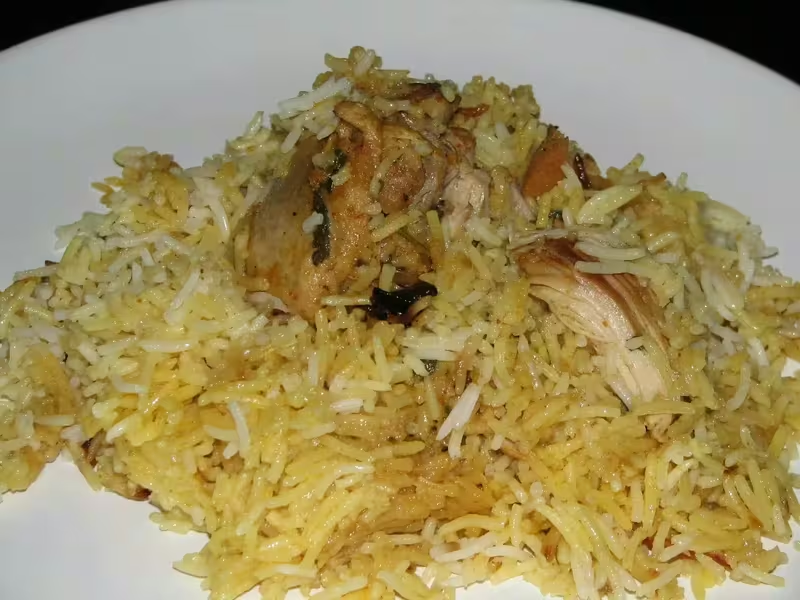
Biryani stands as one of South Asia's most celebrated culinary creations, a mixed rice dish that has captivated palates for centuries with its complex flavors and aromatic appeal. This magnificent dish combines rice, meat or seafood (and increasingly, vegetables), yoghurt, and an elaborate blend of spices, all cooked together to create layers of flavor that have made it a cornerstone of festive and celebratory meals across the Indian subcontinent.
The dish emerged during the Mughal era in India, representing a sophisticated fusion of Persian and Indian culinary traditions. While Persian pilau rice brought colorful, aromatic rice cooking techniques, Indian culinary practices contributed yoghurt-marinated meats and bold spice profiles. This cultural synthesis produced a dish that transcended its origins to become deeply embedded in South Asian food culture.
Despite its widespread popularity and cultural significance, biryani's precise origins remain a subject of scholarly debate. The uncertainty surrounding its exact birthplace and date of creation only adds to the mystique of this beloved dish, which has evolved into countless regional variations while maintaining its essential character as a royal, celebratory food.
Etymology and Names
The word "biryani" has Persian roots, though its exact etymological journey reflects the dish's multicultural heritage. Across South Asia, the dish is known by several phonetic variations including biriyani, biriani, and beriani, with spelling differences often reflecting regional linguistic patterns and pronunciation.
The name itself evokes the dish's Persian connections, linking it to the broader family of pilau or pilaf dishes that spread across Central and South Asia through trade routes and cultural exchange. In different regions of India, local languages have adapted the name while preserving its recognizable core, making biryani one of the few food terms that remains relatively consistent across the subcontinent's diverse linguistic landscape.
Historical Origins
Biryani's creation during the Mughal era represents one of the most significant culinary innovations in Indian history. The Mughal Empire, which ruled much of the Indian subcontinent from the 16th century onwards, brought Persian cultural influences including sophisticated culinary traditions that would profoundly impact Indian cuisine.
The dish emerged from the meeting of two distinct culinary traditions. From Persia came the concept of pilau - aromatic rice dishes cooked with meat, dried fruits, and nuts, often colored with saffron. The Indian contribution included the practice of marinating meat in yoghurt and the liberal use of local spices such as cardamom, cinnamon, and pepper. This fusion created something entirely new: a layered rice dish where spiced, yoghurt-marinated meat cooked slowly with partially cooked rice, allowing flavors to meld completely.
Royal Connections
Biryani's association with royal kitchens and Mughal nobility elevated it to the status of ceremonial food. The elaborate preparation method, expensive ingredients like saffron, and time-intensive cooking process made it a dish worthy of royal feasts and special occasions. The Mughal courts' appreciation for refined cuisine and elaborate dining experiences provided the perfect environment for biryani to evolve and flourish.
The royal kitchens employed master chefs who experimented with different techniques, spice combinations, and cooking methods. The dum pukht technique - slow-cooking in a sealed vessel - became particularly associated with biryani preparation, allowing the rice and meat to cook in their own steam and spices, creating intense, concentrated flavors.
Trade and Cultural Exchange
The development of biryani reflects broader patterns of cultural and culinary exchange along historical trade routes. Persian influence arrived in India through various channels: conquering armies, traveling merchants, and migrating craftspeople and courtiers. These connections brought not just recipes but entire cooking philosophies and techniques.
Indian cooks adapted these foreign influences to local tastes and available ingredients. Indigenous spices, regional rice varieties, and local cooking methods transformed Persian pilau into something distinctly South Asian. This process of adaptation and innovation continued as biryani spread across different regions of India, each adding its own character to the dish.
Ingredients and Preparation
Key Ingredients
At its foundation, biryani requires high-quality rice - traditionally long-grain varieties like basmati that remain separate and fluffy when cooked. The rice serves as both base and canvas, absorbing the complex flavors of spices and meat while maintaining its distinct texture.
The protein component varies widely but traditionally includes meat (mutton, chicken, or beef) or seafood, marinated in yoghurt and spices. The yoghurt serves multiple purposes: tenderizing the meat, providing a tangy counterpoint to rich spices, and creating moisture for the slow-cooking process. Vegetarian versions use vegetables, paneer, or legumes, demonstrating biryani's adaptability.
Spices form the soul of biryani. Whole spices like cardamom, cinnamon, bay leaves, and cloves provide aromatic depth, while ground spices including cumin, coriander, and turmeric add complexity. Saffron, though expensive, remains traditional for its distinct flavor and the golden color it imparts to rice.
Traditional Preparation
Authentic biryani preparation involves multiple stages requiring patience and skill. The meat undergoes extended marination in yoghurt and spices, sometimes overnight, allowing flavors to penetrate deeply. Rice is partially cooked separately - about 70% done - so it completes cooking during the final dum process without becoming mushy.
The assembly creates distinct layers: partially cooked rice alternates with spiced meat, each layer potentially garnished with fried onions, fresh herbs (typically mint and cilantro), and saffron-infused milk. This layering ensures every spoonful contains rice, meat, and a variety of flavors and textures.
The dum process represents the crucial final step. The pot is sealed - traditionally with dough to prevent steam escape - and placed over very low heat. Some traditional methods place hot coals on the lid, creating even heat distribution. This slow-cooking in a sealed environment allows flavors to concentrate and meld, rice to finish cooking perfectly, and aromatic steam to infuse every element.
Regional Variations
Hyderabadi biryani represents perhaps the most famous regional style, known for its spicier profile and generous use of saffron. The Hyderabadi approach typically employs the "kacchi" (raw) method, where raw marinated meat and partially cooked rice cook together from the start, creating intense flavor integration.
Lucknowi or Awadhi biryani from North India takes a subtler approach, reflecting the refined culinary traditions of Awadh's nawabs. This style uses the "pakki" (cooked) method, where meat is cooked separately before layering with rice. The result is lighter in spices but rich in aromatic complexity, embodying the sophisticated restraint of Awadhi cuisine.
Bengali or Kolkata biryani includes a distinctive ingredient: potatoes. This addition, along with a lighter spice profile, creates a unique variation that has become beloved in Eastern India. The Kolkata style, influenced by the last nawab of Awadh who settled in Calcutta, represents how biryani continued evolving as it traveled.
Malabar biryani from Kerala's coastal region reflects local preferences and available ingredients, using short-grain rice varieties and incorporating distinctive spice blends that include curry leaves and coconut influences, demonstrating biryani's remarkable adaptability to regional tastes.
Cultural Significance
Festivals and Occasions
Biryani occupies a central place in South Asian celebratory cuisine. Its elaborate preparation makes it special-occasion food, appearing at weddings, religious festivals, and important family gatherings. The dish's richness and complexity make it appropriate for celebrations where abundant, impressive food demonstrates hospitality and respect for guests.
During Eid celebrations, biryani often serves as the centerpiece of the feast, prepared in large quantities to share with family, friends, and neighbors. The tradition of sharing biryani during festivals reinforces community bonds and celebrates shared cultural heritage. Similarly, wedding menus across South Asia frequently feature biryani as a main course, its status as luxury food making it fitting for such important occasions.
Social and Religious Context
While biryani traditionally contains meat, making it unsuitable for strict vegetarians, the dish has evolved to accommodate various dietary preferences. Vegetarian biryanis using vegetables, paneer, or legumes have become popular, allowing those who don't consume meat to enjoy this iconic dish. Egg biryani provides another option, particularly popular in South India.
The dish's association with Muslim culinary traditions, particularly through its Mughal origins, gives it special significance in Islamic cultural contexts. However, biryani has transcended religious boundaries to become beloved across communities, demonstrating food's power to unite diverse populations through shared appreciation of culinary excellence.
Family Traditions
Many South Asian families maintain treasured biryani recipes passed down through generations, each family claiming their version as the authentic one. These recipes often include closely guarded secrets about spice proportions, marination times, or cooking techniques. The preparation of biryani frequently becomes a multi-generational activity, with elders teaching younger family members the intricate process.
The act of making biryani together strengthens family bonds and preserves culinary heritage. Stories, techniques, and family history transmit alongside the recipe, making biryani preparation an act of cultural preservation as much as cooking.
Culinary Techniques
The dum cooking method stands as biryani's most distinctive technique. This slow-cooking process in a sealed vessel allows rice and meat to cook in trapped steam, creating intense flavor concentration impossible to achieve through other methods. The seal prevents moisture loss, ensuring rice remains perfectly cooked while meat becomes tender.
Traditional cooks might place hot coals both below and atop the cooking vessel, creating even heat distribution. Modern adaptations use heavy-bottomed pots on low heat, sometimes placing the pot on a tawa (griddle) to prevent bottom burning. The key remains maintaining gentle, consistent heat that slowly brings all elements to perfect doneness.
Layering technique significantly impacts the final result. Proper layering ensures even distribution of meat and rice, preventing any portion from being dry or over-spiced. The art lies in creating enough layers for complexity while maintaining structural integrity when serving.
Evolution Over Time
From its Mughal-era origins, biryani has undergone continuous evolution while maintaining core identity. Early versions likely featured different meat choices and spice combinations than modern recipes, with each era and region adapting the dish to contemporary tastes and available ingredients.
The 20th century saw biryani's transformation from exclusively special-occasion food to something more accessible. Restaurants began specializing in biryani, developing their own styles and attracting devoted followings. This commercialization made biryani available beyond home kitchens and celebration feasts, though connoisseurs often insist home-cooked versions remain superior.
Contemporary fusion versions incorporate non-traditional ingredients or cooking methods, sometimes sparking debates about authenticity. However, these innovations demonstrate biryani's continuing vitality and ability to adapt to changing tastes while remaining recognizably itself.
Famous Establishments
Throughout South Asia, certain restaurants and street vendors have achieved legendary status for their biryani. Hyderabad's Paradise Restaurant and Bawarchi, Mumbai's Persian Darbar, and Kolkata's Arsalan represent just a few establishments where biryani devotees make pilgrimages to experience regional styles at their finest.
Street food culture in many Indian cities features smaller biryani specialists, often operating from tiny shops or carts, who have perfected their recipes over decades. These vendors frequently maintain loyal customer bases who swear by their particular version's superiority.
Health and Nutrition
Traditional understanding viewed biryani as a heating, strength-building food appropriate for celebrations and cold weather. The combination of rice, meat, and ghee provided substantial calories and energy, making it suitable for festive occasions when abundance was valued.
From an Ayurvedic perspective, biryani's multiple spices offer various benefits: cardamom aids digestion, cinnamon regulates metabolism, and cloves have antimicrobial properties. However, the dish's richness means it's typically considered rajasik - promoting activity and energy rather than the calm simplicity of satvik foods.
Modern nutritional analysis recognizes biryani as calorie-dense due to rice, meat, and cooking fats. The dish provides protein, carbohydrates, and various nutrients from spices and herbs, though portion control becomes important for those monitoring calorie intake. Vegetarian versions generally contain fewer calories while maintaining nutritional value.
Modern Relevance
Biryani's popularity shows no signs of declining in contemporary South Asia. If anything, the dish has experienced renewed appreciation as younger generations explore their culinary heritage. Social media has amplified biryani culture, with enthusiasts sharing photos, recipes, and reviews of biryani establishments.
The global South Asian diaspora has carried biryani worldwide, introducing international audiences to this complex, flavorful dish. Indian and Pakistani restaurants globally feature biryani prominently, while home cooks maintain traditions in their adopted countries, keeping cultural connections alive through food.
Ready-to-cook biryani kits, YouTube cooking channels dedicated to biryani techniques, and food delivery services specializing in the dish demonstrate how traditional cuisine adapts to modern lifestyles. While purists may debate whether these innovations maintain authenticity, they ensure biryani remains relevant and accessible to new generations.
Biryani's journey from Mughal royal kitchens to contemporary tables worldwide illustrates cuisine's power to transcend boundaries while maintaining cultural significance. Each pot of biryani connects present-day cooks and diners to centuries of culinary tradition, cultural exchange, and evolving tastes, ensuring this magnificent dish continues delighting future generations.