

Overview
Dum Pukht represents one of the most refined and sophisticated cooking techniques to emerge from the royal kitchens of Mughal India. The term "dum" means "breath" or "steam," while "pukht" translates to "cooking," together describing a method where food is cooked slowly in its own steam and juices, sealed within containers to preserve every nuance of flavor and aroma. This ancient technique transforms simple ingredients into extraordinarily tender and flavorful dishes through patience, precision, and an understanding of how trapped heat and moisture can work culinary magic.
Originating during the reign of Nawab Asaf-ud-Daulah of Awadh between 1748 and 1797, Dum Pukht emerged during a golden age of culinary innovation in pre-partition India. The technique embodies the philosophical approach of Mughal cuisine, where cooking was not merely about sustenance but an expression of refinement, patience, and aesthetic sensibility. In the Nawabi courts of Lucknow, chefs would spend hours perfecting dishes using this method, understanding that true excellence could not be rushed.
The cultural significance of Dum Pukht extends far beyond its technical aspects. It represents a culinary philosophy where time itself becomes an ingredient, where the slow transformation of food mirrors the patience and dedication valued in traditional Indian culture. Today, this technique continues to influence cuisines across South Asia, Central Asia, and West Asia, serving as a living connection to the sophisticated court culture of Mughal India.
Etymology and Names
The term "Dum Pukht" derives from Persian, the court language of the Mughal Empire. "Dum" (دم) in Persian means "breath," "steam," or "sigh," referring to the steam that cooks the food. "Pukht" (پخت) means "to cook" or "cooked." Together, the phrase elegantly captures the essence of cooking through trapped steam and breath.
The technique is known by several regional names across different cultures and geographies. In Kashmir, it is called "Dampokhtak" (دمپوخت), maintaining the Persian linguistic roots while adapting to local pronunciation. The term "Larhmeen" is used in some Central Asian regions, reflecting the technique's spread along historical trade routes.
In contemporary usage, the technique is sometimes simply called "Dum" cooking, particularly when referring to preparations like "Dum Biryani" or "Dum Aloo." The English translation "slow oven cooking" or "sealed pot cooking" attempts to describe the method but loses the poetic quality of the original Persian terminology, which connects breath, steam, and patience in a single concept.
Historical Origins
The documented origins of Dum Pukht trace back to the court of Nawab Asaf-ud-Daulah, who ruled the princely state of Awadh from 1748 to 1797. This period marked the zenith of Awadhi culture, where the arts, architecture, poetry, and cuisine flourished under royal patronage. The Nawab's capital, Lucknow, became renowned as a center of refinement and cultural sophistication, where the courtly lifestyle emphasized elegance in all aspects of life.
Historical tradition attributes the development or perfection of Dum Pukht to the innovative chefs of Asaf-ud-Daulah's kitchen, though the technique likely built upon earlier slow-cooking methods practiced during the Mughal period. The Mughal emperors, originally from Central Asia, had brought with them culinary traditions that valued slow-cooked meat preparations. The Awadhi court refined these techniques, developing the specific method of dough-sealing vessels to create a completely enclosed cooking environment.
The timing of Dum Pukht's emergence coincides with a period when Awadh was asserting its cultural independence while the Mughal Empire's central authority was declining. The Nawabs of Awadh positioned themselves as inheritors and preservers of Mughal culture, and their kitchens became laboratories of culinary innovation where traditional techniques were perfected and new methods developed.
Royal Connections
Dum Pukht became intimately associated with royal and aristocratic dining in North India. The technique required patient attention, expensive ingredients like saffron and dry fruits, and skilled cooks who understood the precise timing and temperatures needed for different dishes. These requirements made it a hallmark of elite cuisine, served at royal feasts, wedding celebrations, and important state occasions.
The Mughal Empire's culinary legacy provided the foundation for Dum Pukht's development. Mughal emperors had established sophisticated kitchen hierarchies with specialized cooks (rakabdars) responsible for different types of dishes. The slow-cooking method aligned perfectly with Mughal culinary philosophy, which emphasized the harmonious blending of flavors, the use of expensive spices, and the creation of dishes that displayed both wealth and refined taste.
In the Awadhi courts, dishes prepared using Dum Pukht became signatures of Nawabi hospitality. The dramatic presentation of opening a dough-sealed vessel at the dining table, releasing clouds of aromatic steam, became a theatrical element of royal dining. This ceremony transformed cooking into performance art, demonstrating the host's ability to command patience, resources, and culinary expertise.
Trade and Cultural Exchange
The spread of Dum Pukht across vast geographical regions reflects the interconnected nature of South, Central, and West Asian cuisines through historical trade routes and cultural exchanges. The technique traveled with migrants, merchants, and conquering armies, adapting to local ingredients and tastes while maintaining its core principles.
In Central Asia, where Mughal ancestors originated, similar slow-cooking methods existed for preparing lamb and other meats in sealed containers. The traffic of ideas and techniques along the Silk Road meant that culinary innovations moved bidirectionally, with Indian refinements of the technique potentially influencing cooking methods back in Central Asian regions.
The technique's adoption in West Asian cuisines demonstrates how cooking methods transcend political and cultural boundaries. Persian influences on Mughal cuisine created a shared culinary vocabulary, and techniques like Dum Pukht could be readily understood and appreciated across regions where Persian cultural influence extended.
The Dum Pukht Technique
Principles of Sealed Cooking
The fundamental principle of Dum Pukht involves creating a sealed cooking environment where food cooks slowly in its own steam and juices. Traditional practitioners use heavy-bottomed vessels, typically made of copper, brass, or thick clay (handi), which retain and distribute heat evenly. The vessel is filled with marinated meat or vegetables, partially cooked rice (in the case of biryani), and whole spices, then sealed completely.
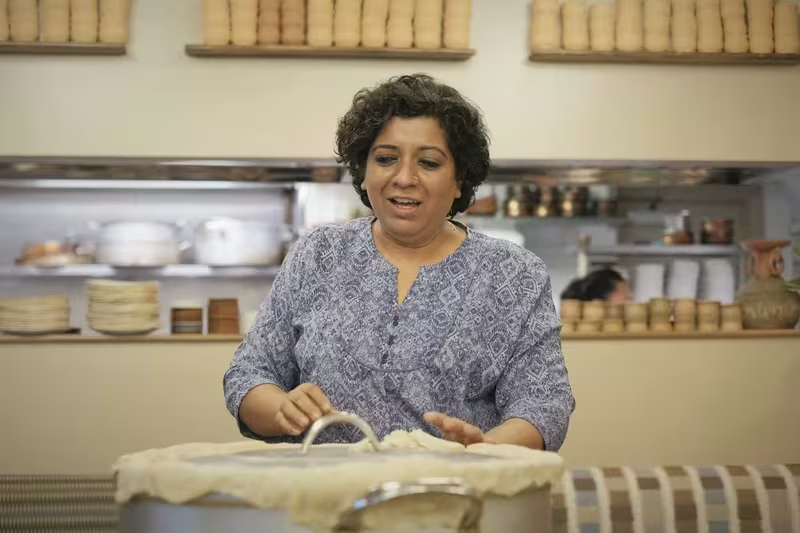
The sealing process is crucial to the technique's success. A rope of wheat dough is pressed around the rim of the vessel before the lid is placed, creating an airtight seal. Some cooks also cover the lid with additional dough or a wet cloth. This seal ensures that no steam escapes during the cooking process, forcing all the moisture, flavors, and aromas to remain within the vessel and infuse the food.
Heat application in Dum Pukht requires careful control. Traditionally, cooking vessels were placed over very low charcoal fires, with additional hot coals placed on the lid to provide even heat from above and below. The gentle, consistent heat allows proteins to break down slowly, vegetables to soften without losing structure, and spices to release their essential oils gradually. The process typically takes two to four hours, depending on the ingredients and quantity.
Traditional Preparation Method
The preparation for Dum Pukht begins long before the actual sealing and cooking. Meats are marinated with yogurt, spices, and aromatics for several hours or overnight, allowing flavors to penetrate deeply. Spices are carefully selected and sometimes dry-roasted to enhance their aromatic properties. Onions are often fried to a golden brown and ground into paste, which becomes the flavor base for many dishes.
Layering is essential in dishes like Dum Biryani. Partially cooked rice is layered alternately with marinated meat, fried onions, saffron-infused milk, and ghee. Each layer contributes to the final symphony of flavors. The arrangement ensures that steam and heat circulate through all layers, cooking everything evenly while allowing flavors to mingle.
Once sealed, the cooking vessel must not be disturbed. Opening the seal prematurely releases the precious steam that drives the cooking process and carries flavors. Experienced cooks judge doneness by timing, the subtle sounds from within the vessel, and the aromas that eventually penetrate even the dough seal. The dramatic moment of breaking the seal at serving time releases a burst of fragrant steam, signaling the dish's completion.
Regional Variations
In Lucknow, the birthplace of refined Dum Pukht, the technique is applied to various dishes including biryani, korma, and nihari. Lucknowi Dum Biryani typically uses the pakki method, where rice and meat are both partially cooked before being layered and sealed. The resulting dish features distinct grains of rice and tender meat infused with delicate spices.
Hyderabad developed its own interpretation of Dum cooking, particularly for biryani. Hyderabadi Dum Biryani often uses the kacchi method, where raw marinated meat is layered with partially cooked rice, relying entirely on the dum process to cook the meat. This results in a spicier, more intense flavor profile compared to Lucknowi versions, reflecting the Deccan region's preference for bolder spices.
Kashmir's Dampokhtak applies the slow-cooking principle to regional dishes using local ingredients like Kashmiri lamb and traditional spices. The sealed cooking method proved particularly suitable for the region's cold climate, where hot, steaming dishes provide both nourishment and warmth.
As the technique spread to Central and West Asia, it adapted to local cuisines while maintaining its core principle. Different regions use local vessels, indigenous spices, and traditional proteins, but the fundamental approach of sealed, slow cooking remains consistent.
Cultural Significance
Royal Cuisine and Refinement
Dum Pukht epitomizes the refinement of royal Indian cuisine, where cooking transcended mere nourishment to become an expression of cultural sophistication and aesthetic sensibility. In the courts of Awadh, the ability to create perfect Dum dishes demonstrated a cook's mastery, patience, and understanding of the subtle transformations that occur during slow cooking.
The technique aligned with courtly values that emphasized patience, refinement, and attention to detail. Unlike quick-cooking methods, Dum Pukht could not be rushed. This philosophical approach to cooking mirrored the leisurely pace of aristocratic life, where time was abundant and excellence was pursued without compromise.
Occasions and Celebrations
While originating in royal kitchens, Dum Pukht dishes eventually became central to celebratory occasions across social classes. Weddings, religious festivals, and special family gatherings feature Dum Biryani and other slowly cooked dishes as centerpieces of elaborate meals. The time and care required to prepare these dishes make them symbols of hospitality and respect for guests.
The theatrical element of opening a sealed vessel at the table transforms dining into a shared experience. The release of aromatic steam creates anticipation and appreciation for the care invested in preparation. This moment of revelation connects diners to the tradition of royal feasts where such presentations were commonplace.
Preservation of Tradition
In contemporary times, Dum Pukht serves as a living link to India's culinary heritage. Restaurants specializing in the technique preserve traditional methods, training new generations of chefs in skills that might otherwise be lost. The popularity of authentic Dum Pukht cuisine demonstrates continuing appreciation for traditional cooking methods in an age of convenience and speed.
Master chefs who specialize in Dum Pukht often trace their culinary lineages back through generations, maintaining recipes and techniques passed down within families or through apprenticeship traditions. This preservation of knowledge ensures that the refinements developed in royal kitchens centuries ago continue to influence contemporary cuisine.
Evolution Over Time
From Royal Courts to Restaurants
The transition of Dum Pukht from exclusive royal cuisine to more widely accessible restaurant fare began during the late colonial period and accelerated after independence. As princely states merged into democratic India, many court cooks entered commercial kitchens, bringing with them the techniques and recipes of royal cuisine.
The establishment of fine dining restaurants specializing in Dum Pukht, particularly in Delhi and other major cities, helped preserve and popularize the technique. These restaurants became custodians of tradition, maintaining authentic preparation methods while making them available to a broader audience. The ITC Group's Dum Pukht restaurant, established in the 1980s under the guidance of master chef Imtiaz Qureshi, played a particularly significant role in reviving interest in authentic Awadhi cuisine.
Modern Adaptations
Contemporary interpretations of Dum Pukht have adapted the technique to modern kitchens and equipment while attempting to preserve its essence. Home cooks use pressure cookers or conventional ovens to simulate the sealed, slow-cooking environment, though purists argue these shortcuts cannot replicate the subtle flavors achieved through traditional methods.
Professional kitchens have developed more efficient approaches to dough-sealing and heat control, allowing restaurants to serve Dum dishes with greater consistency and speed. Some modern interpretations incorporate global ingredients or fusion elements while maintaining the core technique of sealed, slow cooking.
Global Recognition
Dum Pukht has gained international recognition as one of India's signature culinary contributions. Indian restaurants worldwide feature Dum Biryani and other dishes prepared using this technique. Food historians and culinary experts recognize Dum Pukht as an important example of how cooking methods can embody cultural values and historical traditions.
The technique has influenced modern slow-cooking movements globally, with parallels drawn to other cultures' sealed-pot cooking methods. This recognition positions Dum Pukht within a global context of culinary heritage, demonstrating how traditional techniques remain relevant in contemporary gastronomy.
Health and Traditional Understanding
Traditional understanding of Dum Pukht emphasized the healthfulness of slow cooking. The sealed environment preserves nutrients that might otherwise be lost through evaporation or exposure to air. Cooking in minimal liquid, with food essentially steaming in its own juices, requires less added fat than some other preparation methods.
The gentle heat of Dum cooking prevents the formation of harsh compounds that can result from high-temperature cooking. Proteins become exceptionally tender without becoming tough or overcooked. The extended cooking time allows complete integration of spices, which traditional Indian medicine systems like Ayurveda consider important for digestibility and therapeutic benefits.
From an Ayurvedic perspective, the slow cooking process helps make food more sattvic (pure and balanced), as the gentle preparation method is believed to preserve the vital energy of ingredients while making them easier to digest. The complete sealing of the cooking vessel prevents the escape of prana (life force) from the food.
Modern Relevance
Contemporary Practice
Dum Pukht remains highly relevant in contemporary Indian cuisine, practiced in home kitchens and professional establishments alike. The technique's ability to create deeply flavorful, tender dishes continues to appeal to modern palates seeking authentic tastes and traditional cooking methods. Social media has amplified interest, with dramatic videos of dough seals being broken and aromatic steam being released capturing widespread attention.
Cooking shows and culinary education programs often feature Dum Pukht as an example of sophisticated Indian cooking technique, introducing new generations to traditional methods. This educational focus helps ensure the technique's continuity while adapting it to contemporary contexts.
Challenges and Preservation
The time-intensive nature of authentic Dum Pukht poses challenges in modern, fast-paced lifestyles. Many home cooks resort to shortcuts or simplified versions that approximate but don't fully replicate traditional results. The availability of skilled cooks trained in authentic techniques has declined, making genuine Dum Pukht increasingly rare outside specialized restaurants.
Conservation efforts by culinary historians, master chefs, and cultural organizations aim to document and preserve authentic Dum Pukht techniques. These initiatives recognize that cooking methods represent intangible cultural heritage worthy of protection and promotion. Some organizations conduct workshops and training programs to ensure knowledge transfer to younger generations.
Future Prospects
The growing global interest in authentic, traditional cooking methods suggests a promising future for Dum Pukht. As consumers increasingly value slow food movements and artisanal preparation, techniques like Dum Pukht that prioritize quality, patience, and tradition find new appreciation. The technique's adaptability to various ingredients and cuisines positions it well for creative reinterpretation while maintaining core principles.
Technological innovations may offer new ways to practice Dum cooking while preserving its essential characteristics. Smart cooking equipment that can precisely control temperature and timing might make authentic Dum Pukht more accessible to home cooks, democratizing a technique once reserved for royal kitchens.
See Also
- Mughal Empire - The dynasty whose culinary traditions fostered Dum Pukht's development
- Lucknow - The city where Dum Pukht was perfected under Nawabi patronage
- Hyderabad - Major center for Dum Biryani and regional variations of the technique