

Overview
Halwa (also spelled halva, halua, or aluva) represents one of the most versatile and widespread confections in Indian cuisine, with roots that stretch across continents and centuries. This thick, sweet paste has evolved from its Middle Eastern origins into a beloved dessert that varies dramatically across India's diverse regions. Whether it's the rich, carrot-studded Gajar Ka Halwa of North India, the translucent wheat halwa of Tirunelveli in Tamil Nadu, or the quick-cooking semolina version served in temples, halwa has woven itself into the fabric of Indian celebrations, religious offerings, and daily life.
The confection's adaptability is perhaps its greatest strength. While the basic principle remains consistent—a thick paste made from some combination of flour, butter or ghee, oil, and sugar—the specific ingredients and preparation methods vary widely. Some versions incorporate saffron and rosewater for aromatic complexity, while others use turmeric for color and milk for richness. This flexibility has allowed halwa to transcend regional boundaries while maintaining distinct local identities.
In India, halwa occupies a special place in the culinary landscape, straddling the line between everyday comfort food and festive delicacy. It's equally at home being served as prasad (religious offering) in temples, as the grand finale to wedding feasts, or as a warming winter treat shared among family members on cold evenings.
Etymology and Names
The word "halwa" derives from the Arabic term "hulw," meaning sweet, reflecting the dessert's Middle Eastern origins. This etymological root reveals the confection's journey along medieval trade routes, where it traveled from the Arab world through Persia and Central Asia before establishing itself firmly in the Indian subcontinent.
Across India, the sweet is known by various names that reflect linguistic diversity and regional preferences. In most of North India, it's called "halwa," while in some South Indian languages, it becomes "halva" or "aluva." The Malayalam-speaking regions of Kerala use "alwa," while in Bengali, it's known as "halua." These variations in pronunciation and spelling reflect not just linguistic differences but also the independent paths through which the confection entered different parts of India.
Individual varieties of halwa are typically named after their primary ingredient or place of origin. "Gajar Ka Halwa" literally translates to "carrot halwa," "Sooji Halwa" means "semolina halwa," and "Tirunelveli Halwa" takes its name from the Tamil Nadu city famous for this particular variation. This naming convention makes the vast world of halwa variations more navigable while preserving regional identity.
Historical Origins
The history of halwa in India is intertwined with the broader narrative of cultural and culinary exchange between the Middle East, Central Asia, and the Indian subcontinent. While the confection originated in the Middle East, its arrival and evolution in India cannot be pinpointed to a single moment or route. Instead, it likely came through multiple channels over centuries, adapting and transforming with each wave of cultural contact.
The spread of halwa across the Middle East, North Africa, Eastern Europe, the Balkans, Central Asia, and South Asia demonstrates the power of trade routes and cultural exchange in shaping culinary traditions. As merchants, travelers, and conquering armies moved along these routes, they carried not just goods but also recipes and cooking techniques that would be adapted to local ingredients and tastes.
Royal Connections
The Mughal period marked a significant chapter in halwa's evolution in India. The Mughal courts, known for their sophisticated cuisine and elaborate feasts, embraced halwa as part of their culinary repertoire. The Mughals' Persian heritage meant they were already familiar with similar confections, and they brought refinement to halwa preparation in India, introducing ingredients like saffron, rose water, and premium nuts. The royal kitchens experimented with different bases and flavoring agents, elevating halwa from a simple sweet to an aristocratic delicacy.
This royal association helped establish halwa's status as a prestige food suitable for important occasions and celebrations. The tradition of serving elaborate halwas at courtly functions filtered down through society, making the sweet an essential part of wedding feasts and festival celebrations.
Trade and Cultural Exchange
The ingredients that make up halwa tell their own story of global trade. Saffron, one of the prized ingredients in many halwa variations, traveled to India along ancient trade routes from Persia. Sugar, now ubiquitous in halwa, became more widely available in India through agricultural development and trade networks. Even the cooking fats used—whether ghee, butter, or various oils—reflect regional agricultural traditions and trade patterns.
The confection's journey wasn't unidirectional. As halwa established itself in India, it began to reflect distinctly Indian sensibilities and ingredients. The use of local grains, vegetables like carrots and potatoes, regional spices, and Indian cooking techniques created versions that were unmistakably Indian while maintaining connection to the original Middle Eastern concept.
Ingredients and Preparation
Key Ingredients
At its most basic, halwa requires just a few fundamental ingredients: a base material (flour, semolina, or vegetables), a sweetener (usually sugar), and a fat (ghee, butter, or oil). However, these simple foundations support infinite variation. The choice of flour can range from wheat to rice to chickpea flour, each creating a different texture and flavor profile. Semolina produces a slightly granular texture, while wheat flour yields a smoother paste.
The fat component is crucial to halwa's characteristic rich texture and glossy appearance. Ghee (clarified butter) is the premium choice in most Indian preparations, imparting a distinctive nutty aroma and flavor. The quality of ghee can dramatically affect the final product—this is why Tirunelveli halwa makers insist on ghee from the nearby region of Tenkasi.
Milk adds richness and helps create a creamy consistency, particularly in variations like Gajar Ka Halwa. Aromatic ingredients such as saffron, cardamom, and rose water elevate the halwa from simple to sublime, while turmeric powder might be added for color in some regional variations. Nuts—cashews, almonds, and pistachios—provide textural contrast and visual appeal when used as garnish.
Traditional Preparation
The preparation of halwa is a lesson in patience and attention. The basic process involves roasting the base ingredient (flour, semolina, or grated vegetables) in ghee until it releases its aroma and achieves the desired color and texture. This roasting step is crucial—it must be thorough enough to cook the base and develop flavor, but not so aggressive that it burns.
Once properly roasted, liquid (milk, water, or a combination) is gradually added while stirring continuously. The mixture must be stirred constantly to prevent lumps and ensure even cooking. Sugar is typically added toward the end, along with any spices or flavorings. The cooking continues until the mixture reaches the right consistency—thick enough to hold its shape but still soft and yielding.
The entire process requires constant attention and can take anywhere from 30 minutes for a quick semolina halwa to several hours for elaborate versions like Gajar Ka Halwa. The continuous stirring is not just practical but meditative, and many cooks consider the making of halwa a labor of love that requires presence and care.
Regional Variations
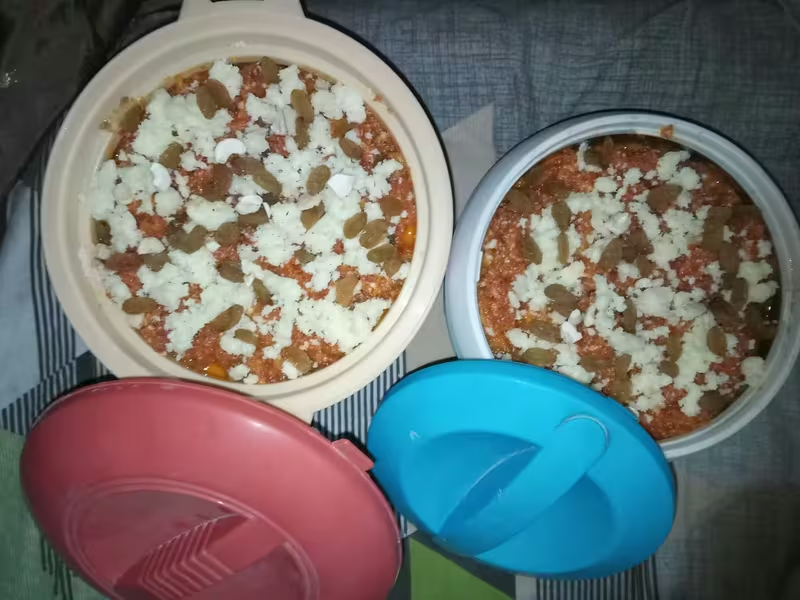
Gajar Ka Halwa (North India): Perhaps the most famous Indian halwa variation, this carrot-based dessert is synonymous with winter in North India. Fresh red carrots are grated and slow-cooked in milk until tender, then finished with ghee, sugar, and cardamom. The long cooking process allows the carrots to absorb the milk and develop a deep, concentrated sweetness. It's traditionally garnished with slivered almonds and pistachios.
Tirunelveli Halwa (Tamil Nadu): This wheat-based halwa from Tamil Nadu is famous for its translucent appearance and unique texture. Traditional makers insist that authentic Tirunelveli halwa can only be made with water from the Thamirabarani river and ghee from nearby Tenkasi. The wheat is soaked, ground, and strained to extract a starchy liquid that's then cooked with ghee and sugar into a glossy, semi-transparent confection.
Sooji Halwa (Pan-India): Also known as semolina halwa or rava halwa, this is perhaps the quickest version to prepare, making it popular for impromptu celebrations and religious offerings. Semolina is roasted in ghee, mixed with sugar syrup flavored with cardamom, and cooked until it achieves a pudding-like consistency. It's often served warm and is a common prasad (offering) in temples.
Aloo Halwa (North India): This potato-based variation demonstrates halwa's adaptability to unexpected ingredients. Boiled potatoes are mashed and cooked with ghee, sugar, and milk into a rich, dense sweet. Despite its humble main ingredient, properly made aloo halwa is luxuriously smooth and rich.
Aloe Vera Halwa: A more contemporary variation that reflects modern health consciousness, this version uses aloe vera pulp as its base, creating a lighter halwa that's believed to have health benefits.
Cultural Significance
Festivals and Occasions
Halwa plays a central role in Indian celebrations across religious and regional boundaries. During Diwali, the festival of lights, varieties of halwa feature prominently on sweet platters exchanged between families. The dessert's rich, warming qualities make it particularly appropriate for winter festivals. During Eid celebrations, halwa often appears on feasting tables, reflecting the sweet's acceptance across religious communities.
Weddings are perhaps the occasion where halwa truly shines. Different types of halwa might be served throughout the multi-day celebration—from elaborate presentations at the main feast to simpler versions served to guests during preliminary functions. The labor-intensive preparation of certain halwa varieties makes them particularly suitable for occasions where effort and expense demonstrate respect and celebration.
Social and Religious Context
In Hindu temples across India, simple versions of halwa—particularly sooji halwa—are prepared as prasad, sanctified food offered to deities and then distributed to devotees. The vegetarian nature of halwa makes it acceptable across most Hindu communities, and its preparation can be adapted to meet various dietary restrictions and preferences.
The sweet's vegetarian status has contributed to its widespread acceptance and popularity across India's diverse communities. Most traditional halwa recipes are lacto-vegetarian (containing dairy but no eggs), making them suitable for the majority of India's population. The sweetness and richness of halwa also align with the concept of "rajasik" foods in Ayurvedic classification—foods that are stimulating and energizing, appropriate for celebrations and special occasions.
Family Traditions
The making of halwa often carries deep familial significance. Many families have recipes passed down through generations, with subtle variations in technique or proportion that define "how grandmother made it." The preparation of elaborate halwas like Gajar Ka Halwa during winter months becomes a family activity, with different members taking turns at the essential but tedious stirring process.
These family recipes and preparation traditions create continuity across generations. The specific way of grating carrots, the exact proportion of milk to carrots, the preferred garnish—these details become markers of family identity and memory.
Culinary Techniques
The preparation of halwa involves several techniques that are fundamental to Indian cooking. The initial roasting of flour or semolina in ghee is similar to the process used for making many Indian sweets and some savory dishes. This technique, called "bhunna" in Hindi, develops flavor and ensures the flour is properly cooked without raw taste.
The gradual addition of liquid while stirring continuously is a skill that develops with practice. The cook must judge when to add more liquid, how much to add at once, and when the mixture has reached the right consistency. These decisions are made based on visual cues, aroma, and the feel of the mixture as it's stirred.
For vegetable-based halwas like Gajar Ka Halwa, the technique of cooking vegetables in milk until the liquid is almost entirely absorbed requires patience and careful heat management. The mixture must be cooked slowly enough that the vegetables become tender without the milk scorching, yet vigorously enough that the mixture thickens properly.
Temperature control is crucial throughout the process. Too high heat can cause burning or uneven cooking; too low heat extends cooking time and can result in poor texture. Traditional cooks often use heavy-bottomed vessels that distribute heat evenly and reduce the risk of scorching.
Evolution Over Time
From its Middle Eastern origins, halwa has undergone significant transformation in the Indian context. The adoption of local ingredients—from Indian carrots and potatoes to regional spices—created versions that bear little resemblance to the original Middle Eastern halva yet maintain the fundamental concept of a sweet, thick paste.
The introduction of condensed milk and khoya (reduced milk solids) in modern recipes represents another evolutionary step, allowing cooks to achieve richness and complexity more quickly than traditional long-cooking methods. Some contemporary versions use food processors to grate carrots or grind wheat, reducing the manual labor involved in preparation.
Restaurant and commercial preparations have further adapted halwa, creating versions that can be made in larger quantities, stored longer, and presented in modern plating styles. While purists might lament these changes, they've also made halwa more accessible to wider audiences and ensured its continued relevance in contemporary Indian cuisine.
Famous Establishments
Tirunelveli in Tamil Nadu is renowned for its halwa, with several generations-old shops specializing in this confection. These establishments maintain traditional preparation methods and jealously guard their recipes, contributing to the mystique surrounding authentic Tirunelveli halwa.
In North India, numerous sweet shops (mithai shops) in cities and towns pride themselves on their particular style of Gajar Ka Halwa or other halwa variations. During winter months, these shops often feature fresh Gajar Ka Halwa as their signature item, with customers traveling from across the city to purchase it.
Street vendors in many Indian cities prepare fresh halwa, particularly sooji halwa, cooking it in large karahis (woks) and serving it warm. These street preparations make halwa accessible as a quick, affordable sweet treat rather than just a special-occasion food.
Health and Nutrition
Traditional Indian food wisdom recognizes halwa as a warming, nourishing food. The combination of ghee, milk, and sugar provides quick energy and is considered beneficial during cold weather or for people needing to gain weight or recover from illness. Gajar Ka Halwa, in particular, is seen as nutritious because carrots provide vitamins and fiber alongside the sweet's calories.
From an Ayurvedic perspective, halwa made with ghee and natural sweeteners is considered easier to digest than many other sweets. The warming spices like cardamom aid digestion, while saffron is believed to have various health benefits.
Modern nutritional analysis reveals halwa as a calorie-dense food high in sugars and fats. A typical serving can contain significant amounts of both, making it a food best enjoyed in moderation. However, halwa made with vegetables like carrots or with ingredients like aloe vera can provide some nutritional benefits beyond simple calories.
The use of ghee, once demonized in Western nutritional thinking, is now recognized as having certain benefits, including the presence of fat-soluble vitamins and potentially beneficial fatty acids. When made with whole grains and minimal processed sugar, halwa can be part of a balanced diet when consumed occasionally and in appropriate portions.
Modern Relevance
In contemporary India, halwa maintains its cultural significance while adapting to modern contexts. It remains an essential part of celebrations and religious observances, even as Indian society becomes more urbanized and globalized. The dessert's presence in restaurants, both traditional and modern, ensures its continued visibility.
Halwa has also spread globally with the Indian diaspora. Indian restaurants worldwide feature various halwa preparations, introducing the sweet to new audiences. In some cases, fusion interpretations have emerged, such as halwa ice cream or halwa-inspired pastries, demonstrating the confection's continuing evolution.
Social media has created new interest in traditional halwa preparation, with videos of elaborate Gajar Ka Halwa or authentic Tirunelveli halwa preparation garnering millions of views. This digital attention has sparked renewed appreciation among younger generations for traditional preparation methods and regional variations.
Health-conscious adaptations have also emerged, with recipes reducing sugar content, using alternative sweeteners, or incorporating ingredients perceived as healthier. While traditional cooks might question whether these adaptations truly qualify as halwa, they represent the sweet's continued evolution and relevance.
The preservation of traditional halwa-making techniques, particularly for regional specialties like Tirunelveli halwa, has become a matter of cultural heritage. Efforts to document and maintain these traditions recognize halwa not just as food but as an important element of India's culinary heritage worthy of protection and transmission to future generations.
See Also
- Mughal Empire - Royal patronage that refined halwa preparation in India
- Indian Festive Foods - Context for halwa's role in celebrations
- Traditional Indian Sweets - The broader category of confections to which halwa belongs