

Overview
Idli stands as one of the most iconic and beloved breakfast foods in South Indian cuisine, representing centuries of culinary wisdom and nutritional sophistication. These soft, fluffy, white rice cakes are the product of a carefully orchestrated fermentation process that transforms simple ingredients—rice and hulled black lentils—into a nutritious, easily digestible meal. The genius of idli lies not just in its subtle, comforting flavor, but in the ancient understanding of fermentation science that makes the starches more bioavailable and the proteins more complete.
Beyond its nutritional merits, idli holds a special place in the cultural fabric of South India and Sri Lanka, where it is consumed not just as breakfast but also as a dinner option. The dish exemplifies the principle of simplicity in Indian cooking—using minimal ingredients to create maximum flavor and nutrition when paired with its traditional accompaniments: sambar (a tangy lentil stew), coconut chutney, and tomato chutney. This combination provides a complete protein profile and a balance of flavors that has satisfied millions for generations.
The popularity of idli has transcended regional boundaries, becoming a pan-Indian phenomenon served in restaurants from Delhi to Mumbai, and even gaining international recognition as a healthy, vegetarian breakfast option. Its versatility has led to numerous innovations while the traditional recipe continues to be honored in homes and temples across South India.
Etymology and Names
The word "idli" (also spelled "idly") is commonly used across South India, though its exact etymological origins remain a subject of scholarly discussion. The term is consistent across major South Indian languages including Tamil, Telugu, Kannada, and Malayalam, suggesting a shared culinary heritage across the region.
In different regions, idli is sometimes referred to with local variations or affectionate diminutives, but the core name remains remarkably consistent. This linguistic uniformity across diverse language families speaks to the dish's ancient roots and widespread acceptance throughout South India. The simplicity of the name reflects the simplicity of the dish itself—unpretentious yet profound in its cultural significance.
Historical Origins
The exact origins of idli are difficult to pinpoint with certainty, as the dish predates detailed culinary documentation. However, the sophisticated fermentation technique suggests a long history of development and refinement. The practice of fermenting grains and lentils demonstrates an advanced understanding of food science that ancient South Indian cooks possessed.
The combination of rice and black lentils (urad dal) is particularly significant from a nutritional standpoint. Rice is deficient in the amino acid lysine but rich in methionine, while lentils have the opposite profile. The fermentation of these two ingredients together not only makes them more digestible but also creates a complete protein source—a remarkable achievement in plant-based nutrition that ancient cooks accomplished through empirical observation and tradition.
Evolution and Adaptation
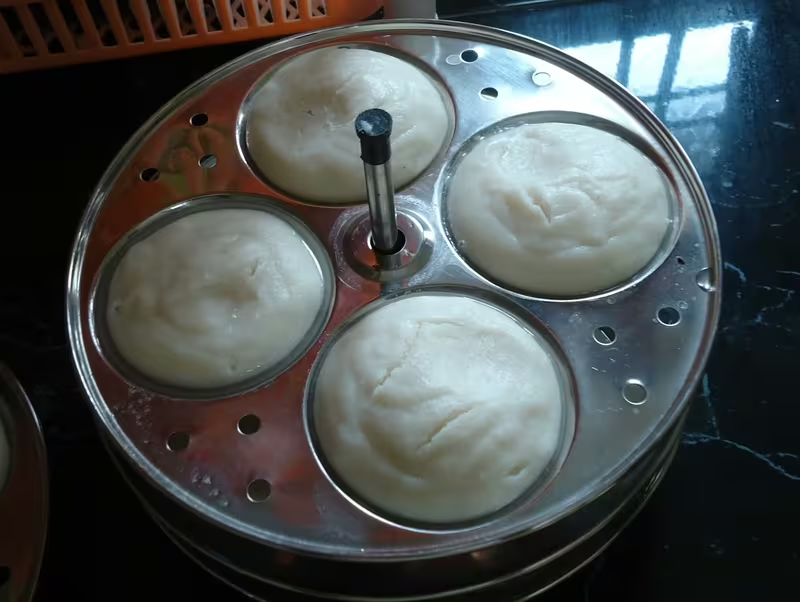
Over centuries, idli preparation has been refined through countless iterations by home cooks and professional chefs. The development of specialized equipment, particularly the idli steamer with its distinctive circular molds, represents an evolution in cooking technology specifically designed to perfect this dish. These multi-tiered steamers allow for efficient preparation of multiple idlis simultaneously, making it practical for feeding families and serving in restaurants.
The spread of idli culture has led to the development of commercial wet grinders that make the batter preparation easier, and more recently, instant idli mixes that attempt to capture the traditional flavor while reducing preparation time. However, purists maintain that nothing compares to the traditional method of soaking, grinding, and fermenting.
Ingredients and Preparation
Key Ingredients
Idli requires remarkably few ingredients, a testament to the minimalist philosophy that can produce extraordinary results:
Rice: Traditionally, parboiled rice (idli rice) is preferred because it ferments better and produces the right texture. The rice forms the bulk of the batter and provides the characteristic soft, fluffy texture.
Black lentils (Urad dal): Specifically, de-husked split black lentils are used. These lentils are crucial for the fermentation process and contribute to the light, airy texture of the finished idli. They also provide protein and create the slight stickiness that helps the batter hold together.
Water: Clean water is essential for soaking, grinding, and adjusting the batter consistency.
Salt: Added after fermentation in traditional recipes, salt enhances flavor and also helps control the fermentation process.
Traditional Preparation
The preparation of idli is a time-honored process that cannot be rushed:
Soaking: Rice and urad dal are soaked separately for 4-6 hours or overnight. This softens the grains and initiates the process that will lead to fermentation.
Grinding: The soaked ingredients are ground separately into smooth batters using a wet grinder or traditional stone grinder. The urad dal is ground until it becomes light and fluffy, incorporating air that will help the batter rise. The rice is ground to a slightly coarser consistency. The two batters are then mixed together.
Fermentation: The combined batter is left to ferment in a warm place for 8-12 hours, or longer in cooler climates. During this time, naturally occurring bacteria and yeasts break down the starches and proteins, creating the characteristic tangy flavor and causing the batter to rise and become airy. This fermentation is the secret to idli's digestibility and nutritional enhancement.
Steaming: The fermented batter is poured into greased idli molds and steamed for 10-15 minutes. The steam cooking preserves nutrients and requires no oil, making idli a healthy choice. The molds are designed to create the characteristic round, dome-shaped cakes.
Serving: Fresh idlis are best served hot, immediately after steaming. They are typically arranged on a plate or in a bowl and accompanied by sambar and various chutneys.
Regional Variations
While the basic idli recipe is consistent across South India, regional variations have emerged:
Button idli: Miniature versions of regular idlis, these bite-sized delights are popular in Karnataka and are often served as party snacks or in restaurants. Their small size means more surface area for absorbing accompaniments.
Tatte idli: Large, plate-shaped idlis from Karnataka, these are flatter and wider than traditional idlis and have a different texture. They are typically served with a generous topping of butter and chutney powder.
Sanna: Found in Goan and Konkani cuisine, sanna is similar to idli but may include coconut and toddy in the batter, giving it a slightly different flavor profile.
Rava idli: A modern innovation that uses semolina (rava) instead of rice, making the preparation faster as it requires less fermentation time. This version often includes vegetables and spices mixed into the batter.
Sambar idli: Idlis served immersed in or topped with sambar, creating a one-pot comfort food popular in restaurants.
Masala idli: Leftover idlis are often crumbled or cut into pieces and stir-fried with onions, chilies, and spices, creating a different dish altogether.
In East India, particularly in cities with South Indian populations, idlis are sometimes served with regional accompaniments like ghugni (spiced chickpea curry) and aloo dum (spiced potato curry), creating a fusion of culinary traditions.
Cultural Significance
Festivals and Occasions
Idli is primarily associated with daily meals rather than specific festivals, which speaks to its role as a staple food. However, its significance lies precisely in this everyday presence—it is the comfort food that marks the beginning of countless South Indian days. In temples across South India, idli is often prepared as prasadam (blessed food offering) due to its pure, satvik nature and the absence of onion and garlic in the traditional recipe.
The dish appears at family gatherings, wedding breakfasts, and any occasion where a nutritious, easily digestible meal is needed. Its versatility means it can be served to everyone from young children to elderly family members, making it a unifying food in South Indian households.
Social and Religious Context
Idli embodies the satvik principle in Ayurvedic dietary classification. Satvik foods are considered pure, light, and promoting clarity of mind and body. The simple ingredients, steaming method (no frying), and easily digestible nature make idli ideal for those following spiritual practices or seeking balanced nutrition.
The dish's vegetarian and, in its traditional form, vegan nature makes it acceptable across religious and caste boundaries. This universality has contributed to its widespread popularity and its role as a common culinary language across South India's diverse communities.
Family Traditions
In traditional South Indian homes, the making of idli batter often follows generational patterns passed down from mothers to daughters. The art of getting the fermentation just right, achieving the perfect texture in grinding, and mastering the steaming process represents culinary knowledge that is learned through observation and practice rather than written recipes.
Many families maintain specific ratios of rice to dal, particular soaking times, or special techniques that they believe produce superior idlis. The characteristic warm, slightly sour aroma of fermenting idli batter is a sensory memory deeply associated with home for many South Indians.
Culinary Techniques
Fermentation Science
The fermentation process in idli making is a natural fermentation driven by wild yeasts and lactic acid bacteria present in the environment and on the rice and lentils themselves. This process:
- Breaks down complex carbohydrates into simpler sugars, making them easier to digest
- Increases the bioavailability of minerals by reducing anti-nutritional factors like phytic acid
- Produces B vitamins, particularly B12, which is rare in vegetarian foods
- Creates the characteristic tangy flavor and airy texture
- Acts as a natural preservative, allowing the batter to stay fresh for several days
The fermentation is influenced by temperature, humidity, and the microbial environment, which is why experienced cooks often say that getting perfect idlis requires practice and attention to local conditions.
Steaming Technique
Steaming is crucial to idli's success. The specialized idli steamer, with its stacked circular molds, allows for:
- Even cooking without direct heat contact
- Retention of nutrients that might be lost in other cooking methods
- A fat-free preparation
- The characteristic soft, spongy texture
The molds are typically greased lightly with oil or ghee to prevent sticking, and the batter should be poured into the molds to about three-quarters full to allow for expansion during cooking.
Evolution Over Time
From its traditional roots, idli has undergone various transformations while maintaining its essential character. The introduction of electric wet grinders revolutionized home preparation, making the laborious grinding process easier and more consistent. Commercial establishments developed larger-scale steaming equipment to serve the growing demand.
Modern variations include instant idli mixes, though these rarely match the flavor and nutrition of traditionally fermented idlis. Health-conscious adaptations have introduced ingredients like quinoa, oats, and various millets into idli batter, creating fusion versions that appeal to contemporary dietary preferences.
The rise of South Indian restaurants across India and internationally has made idli a ambassador of South Indian cuisine, introducing it to audiences far beyond its traditional geography. Many restaurants now offer creative variations while maintaining traditional preparation methods for purists.
Health and Nutrition
Traditional Understanding
Ayurveda classifies idli as a satvik food that is cooling, light, and easy to digest. It is recommended for people of all ages and is particularly suitable for those recovering from illness due to its gentle nature. The fermentation process is recognized in traditional medicine as beneficial for digestion and overall health.
Modern Nutritional Perspective
Contemporary nutritional analysis confirms many of the traditional beliefs:
- Complete Protein: The combination of rice and lentils provides all essential amino acids
- Probiotic Benefits: Fermentation produces beneficial bacteria that support gut health
- Low in Fat: Steaming requires no added fat, making idli naturally low in calories
- Rich in Fiber: Both rice and lentils contribute dietary fiber
- Vitamin Enhancement: Fermentation increases B vitamin content
- Gluten-Free: Made entirely from naturally gluten-free ingredients
The easy digestibility that the fermentation process provides makes idli suitable for people with sensitive digestive systems, and its balanced nutrition makes it an excellent choice for sustainable, plant-based eating.
Modern Relevance
In contemporary India, idli has transcended its regional origins to become a pan-Indian breakfast staple. It is served in railway stations, airports, street stalls, and five-star hotels alike. The dish has become a symbol of healthy Indian cuisine, often cited as an example of sophisticated traditional food science.
The global interest in fermented foods, probiotics, and plant-based diets has brought renewed attention to idli. Food researchers study its fermentation process, nutritionists recommend it for balanced diets, and chefs experiment with it in fusion cuisine. Despite these modern interpretations, the traditional idli remains beloved in its original form, a testament to centuries of culinary evolution that achieved near-perfection.
The simplicity of idli—just rice, lentils, water, and time—continues to inspire, reminding us that sometimes the most profound culinary achievements require not complexity, but patience, understanding, and respect for natural processes.