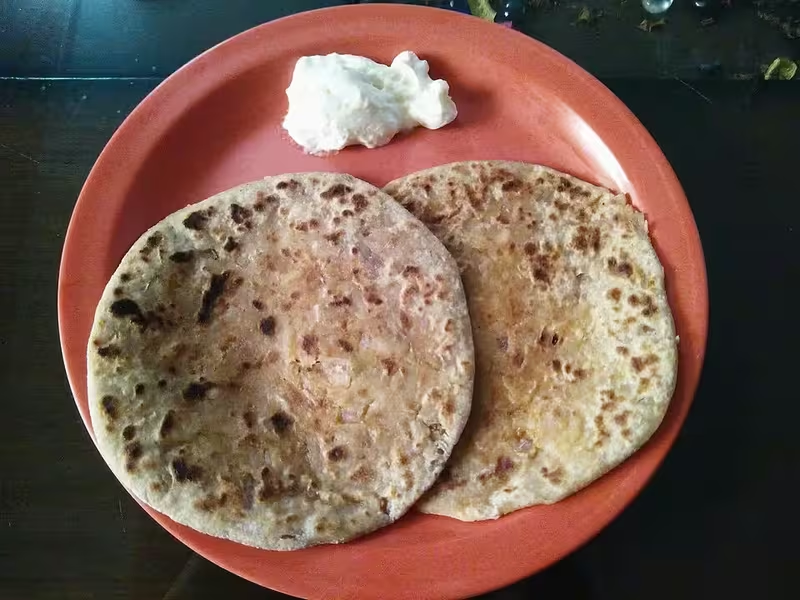


Overview
Paratha stands as one of the most beloved and versatile flatbreads in South Asian cuisine, distinguished by its characteristic layers, crispy exterior, and soft interior. Unlike the simpler roti or chapati, paratha is enriched with ghee, butter, or oil, which creates its signature flaky texture through a technique of folding and rolling that incorporates fat between layers of dough. The name itself derives from Sanskrit, reflecting the bread's ancient origins in the culinary traditions of the Indian subcontinent.
First mentioned in early medieval Sanskrit texts, paratha has evolved from a simple layered bread into a canvas for regional creativity. Today, it exists in countless variations across South Asia and beyond, from the stuffed aloo paratha of Punjab to the paper-thin Dhakai paratha of Bangladesh, from the robust Mughlai paratha filled with meat and eggs to the sweet versions enjoyed as desserts. What unites these diverse preparations is the fundamental technique of creating layers and the bread's role as both sustenance and celebration food.
The paratha's enduring popularity stems from its versatility and adaptability. It can be eaten plain with a simple dal or curry, stuffed with vegetables, paneer, or meat, wrapped around fillings to create rolls, or even sweetened for dessert. Its ability to remain relatively fresh during travel made it ideal for long journeys, while its substantial nature and rich flavor made it suitable for festive occasions. This humble bread has transcended its origins to become a global food, adapted by Indian diaspora communities worldwide while maintaining its essential character.
Etymology and Names
The word "paratha" has its roots in Sanskrit, likely derived from a combination of words related to layers of cooked dough. The term reflects the bread's defining characteristic—the creation of multiple layers through folding and rolling techniques. This etymological connection to layering appears consistently across most regional variations of the name, despite phonetic differences.
Across the Indian subcontinent, paratha is known by various regional names, each reflecting local linguistic patterns. In Punjab, it is often called "parontha" or "parantha," while Bengali speakers in both West Bengal and Bangladesh refer to it as "porota." In South India, particularly Tamil Nadu and Kerala, the flakier version is known as "porotta." The diversity of names extends to the Indian diaspora: in Trinidad and Tobago, it becomes "buss-up shut" (a phonetic rendering of "burst up shirt," describing its shredded appearance), while in Guyana it's called "oil roti," emphasizing its preparation method.
In Southeast Asian nations where Indian influence has been strong, paratha has been further adapted phonetically. In Myanmar, it is known as "htattaya," while Malaysia and Singapore use variations of "roti canai" for similar breads. Mauritius calls it "faratha," and the Maldives use "farata." Each name carries within it the history of migration, trade, and cultural exchange that brought this bread from the Indian subcontinent to tables around the world.
Historical Origins
The paratha's origins trace back to early medieval India, with Sanskrit texts providing the earliest written references to layered, fried flatbreads. The development of paratha likely coincided with the increasing sophistication of Indian cooking techniques and the availability of cooking fats like ghee, which enabled the creation of richer, more complex breads beyond simple unleavened flatbreads.
The evolution of paratha reflects broader patterns in South Asian culinary history. As regional cuisines developed distinct identities, paratha adapted to local tastes, ingredients, and cooking methods. In wheat-growing northern regions, paratha became a breakfast staple and daily bread, while in southern India, where rice predominated, paratha remained more of a special preparation, often made with refined flour (maida) rather than whole wheat.
The bread's portability and keeping qualities made it particularly valuable in pre-refrigeration eras. Travelers, merchants, and pilgrims often carried parathas on long journeys, as the high fat content helped preserve the bread longer than simple rotis. This practical advantage contributed to paratha's spread along trade routes throughout South Asia and beyond.
Cultural Exchange and Migration
The paratha's journey beyond South Asia tells a story of migration and cultural adaptation. During the colonial era and post-colonial period, Indian indentured laborers and migrants brought paratha to the Caribbean, Africa, Southeast Asia, and the Middle East. In each new location, the bread adapted to local ingredients and tastes while maintaining its essential character.
In Southeast Asia, where Indian influence through trade and migration stretches back centuries, paratha merged with local flatbread traditions. The Malaysian and Singaporean roti canai, while similar to paratha, developed its own techniques and serving styles. In Myanmar, htattaya became integrated into local breakfast culture. These adaptations demonstrate food's ability to serve as both cultural anchor and bridge.
The Caribbean variations, particularly Trinidad's buss-up shut, show how immigrant communities creatively adapted traditional foods with available ingredients and developed unique preparation methods. The theatrical technique of beating the cooked bread to create a shredded texture became a distinctive feature that set the Caribbean version apart from its South Asian ancestor.
Ingredients and Preparation
Key Ingredients
The fundamental ingredients of paratha are remarkably simple: whole wheat flour (atta), water, salt, and a cooking fat—traditionally ghee, though butter or cooking oil are commonly used. This simplicity allows the technique of preparation to shine through, creating the bread's characteristic texture and flavor. The quality of ingredients matters significantly; stone-ground whole wheat flour produces a more flavorful and nutritious bread, while pure ghee contributes a distinct nutty richness that butter or oil cannot fully replicate.
For stuffed variations, the filling ingredients vary widely based on regional preferences and seasonal availability. The most popular aloo (potato) paratha uses boiled, mashed potatoes mixed with spices like cumin, coriander, red chili powder, and garam masala. Other common stuffings include grated cauliflower (gobi), radish (mooli), paneer (cottage cheese), or mixed vegetables. Non-vegetarian versions incorporate minced meat, particularly in Mughlai paratha, along with eggs and additional spices.
The choice of cooking fat influences both flavor and texture. Ghee provides the most traditional taste and creates the crispiest exterior, while also being considered more sattvic (pure) in traditional dietary classifications. Butter offers a similar richness with a slightly different flavor profile, while oil produces a lighter, less rich bread that some prefer for everyday consumption.
Traditional Preparation
The preparation of basic paratha begins with making a soft dough from whole wheat flour, water, and salt, kneaded until smooth and elastic. After resting, the dough is divided into portions and rolled into circles. The traditional technique involves brushing the rolled dough with ghee, folding it into pleats or triangles, and then rolling it out again. This process creates layers of dough separated by fat, which, when cooked, produce the characteristic flaky texture.
The cooking process requires a hot tawa (griddle) or flat pan. The rolled paratha is placed on the hot surface and cooked until bubbles appear, then flipped. Ghee or oil is applied to both sides during cooking, and the paratha is pressed gently with a spatula to ensure even cooking and promote the development of crispy spots. The finished paratha should be golden-brown with darker spots, crispy on the outside yet soft and layered within.
For stuffed parathas, the technique differs slightly. A portion of dough is rolled into a small circle, the filling is placed in the center, and the edges are brought together to enclose the filling completely. This stuffed ball is then carefully rolled out again, taking care not to let the filling break through, and cooked as described above. Achieving the right balance—a thin enough paratha to cook properly without a thick, doughy texture, yet thick enough to contain the filling without tearing—requires practice and skill.
Regional Variations in Technique
The Dhakai paratha of Bangladesh represents perhaps the most technically demanding variation. Creating this ultra-flaky bread requires repeatedly oiling and folding the dough, then rolling it paper-thin—a process that can create up to 100 layers. The dough is often allowed to rest between foldings, and some recipes incorporate a small amount of milk or egg for additional richness and texture. The result is an extraordinarily delicate, crispy bread that shatters when torn, traditionally served with richly spiced chickpea curry (chhola).
South Indian porotta takes a different approach, typically using maida (refined flour) rather than whole wheat, which allows for even thinner rolling and more dramatic layering. The dough is often enriched with a small amount of egg or condensed milk. After rolling thin, the dough is gathered into a rope-like coil, then rolled flat again. Some preparations involve tossing and stretching the dough in the air, similar to pizza-making techniques, to achieve extreme thinness.
The Mughlai paratha represents the most elaborate variation, reflecting its royal origins. The paratha is stuffed with a mixture of minced meat (keema), eggs, onions, and aromatic spices. Some versions incorporate saffron, making them particularly luxurious. Unlike other stuffed parathas that are pan-fried, Mughlai paratha is often deep-fried in ghee, creating an especially rich, indulgent dish typically reserved for special occasions.
Cultural Significance
Daily Life and Meals
In North India and Pakistan, paratha holds a central place in breakfast culture. The classic combination of aloo paratha with yogurt, butter, and pickle constitutes a complete, satisfying meal that provides sustained energy through the morning. In traditional households, making fresh parathas for breakfast represents an act of care and domestic skill, with recipes and techniques passed down through generations, often from mother to daughter or within family traditions.
The paratha's versatility makes it suitable for various meal times and occasions. Plain parathas accompany lunch or dinner curries, while stuffed versions can constitute a complete meal. For travelers, students, and workers, parathas make convenient packed lunches, as they remain palatable even when cold, unlike rice-based dishes. This practicality has made paratha a favorite food for school tiffins, office lunches, and train journeys throughout South Asia.
In contemporary urban settings, paratha has evolved from exclusively home-cooked food to a popular street food and restaurant dish. Paratha stalls and specialized restaurants serve numerous stuffed varieties, allowing customers who might not have time to prepare elaborate breakfasts at home to enjoy freshly made parathas. Some establishments have become legendary for their paratha-making skills, attracting customers from across cities.
Festivals and Special Occasions
While paratha serves as everyday food, certain variations are reserved for special occasions. Puran poli, a sweet stuffed paratha filled with lentils and jaggery, is traditional during festivals like Holi and Gudi Padwa in Maharashtra. In Bengal, elaborately layered parathas might be prepared for special gatherings or religious celebrations. The Mughlai paratha, given its richness and complexity, typically appears at weddings, Eid celebrations, or other significant events.
The act of preparing parathas often brings families together, particularly during festivals when multiple generations gather in the kitchen. Rolling parathas while sharing stories, teaching younger family members the techniques, and collectively preparing feast meals reinforces family bonds and ensures the continuation of culinary traditions. These communal cooking experiences carry cultural knowledge beyond mere recipes, transmitting values, stories, and identity.
Social and Economic Dimensions
Historically, the type of paratha consumed often reflected economic status. Plain parathas or those stuffed with inexpensive vegetables like radish were everyday foods for working-class families, while parathas enriched with pure ghee, stuffed with paneer, or the lavish Mughlai paratha indicated greater prosperity. However, unlike some other foods in Indian cuisine, paratha was never exclusively associated with upper classes or particular caste groups, making it relatively democratic across social hierarchies.
The establishment of paratha shops and street stalls has created economic opportunities for countless families and entrepreneurs. Famous paratha shops, some operating for generations, have become local institutions and tourist attractions. In Old Delhi's Paranthe Wali Gali (Paratha Lane), shops have specialized in paratha-making since the 1870s, offering dozens of varieties and serving as both culinary destination and historical landmark.
Culinary Techniques and Skills
The art of paratha-making encompasses several distinct skills. Creating the proper dough consistency requires understanding how flour absorbs water and develops gluten. Too soft, and the paratha becomes difficult to roll and shape; too stiff, and it lacks the tender texture desired. Experienced cooks can judge dough readiness by feel, understanding how it should respond to kneading and how it changes during the resting period.
The layering technique distinguishes competent paratha-making from exceptional paratha-making. Creating well-defined layers requires the right amount of ghee—too little produces a dense bread lacking flakiness, while too much makes rolling difficult and results in greasy finished bread. The folding method also matters; some cooks prefer accordion-style pleating, others triangular folding, and each technique produces slightly different textures and appearances.
Temperature control during cooking represents another crucial skill. The griddle must be hot enough to cook the paratha through and create appealing brown spots without burning, yet not so hot that the exterior chars while the interior remains doughy. Knowing when to flip the paratha, how much ghee to add during cooking, and how firmly to press the bread comes from experience and attention. Master paratha-makers can cook multiple parathas simultaneously on large griddles, flipping and pressing each at exactly the right moment.
Evolution and Modern Interpretations
Contemporary Indian cuisine has seen creative experimentation with paratha, introducing fusion varieties that blend traditional techniques with global flavors. Cheese-stuffed parathas, chocolate parathas, pizza parathas with tomato and cheese, and parathas made with alternative grains like millet or quinoa reflect changing tastes and dietary preferences. Urban restaurants serve parathas with contemporary presentations, often deconstructed or paired with fusion accompaniments.
Health consciousness has influenced paratha preparation, with many cooks reducing the amount of ghee or oil used, incorporating whole grains, adding vegetables to the dough itself for additional nutrition, or using healthier cooking fats. Multigrain parathas, oats parathas, and parathas made with vegetable purees blended into the dough represent attempts to make this traditionally rich bread more aligned with contemporary nutritional awareness.
The packaged food industry has attempted to commercialize paratha, offering frozen stuffed parathas that require only reheating. While convenient, these mass-produced versions often lack the texture, flavor, and satisfaction of freshly made parathas. Nevertheless, they serve important purposes for diaspora communities seeking taste connections to home, busy families seeking convenient meal options, and food service operations requiring consistency and efficiency.
Global Spread and Diaspora Adaptations
The Indian diaspora has carried paratha worldwide, establishing it in communities far from South Asia. In the United Kingdom, Canada, the United States, and Australia, Indian restaurants and home cooks continue making parathas, sometimes adapting techniques to available ingredients or equipment. Whole wheat flour suitable for paratha-making isn't always easily available, leading some cooks to blend different flour types or adjust recipes for local conditions.
In Southeast Asia, paratha evolved into regional specialties predating recent migration waves. Malaysian roti canai and Singapore's similar versions have become national dishes, served at specialized restaurants called "mamak stalls" alongside tea pulled (teh tarik) and curries. The technique differs from Indian parathas, involving dramatic tossing and stretching of dough to achieve thinness, demonstrating how a food can be simultaneously familiar and distinctly localized.
The Caribbean variations, particularly Trinidad's buss-up shut and Guyana's oil roti, show how paratha adapted to island life. Served alongside Caribbean interpretations of Indian curries, these breads have become essential components of Indo-Caribbean cuisine. The unique beating technique that creates the shredded texture has no direct parallel in South Asian paratha preparation, representing a genuine culinary innovation developed in the diaspora.
Nutritional and Health Perspectives
Traditional Indian dietary philosophy, rooted in Ayurvedic principles, considers paratha a rajasic food—one that is rich, heating, and stimulating. The wheat provides sustained energy and fiber, while the ghee aids digestion and provides fat-soluble vitamins. However, the richness that makes paratha satisfying also means it should be consumed in moderation, particularly for those with sedentary lifestyles or digestive sensitivities.
From a modern nutritional perspective, paratha provides complex carbohydrates from whole wheat flour, some protein, and significant calories from the added fats. Stuffed parathas can add vegetables, increasing fiber and micronutrient content, or paneer, adding protein and calcium. The nutritional profile varies considerably based on preparation; parathas made with ghee and generous stuffing are more calorie-dense than lightly oiled plain parathas.
Contemporary health-conscious preparations attempt to retain paratha's appeal while reducing potential concerns. Using minimal oil, incorporating vegetables into the dough, choosing healthier stuffing ingredients, and pairing parathas with yogurt and vegetable sides can create more balanced meals. Whole grain versions provide additional fiber and nutrients compared to those made with refined flour.
Preservation of Tradition
Despite modern innovations and health adaptations, traditional paratha-making remains valued as a culinary skill and cultural practice. Families continue teaching children to make parathas, understanding that this knowledge represents more than just cooking ability—it carries cultural identity and connects generations. Food blogs, YouTube channels, and social media have become new venues for sharing traditional techniques, allowing knowledge to spread beyond family circles.
Regional pride in distinctive paratha styles motivates preservation efforts. Bengali communities take pride in Dhakai paratha's complexity, Punjabis in their stuffed variations, and specific cities in their unique preparations. Food festivals, cultural events, and culinary tourism increasingly recognize paratha as heritage worth celebrating and preserving, not merely as food but as cultural expression.
See Also
- Traditional Indian bread-making techniques
- Regional variations in Indian flatbreads
- Wheat cultivation and usage in Indian cuisine
- Street food culture across the Indian subcontinent
- Indo-Caribbean culinary traditions