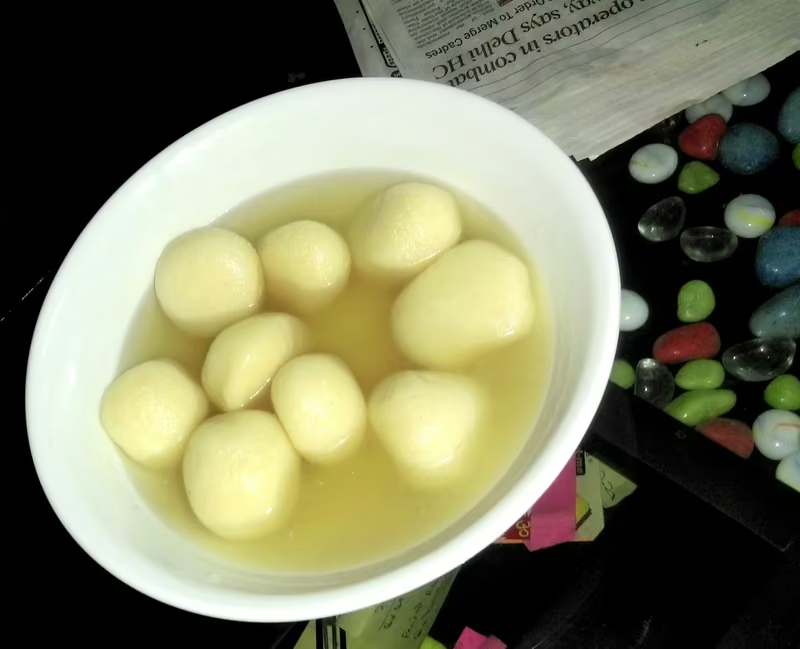


Overview
Rasgulla, known as rosogolla in Bengali and rasagola in Odia, stands as one of India's most iconic and beloved desserts. These delicate, spongy balls of chhena (cottage cheese) soaked in light sugar syrup represent the pinnacle of eastern Indian sweet-making traditions. The dessert's simple yet elegant composition - just chhena and sugar - belies the skill required to achieve its characteristic soft, porous texture that melts in the mouth.
Popular throughout the Indian subcontinent and among South Asian diaspora communities worldwide, rasgulla transcends its regional origins to become a pan-Indian cultural symbol. Whether served at room temperature, chilled, or even warm, this syrupy delight graces celebrations from intimate family gatherings to grand festivals, holding particular significance during Durga Puja in West Bengal and Ratha Yatra in Odisha.
The dessert embodies the innovative spirit of Indian confectionery, representing a relatively modern development in the ancient tradition of Indian sweets. Unlike many Indian desserts based on khoya (reduced milk) or flour, rasgulla's foundation in chhena marked a significant evolution in sweet-making techniques, creating an entirely new category of soft, syrup-based confections.
Etymology and Names
The name "rasgulla" derives from two components: "ras" meaning juice or syrup in Hindi and Sanskrit, and "gulla" meaning ball or round shape. This straightforward naming convention describes exactly what the dessert is - a ball soaked in syrup. In Bengali, the sweet is called "roshogolla," where "rosho" similarly means juice or essence, maintaining the same descriptive tradition.
The Odia name "rasagola" follows the identical etymological pattern, with "rasa" meaning juice and "gola" meaning round or ball-shaped. Regional pronunciations and spellings vary across eastern India, with "rasgullah" being another common variation, particularly in areas with stronger Persian linguistic influence where "gullah" (meaning ball or round) is preferred.
The name "Pahala rasa gola" specifically refers to the traditional Odia variant from the Pahala region in Khurda district, Odisha, which has its own distinctive preparation method and characteristics. This regional nomenclature highlights the deep-rooted local traditions associated with the sweet.
Historical Origins
The origins of rasgulla remain one of the most debated topics in Indian culinary history, with both West Bengal and Odisha laying historical claim to its invention. This dispute goes beyond mere regional pride, touching on cultural identity and heritage preservation.
The West Bengal narrative centers around Nobin Chandra Das, a confectioner from Kolkata who is widely credited with creating the modern spongy rasgulla in the mid-19th century. According to this account, Das perfected the technique of cooking chhena dumplings in sugar syrup, creating the distinctive soft, porous texture that defines rasgulla today. His innovation revolutionized Bengali sweet-making and established a new paradigm in Indian confectionery.
Odisha's claim rests on a much older tradition, asserting that rasagola has been offered to Lord Jagannath at the Puri temple for centuries, predating the Bengali version by hundreds of years. According to Odia tradition, the sweet plays a crucial role in the "Niladri Bije" ritual during Ratha Yatra, where Lord Jagannath offers rasagola to Goddess Lakshmi as an appeasement after returning from his annual sojourn.
Cultural Exchange and Evolution
The development of chhena-based sweets in eastern India represents a fascinating case of cultural adaptation. Before Portuguese and other European influences introduced the technique of curdling milk with acidic agents, Indian sweet-making primarily relied on khoya and milk-based preparations. The introduction of paneer and chhena-making techniques enabled entirely new categories of sweets to emerge.
Rasgulla's evolution reflects the innovative spirit of Bengali and Odia confectioners who experimented with these new ingredients. The key innovation lay not just in using chhena, but in discovering that properly kneaded chhena could create dumplings that would remain intact during vigorous boiling while developing a spongy, syrup-absorbing texture.
The GI Tag Dispute
The cultural significance of rasgulla reached legal dimensions when both West Bengal and Odisha sought Geographical Indication (GI) tags for their versions. In 2017, West Bengal received GI status for "Banglar Rosogolla," while in 2019, Odisha secured GI protection for "Odisha Rasagola" (specifically the Pahala variant). This resolution acknowledged that both regions have distinct, authentic rasgulla traditions worthy of protection and recognition.
Ingredients and Preparation
Key Ingredients
The beauty of rasgulla lies in its simplicity, requiring just three primary components:
Chhena (Cottage Cheese): The foundation of rasgulla, chhena is fresh cheese made by curdling milk with an acidic agent like lemon juice or vinegar. The quality and texture of chhena directly determine the final product's success. It must be fresh, not grainy, and properly drained to remove excess moisture while retaining enough to create the right consistency.
Sugar: Used in two contexts - a small amount may be mixed into the chhena dough, while the primary sugar content comes from the syrup in which the dumplings are cooked. The syrup's concentration is crucial; too thick and it won't penetrate the dumplings properly, too thin and the rasgullas won't absorb enough sweetness.
Water: Forms the base of the cooking syrup and affects the final texture and sweetness level.
In variations like nolen gurer roshogolla, date palm jaggery replaces white sugar, creating a darker, more complex flavor profile particularly prized during winter months when fresh nolen gur (date palm jaggery) is available.
Traditional Preparation
Creating perfect rasgulla requires precision and patience, with each step critical to achieving the characteristic spongy texture:
Preparing the Chhena: Fresh milk is brought to a boil and curdled using lemon juice, vinegar, or citric acid. The curdled milk is strained through muslin cloth, and the resulting chhena is thoroughly washed under cold water to remove any acidic taste. The chhena is then hung to drain excess moisture for 30-45 minutes.
Kneading: This is perhaps the most critical step. The chhena must be kneaded on a clean surface for 8-10 minutes until it becomes smooth, non-grainy, and slightly greasy. Proper kneading develops the texture that allows the dumplings to hold together during cooking while remaining spongy. The chhena should form a smooth dough that doesn't stick to the hands.
Shaping: The kneaded chhena is divided into equal portions and rolled into smooth, crack-free balls. Any cracks will cause the dumplings to break during cooking. The balls should be compact but not too tightly pressed.
Preparing the Syrup: Sugar is dissolved in water (typically a 1:4 ratio) and brought to a boil. The syrup should be kept at a rolling boil throughout the cooking process.
Cooking: The dumplings are gently added to the boiling syrup, which must be maintained at a vigorous boil. A lid is placed on the pot, and the dumplings are cooked for 10-15 minutes. During this time, they nearly double in size, developing their characteristic spongy texture as the syrup penetrates and creates air pockets within.
Cooling: After cooking, the rasgullas are allowed to cool in the syrup, absorbing more sweetness and developing their final texture.
Regional Variations
Bengali Roshogolla: The classic version is pure white, extremely spongy, and served in light, clear sugar syrup. Bengali rasgullas are known for their delicate texture that requires gentle handling.
Nolen Gurer Roshogolla: A winter specialty from Bengal, these are made with date palm jaggery (nolen gur), giving them a caramel-like color and complex, rich flavor. The jaggery adds depth that complements the delicate chhena.
Pahala Rasa Gola: The traditional Odia version from Pahala is often darker in color and slightly firmer in texture than Bengali rasgulla. The Odia preparation method may involve different proportions and cooking times, resulting in subtle but distinctive differences.
Baked Rosogolla: A modern innovation where cooked rasgullas are briefly baked or caramelized under high heat, creating a golden-brown, slightly crispy exterior while maintaining the soft interior. This variation adds textural contrast to the traditional all-soft version.
Colored Variations: Orange and red rasgullas represent festive variations where food coloring and sometimes flavoring agents like rose essence or kewra are added. These are popular in certain regions and for special occasions.
Cultural Significance
Festivals and Occasions
Rasgulla holds deep cultural significance across eastern India, transcending its role as merely a dessert to become an integral part of religious and social traditions.
Durga Puja: In West Bengal, rasgulla is practically synonymous with Durga Puja celebrations. Sweet shops see their highest sales during this festival, and offering rasgulla to the goddess and distributing it as prasad (blessed food) is a cherished tradition.
Ratha Yatra and Niladri Bije: In Odisha, rasagola plays a crucial ritual role during Ratha Yatra. According to tradition, when Lord Jagannath returns to the temple after his annual journey, Goddess Lakshmi is upset about being left behind. To appease her, rasagola is offered - a tradition called "Niladri Bije" that highlights the sweet's ancient religious significance in Odia culture.
Weddings and Celebrations: Across eastern India, no celebration is complete without rasgulla. It's served at weddings, thread ceremonies, birthdays, and religious functions, representing sweetness and auspiciousness.
Social and Religious Context
As a vegetarian, chhena-based sweet, rasgulla fits comfortably within satvik dietary traditions. Unlike some Indian sweets that use eggs or animal fats, rasgulla's simple, pure ingredients make it acceptable across various religious and dietary restrictions, contributing to its widespread popularity.
The sweet's association with temple offerings, particularly at the Jagannath Temple in Puri, elevates it beyond mere food to a sacred offering (prasad). This religious dimension adds layers of meaning to its consumption, connecting devotees to divine blessings through taste.
Family Traditions
In Bengali and Odia households, the ability to make perfect rasgulla is considered a mark of culinary skill, often passed down through generations. Many families have their own subtle variations in technique - the exact amount of kneading, the precise syrup concentration, the cooking time - each believed to create the perfect texture.
The practice of buying rasgulla from renowned sweet shops is also a tradition, with families loyal to particular establishments known for their exceptional rasgullas. Famous shops like K.C. Das (descendants of Nobin Chandra Das) in Kolkata have become institutions, with their rasgullas considered benchmarks of quality.
Culinary Techniques
The Science of Sponge
The spongy texture that defines rasgulla results from a complex interplay of chemistry and technique. When chhena dumplings are added to boiling syrup, several processes occur simultaneously:
Steam Formation: The high temperature causes moisture within the dumplings to convert to steam. If the chhena has been properly kneaded to develop elasticity, it can expand to accommodate this steam, creating air pockets.
Protein Network: Proper kneading develops a protein network in the chhena that's strong enough to hold together during vigorous boiling but porous enough to allow syrup penetration.
Syrup Penetration: As the dumplings expand and their internal structure becomes porous, the sugar syrup penetrates, sweetening throughout while maintaining structural integrity.
Size Increase: Well-made rasgullas nearly double in size during cooking, a visual indicator of successful technique. This expansion is essential for creating the characteristic spongy texture.
Critical Success Factors
Chhena Quality: The chhena must be fresh and properly prepared. Over-draining makes it too dry and crumbly; under-draining results in dumplings that disintegrate during cooking.
Kneading Duration: Insufficient kneading leaves the chhena grainy and unable to hold together; over-kneading can make it too dense and rubbery.
Boiling Vigor: The syrup must be kept at a rolling boil. Insufficient heat prevents proper expansion; excessive heat can cause the dumplings to break apart.
Pot Size: The pot must be large enough for the rasgullas to expand without crowding, ensuring even cooking and syrup circulation.
Evolution Over Time
While rasgulla's basic form has remained consistent, various innovations have emerged over time, reflecting both traditional creativity and modern culinary experimentation.
Traditional Innovations
Different regions developed their own variations based on local tastes and available ingredients. The nolen gurer version represents a seasonal adaptation, taking advantage of winter's fresh date palm jaggery. The Pahala tradition evolved its own distinct preparation methods that differ subtly from Bengali techniques.
Modern Adaptations
Contemporary sweet makers have introduced numerous variations:
Baked Rasgulla: Adding a caramelized exterior through baking creates textural contrast while maintaining the traditional soft interior.
Filled Rasgulla: Some modern versions include fillings like dry fruits, saffron-infused cream, or flavored pastes, creating surprise elements within the traditional form.
Fusion Desserts: Rasgulla has been incorporated into ice creams, cakes, and other fusion desserts, demonstrating its versatility and adaptability to contemporary tastes.
Commercial Production: Industrial production techniques have made rasgulla available in canned and packaged forms with extended shelf life, spreading its popularity beyond eastern India to national and international markets.
Restaurant Presentations
Fine dining establishments have elevated rasgulla presentation, serving it with garnishes like saffron strands, crushed pistachios, edible silver leaf, or paired with contemporary elements like chocolate sauce or fruit compotes, creating sophisticated dessert experiences while honoring traditional flavors.
Famous Establishments
Historic Sweet Shops
K.C. Das (Kolkata): Founded by the descendants of Nobin Chandra Das, this establishment claims direct lineage to the modern rasgulla's inventor. Their rasgullas are considered by many to represent the authentic Bengali style.
Balaram Mullick and Radharaman Mullick (Kolkata): These historic sweet shops have been serving traditional Bengali rasgullas for generations, maintaining time-tested recipes and techniques.
Odisha Traditions
Pahala Sweet Makers: The town of Pahala in Khurda district is renowned for its traditional rasagola, with numerous local sweet makers maintaining centuries-old preparation methods that received GI recognition.
Puri Temple Sweet Shops: Establishments near the Jagannath Temple specialize in producing rasagola for temple offerings, following specific traditional protocols.
Modern Chains
Contemporary sweet shop chains across India have popularized rasgulla nationally, though connoisseurs often prefer traditional establishments for authentic taste and texture.
Health and Nutrition
Traditional Perspective
In traditional Indian dietary systems, rasgulla is considered relatively light compared to many other sweets. Being based on fresh cheese rather than concentrated milk (khoya) or fried ingredients, it's often viewed as a more digestible option.
The fresh chhena provides protein and calcium, though these nutritional benefits are balanced against the significant sugar content. Traditional preparation uses no added fats, making it lower in calories than many other Indian sweets.
Ayurvedic View
Rasgulla falls into the satvik category - pure, fresh, and considered suitable for maintaining mental clarity and spiritual practices. The use of fresh milk products and sugar without heavy spices or excessive processing aligns with satvik principles.
However, like all sweets, it's recommended in moderation. Ayurvedic tradition suggests consuming sweets at the beginning of a meal to satisfy the sweet taste requirement, potentially reducing overall sugar consumption throughout the meal.
Modern Nutritional Perspective
A typical rasgulla contains approximately 100-150 calories, primarily from sugars and protein. While it provides some calcium and protein from the chhena, it's high in simple sugars. The lack of fats makes it lower in calories than many other desserts, but the sugar content requires moderation, especially for those managing diabetes or weight.
The syrup-soaking method means much of the sweetness can actually be reduced by serving rasgullas squeezed of excess syrup, a practice some health-conscious consumers adopt.
Modern Relevance
Contemporary Popularity
Rasgulla continues to enjoy immense popularity across India and among South Asian communities worldwide. Its presence has expanded far beyond eastern India, becoming available in sweet shops throughout the country. The dessert represents Indian cuisine in international contexts, often appearing on Indian restaurant menus globally.
Cultural Preservation
The GI tag recognition for both Bengali and Odia versions represents growing awareness about preserving culinary heritage. This legal protection helps maintain traditional preparation methods and acknowledges the cultural significance of regional food traditions.
Sweet-making competitions featuring rasgulla have become popular, keeping traditional skills alive while encouraging innovation. These events celebrate craftsmanship and pass knowledge to younger generations who might otherwise pursue other careers.
Global Spread
The Indian diaspora has carried rasgulla traditions worldwide, with Indian sweet shops in major international cities offering authentic rasgulla. Some non-Indian restaurants have incorporated rasgulla into fusion desserts, introducing the sweet to new audiences.
Innovation and Tradition
Modern sweet makers balance innovation with tradition, creating new variations while respecting traditional methods. This dynamic interplay ensures rasgulla remains relevant to contemporary tastes while maintaining its cultural authenticity.
Social media has created new appreciation for traditional sweet-making, with videos of rasgulla preparation gaining viral attention and educating global audiences about this distinctive Indian dessert.