

Overview
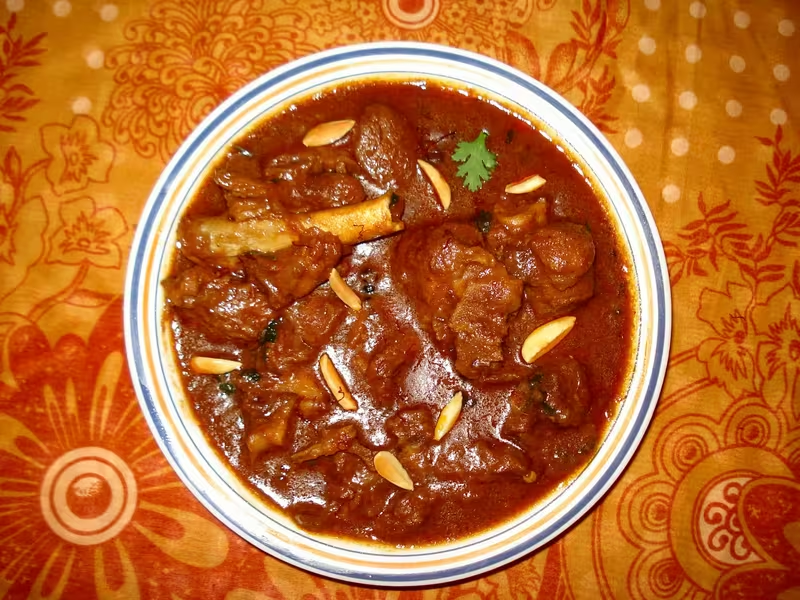
Rogan Josh stands as one of the most celebrated dishes in Kashmiri cuisine, renowned for its aromatic complexity, tender meat, and distinctive deep red color. This curried meat preparation, traditionally made with lamb or goat, represents the culinary sophistication of the Kashmir Valley and holds pride of place in the Wazwan, the region's elaborate multi-course ceremonial feast. The dish epitomizes the unique character of Kashmiri cooking, which blends Persian influences with local ingredients and techniques to create flavors found nowhere else in India.
What distinguishes Rogan Josh from other Indian curries is its authentically vibrant red hue, derived not from tomatoes—which are absent in traditional recipes—but from alkanet root (ratanjot), a natural colorant that has been used in Kashmiri cooking for centuries. The meat is slow-cooked in yogurt-based gravy with aromatic Kashmiri spices, resulting in tender pieces bathed in a rich, flavorful sauce that balances heat, tang, and warmth. The dish's preparation requires patience and skill, with each ingredient added at precisely the right moment to build layers of complex flavor.
Beyond its culinary appeal, Rogan Josh carries deep cultural significance in Kashmir. It is central to celebrations, weddings, and religious occasions, serving as a dish that brings families and communities together. The preparation and serving of Rogan Josh in the context of a Wazwan represents the height of Kashmiri hospitality, where food becomes an expression of welcome, respect, and cultural pride. Today, while Rogan Josh has traveled beyond Kashmir to become a beloved dish across India and the world, its authentic preparation remains closely guarded by traditional Kashmiri cooks who understand the nuances that make this dish truly special.
Etymology and Names
The name "Rogan Josh" derives from Persian, reflecting the historical cultural and linguistic influences on Kashmiri cuisine. "Rogan" (or "roghan") translates to oil or fat, while "josh" means heat, intensity, or passion. Together, the name evocatively describes the cooking method: meat braised in aromatic oil with passionate heat, creating the dish's characteristic richness and depth of flavor.
In various transliterations and regional contexts, the dish is also spelled as "Roghan Josh" or "Roghan Ghosht," with "ghosht" being the Persian and Urdu word for meat. In Kashmir, where both Kashmiri and Urdu are spoken, locals might refer to it in the native tongue, though the Persian-derived name remains most common. The Arabic script rendering روگن جوش is used in Urdu and Persian contexts, maintaining the dish's connection to the broader Persian culinary tradition that influenced much of North Indian and Kashmiri cooking.
The etymological roots speak to Kashmir's position as a historical crossroads where Persian, Central Asian, and Indian culinary traditions met and merged. Persian influence on Kashmiri cuisine came through various waves of cultural exchange, including the medieval period when Persian was the court language and Persian-speaking peoples settled in the region. This linguistic heritage is preserved in many Kashmiri dishes, with Rogan Josh being perhaps the most famous example of how Persian culinary vocabulary became embedded in the subcontinent's food culture.
Historical Origins
Rogan Josh's origins are deeply intertwined with Kashmir's complex culinary history, though precise dating remains uncertain. The dish is believed to have developed during the medieval period when Kashmir experienced significant Persian and Central Asian influence. This was an era when the Kashmir Valley served as an important waypoint on trade routes connecting Central Asia with the Indian subcontinent, facilitating not just commercial exchange but also the movement of people, ideas, and culinary traditions.
The development of Rogan Josh as we know it today likely occurred over centuries, with the dish evolving through the contributions of various communities in Kashmir. The Kashmiri Pandit community, known for their sophisticated culinary traditions, played a significant role in developing many of Kashmir's signature dishes. However, Rogan Josh as a meat dish is primarily associated with Kashmiri Muslim cuisine, reflecting the broader Islamic culinary traditions that emphasize meat preparation with aromatic spices.
The dish's inclusion as a main course in the Wazwan—Kashmir's legendary multi-course feast—speaks to its elevated status within Kashmiri culinary hierarchy. The Wazwan itself is a centuries-old tradition, believed to have been formalized during the reign of various rulers who patronized elaborate feasting traditions. Rogan Josh's position as one of the central dishes in this feast indicates that by the time the Wazwan tradition was established in its recognizable form, Rogan Josh had already achieved its status as an essential expression of Kashmiri culinary art.
Cultural Exchange and Evolution
The development of Rogan Josh reflects Kashmir's unique position as a meeting point of diverse culinary traditions. The use of yogurt as a cooking medium is characteristic of Indian and Central Asian cuisines, while the aromatic spicing and braising techniques show Persian influence. The emphasis on subtle, warming spices rather than aggressive heat distinguishes Kashmiri cuisine from other regional Indian cooking styles, and Rogan Josh exemplifies this approach perfectly.
The traditional use of alkanet root for coloring, rather than the tomatoes common in modern adaptations, points to the dish's pre-colonial origins. Alkanet, a flowering plant whose root produces a deep red dye, was historically available in the region and had been used in traditional medicine and cooking long before European contact brought New World ingredients like tomatoes to India. This authentic coloring method remained standard in traditional Kashmiri households even as commercial adaptations elsewhere began using Kashmiri red chilies or tomatoes for color.
Ingredients and Preparation
Key Ingredients
At the heart of authentic Rogan Josh is high-quality lamb or goat meat, traditionally cut into substantial pieces that can withstand long, slow cooking. Kashmiri cooks prefer meat with some fat, as this contributes to the dish's richness and helps carry the aromatic flavors. The meat is typically from the shoulder or leg, portions that become exceptionally tender when braised slowly in the yogurt-based gravy.
Alkanet root (ratanjot) is the signature ingredient that gives traditional Rogan Josh its distinctive deep red color. This natural colorant is steeped in oil at the beginning of cooking, releasing its vibrant pigment without adding any significant flavor. In authentic preparation, this step is crucial—the colored oil becomes the medium in which the spices bloom and the meat is eventually braised.
Kashmiri red chilies, known for their bright color and relatively mild heat, provide warmth without overwhelming spice. Unlike the fiery chilies used in other regional Indian cuisines, Kashmiri chilies contribute to the dish's characteristic ruby hue while maintaining a balanced heat level. The yogurt serves multiple purposes: it acts as a tenderizer for the meat, creates the base for the gravy, and adds a subtle tang that balances the richness of the dish.
Aromatic spices including fennel seeds, green cardamom, cloves, bay leaves, and dried ginger powder create the complex flavor profile that makes Rogan Josh distinctive. Importantly, traditional Kashmiri Rogan Josh does not include onions, garlic in large quantities, or tomatoes—ingredients that became common in restaurant versions outside Kashmir but which alter the authentic character of the dish.
Traditional Preparation
The preparation of authentic Rogan Josh begins with heating mustard oil or ghee in a heavy-bottomed vessel, traditionally a copper degchi. Alkanet root is steeped in the hot oil until it releases its red color, then removed. The meat pieces are added to this colored oil and seared until they develop a light crust, sealing in their juices.
Once the meat is seared, the aromatics are added—ginger paste, fennel powder, and Kashmiri chili powder—which are fried briefly to release their essential oils. The heat is then reduced, and beaten yogurt is added gradually while stirring constantly to prevent curdling. This yogurt addition is perhaps the most critical step in the cooking process, requiring patience and attention to achieve a smooth gravy.
After the yogurt is incorporated, the dish is covered and allowed to braise slowly over low heat. Traditional cooks might transfer the vessel to a tandoor or place it over dying coals, allowing the meat to cook gently in its own steam. This slow cooking process can take two to three hours, during which the meat becomes extraordinarily tender and the gravy reduces to a thick, clinging consistency.
Whole spices—cardamom pods, cloves, and bay leaves—are added during the braising process to infuse their fragrances into the dish. As the cooking progresses, some cooks add small amounts of water if needed, though the goal is to concentrate flavors rather than dilute them. The dish is considered ready when the meat is tender enough to fall apart at the slightest pressure and the oil separates from the gravy, rising to the surface—a sign called "tarkari" in Kashmiri cooking that indicates proper preparation.
Regional Variations
While authentic Kashmiri Rogan Josh maintains specific characteristics, the dish has been adapted in various regions of India and beyond. In Punjab and other parts of North India, restaurant versions often include onions and tomatoes, creating a thicker, more familiar gravy but diverging from the traditional Kashmiri preparation. These adaptations typically increase the heat level and may omit the signature alkanet root coloring in favor of tomatoes or additional red chili powder.
In Kashmiri Hindu (Pandit) cuisine, variations exist that might use different spicing or include additional ingredients like asafoetida, which is traditionally avoided in Muslim preparations. Some Pandit versions also incorporate ground almonds or other nuts into the gravy, adding richness and body.
International adaptations, particularly in British and American Indian restaurants, have further modified the dish, often making it milder and sweeter to suit local palates. These versions might include cream, coconut milk, or even food coloring—departures from tradition that, while sometimes delicious, represent different dishes altogether from authentic Kashmiri Rogan Josh.
Cultural Significance
Wazwan Tradition
Rogan Josh occupies a position of honor within the Wazwan, the traditional Kashmiri multi-course feast that represents the pinnacle of the region's culinary tradition. The Wazwan is served at weddings, religious celebrations, and important social occasions, with guests seated in groups of four around large copper platters called traems. Rogan Josh typically appears in the middle courses, one of several meat dishes that showcase different cooking techniques and flavor profiles.
The preparation and serving of Rogan Josh in a Wazwan context is governed by elaborate customs and etiquette. The dish is prepared by specialized cooks called wazas, who train for years to master the techniques required for authentic Kashmiri cuisine. The act of serving and eating Rogan Josh becomes part of a larger ritual of hospitality, where the quality of the food reflects the host's respect for their guests and the importance of the occasion being celebrated.
Social and Religious Context
In Kashmir's Muslim community, Rogan Josh is a celebratory dish served during Eid and other religious festivals. The use of halal meat prepared according to Islamic dietary laws is essential, and the dish's richness makes it appropriate for special occasions when ordinary daily fare gives way to festive abundance. The communal aspect of preparing and sharing Rogan Josh reinforces social bonds and community identity.
For many Kashmiri families, the recipe for Rogan Josh is a treasured inheritance, passed down through generations with each family maintaining their own subtle variations. These family recipes become markers of identity and continuity, connecting present generations with their ancestors and preserving culinary knowledge that might otherwise be lost. The act of teaching a younger family member to prepare Rogan Josh properly is thus not merely about cooking instruction but about transmitting cultural values and maintaining heritage.
Symbol of Hospitality
In Kashmiri culture, serving Rogan Josh to guests represents the ultimate expression of welcome and respect. The dish's labor-intensive preparation and expensive ingredients make it a significant offering, one that demonstrates the host's willingness to invest time and resources to honor their visitors. This tradition of generous hospitality, embodied in dishes like Rogan Josh, is central to Kashmiri social life and has been maintained despite the region's many challenges and changes over the centuries.
Culinary Techniques
The preparation of authentic Rogan Josh relies on several specialized techniques that distinguish it from other curries. The initial blooming of spices in colored oil, called "chaunk" or tempering in broader Indian cooking, must be timed precisely to extract maximum flavor without burning the spices. This technique requires understanding how different spices release their aromatics at different temperatures and rates.
The yogurt incorporation technique, known as "dahi ka bharta" in some culinary traditions, prevents curdling while creating a smooth, integrated gravy. This is achieved by using room-temperature yogurt that has been beaten until smooth, adding it gradually while stirring constantly, and maintaining moderate heat throughout the process. Many novice cooks fail at this step, resulting in a grainy, separated gravy rather than the silky texture characteristic of proper Rogan Josh.
The slow braising that follows the yogurt addition is essentially a form of dum cooking, though without the sealed vessel and dough typically associated with formal dum pukht. The meat cooks in its own steam and the moisture from the yogurt, becoming tender while the flavors meld and intensify. This technique requires patience and trust in the process—resisting the temptation to stir frequently or add liquid unnecessarily.
Evolution Over Time
While Rogan Josh has ancient roots, the dish has not remained static. The introduction of new ingredients and cooking technologies has influenced how the dish is prepared, even in Kashmir. Pressure cookers have made the slow braising process faster, though purists argue this changes the texture and depth of flavor. Gas stoves have replaced traditional clay ovens and coal fires in many kitchens, altering heat distribution and cooking dynamics.
The globalization of Indian cuisine has spread Rogan Josh far beyond Kashmir, but this dissemination has often come with modifications. Restaurant versions designed for broad appeal typically use more familiar ingredients and milder spicing. These adaptations have made Rogan Josh accessible to international audiences but have also created confusion about what constitutes an authentic preparation.
In recent decades, there has been a revival of interest in traditional Kashmiri cooking methods and authentic recipes. Younger generations of Kashmiris, both in the valley and in diaspora communities, have begun documenting family recipes and traditional techniques, recognizing the importance of preserving this culinary heritage. Food historians and culinary anthropologists have also contributed to this preservation effort, studying traditional Wazwan preparations and documenting the knowledge of master wazas before it is lost.
Modern Relevance
Today, Rogan Josh remains deeply important in Kashmir itself, where traditional preparations continue at weddings and celebrations. The dish has also become a symbol of Kashmiri identity and culture, particularly important during periods when the region has faced conflict and uncertainty. Maintaining culinary traditions like Rogan Josh preparation becomes an act of cultural preservation and resistance against forces that threaten to erode regional distinctiveness.
Outside Kashmir, Rogan Josh has become one of the most recognizable Indian dishes internationally, featured on restaurant menus worldwide. While these versions often differ significantly from authentic Kashmiri preparation, they have introduced millions of people to at least a approximation of this culinary tradition. This global presence has both benefits and drawbacks—it spreads awareness of Kashmiri cuisine but may also create misconceptions about authentic flavors and methods.
In contemporary Indian cuisine, there is growing appreciation for regional authenticity and traditional methods. High-end restaurants in major cities have begun offering more authentic versions of Rogan Josh, sometimes collaborating with Kashmiri chefs or researching traditional recipes. This trend reflects broader changes in how Indian cuisine is understood and presented, moving away from homogenized "Indian food" toward recognition of the subcontinent's diverse regional traditions.
The dish continues to evolve, with modern chefs sometimes creating fusion versions or adaptations that play with traditional elements while introducing new ingredients or techniques. While controversial among traditionalists, these innovations demonstrate that Rogan Josh remains a living tradition, not a museum piece—a dish that continues to inspire creativity while maintaining its essential character and cultural significance.
Preservation of Tradition
Efforts to preserve authentic Rogan Josh preparation are ongoing in Kashmir and among diaspora communities. Some families maintain detailed written recipes, while others rely on oral tradition and hands-on teaching. Culinary workshops and cultural festivals sometimes feature demonstrations by master wazas, providing opportunities for younger generations to learn traditional techniques and understand the cultural context of this important dish.
The challenge facing Rogan Josh, like many traditional dishes, is balancing preservation with evolution. As ingredients, cooking technologies, and dietary preferences change, the question becomes how much adaptation is acceptable while still maintaining the dish's essential character and cultural meaning. This tension between tradition and modernity continues to shape how Rogan Josh is prepared, served, and understood both within Kashmir and in the wider world.