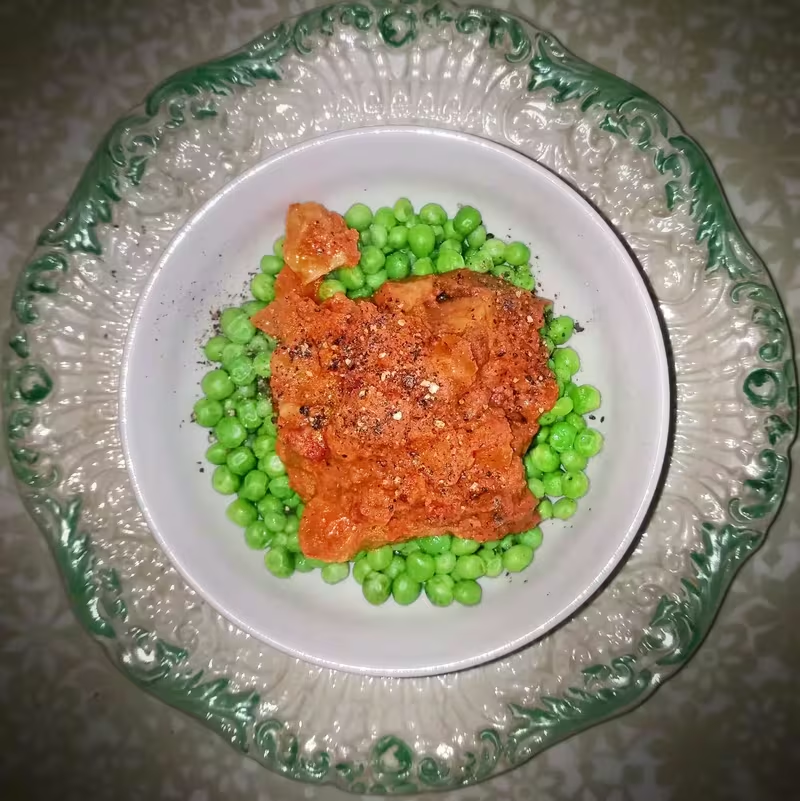


Overview
Vindaloo stands as one of Indian cuisine's most fascinating examples of culinary fusion and cultural transformation. Known globally as an intensely spicy, fiery curry that has become a staple of British-Indian curry houses and restaurants worldwide, vindaloo's true story is far more nuanced than its reputation suggests. The dish originated in Goa, India's smallest state on the western coast, where it emerged as a distinctive blend of Portuguese and Indian culinary traditions during the colonial period.
The original Goan dish, properly spelled "vindalho," is actually a mildly spiced pork preparation that bears little resemblance to the blazing red curry served in restaurants around the world. This transformation from a gentle Portuguese-inspired dish to an international symbol of extreme spiciness represents not just culinary evolution, but also the complex ways in which food adapts across cultures, borders, and colonial histories.
Understanding vindaloo requires appreciating both its authentic Goan roots and its British-Indian incarnation, recognizing that both versions have legitimate places in the broader story of Indian cuisine's global journey.
Etymology and Names
The name "vindaloo" derives directly from the Portuguese dish "carne de vinha d'alhos," which translates to "meat in wine-garlic marinade." This etymology reveals the dish's colonial origins and its fundamental preparation method. The Portuguese term "vinha d'alhos" (wine-garlic) was gradually corrupted through local pronunciation and transliteration into "vindalho" in Goan usage, and eventually further anglicized to "vindaloo" in British-Indian contexts.
In Goa, the dish is traditionally known as "vindalho," maintaining closer phonetic ties to its Portuguese heritage. The alternative spelling "vindahloo" also appears in some contexts, particularly in restaurant menus and British-Indian culinary literature. These variations in spelling reflect the dish's journey across linguistic and cultural boundaries, from Portuguese colonizers to Goan Catholics to British curry enthusiasts and eventually to global audiences.
The etymology is particularly significant because it preserves the memory of wine in the original recipe—a ingredient that was replaced with palm vinegar or toddy vinegar in Goan adaptations, as wine was less readily available and local vinegars were more accessible in the Indian context.
Historical Origins
Portuguese Colonial Influence
Vindaloo's story begins with the Portuguese colonization of Goa in 1510, when Afonso de Albuquerque conquered the region for Portugal. The Portuguese brought with them their culinary traditions, including various preservation techniques essential for long sea voyages. Among these was "carne de vinha d'alhos," a method of preserving meat by marinating it in wine, garlic, and mild spices.
This Portuguese dish served a practical purpose: the acidic wine marinade helped preserve pork during long journeys and in tropical climates where refrigeration was unavailable. When Portuguese settlers established themselves in Goa, they continued preparing this dish, but gradually local adaptations began to emerge as Indian ingredients and cooking methods influenced the recipe.
Goan Adaptation
The transformation of the Portuguese original into Goan vindalho occurred gradually over centuries of Portuguese rule in Goa (1510-1961). Local Goan Catholic cooks working in Portuguese households began adapting the recipe to available ingredients and local tastes. The most significant change was the substitution of wine with palm vinegar or coconut vinegar, which were locally produced and more readily available than imported wine.
Indian spices were gradually incorporated into the marinade, though the original Goan version remained relatively mild compared to other Indian curries. The use of pork continued, as it was acceptable to both Portuguese colonizers and the Catholic Goan community that had converted during Portuguese rule. This religious dimension is important: pork consumption distinguished Christian Goans from their Hindu and Muslim neighbors, making vindalho a marker of cultural and religious identity.
British Popularization and Transformation
The dramatic transformation of vindaloo from a mild Goan dish to an intensely spicy curry occurred primarily through British-Indian curry houses, particularly in the United Kingdom. As Indian restaurants proliferated in Britain from the mid-20th century onward, vindaloo became positioned as the spiciest option on curry house menus, far exceeding the heat level of the traditional Goan preparation.
This British-Indian version significantly increased the quantity of chili peppers and created the characteristic deep red, fiery curry that became internationally famous. The dish's reputation for extreme spiciness even entered British popular culture, inspiring songs, challenges, and becoming synonymous with culinary bravado. This version of vindaloo, while bearing the Goan name, represents a distinct evolution adapted to British tastes and expectations about Indian food.
Ingredients and Preparation
Key Ingredients
Traditional Goan vindalho centers on pork as its primary protein, reflecting both Portuguese culinary preference and the Christian Goan community's dietary practices. The pork is typically cut into substantial chunks that can absorb the marinade thoroughly. Vinegar—specifically palm vinegar or coconut vinegar in Goa—serves as the crucial souring and preserving agent, replacing the wine of the Portuguese original.
Garlic features prominently, maintaining the "alhos" (garlic) component of the original Portuguese name. The spice blend in authentic Goan vindalho includes cumin, turmeric, black pepper, cinnamon, and cardamom, but with restraint—the traditional version is not particularly spicy despite containing chili peppers. Ginger, cloves, and sometimes cinnamon bark add aromatic complexity.
The British-Indian version dramatically increases the quantity of red chili peppers, both fresh and dried, creating the characteristic intense heat and deep red color. Additional ingredients like tomatoes and onions appear more prominently in restaurant versions, creating a thicker, more gravy-like curry consistency.
Traditional Preparation
Authentic Goan vindalho preparation begins with creating a spice paste by grinding together dried red chilies (in moderate quantity), cumin seeds, peppercorns, turmeric, cinnamon, cardamom, and cloves. This paste is combined with crushed garlic and ginger to form the marinade base. Vinegar is then added to create the acidic medium that both flavors and tenderizes the meat.
The pork pieces are thoroughly coated with this marinade and traditionally left for several hours or overnight, allowing the flavors to penetrate and the vinegar's acidity to begin breaking down the meat fibers. The marinated pork is then slowly cooked, typically with onions, until the meat becomes tender and the flavors meld together. The cooking process is relatively straightforward, without the complex layering of techniques found in some other Indian curries.
The British-Indian preparation method differs significantly, often creating a separate curry sauce with tomatoes, onions, and significantly more chili peppers, then adding the marinated meat. This produces a wetter, more gravy-like consistency typical of curry house dishes.
Regional Variations
Traditional Goan vindalho maintains relatively consistent preparation methods within Goan Catholic communities, where it remains a festive dish for special occasions, particularly Christmas and feast days. Some Goan variations include the addition of jaggery (palm sugar) to balance the vinegar's acidity, creating a subtle sweet-sour-spicy profile.
The British-Indian restaurant version represents the most dramatic variation, characterized by significantly increased heat levels, redder color from extra chili peppers, and a thicker curry consistency. Lamb and chicken vindaloo became popular alternatives to pork, making the dish accessible to a broader customer base including Hindus and those who don't consume pork.
Modern adaptations include vegetable vindaloo and even seafood versions using prawns or fish, particularly in coastal regions. These variations maintain the vinegar-based marinade and spice profile while substituting the protein, though purists argue that authentic vindalho must be made with pork.
Cultural Significance
Religious and Community Identity
Vindalho holds particular significance within Goan Catholic communities, where it serves as a marker of cultural and religious identity. The use of pork distinguishes Catholic cuisine from both Hindu vegetarian traditions and Muslim dietary restrictions, making the dish emblematic of Goan Christian culture. It appears prominently at Catholic celebrations, weddings, baptisms, and especially Christmas feasts.
The dish represents the unique position of Goan Catholics as a community shaped by both Indian and Portuguese influences, neither fully European nor entirely in line with mainstream Indian Hindu culture. Preparing and serving vindalho became a way of maintaining connections to this distinctive heritage.
Festivals and Occasions
Within Goa, vindalho is particularly associated with Christmas celebrations, when it appears alongside other Goan Christian specialties like sorpotel and roast pork. The dish's festive status stems partly from pork's position as a special-occasion meat and partly from the time and effort required for proper preparation.
Family gatherings and feast days celebrating patron saints of various Goan villages traditionally feature vindalho as a centerpiece dish. The recipe is often passed down through generations, with each family maintaining subtle variations in spice proportions and preparation techniques.
Social and Religious Context
The social meaning of vindalho extends beyond religious identity to represent Goa's complex colonial history. The dish embodies cultural fusion—neither purely Portuguese nor entirely Indian, but distinctively Goan. This hybrid nature reflects the broader experience of Goan society under 451 years of Portuguese rule.
In British-Indian curry houses, vindaloo took on different social meanings, becoming associated with masculine bravado and the ability to tolerate extreme spiciness. This transformation disconnected the dish from its religious and cultural origins, creating what some view as a caricature of the authentic Goan preparation.
Culinary Techniques
The fundamental technique underlying vindaloo is acid-based marination, wherein vinegar's acetic acid denatures proteins in the meat, both tenderizing it and allowing spice flavors to penetrate deeply. This technique, borrowed from Portuguese preservation methods, proved particularly valuable in tropical climates where meat spoilage was a constant concern.
The grinding of whole spices into a paste rather than using pre-ground powder creates more intense, complex flavors. Traditional preparation uses a stone mortar and pestle or grinding stone, though modern cooks often employ electric grinders. The freshly ground spices release essential oils that would have dissipated in pre-ground versions.
The slow cooking process allows the vinegar to mellow while the spices bloom, creating a harmonious blend rather than harsh, aggressive flavors. This gentle cooking distinguishes authentic vindalho from quick restaurant preparations that may taste sharply acidic or overwhelmingly spicy.
Evolution Over Time
Vindaloo's evolution represents three distinct phases: the original Portuguese carne de vinha d'alhos, the Goan adaptation into vindalho, and the British-Indian transformation into the intensely spicy curry known globally. Each phase responded to different cultural contexts, ingredient availability, and culinary expectations.
The substitution of vinegar for wine in Goa represented adaptation to local resources while maintaining the dish's fundamental character. The gradual incorporation of Indian spices created a fusion that remained recognizably connected to its Portuguese origins while becoming distinctively Goan.
The British transformation was more radical, essentially creating a new dish that retained only the name and some basic elements. This version prioritized heat intensity over the subtle complexity of the original, reflecting curry house marketing strategies that positioned different dishes along a spiciness scale.
Modern Relevance
Contemporary vindaloo exists simultaneously in multiple forms: the traditional Goan vindalho preserved within Goan Catholic communities, the British-Indian curry house version known internationally, and various modern fusion interpretations. Each version serves different audiences and cultural purposes.
In Goa, there has been a revival of interest in traditional cuisine as part of broader efforts to preserve Goan cultural identity in the face of tourism development and cultural change. Authentic vindalho appears on menus of upscale Goan restaurants seeking to showcase genuine local cuisine rather than tourist-oriented adaptations.
Globally, vindaloo has become a test of spice tolerance and a staple of Indian restaurant menus, though often bearing little resemblance to the Goan original. Food historians and culinary enthusiasts have recently begun highlighting the dish's authentic history, creating greater awareness of the gap between traditional vindalho and its international incarnation.
The dish continues to evolve with vegetarian and vegan adaptations appearing in response to contemporary dietary preferences, and fusion versions incorporating vindaloo flavors into non-traditional contexts like pizzas, tacos, and sandwiches. These innovations represent the ongoing cultural journey of a dish that has already traveled far from its Portuguese-Goan origins.
See Also
- Goan Cuisine (Note: Link only if this article exists)
- Portuguese Colonial India (Note: Link only if this article exists)
- British-Indian Cuisine (Note: Link only if this article exists)