
Indian Independence Movement Timeline
Comprehensive timeline of 42 major events spanning India's struggle for freedom from 1757 to 1947, from the Battle of Plassey to Independence and Partition.
Battle of Plassey
The British East India Company's victory over Siraj-ud-Daulah, the Nawab of Bengal, marked the beginning of British political control in India. This decisive battle, won through military strategy and betrayal by Mir Jafar, established the foundation for nearly two centuries of colonial rule. The event transformed a trading company into a territorial power, fundamentally altering the subcontinent's political landscape.
Bengal Famine of 1770
A devastating famine killed approximately 10 million people in Bengal, about one-third of the population, during the early years of Company rule. The famine exposed the exploitative nature of British economic policies and sparked early resentment against colonial administration. This humanitarian catastrophe demonstrated the Company's priority of revenue collection over the welfare of Indian subjects.
Regulating Act of 1773
The British Parliament passed the Regulating Act to bring the East India Company under greater parliamentary control, establishing the position of Governor-General. This act represented the first step toward Crown involvement in Indian administration. It laid the groundwork for future governance structures while acknowledging the political significance of Britain's Indian territories.
Permanent Settlement of Bengal
Lord Cornwallis introduced the Permanent Settlement system, creating a new class of landlords (zamindars) who collected revenue for the British. This policy fundamentally transformed land relations in Bengal, dispossessing many traditional cultivators and creating economic hardship. The system's exploitative nature would later fuel agrarian discontent and nationalist sentiment.
Vellore Mutiny
Indian sepoys at Vellore Fort rebelled against new military dress codes that prohibited religious markings and required European-style uniforms, killing over 100 British officers and soldiers. This early uprising highlighted religious and cultural grievances among Indian soldiers. Though brutally suppressed, it foreshadowed the larger 1857 rebellion.
Abolition of Sati
Governor-General Lord William Bentinck, influenced by Indian reformers like Raja Ram Mohan Roy, banned the practice of sati (widow immolation). This landmark social reform demonstrated both the potential for progressive change and sparked debates about cultural interference. The reform movement energized Indian intellectuals who sought to modernize society while preserving cultural identity.
Macaulay's Minute on Education
Thomas Macaulay's influential education policy promoted English-language education and Western learning in India, aiming to create 'a class of persons Indian in blood and colour, but English in taste.' This policy created an English-educated Indian elite who would later lead the independence movement. The emphasis on English education had profound and lasting cultural and political consequences.

The Revolt of 1857 Begins
Indian sepoys in Meerut rebelled against the British East India Company, marking the beginning of the First War of Independence. Triggered by the cartridge controversy and deeper grievances about British policies, the rebellion spread rapidly across northern India. Though ultimately suppressed, it ended Company rule and ushered in direct Crown administration while becoming a powerful symbol of resistance.

Bahadur Shah II Proclaimed Emperor
Rebel sepoys proclaimed the aged Mughal emperor Bahadur Shah II as the leader of the uprising, symbolically uniting the rebellion under the last Mughal ruler. This act gave the revolt legitimacy and a rallying point across different regions and communities. His subsequent trial and exile to Rangoon marked the definitive end of the Mughal dynasty.

Siege of Lucknow
The prolonged siege of the British Residency in Lucknow became one of the most dramatic episodes of the 1857 uprising, lasting several months. Indian forces under various leaders surrounded the British garrison in intense fighting. The siege exemplified the rebellion's intensity and the determination of both sides in this crucial conflict.
British Recapture of Delhi
After a brutal four-month siege, British forces recaptured Delhi from rebel forces, effectively crushing the symbolic center of the uprising. The recapture involved intense urban warfare and was followed by severe reprisals against the city's population. This victory marked the beginning of the end for the 1857 rebellion.
Government of India Act 1858
The British Parliament dissolved the East India Company and transferred all its powers to the British Crown, establishing the British Raj. Queen Victoria became the sovereign ruler of India, with administration through the India Office in London. This act formalized direct colonial rule that would last until 1947.
Indian Councils Act 1861
The British introduced limited Indian representation in legislative councils, allowing nominated Indian members to participate in governance. Though these powers were minimal and members had no real authority, the act created the first formal space for Indian voices in colonial administration. This limited reform planted seeds for future demands for representative government.

Formation of Indian National Congress
The Indian National Congress was founded in Bombay with 72 delegates attending its first session, providing the independence movement with its primary organizational platform. Initially a forum for moderate demands and dialogue with the British, it would evolve into the leading force for independence. This institution became the crucible for nationalist politics and strategy over the next six decades.
Partition of Bengal
Lord Curzon partitioned Bengal into Hindu-majority and Muslim-majority regions, ostensibly for administrative efficiency but widely seen as a divide-and-rule tactic. The partition sparked massive protests, the Swadeshi movement, and boycotts of British goods across India. Though reversed in 1911, it awakened mass political consciousness and demonstrated the power of popular protest.
Formation of Muslim League
The All-India Muslim League was founded in Dhaka to represent Muslim political interests, initially supporting British rule while seeking separate representation for Muslims. The organization would later play a crucial role in the demand for Pakistan. Its formation reflected growing communal political consciousness and concerns about minority rights in a future independent India.
Surat Split of Congress
The Indian National Congress split at its Surat session between Moderates led by Gopal Krishna Gokhale and Extremists led by Bal Gangadhar Tilak. The Extremists advocated for more aggressive tactics including boycotts and swadeshi, while Moderates favored constitutional methods. This split reflected fundamental disagreements about strategy that would continue to shape the movement.
Morley-Minto Reforms
The Indian Councils Act of 1909 introduced separate electorates for Muslims and expanded Indian participation in legislative councils. While increasing representation, the reforms institutionalized communal divisions in Indian politics. These changes reflected British attempts to accommodate moderate nationalist demands while maintaining imperial control through divide-and-rule policies.
Delhi Durbar and Annulment of Partition
King George V became the first British monarch to visit India, announcing the annulment of Bengal's partition and the transfer of the capital from Calcutta to Delhi at an elaborate durbar ceremony. The partition's reversal represented a significant British concession to Indian opinion. The shift to Delhi symbolically aligned British power with Mughal imperial legacy.
Formation of Ghadar Party
Indian expatriates in North America, particularly California, formed the Ghadar Party to coordinate revolutionary activities against British rule. The party published revolutionary literature and planned armed uprisings, representing the militant, overseas dimension of the independence struggle. Their efforts, though largely unsuccessful, inspired revolutionary nationalism and international solidarity.
Komagata Maru Incident
The Japanese ship Komagata Maru, carrying 376 Punjabi passengers seeking to challenge Canadian exclusion laws, was forced to return to India after being denied entry. Upon return to Calcutta, British authorities' violent confrontation with passengers killed 19 people. The incident highlighted racial discrimination in British territories and inflamed anti-British sentiment in Punjab.
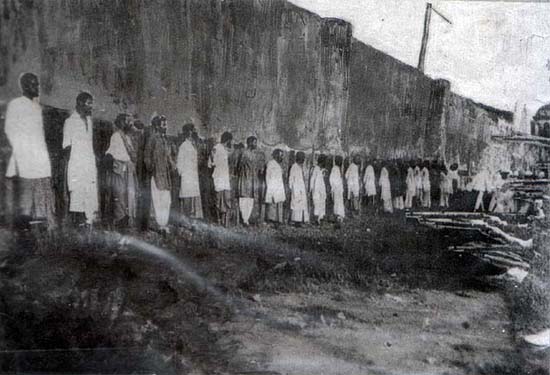
Singapore Mutiny
Indian Muslim soldiers of the 5th Light Infantry stationed in Singapore mutinied against their British officers, influenced by Ghadar Party activists and concerns about fighting against the Ottoman Caliphate. The mutiny resulted in 47 deaths before being suppressed, with 47 mutineers subsequently executed. This revolt demonstrated the global dimensions of anti-colonial resistance and religious solidarity.
Lucknow Pact
The Indian National Congress and Muslim League reached an agreement on constitutional reforms and Hindu-Muslim cooperation, temporarily uniting the two major political organizations. The pact included provisions for separate electorates and weightage for Muslim representation. This brief period of Hindu-Muslim unity represented a high point in nationalist cooperation before later divisions.
Home Rule Movement Launched
Annie Besant and Bal Gangadhar Tilak launched separate Home Rule Leagues demanding self-government for India within the British Empire, modeled on Irish Home Rule. The movement mobilized thousands of Indians and marked the expansion of nationalist politics beyond the educated elite. Though the leagues were later banned, they strengthened the demand for political autonomy.
Rowlatt Act Passed
The British government enacted the Rowlatt Act, allowing detention without trial and suppression of political activities, extending wartime emergency powers into peacetime. The act provoked nationwide protests led by Gandhi, marking his emergence as a major national leader. The legislation symbolized British authoritarianism and united Indians across regions in opposition.

Jallianwala Bagh Massacre
General Reginald Dyer ordered troops to fire on an unarmed gathering at Jallianwala Bagh in Amritsar, killing hundreds of men, women, and children. The massacre shocked India and the world, fundamentally transforming Indian attitudes toward British rule from reform to independence. This atrocity became a defining moment that radicalized the independence movement and destroyed any remaining faith in British justice.
Non-Cooperation Movement Begins
Gandhi launched the first mass non-cooperation movement, calling for boycotts of British institutions, courts, schools, and goods. Millions of Indians participated in peaceful resistance, surrendering titles and resigning from government positions. The movement demonstrated the power of mass civil disobedience and Gandhi's ability to mobilize ordinary Indians across class, caste, and religious lines.
Chauri Chaura Incident
Protesters in Chauri Chaura set fire to a police station, killing 22 policemen, after police fired on demonstrators. Disturbed by the violence, Gandhi immediately suspended the Non-Cooperation Movement despite its success. This decision disappointed many Congress leaders but demonstrated Gandhi's unwavering commitment to nonviolence even at the cost of political momentum.
Formation of Swaraj Party
Disappointed by Gandhi's suspension of Non-Cooperation, Motilal Nehru and C.R. Das formed the Swaraj Party to enter legislative councils and obstruct British governance from within. The party achieved significant electoral success and demonstrated that constitutional politics could complement civil disobedience. This pragmatic approach provided an alternative strategy within the broader independence movement.
Kakori Conspiracy
Revolutionary activists led by Ram Prasad Bismil robbed a train carrying British government treasury at Kakori to fund revolutionary activities. The British conducted mass arrests and trials, executing four revolutionaries including Bismil and Ashfaqullah Khan. The case highlighted the revolutionary wing of the independence movement and their willingness to use armed resistance.
Simon Commission Arrival
The all-British Simon Commission arrived in India to review constitutional reforms, sparking nationwide protests with the slogan 'Simon Go Back' for excluding Indians. Lala Lajpat Rai was fatally injured in police lathi-charge during protests in Lahore. The commission's composition insulted Indian aspirations for self-governance and united various political factions in opposition.
Nehru Report
A committee led by Motilal Nehru drafted a constitution for India proposing dominion status, fundamental rights, and a federal structure. The report represented Indian leaders' attempt to demonstrate constitutional capability. However, disagreements over separate electorates and dominion versus complete independence revealed growing divisions within the nationalist movement.
Congress Lahore Session - Purna Swaraj
Under President Jawaharlal Nehru, the Congress adopted Purna Swaraj (complete independence) as its goal, replacing demands for dominion status. The session authorized civil disobedience and declared January 26 as Independence Day. This historic declaration marked the movement's decisive shift toward full independence and rejection of any compromise with British imperialism.
Salt March (Dandi March)
Gandhi launched the Salt Satyagraha by marching 240 miles to the coastal village of Dandi to make salt, defying the British salt monopoly. Thousands joined the march and millions across India began making illegal salt, leading to mass arrests. This brilliant act of civil disobedience captured global attention and demonstrated how simple protest could challenge imperial authority.
Gandhi-Irwin Pact
Gandhi and Viceroy Irwin reached an agreement suspending civil disobedience in exchange for releasing political prisoners and Congress participation in Round Table Conferences. Critics saw this as a retreat, but Gandhi viewed it as a tactical pause. The pact recognized Congress as a legitimate negotiating partner, elevating the movement's status.

Adoption of Tricolor Flag
The Indian National Congress officially adopted the tricolor flag (saffron, white, green with the spinning wheel) as the national flag at the Karachi session. The flag became a powerful symbol of independence aspirations and national identity. Its colors represented courage, peace, and prosperity, while the spinning wheel symbolized self-reliance and Gandhian principles.
Communal Award Announced
British Prime Minister Ramsay MacDonald announced separate electorates for different communities including Dalits (then called 'Depressed Classes'), triggering Gandhi's fast unto death. Gandhi feared this would permanently segregate Dalits from Hindu society. The subsequent Poona Pact modified the arrangement while ensuring Dalit representation, though debates about appropriate methods continued.
Government of India Act 1935
The British Parliament passed the most comprehensive constitutional reform for India, establishing provincial autonomy and a federal structure. Though providing greater self-government at provincial level, it reserved key powers for the British and was criticized as inadequate. Nevertheless, the act shaped Indian constitutional thinking and influenced the future independent constitution.
Provincial Elections of 1937
Under the 1935 Act, Congress won overwhelming victories in most provinces, forming governments in eight of eleven provinces. The success demonstrated Congress's mass support and administrative capability. However, Muslim League's poor performance in Muslim-majority areas motivated Jinnah to rebuild the party, inadvertently setting the stage for future communal politics.
Quit India Movement Launched
Gandhi launched the Quit India Movement with the call 'Do or Die,' demanding immediate British withdrawal from India. The British responded with mass arrests of Congress leaders, but spontaneous mass protests, strikes, and sabotage erupted across the country. Though suppressed, the movement demonstrated that British rule had lost all legitimacy and accelerated demands for immediate independence.
Bengal Famine of 1943
A devastating famine killed approximately three million people in Bengal, caused by wartime policies, hoarding, and British prioritization of military needs over civilian welfare. The tragedy exposed the brutality of colonial administration during World War II. The famine intensified demands for independence and became a powerful indictment of British rule.
Azad Hind Government Proclaimed
Subhas Chandra Bose proclaimed the Azad Hind (Free India) government in Japanese-occupied territories and organized the Indian National Army (INA) from Indian prisoners of war. Though ultimately unsuccessful militarily, the INA trials after the war created nationalist fervor and demonstrated military personnel's willingness to fight for independence.
Cabinet Mission to India
A British Cabinet Mission arrived to negotiate independence terms, proposing a three-tier federal structure. Congress and Muslim League initially accepted but later disagreed on interpretations, particularly regarding grouping of provinces. The mission's failure made partition increasingly inevitable as communal tensions escalated and compromise proved impossible.
Direct Action Day
The Muslim League called for 'Direct Action Day' to demand Pakistan, resulting in catastrophic communal riots in Calcutta that killed thousands. The violence spread to other parts of India, marking the beginning of large-scale communal bloodshed. The tragedy demonstrated the breakdown of political dialogue and made peaceful partition seem the only way to prevent civil war.
Independence and Partition of India
India gained independence at midnight, but was partitioned into India and Pakistan amid unprecedented communal violence, mass migrations, and death of hundreds of thousands. Jawaharlal Nehru became independent India's first Prime Minister. While independence fulfilled decades of struggle, partition's trauma left deep scars. This momentous event ended colonial rule but birthed two nations amid tragedy.