

The Kingmaker Who Never Wore the Crown: Nana Phadnavis and the Art of Invisible Power
In the annals of Indian history, we celebrate the warriors who conquered kingdoms and the kings who wore crowns. But what of the man who ruled an empire for three decades without ever sitting on a throne? Nana Phadnavis wielded power not through the sword but through something far more potent: the whispered word, the carefully crafted letter, the alliance forged in shadows. His story reveals a fundamental truth about power—that it often resides not with those who appear to hold it, but with those who know how to manipulate its levers.
Rise from the Shadows
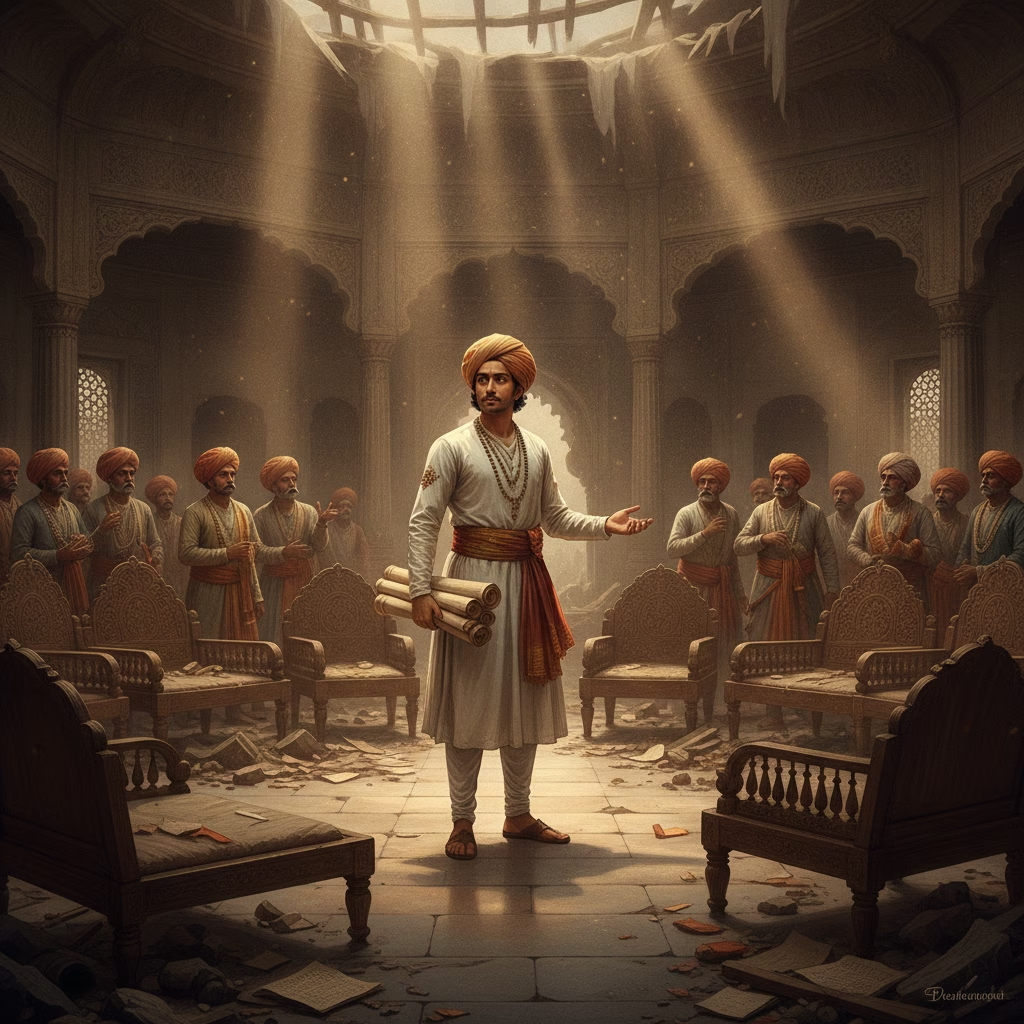
The year 1761 marked a turning point in Maratha history. At Panipat, the empire suffered a catastrophic defeat at the hands of Ahmad Shah Durrani's forces. The battlefield became a graveyard for Maratha leadership—commanders, administrators, and the future of an empire lay broken in the dust of northern India. As news of the disaster reached Pune, the capital descended into chaos. Empty seats in the durbar told the story of a generation lost.
Into this vacuum stepped Balaji Janardan Bhanu, known to history as Nana Phadnavis. Born into a Brahmin family of modest means, he possessed neither royal blood nor military glory. What he had was something more valuable in that moment of crisis: a mind sharp as a blade and an understanding of power's true nature. While others saw only devastation, Nana saw opportunity.
The Maratha Empire that emerged from Panipat's ashes was fundamentally different from what Shivaji had founded a century earlier. According to Wikipedia, the empire had evolved into a confederacy of four major independent states—the Scindia, Holkar, Bhonsle, and Gaekwad families—nominally under the Peshwa's leadership but increasingly autonomous. This 2.5 million square kilometer domain, stretching from Maharashtra to Gwalior in the north and Orissa in the east, was held together more by diplomatic threads than military might.
Nana began his career managing accounts and correspondence, the unglamorous work that keeps empires functioning. But he understood what others missed: in a confederacy of proud chiefs, information was power. Who owed what to whom? Which alliances were fracturing? Where did ambitions conflict? Nana made it his business to know everything.
Under Peshwa Madhavrao I's leadership, the Marathas achieved what seemed impossible—they recovered most territories lost at Panipat within a decade. But Nana knew the recovery was fragile. The young Peshwa's energy and vision held the confederacy together, but what would happen when that force of nature was gone?
The Power Behind the Throne
Madhavrao I's death in 1772 answered that question with devastating clarity. As Wikipedia notes, his passing "marked the end of Peshwa's effective authority over other chiefs in the empire." The confederacy's centrifugal forces, temporarily held in check by Madhavrao's personality, now threatened to tear the empire apart. The Scindia, Holkar, Bhonsle, and Gaekwad families—each commanding their own armies and territories—saw little reason to defer to a weakened Peshwa in Pune.
This was Nana Phadnavis's moment. Appointed chief minister, he faced an impossible task: rule an empire without the authority to command it. A military man would have failed immediately. A king might have demanded obedience and sparked rebellion. But Nana was neither. He was something more dangerous—a master of the possible.
His strategy was brilliant in its simplicity: never demand what you cannot enforce. Instead, make cooperation more profitable than conflict. When the Scindia chief eyed expansion into Holkar territory, Nana would quietly remind him of British movements to the south. When the Gaekwad grew too independent, Nana would facilitate a profitable trade arrangement that required coordination with Pune. He turned the confederacy's weakness—its lack of central authority—into a strength by making himself indispensable as the coordinator, the mediator, the man who made things work.
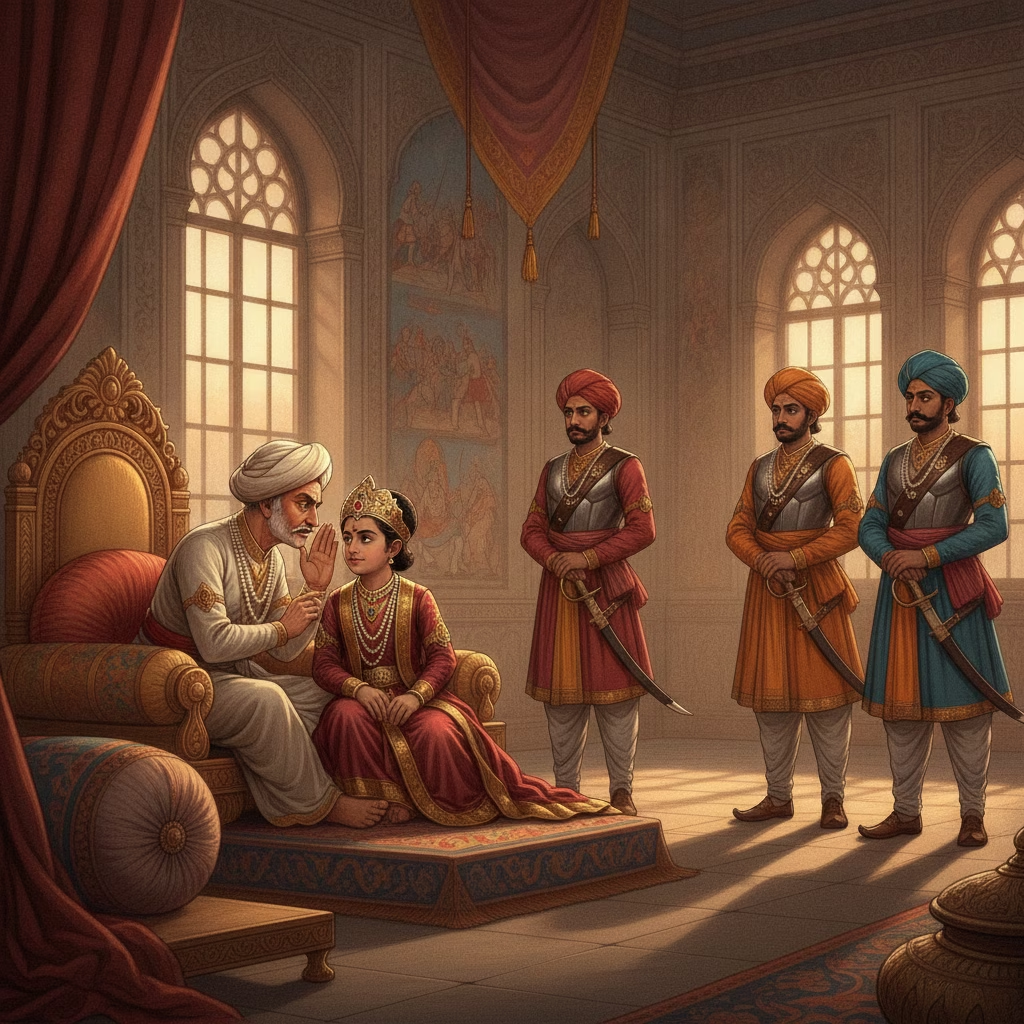
The Peshwa's court in Pune became a theater where Nana stage-managed elaborate performances. Young Peshwas sat on thrones while Nana sat beside them, whispering counsel that was really command dressed in deference. The Maratha chiefs would visit, hands on sword hilts, suspicious of this Brahmin administrator who wielded no army. But they left having agreed to Nana's proposals, somehow convinced they had been their own ideas.
Master of Intrigue
Nana's true genius lay in understanding that power in 18th century India was not a zero-sum game but a complex web of relationships. While the Maratha confederacy appeared fractious, Nana saw its potential. The four major families—Scindia based in Gwalior, Gaekwad in Baroda, Holkar in Indore, and Bhonsle in Nagpur—were rivals, yes, but they were also bound by common interests that Nana carefully cultivated.
The greatest threat came not from internal divisions but from the British East India Company, whose tentacles were slowly wrapping around the subcontinent. Here, Nana deployed his most sophisticated strategies. He played the long game, understanding that direct confrontation with the British would be disastrous. Instead, he worked to keep them divided, to make their expansion costly, to ensure that every British gain came with complications.
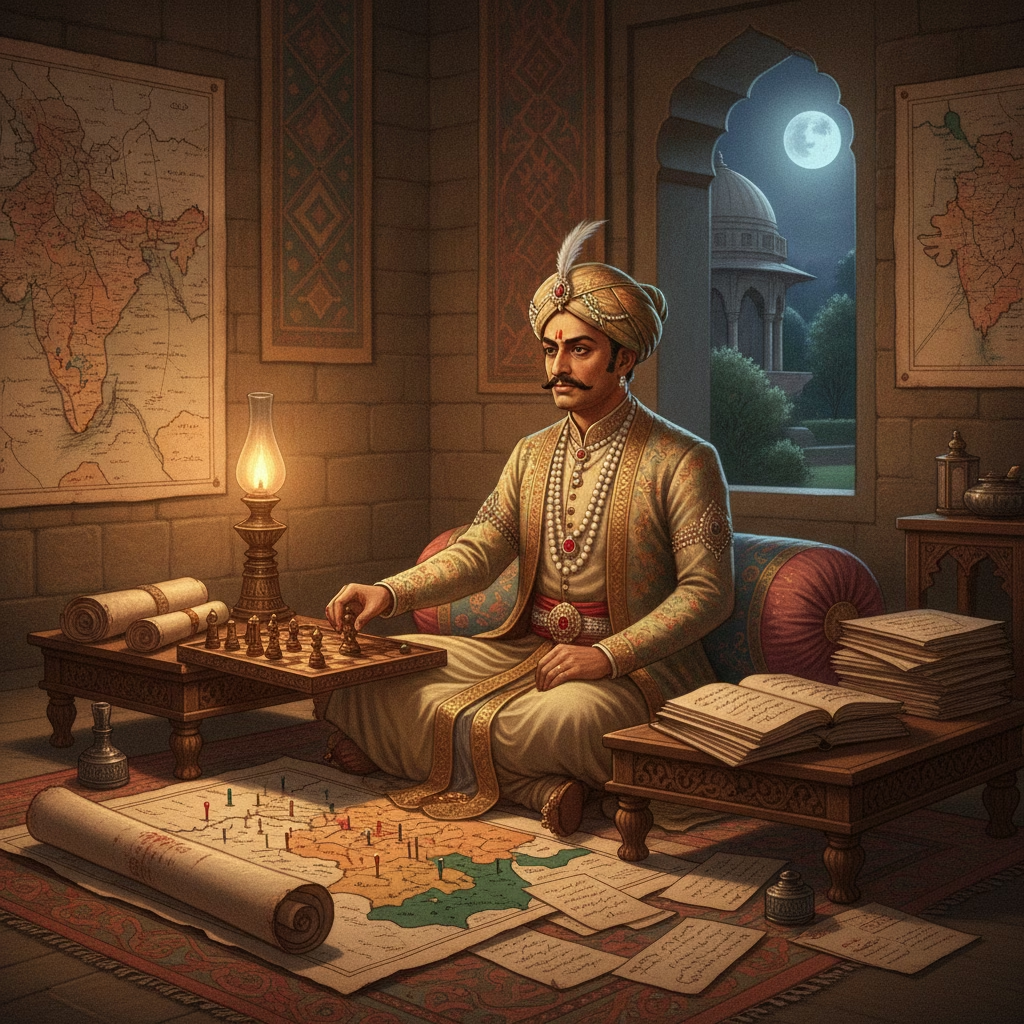
His private chambers became the nerve center of an intelligence network that spanned India. Maps covered the walls, marked with pins showing British positions, Mughal territories, and Maratha holdings. Letters arrived in multiple scripts—Persian, Marathi, English—each containing pieces of a vast puzzle that Nana alone seemed able to assemble. According to Wikipedia, the Marathas "largely controlled" Mughal politics between 1737 and 1803, and Nana was the puppet master behind much of that control.
He maintained relationships with everyone: British officials who thought him a useful native informant, Mughal nobles who saw him as a potential ally, and rival Indian powers who believed they could manipulate him. In reality, Nana was using them all, extracting information, creating dependencies, and ensuring that no single power could move without his knowledge.
The Diplomat's Dance
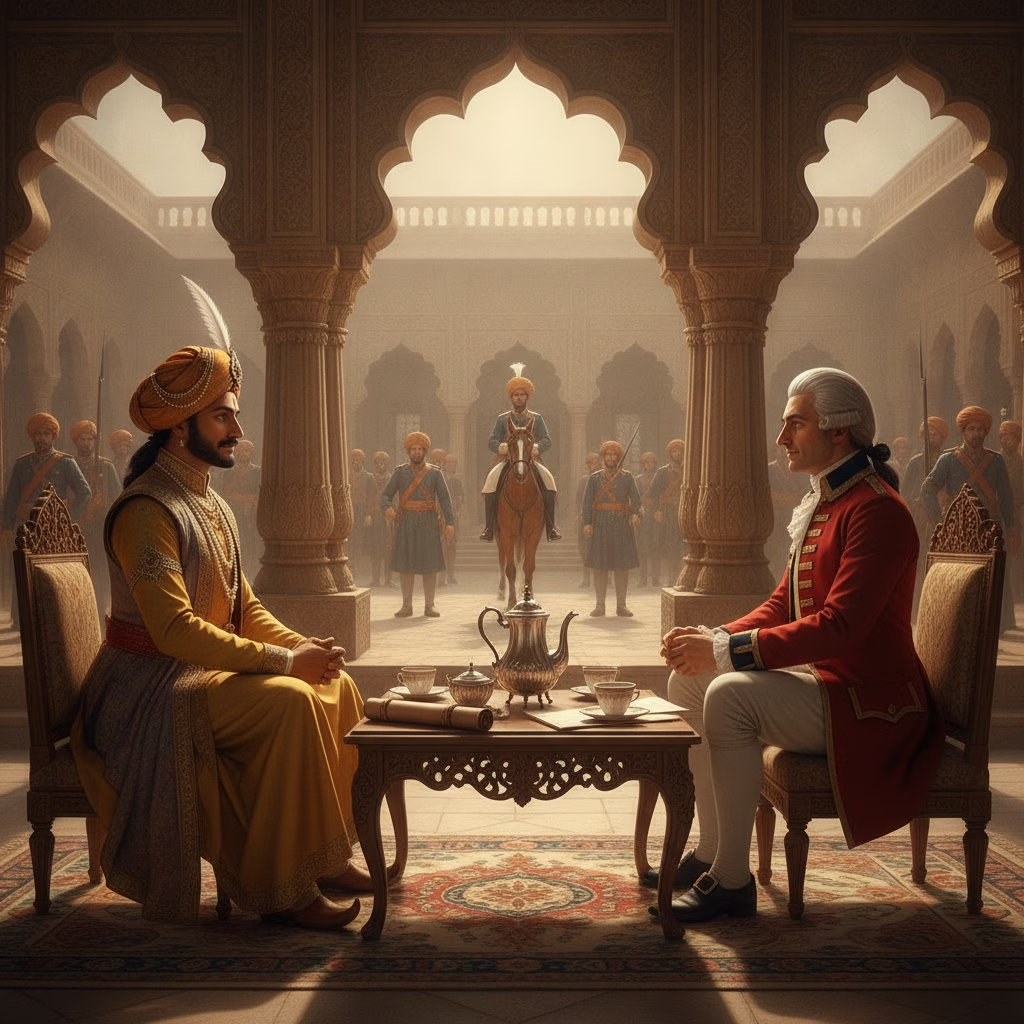
Nana's meetings with British officials were masterclasses in diplomatic theater. He would receive them with elaborate courtesy, serving tea in fine porcelain while discussing trade arrangements and border disputes. The British saw an educated native administrator, sophisticated enough to be reasoned with but ultimately manageable. They fundamentally misunderstood him.
While smiling and negotiating, Nana was playing a deeper game. He would agree to British requests in one province while quietly supporting resistance in another. He would sign treaties with loopholes that only became apparent years later. He cultivated relationships with individual British officials, learning their ambitions and weaknesses, then using that knowledge to sow discord in their ranks.
Simultaneously, he worked to maintain unity among the Maratha chiefs—not through authority but through careful management of their ambitions. When the Holkar and Scindia families clashed, as they inevitably did, Nana would mediate, ensuring that conflicts never escalated to the point of fracturing the confederacy. He arranged marriages between families, negotiated revenue sharing, and constantly reminded the chiefs that their independence depended on collective strength.
The confederacy that Wikipedia describes—stretching across a third of the subcontinent—remained functional largely because of Nana's invisible hand. While historians focus on the Peshwa's nominal leadership, it was Nana who drafted the letters, arranged the meetings, and resolved the disputes that kept this unwieldy political structure from collapsing.
The Weight of Decades
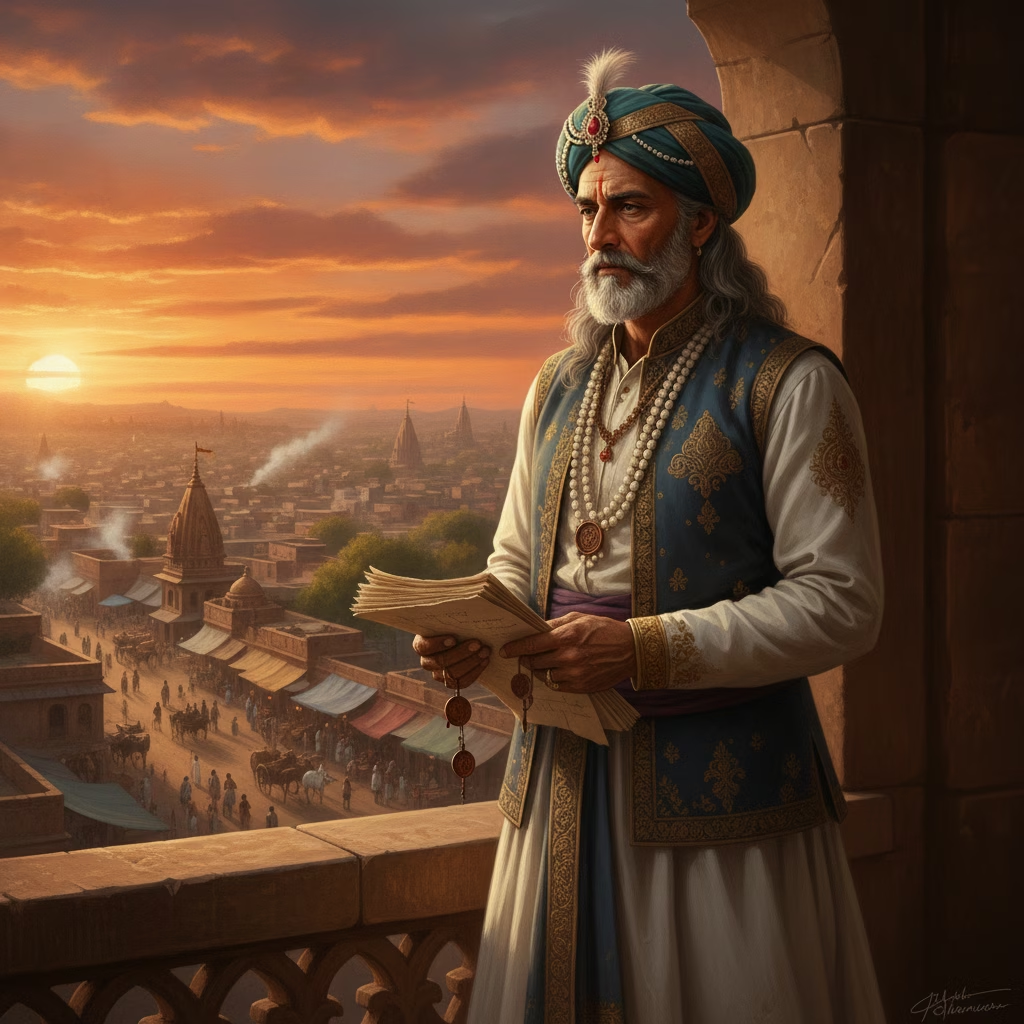
By the 1790s, Nana Phadnavis had been the de facto ruler of the Maratha Empire for over two decades. The young administrator who had entered a devastated court after Panipat was now an elder statesman, his hair gray, his face lined with the weight of countless intrigues. He stood on palace balconies overlooking Pune, holding letters bearing broken seals, and saw both his achievements and their fragility.
The empire had survived—that was his triumph. Through wars, famines, and internal conflicts, the Maratha confederacy had maintained its position as a major power in India. The British had been kept at bay, their expansion slowed if not stopped. The Mughal emperor in Delhi remained a Maratha puppet, providing legitimacy to the confederacy's claims. Trade flourished, revenues flowed, and Pune had become a center of culture and learning.
But Nana was no fool. He could see the forces gathering against the Marathas. The British were growing stronger, more organized, more determined. The confederacy's unity, always fragile, was becoming harder to maintain as a new generation of chiefs chafed at coordination from Pune. The very diplomatic skills that had preserved the empire were becoming insufficient against the British policy of aggressive expansion backed by superior military organization.
His private correspondence from this period reveals a man acutely aware of history's currents. He had bought time—decades of it—but he knew he could not buy forever. The question that haunted him was whether he had bought enough time for the Marathas to adapt, to modernize, to find a way to survive in a changing world.
Legacy of Shadows
Nana Phadnavis died in 1800, and with him died the last real chance for Maratha unity. Within two years, Peshwa Baji Rao II—facing defeat by the Holkar dynasty—would make the fatal decision to seek British protection. As Wikipedia notes, this British intervention "destroyed the confederacy by 1818 after the Second and Third Anglo-Maratha Wars."
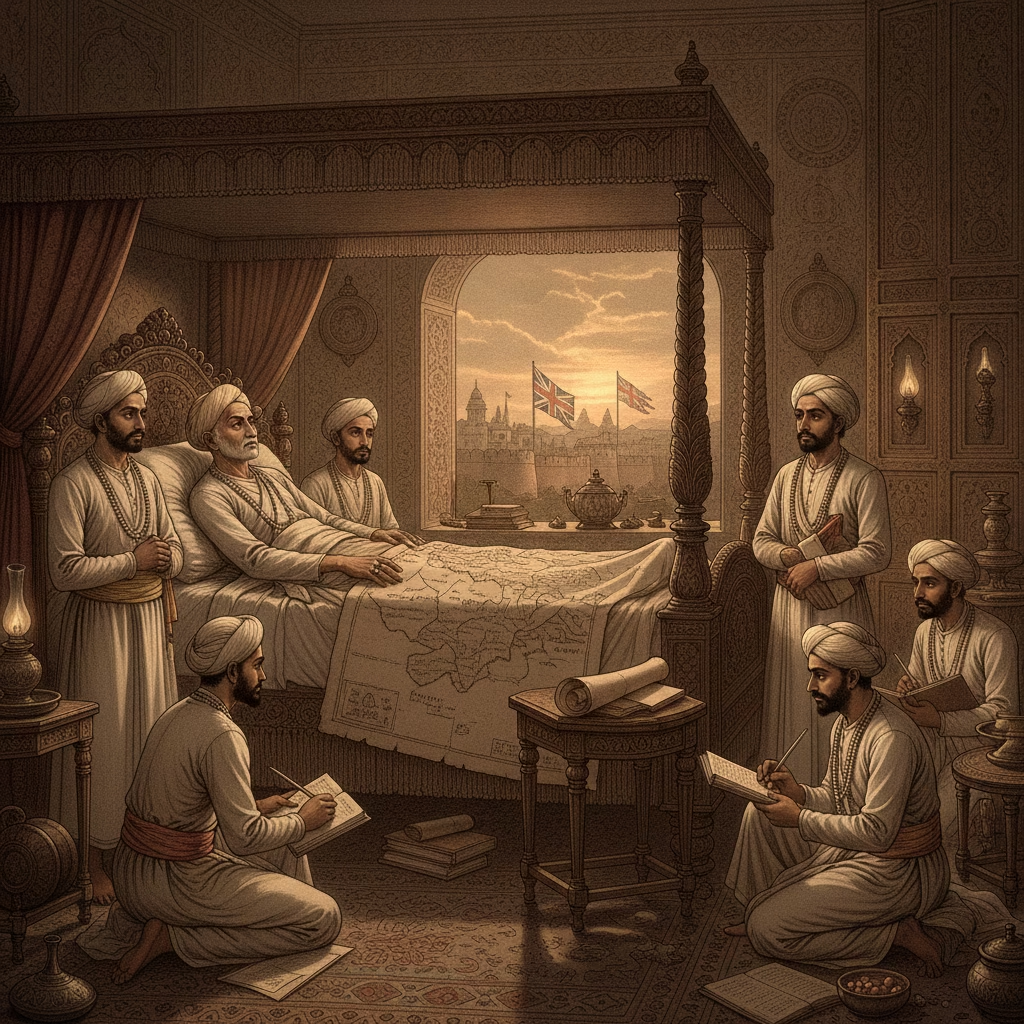
From his deathbed, Nana could see British flags in the distance, harbingers of the empire's fall. Younger administrators gathered around him, taking notes as he offered final counsel, but they lacked his vision, his network, his decades of accumulated knowledge about how to keep fractious chiefs united. The art of invisible power, it seemed, could not be taught—only practiced over a lifetime.
History has not been kind to Nana Phadnavis. While we remember warrior kings and military heroes, the diplomat who ruled through cunning rather than conquest receives less glory. There are no epic poems about cleverly worded letters, no monuments to successful mediation. Power exercised through whispers leaves fewer traces than power exercised through the sword.
Yet Nana's legacy deserves recognition. For three decades, he kept an empire together through sheer diplomatic skill, navigating between aggressive British expansion and internal Maratha divisions. He proved that power need not come from royal blood or military conquest—that intelligence, patience, and an understanding of human nature could be just as effective.
His story offers lessons for any age: that the most effective power is often invisible, that diplomacy can achieve what force cannot, and that sometimes the person whispering behind the throne is more important than the person sitting on it. Nana Phadnavis never wore a crown, but for thirty years, he ruled an empire. In the end, perhaps that is the greatest power of all—to rule without appearing to, to command without demanding, to shape history while remaining in its shadows.