
The boat turned at the confluence, and he saw it all at once.
Ten miles of wooden walls stretched along the Ganges, studded with towers that rose like sentinels against the morning sky. The Greek ambassador—whose name history has not preserved, though his account would reach the courts of the Hellenistic world—gripped the rail of his vessel and tried to comprehend the scale of what lay before him. He had seen Alexandria. He had walked through Babylon. But Pataliputra was something else entirely.
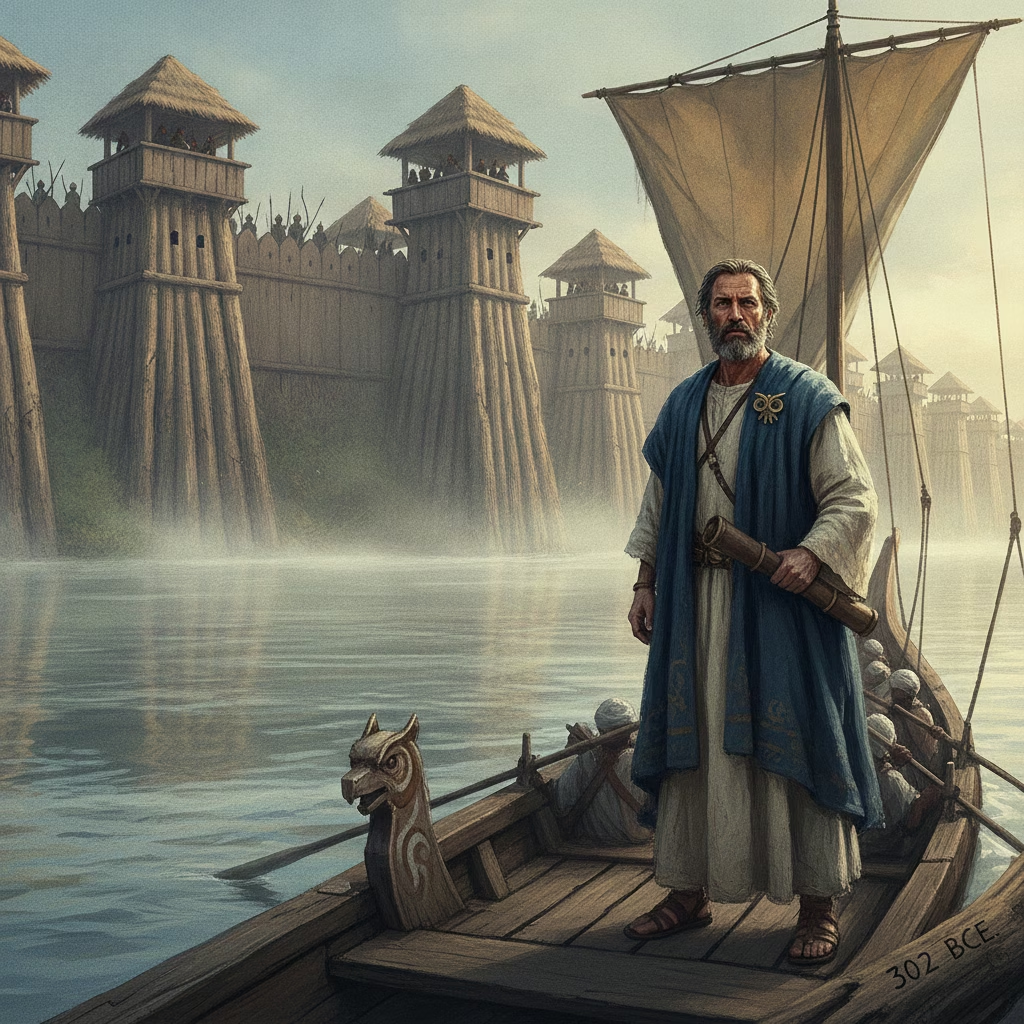
The city sat at the confluence of three rivers—the Ganges, the Gandhaka, and the Son—forming what the Indians called a jaldurga, a water fort. As his boat approached the massive wooden gates, he could see the defensive architecture more clearly. The walls were pierced with arrow slits at regular intervals, and behind them rose 570 towers, each manned by guards whose silhouettes moved against the brightening sky.
His interpreter, a merchant from Taxila who spoke both Greek and the languages of the Gangetic plain, pointed to the ditch that surrounded the fortifications. "Six hundred feet across," he said. "Forty-five feet deep. Filled from the rivers."
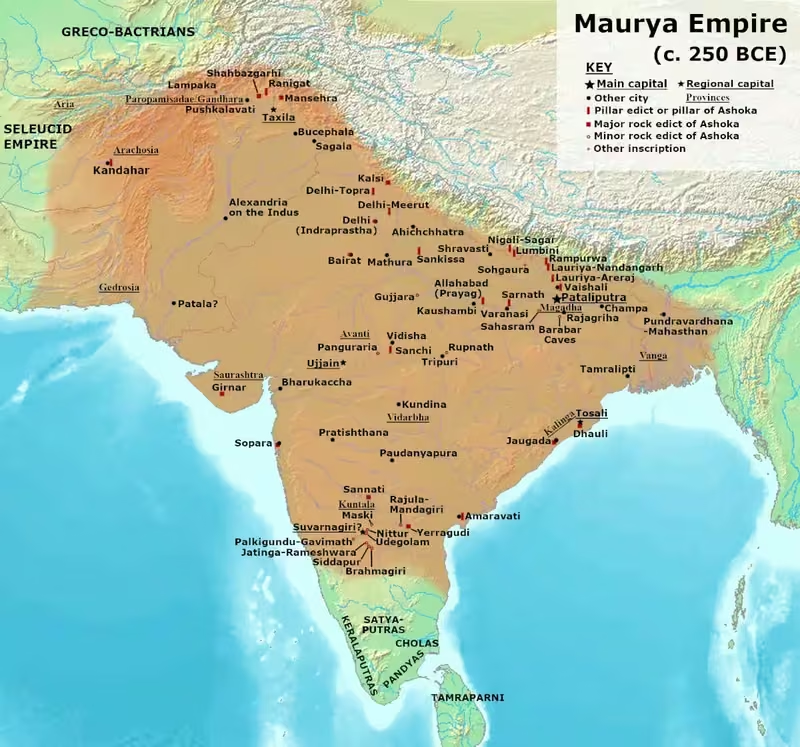
The ambassador made mental notes. His king would want details. The Mauryan Empire, barely two decades old, had already swallowed most of the subcontinent. Chandragupta Maurya, the emperor he had come to meet, had defeated the Nanda dynasty and driven back Seleucus Nicator himself. The treaty that followed had sent the ambassador here, to this city that the Indians also called Kusumapura—the City of Flowers.
They passed through one of the sixty-four gates. Inside, the city sprawled in every direction, wooden buildings pressed close together, streets teeming with humanity. According to Megasthenes, the Greek diplomat who had preceded him, Pataliputra was among the first cities in the world to have a highly efficient form of local self government. The ambassador could see evidence of that organization everywhere—the ordered streets, the managed markets, the systematic patrol of guards.
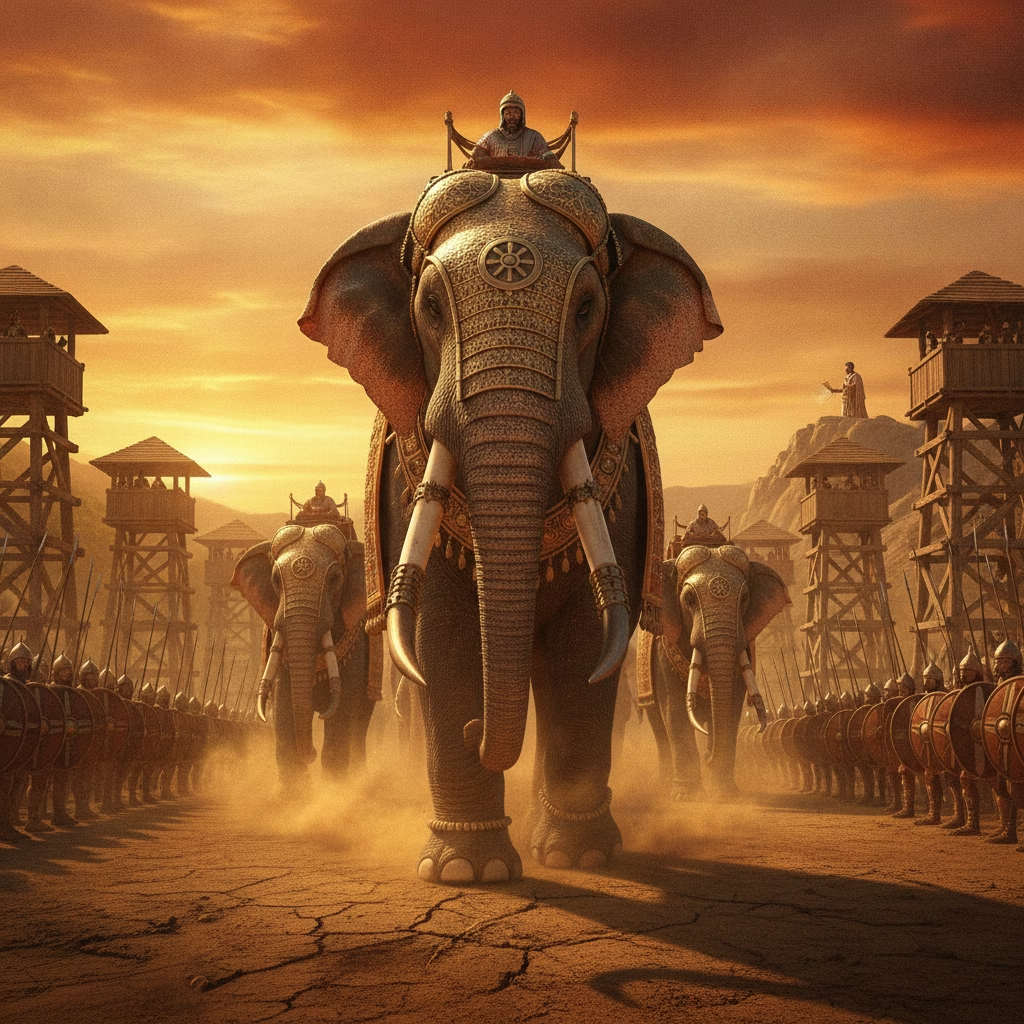
The trumpet blast came without warning, a deep bellow that silenced the morning commerce. The ambassador's escort gestured for him to move to the side of the broad avenue, and he obeyed, pressing against the wooden facade of a merchant's house.
Then they came.
War elephants, dozens of them, moving in formation down the street. Each beast stood ten feet at the shoulder, draped in ceremonial armor that caught the light. Their mahouts sat high on their necks, guiding them with subtle commands. Behind each elephant marched a unit of soldiers, spears held vertical, shields bearing the Mauryan insignia.
The ambassador counted. Twenty elephants in this parade alone. His interpreter leaned close. "The emperor maintains nine thousand war elephants," he said. "Thirty thousand cavalry. Six hundred thousand foot soldiers."
The numbers were staggering. The entire army of Macedon at Gaugamela had numbered less than fifty thousand. The ambassador watched the elephants pass the wooden towers that lined this inner avenue, their footsteps shaking the ground, and understood why Seleucus had chosen diplomacy over continued warfare. The Mauryan Empire was not merely vast—it was organized, efficient, and overwhelmingly powerful.
One elephant turned its massive head as it passed, and the ambassador found himself looking into an eye that held an ancient, unsettling intelligence. These were not the elephants that Alexander had faced at the Hydaspes—those had been war-trained but few in number. These were the core of an imperial military machine that had conquered from the Hindu Kush to the Bay of Bengal.
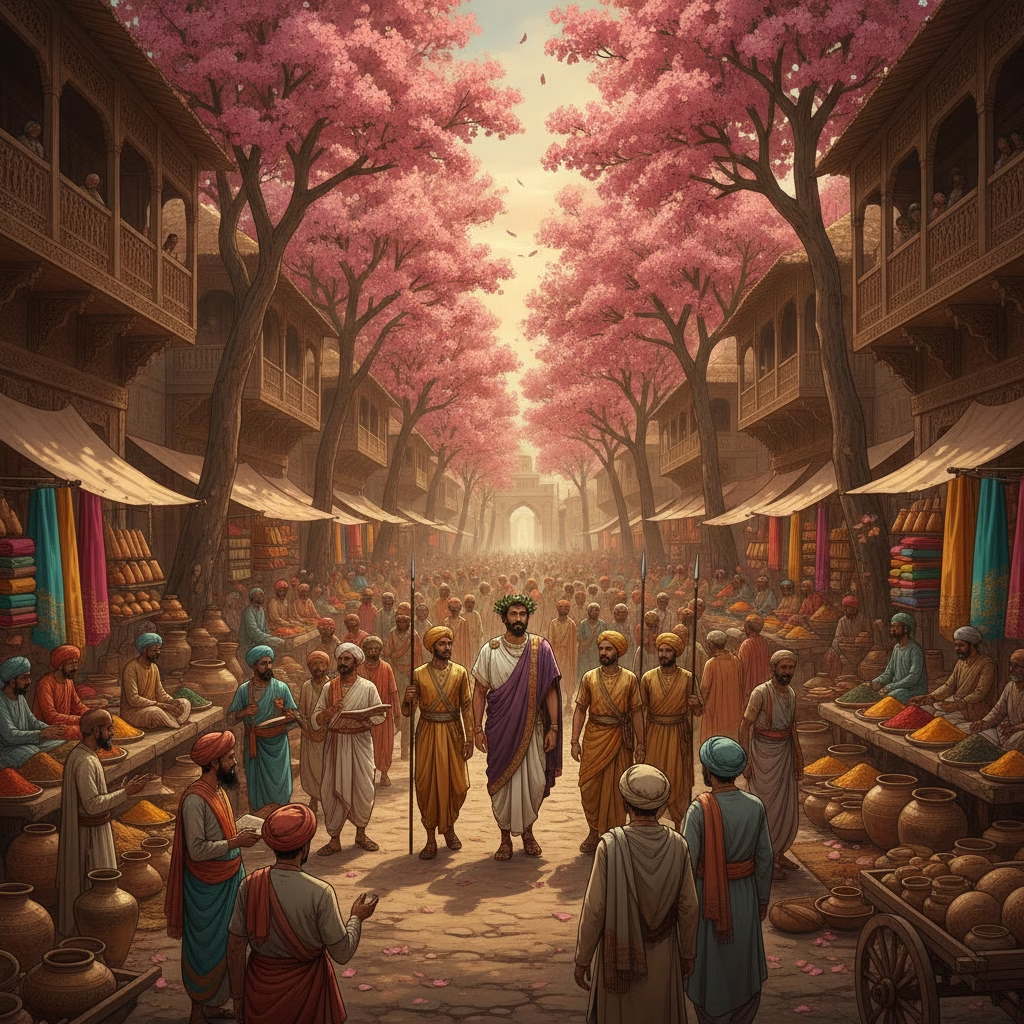
After the parade passed, his escort led him deeper into the city. The streets of Pataliputra teemed with a diversity that rivaled any cosmopolitan center in the known world. Merchants from the southern kingdoms displayed pearls and pepper. Scholars from Taxila debated philosophy under the shade of flowering pāṭalī trees, the plants that had given the city its name. The pink blossoms fell like snow onto the dusty streets.
"How many people?" the ambassador asked.
His interpreter shrugged. "Perhaps one hundred and fifty thousand. Perhaps four hundred thousand. The city grows every year. People come from all over India—merchants seeking profit, scholars seeking wisdom, craftsmen seeking patronage."
They passed a building where officials were settling a dispute between two merchants. The ambassador paused to watch. The proceedings were orderly, documented on palm-leaf manuscripts, witnessed by representatives of the merchant guilds. Megasthenes had been right—the local government here functioned with a sophistication that would impress even Athens in its prime.
The city stretched for miles, a wooden metropolis that dominated the riverine trade of the Indo-Gangetic Plain. During the Maurya period, it became one of the largest cities in the world. The ambassador could believe it. The scale was overwhelming—not just in size, but in the complexity of its organization, the diversity of its population, the evident prosperity of its markets.
A group of Buddhist monks passed, their saffron robes bright against the wooden buildings. The interpreter explained that great councils were held here, that the city was not just a political capital but a center of religious and intellectual life. The famous Chanakya, the Brahmin strategist who had helped Chandragupta overthrow the Nandas, had come to Pataliputra seeking his fortune. So had countless others.
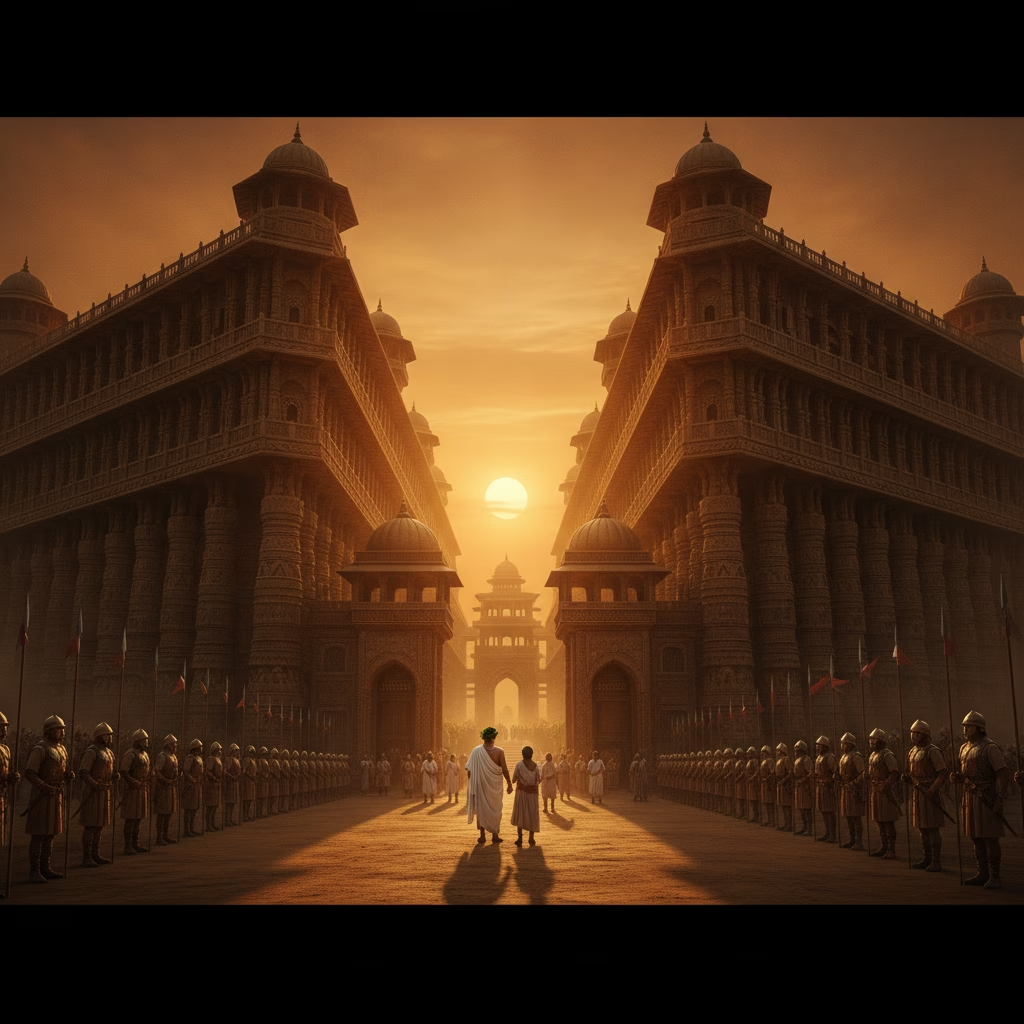
The royal palace complex rose before them like a city within a city. The ambassador had been told it formed a parallelogram, and now he could see the geometry of it—massive wooden structures arranged with mathematical precision, each building serving a specific administrative function.
Guards in ceremonial armor flanked the entrance, their spears crossed. His escort spoke to them in rapid Sanskrit, presenting documents that bore the royal seal. The guards examined the papers, then stepped aside.
Inside the outer courtyard, the ambassador saw the machinery of empire at work. Scribes hurried between buildings carrying palm-leaf manuscripts. Military officers consulted maps. Tax collectors tallied revenue from provinces hundreds of miles away. The Mauryan Empire was not governed through personal charisma alone—it ran on bureaucracy, on systematic administration, on the kind of organized statecraft that the Greeks associated with their own best traditions.
A senior official approached, a man whose bearing suggested high rank. He spoke in accented but clear Greek. "The emperor will receive you shortly. He wishes to demonstrate his friendship with the Greeks."
The ambassador bowed. Diodorus had written that the king of Pataliputra was "friendly to the Greeks," and the evidence seemed to support that claim. The treaty with Seleucus had been generous—territory exchanged for elephants, marriage alliances arranged, trade routes secured. Chandragupta Maurya was building something unprecedented: a subcontinental empire that could negotiate with the Hellenistic world as an equal.
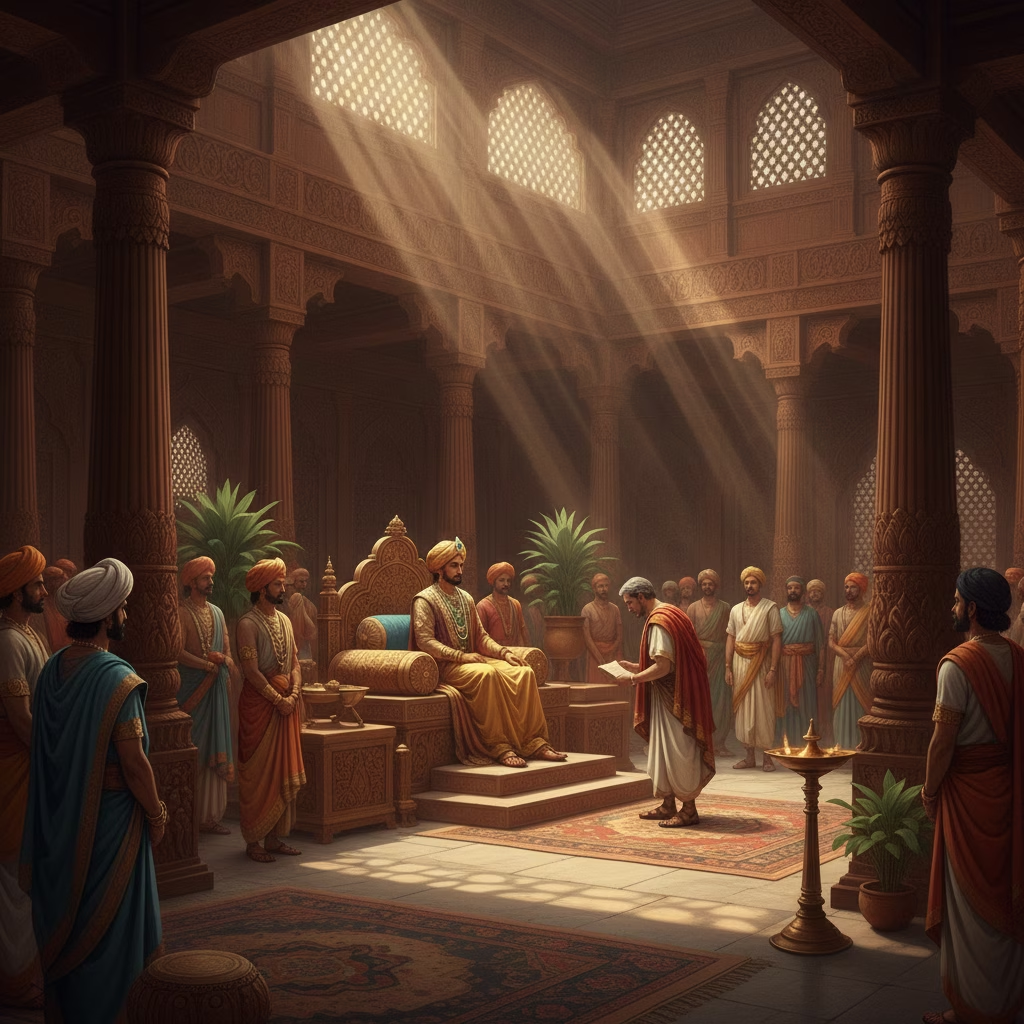
The throne room was simpler than the ambassador had expected, but no less impressive for that simplicity. Wooden pillars, polished until they gleamed, supported a high ceiling. Sunlight streamed through latticed windows, creating patterns on the floor.
Chandragupta Maurya sat on a raised platform, surrounded by advisors. He was younger than the ambassador had imagined—still in his forties, vigorous, alert. His eyes tracked the ambassador's approach with the same calculating intelligence the ambassador had seen in the war elephant's gaze.
The formal greetings were exchanged through interpreters. The ambassador presented gifts from his king—Greek wine, worked silver, books of philosophy. Chandragupta accepted them with courtesy and presented gifts in return—fine cotton that felt like silk, spices whose scents filled the room, a small carved elephant in ivory.
Then they talked, through the careful mediation of translators, about trade routes and military alliances, about the threat of northern tribes and the security of borders. The ambassador found himself impressed despite his intentions to remain professionally detached. This was no barbaric potentate ruling through force alone. Chandragupta Maurya was a sophisticated statesman who understood power in all its dimensions—military, economic, diplomatic, cultural.
The meeting lasted hours. When it finally concluded, the ambassador was escorted back through the palace complex, back through the streets of Kusumapura, back toward the river where his boat waited.
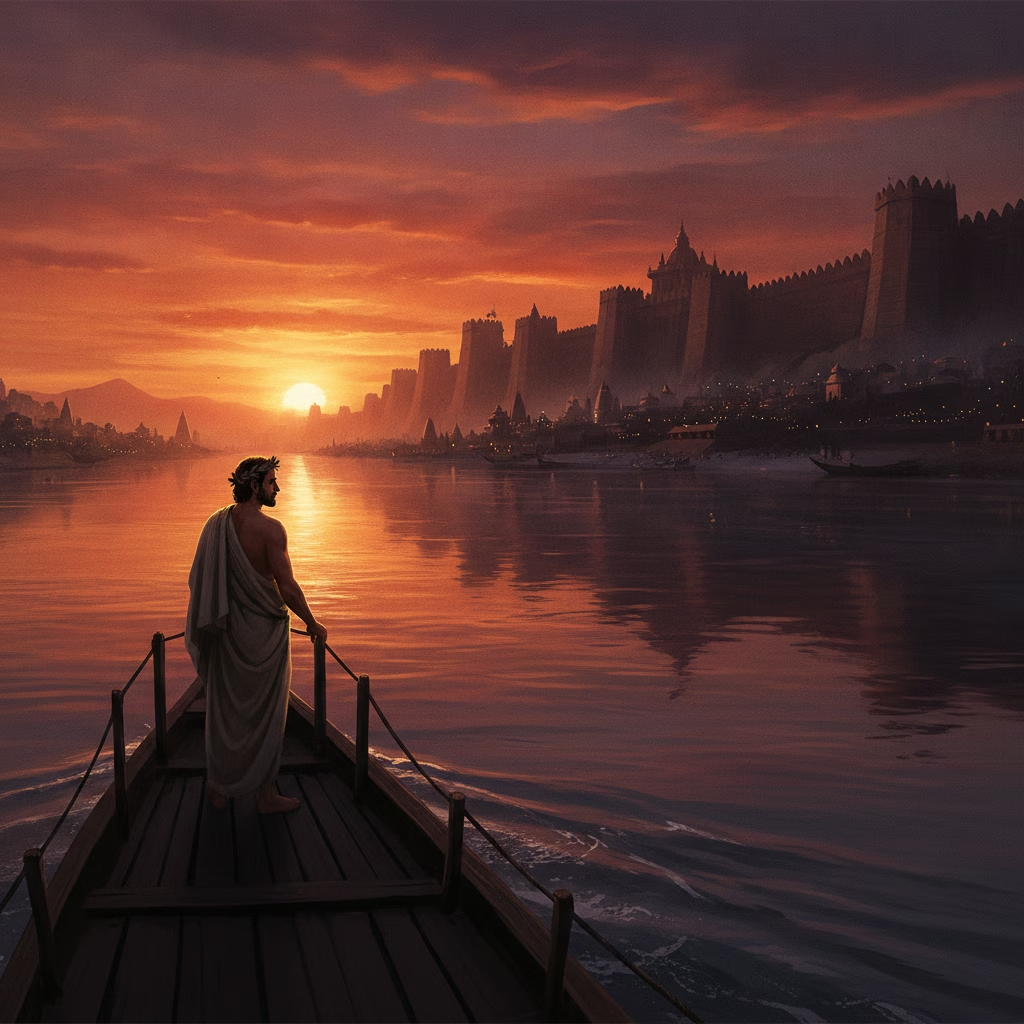
As his vessel pulled away from the docks, the ambassador looked back at Pataliputra. The sun was setting, painting the wooden towers gold and orange. The ten-mile stretch of fortifications glowed in the fading light, the 570 towers silhouetted against the darkening sky.
He thought about what he would write in his report. The numbers—the elephants, the soldiers, the population. The organization—the efficient government, the systematic administration. The wealth—the bustling markets, the diverse trade, the evident prosperity. But more than any of that, he would try to convey the sense of scale, the feeling of standing at the edge of something vast and ancient and powerful.
Pataliputra had been founded as a small fort called Pāṭaligrāma by the Magadha ruler Ajatashatru in 490 BCE. Two centuries later, it had become the capital of an empire that stretched from sea to sea, a city that rivaled anything in the Hellenistic world. The ambassador had come expecting to find a provincial capital. Instead, he had discovered one of the great centers of human civilization.
The boat turned at the confluence, where the three rivers met, and the city began to fade into the evening mist. But the memory of it—the scale, the power, the sophisticated organization—would stay with him forever. And through his reports, and those of Megasthenes and others, the image of Pataliputra would reach the Mediterranean world, changing forever how the Greeks understood India.
Not as a land of exotic wonders and distant mysteries, but as a civilization that could meet them as equals—in power, in organization, in the arts of government and war. The water fort on the Ganges had made its statement, and the world had listened.