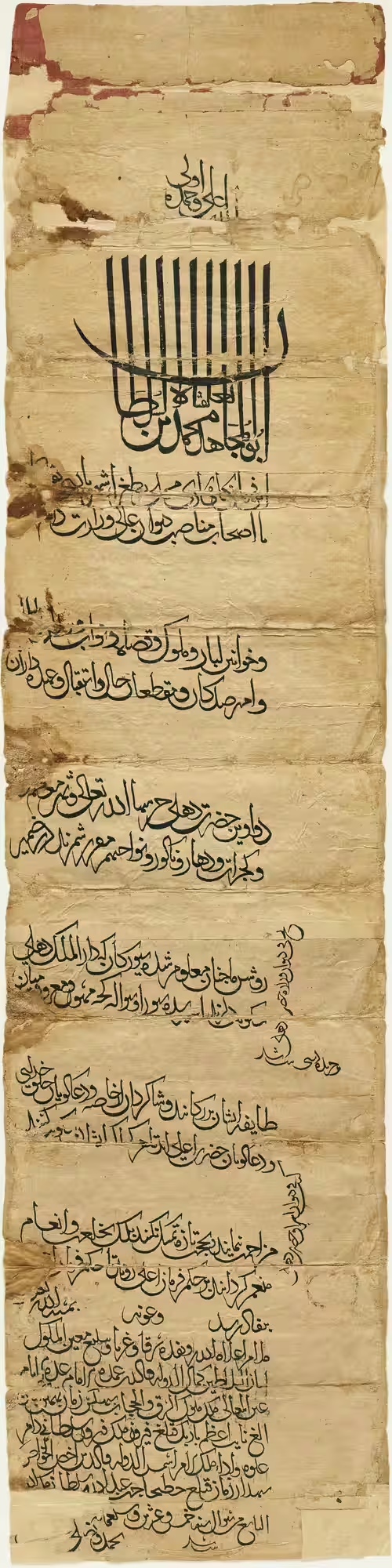

The Scholar Who Defeated the Sultan: A Tale of Intellectual Honor
In the year 1330, when Muhammad bin Tughluq ruled the Delhi Sultanate with a mind as brilliant as it was unpredictable, a story unfolded that would echo through the corridors of history—not of conquest or intrigue, but of intellectual courage and uncommon grace.
The Scholar Arrives at Court
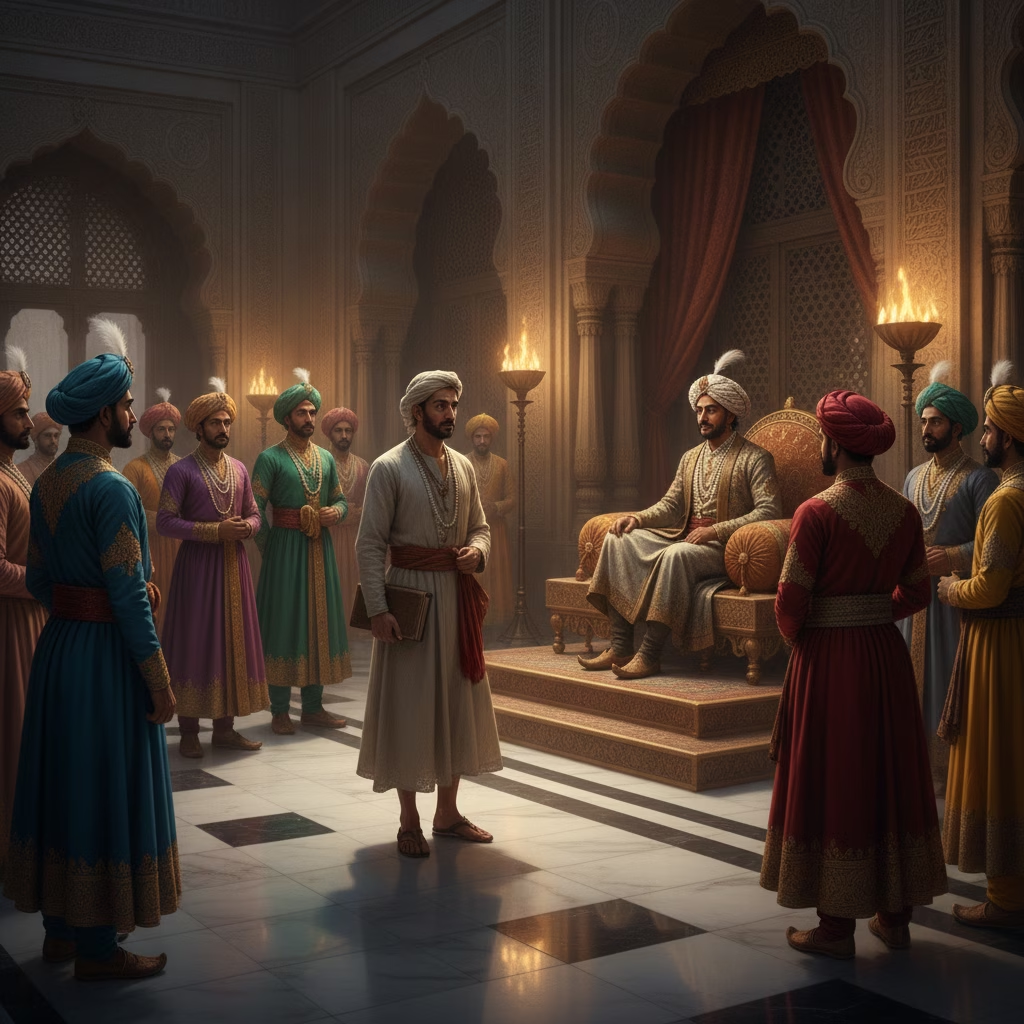
The morning sun cast long shadows across the marble floors of the Tughlaq court when a figure in simple robes appeared at the entrance of the grand durbar hall. He carried no weapons, commanded no army, and bore no letters of introduction from distant kings. He carried only a worn leather satchel filled with manuscripts and the quiet confidence of a man who had spent his life in pursuit of knowledge.
The courtiers, resplendent in their silks and jewels, turned to observe this unexpected visitor. Whispers rippled through the assembly like wind through wheat. Who was this man who dared approach the Sultan without the usual fanfare of nobility?
Sultan Muhammad bin Tughluq, seated upon his elevated throne, leaned forward with interest. The ruler known throughout the land as "The Wisest Fool"—a man who could recite poetry in Persian, debate theology in Arabic, discuss medicine in Sanskrit, and issue commands in Hindavi and Turkic—was always intrigued by those who sought knowledge rather than power.
"Your Majesty," the scholar spoke, his voice steady despite the grandeur surrounding him, "I have traveled from distant lands, hearing tales of your learning and wisdom. I come not seeking gold or position, but to engage in discourse with one whose intellect is said to rival the great philosophers of old."
A smile played at the corners of the Sultan's lips. Here was something rare—a challenge not to his throne, but to his mind. Muhammad bin Tughluq, who had ascended to power in 1325 as the eighteenth Sultan of Delhi, had spent years proving himself not just as a military commander but as a polymath whose interests ranged from medicine to metaphysics.
"You seek to debate with me?" the Sultan asked, his eyes gleaming with anticipation.
"If Your Majesty would honor me with such an opportunity," the scholar replied with a respectful bow.
The Sultan rose from his throne, his robes flowing around him. "Very well. We shall debate for three days in open court. Let all who wish to witness this exchange of ideas attend. Let scribes record every word. And let truth, not rank, determine the victor."
A murmur of astonishment swept through the court. The Sultan, known for his paranoid suspicions and sudden changes of mood, had just agreed to a public intellectual contest where his authority would not shield him from logical defeat.
Day One: The Battle of Words Begins
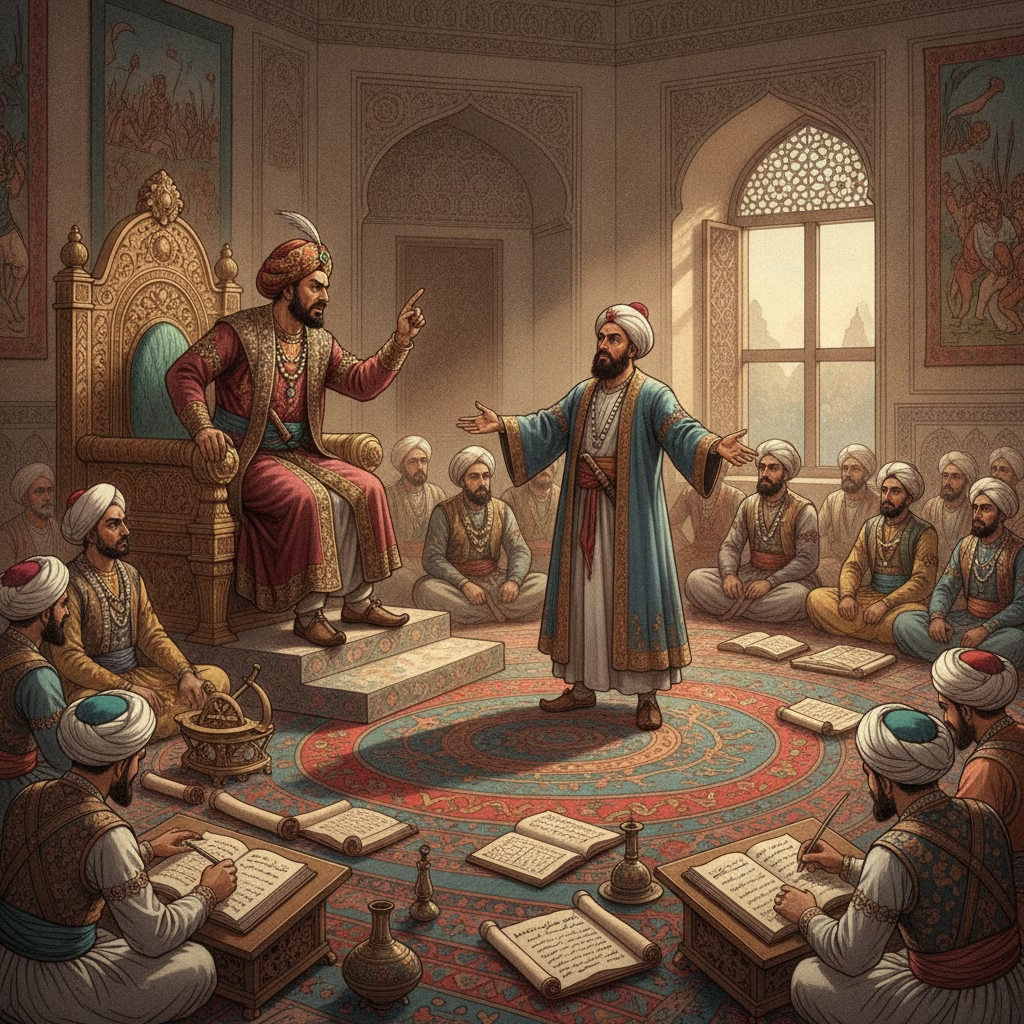
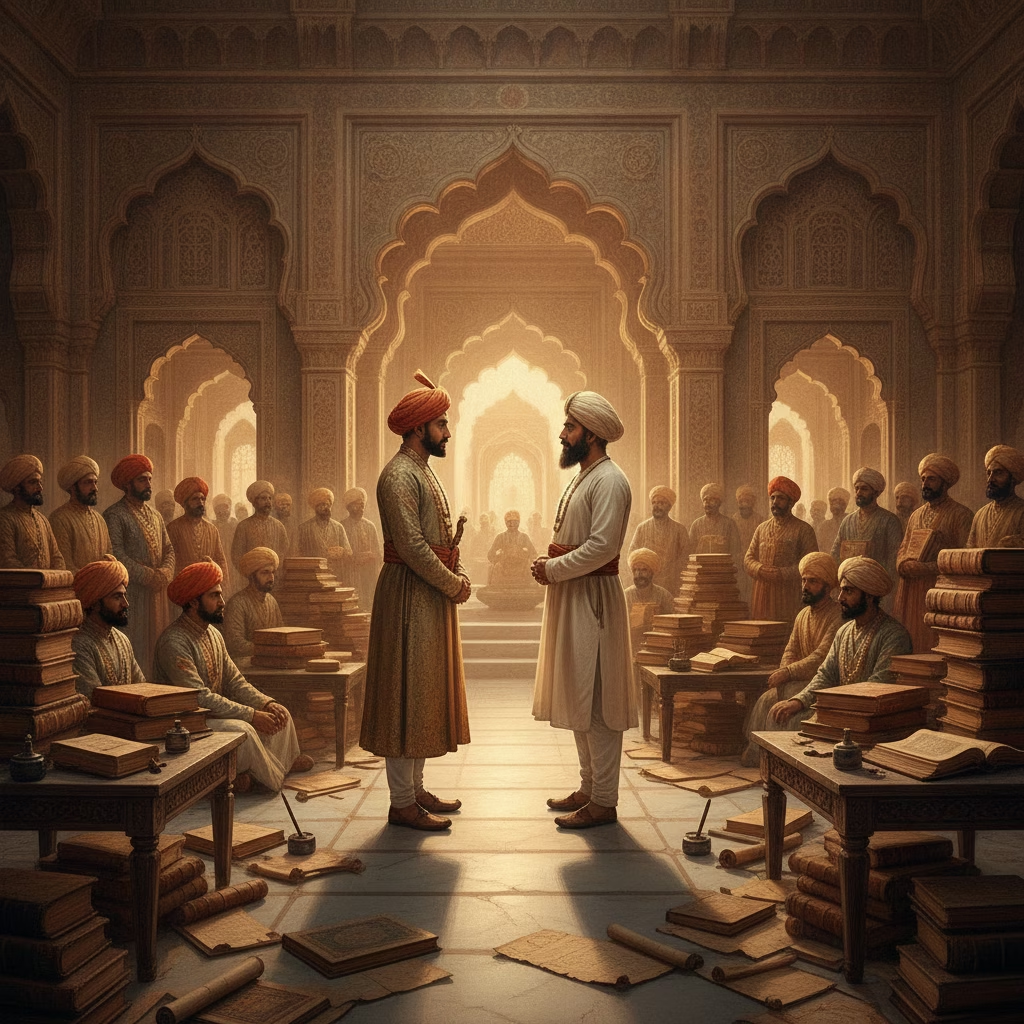
The following morning, the durbar hall filled to capacity. Nobles, ulema (religious scholars), sufis, merchants, and even common citizens who had heard of the unusual contest crowded into every available space. The famous traveler Ibn Battuta, who had been documenting his experiences at the Sultan's court, secured a prominent position to observe and record this unprecedented event.
Manuscripts were brought forth—texts in Persian, Arabic, Sanskrit, and other languages. The debate began with questions of philosophy: What is the nature of justice? How should a ruler balance mercy with law? What obligations does power impose upon those who wield it?
The Sultan demonstrated immediately why he had earned his reputation for brilliance. He quoted from the Quran in flawless Arabic, then seamlessly transitioned to Sanskrit verses from Hindu philosophical texts, illustrating his point that wisdom transcended religious boundaries. This was, after all, the only Sultan known to participate in Hindu festivities, a tolerance that set him apart from his predecessors.
But the scholar was equally formidable. For every citation the Sultan offered, the scholar provided a counter-example. When Muhammad bin Tughluq spoke of medical theories he had studied, the scholar produced alternative interpretations from Greek and Persian physicians. The exchange was not hostile but exhilarating—two minds dancing through the accumulated knowledge of civilizations.
As the sun moved across the sky, casting changing patterns through the latticed windows, neither man yielded ground. The courtiers sat transfixed, witnessing something they had never seen before: their Sultan engaged in genuine intellectual combat where his word was not automatically final.
When evening prayers were called, the Sultan declared the first day complete. "Tomorrow," he announced, "we shall continue. And I confess, I have not enjoyed a conversation so thoroughly in years."
Day Two: The Tide Turns
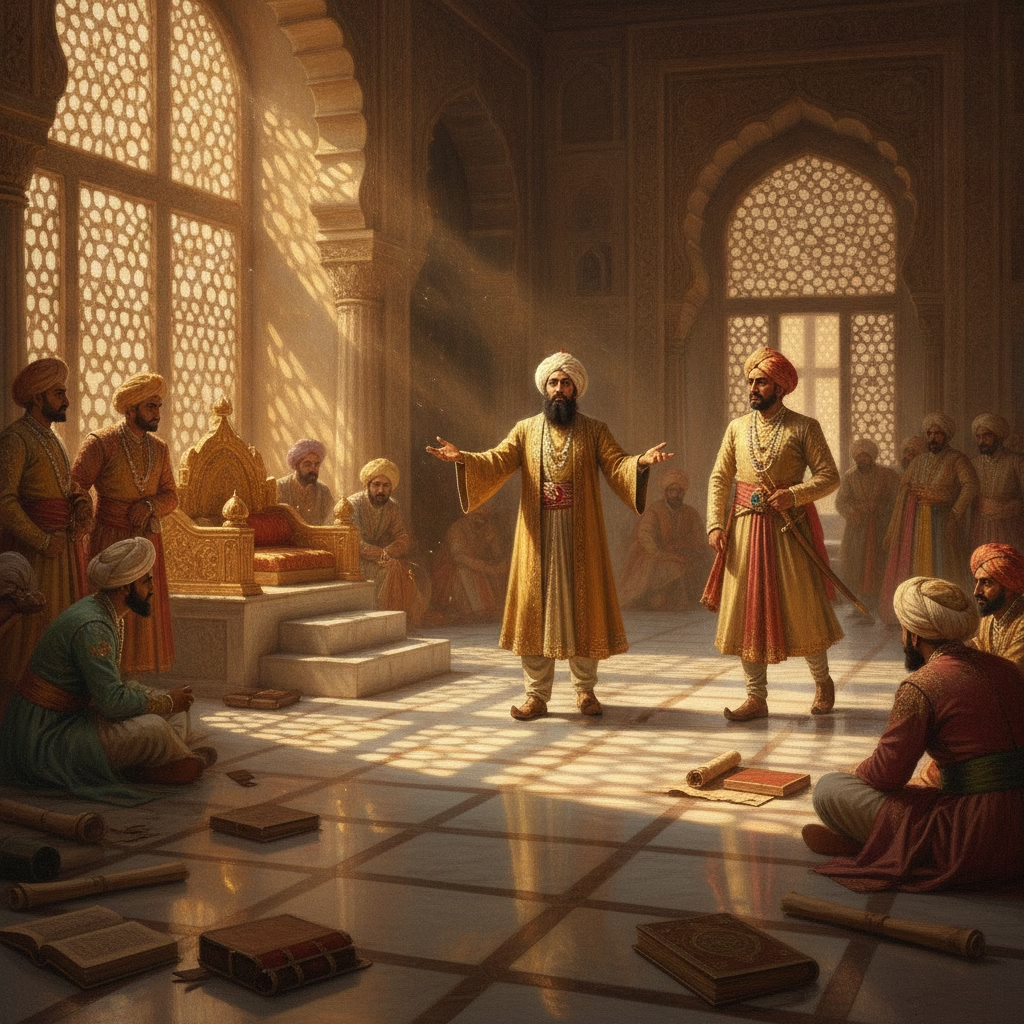
The second day brought a shift in the debate's tenor. Having established mutual respect through philosophical discourse, the scholar began to probe more sensitive territory—the Sultan's controversial decisions as a ruler.
"Your Majesty," the scholar began carefully, "you moved the capital from Delhi to Daulatabad in 1327, a distance of nearly a thousand miles. You constructed roads, planted shade trees, established rest stations with provisions. Yet many suffered during this migration. Can such a decision, however logical in conception, be justified if it brings hardship to the people?"
A hush fell over the court. Everyone knew this was the Sultan's most criticized policy. Muhammad bin Tughluq had envisioned Daulatabad as a centrally located capital from which both the north and south of his vast empire could be efficiently administered. He had even sent his own mother there with the nobles in 1329. But the forced migration had caused tremendous suffering.
The Sultan descended from his throne, pacing as he formulated his response. Those who knew him recognized the signs of his intense mental engagement—and perhaps a touch of the paranoia that sometimes clouded his judgment.
"The vision was sound," the Sultan argued, his voice rising. "A central capital would have unified the realm. The infrastructure was prepared. The logic was irrefutable."
"But logic without compassion," the scholar countered gently, "is like a sword without a handle. It cuts the one who wields it as surely as its intended target. A ruler's first duty is not to grand visions but to the welfare of those he governs."
The courtiers held their breath. But instead of erupting in anger, the Sultan paused mid-stride. His expression shifted from defensive to contemplative. Here was the paradox that had earned him the epithet "The Wisest Fool"—a man capable of both brilliant insight and catastrophic misjudgment, but also capable of recognizing truth when confronted with it.
"Continue," the Sultan said quietly, returning to his throne. "I would hear more of your reasoning."
As the afternoon shadows lengthened, the scholar systematically examined the gap between theoretical perfection and practical governance. He spoke of the need to balance innovation with stability, vision with pragmatism. And with each point, the courtiers could see the Sultan's defenses gradually weakening—not through force, but through the irresistible power of well-reasoned argument.
Day Three: The Final Arguments
Dawn broke on the third day with an electric anticipation filling the durbar hall. Word had spread throughout Delhi that the scholar was holding his own—perhaps even prevailing—against the formidable intellect of Muhammad bin Tughluq. The crowd that gathered was the largest yet.
The Sultan appeared tired but animated. He had reportedly spent the night reviewing texts and preparing arguments. The scholar, too, showed signs of exhaustion, but his resolve remained firm.
The final day's debate ranged across all domains of knowledge. They discussed astronomy and mathematics, debated the interpretation of religious texts, explored questions of ethics and statecraft. The Sultan deployed every weapon in his considerable intellectual arsenal, drawing upon his knowledge of Persian poetry, Arabic jurisprudence, Sanskrit philosophy, and Turkic military strategy.
But the scholar matched him point for point. More importantly, he did something the Sultan's courtiers rarely dared: he challenged not just the Sultan's conclusions but the assumptions underlying them. He questioned whether brilliance alone qualified one to rule, whether intellectual superiority justified imposing one's vision upon others, whether being right in theory excused being wrong in practice.
As midday approached, the debate reached its crescendo. The Sultan posed a final, complex question about the nature of sovereignty and the divine right of kings. The scholar's response was both simple and profound:
"Your Majesty possesses knowledge that would shame the greatest scholars. You speak more languages than most men know exist. Your vision spans continents and centuries. But wisdom is not merely the accumulation of knowledge—it is the humility to recognize that even the wisest among us can be wrong, and that truth matters more than being proven right."
The Sultan's Acknowledgment
Silence descended upon the court like a physical presence. Every eye turned to Muhammad bin Tughluq, waiting to see how the man known for his unpredictable temperament would respond to this implicit declaration of victory.
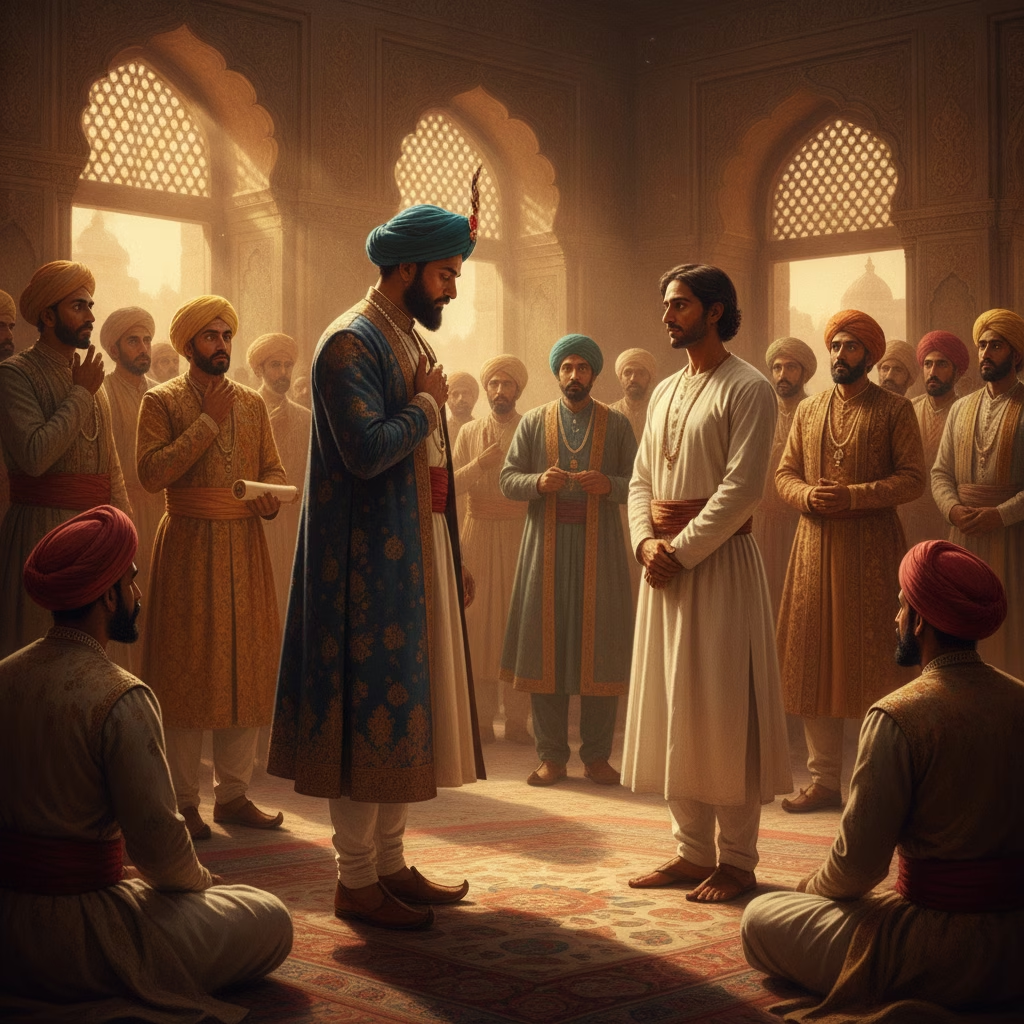
The Sultan sat motionless upon his throne, his expression unreadable. The moment stretched, taut as a bowstring. Then, slowly, he rose to his feet.
He placed his hand over his heart in a gesture of respect and acknowledgment. "You have bested me," he said clearly, his voice carrying to every corner of the hall. "Not through trickery or sophistry, but through superior reasoning and deeper wisdom. In three days, you have taught me what years of study could not: that the greatest knowledge is knowing the limits of one's own understanding."
A collective gasp rippled through the assembly. The Sultan—the absolute ruler, the man whose word was law, the sovereign whose pride and paranoia were legendary—had publicly admitted defeat in an intellectual contest.
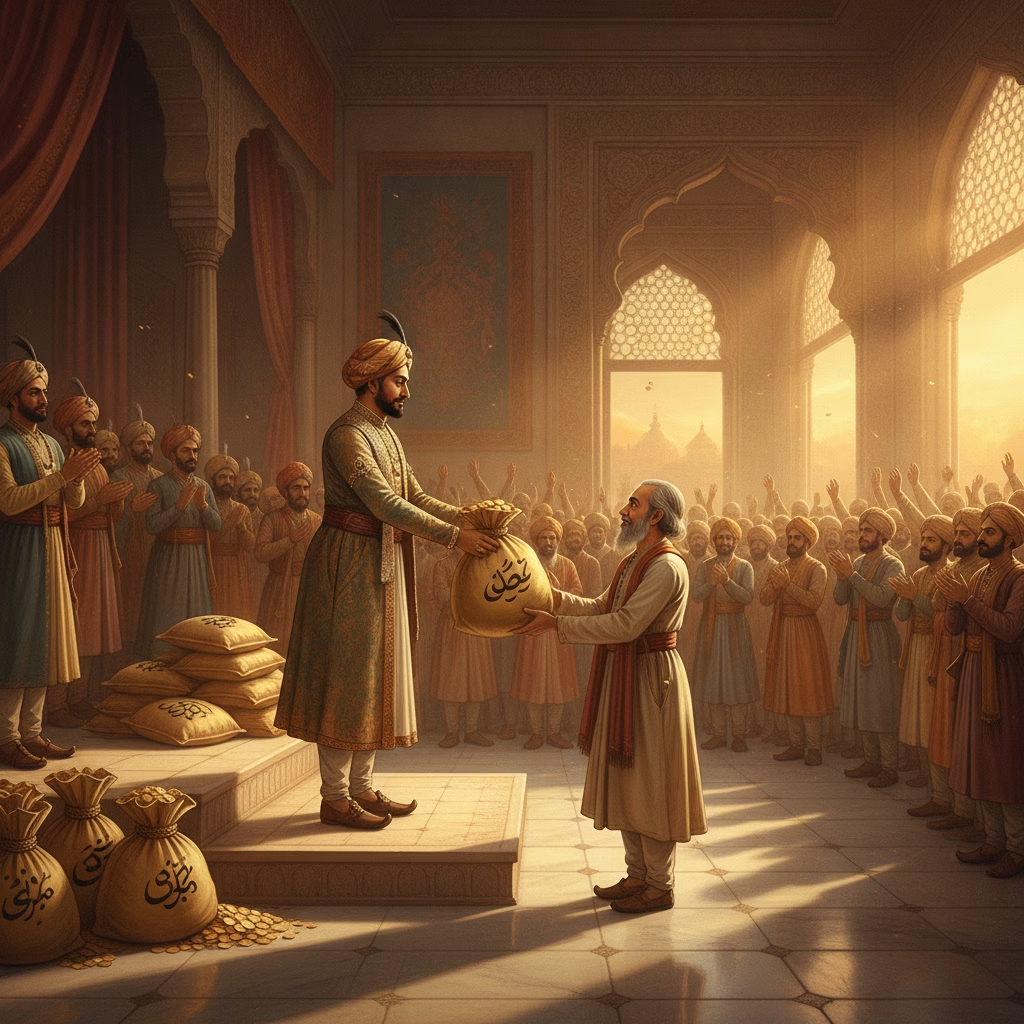
But Muhammad bin Tughluq was not finished. He turned to his treasurer. "Bring gold," he commanded. "This man has given me a gift beyond price—the gift of genuine challenge and honest discourse. He shall be rewarded accordingly."
The Reward of Truth
As the evening light streamed through the arched windows of the durbar hall, the Sultan personally presented the scholar with heavy bags of gold coins. The gesture was unprecedented—a ruler rewarding the man who had defeated him in public debate.
"You came seeking not gold but truth," the Sultan said, his voice warm with genuine respect. "Yet you shall have both. Take this gold not as payment for victory, but as recognition that you have reminded me of something I had forgotten: that a ruler who cannot lose an argument gracefully is not fit to win a war justly."
The scholar accepted the gold with a deep bow. "Your Majesty's grace in defeat is worth more than any victory. You have shown that true nobility lies not in never being wrong, but in acknowledging error when confronted with truth."
The court erupted in applause—not the dutiful applause of courtiers obligated to show approval, but genuine appreciation for having witnessed something extraordinary. They had seen their Sultan display a quality rarer than military prowess or administrative skill: intellectual humility.
Ibn Battuta, recording the scene in his chronicles, would later write that this was the moment he truly understood the paradox of Muhammad bin Tughluq. Here was a man capable of both magnificent wisdom and terrible folly, whose greatest strength and greatest weakness were one and the same: an uncompromising commitment to what he believed was true, regardless of consequence.
Legacy of a Legend
The story of the three-day debate became legendary throughout the Delhi Sultanate and beyond. It was told and retold, embellished and elaborated, until it became difficult to separate historical fact from mythic embroidery. Yet at its core remained a truth that resonated across centuries: that genuine wisdom includes the courage to be proven wrong, and that intellectual honor sometimes demands we reward those who defeat us.
Muhammad bin Tughluq would continue to rule until his death in 1351, his reign marked by both visionary reforms and catastrophic failures. His decision to move the capital to Daulatabad would ultimately be reversed, one of many brilliant ideas that proved impractical in execution. His experiments with token currency, his ambitious military campaigns, his attempts to revolutionize administration—all would earn him the enduring epithet "The Wisest Fool."
But among all the stories told of his reign, the legend of the scholar who debated him for three days stands apart. It reminds us that true greatness lies not in never being challenged, but in how we respond when challenged. That wisdom is not the absence of error but the willingness to acknowledge it. And that sometimes, the most powerful thing a ruler can do is admit that someone else was right.
In the end, the gold the Sultan gave the scholar was not really a reward for winning an argument. It was payment for a more valuable service: the reminder that truth matters more than ego, that wisdom requires humility, and that the greatest victories are sometimes found in graceful defeats.