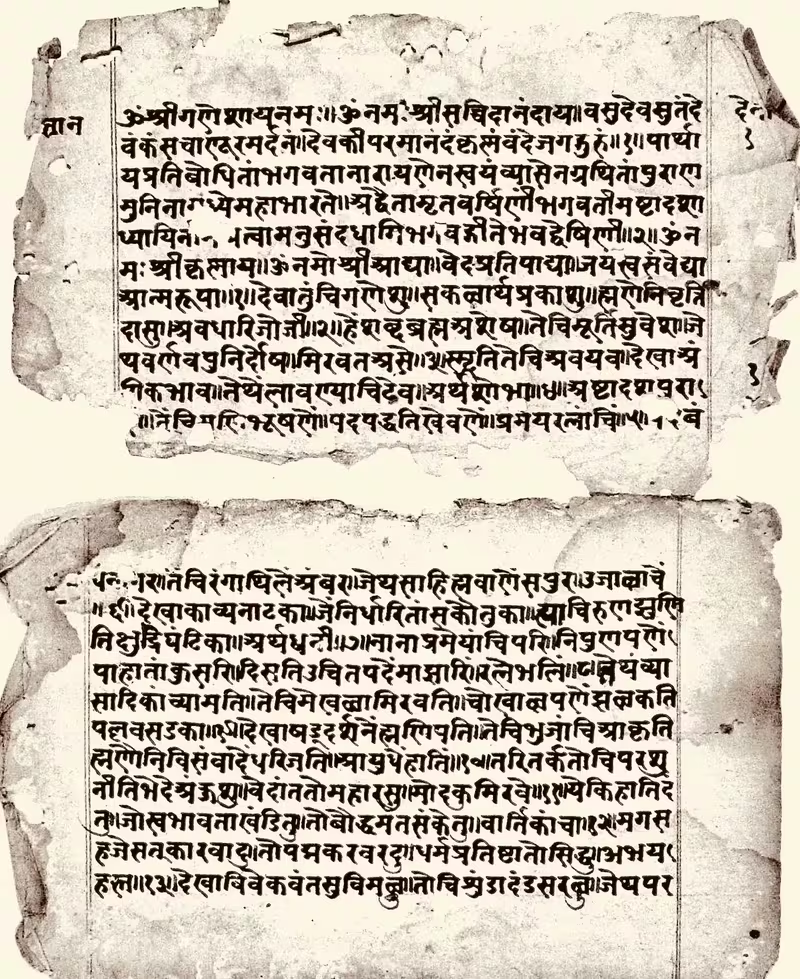

The Outcasts Who Transformed a Language: The Pilgrimage of Dnyaneshwar and His Siblings
The year was 1296 CE in the village of Alandi, on the banks of the Indrayani river in Maharashtra. Four young people—the eldest barely twenty-one—stood at a crossroads that would define not just their lives, but the spiritual landscape of an entire region for centuries to come.
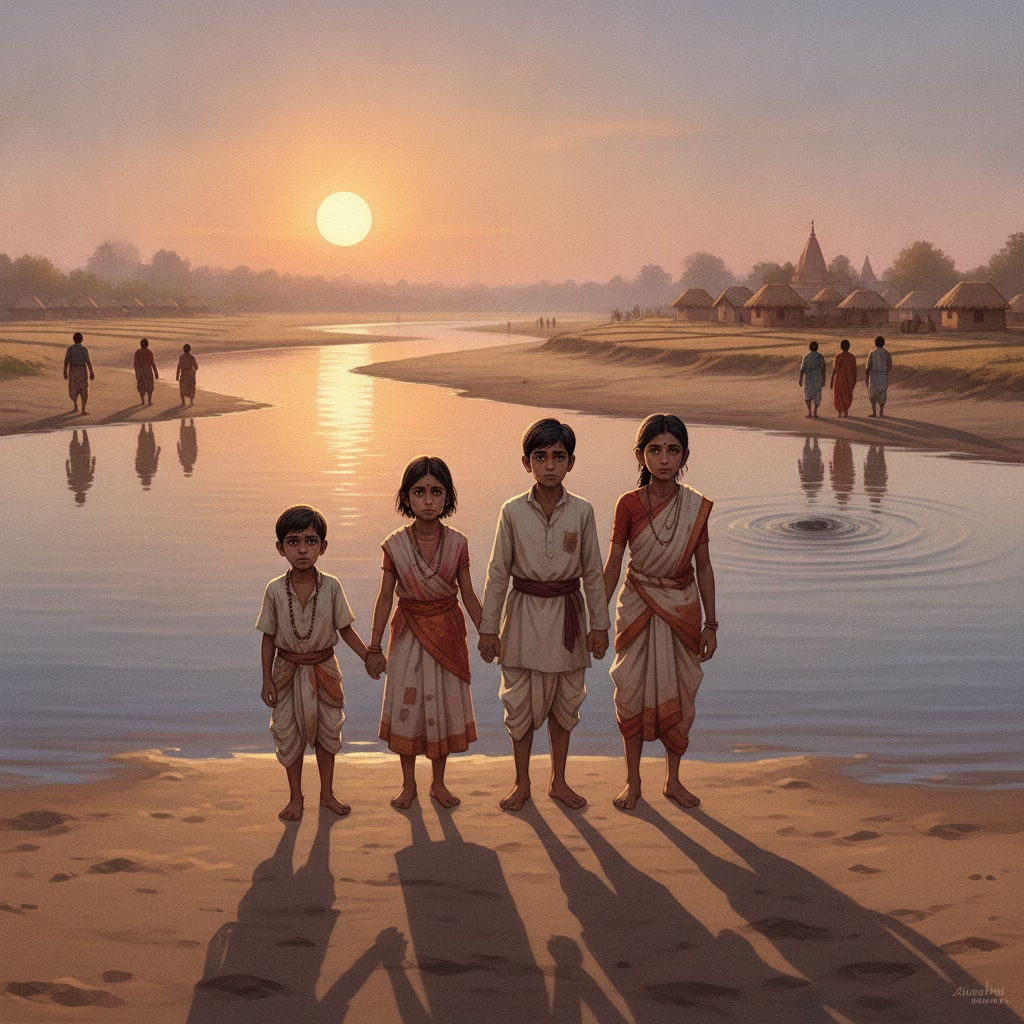
The Outcasts of Alandi
The waters of the Indrayani river had swallowed their parents, and with them, any hope of redemption in the eyes of Alandi's Brahmin community.
Nivritti, Dnyaneshwar, Sopan, and Muktabai—the four children of Vitthal Kulkarni—had committed no crime. Their father had. Years earlier, Vitthal had renounced the world to become a sannyasin, a religious ascetic, studying under a guru in the holy city of Kashi. But when his teacher discovered that Vitthal had left behind a wife without her consent, he was ordered to return to married life.
In 13th-century Maharashtra, this was unthinkable. A sannyasin who returned to householder life had violated the sacred order. When Vitthal returned to Alandi and resumed his marriage, the Brahmin community was scandalized. The couple had four children—Nivruttinath born in 1273 CE, Dnyaneshwar in 1275 CE in nearby Apegaon village on the banks of the Godavari river, Sopan in 1277 CE, and their sister Muktabai in 1279 CE.
But these children were born into a curse. The Brahmins excommunicated the entire family. The boys were denied the sacred thread ceremony that would grant them full admission to the Brahmin caste. No one would give them work. No one would sell them food from the market. No one would even speak to them.
The persecution became unbearable. Vitthal Kulkarni, desperate for a path to redemption, asked the Brahmin council what penance might absolve his sin. Their answer was brutal: only death could atone for his transgression. Hoping their sacrifice might free their children from this inherited shame, Vitthal and his wife Rakhumabai jumped into the Indrayani river.
The four orphaned siblings stood on those same banks now, no less outcast than before. Their parents' deaths had changed nothing. Society still rejected them. But what society meant as punishment would become the foundation for revolution.
The Cave Initiation
Before their parents' deaths, the family had fled to Nashik, hoping distance might ease the persecution. It was during this period that an encounter occurred that would change everything.
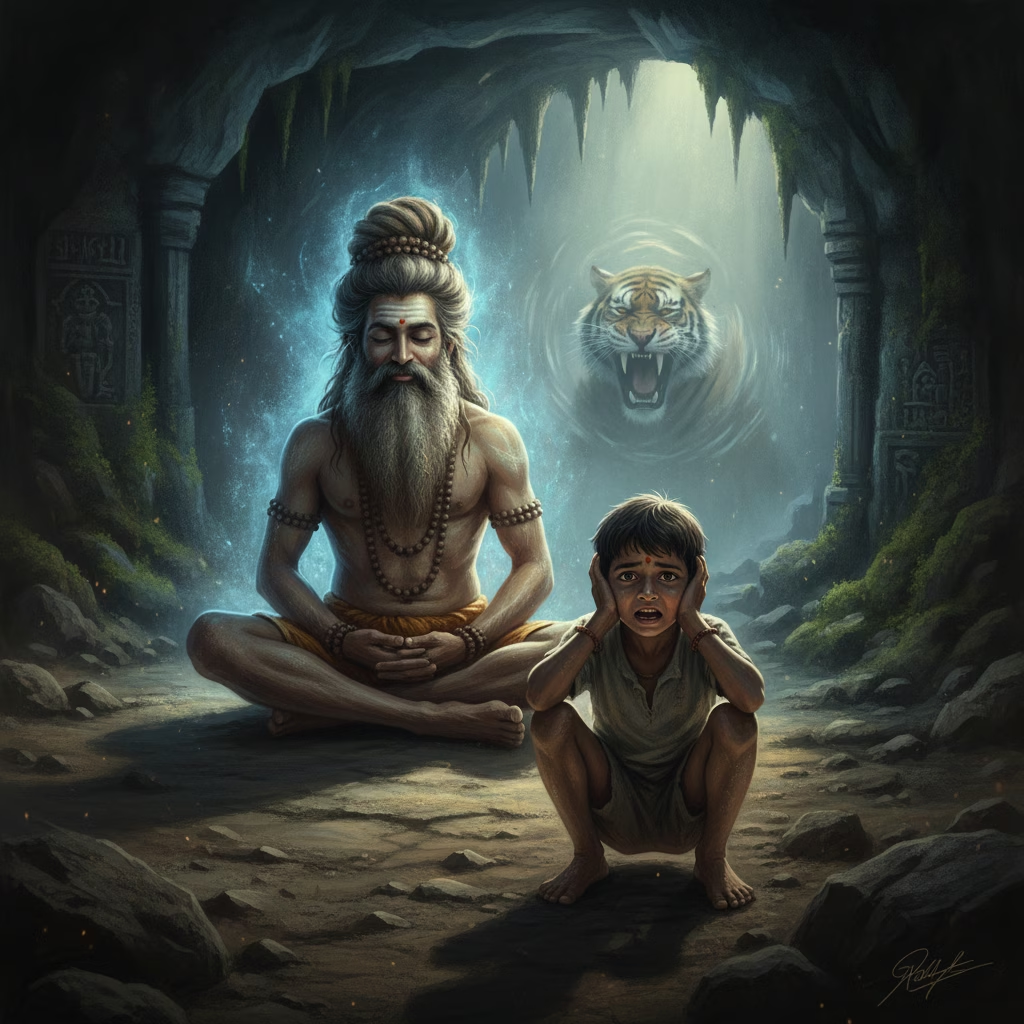
One day, while Vitthal performed his daily rituals in the forest, a tiger appeared. The family scattered in terror. Three of the children escaped with their father, but young Nivruttinath, the eldest, became separated. Terrified, he hid in a cave.
In the darkness of that cave, Nivruttinath met someone who would transform the trajectory of all four siblings: Gahaninath, a master of the Nath yogi tradition. The Nath yogis were spiritual seekers who valued direct experience over ritual orthodoxy, who practiced meditation and yoga, and who cared nothing for caste hierarchies that obsessed the Brahmins.
Gahaninath saw not an outcast child, but a soul ready for awakening. He initiated Nivruttinath into the wisdom of the Nath tradition—teachings about the nature of consciousness, the unity of all existence, and the path to liberation through yoga and devotion.
When Nivruttinath reunited with his family, he carried something more valuable than any sacred thread: genuine spiritual knowledge. And he shared it freely with his siblings. All four children were eventually accepted into and initiated into the Nath tradition. The society that had rejected them found they needed no validation. They had found their own path.
What the Brahmins had meant to destroy, they had inadvertently liberated. Unbound by orthodox constraints, these four young people would become celebrated yogis and Bhakti poets, founding a spiritual movement that welcomed everyone.
The Sacred Commentary
By 1290 CE, Dnyaneshwar was just fifteen years old. Most teenagers in medieval India were still learning their family trades. Dnyaneshwar was completing a work that would become a cornerstone of an entire literary tradition.
The Bhagavad Gita—that sacred dialogue between Krishna and Arjuna on the battlefield of Kurukshetra—had existed for centuries, but only in Sanskrit, the language of the educated elite. Common people could not access its wisdom. They could not read the words that promised liberation was available to all.
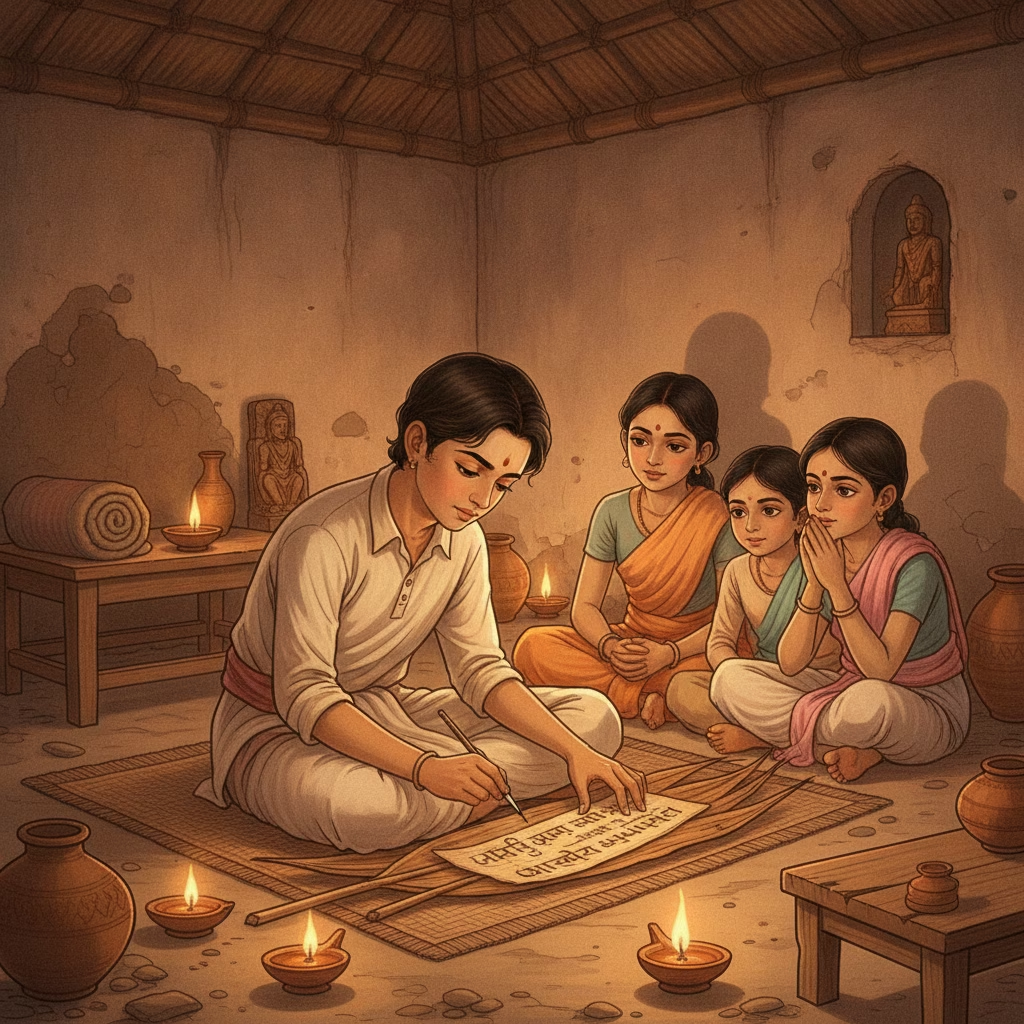
Dnyaneshwar, according to Wikipedia, authored the Dnyaneshwari, a commentary on the Bhagavad Gita, but he wrote it in Marathi—the language spoken by farmers, artisans, and merchants across Maharashtra. For the first time, profound spiritual philosophy was accessible to everyone.
The Dnyaneshwari is the oldest surviving literary work in the Marathi language and is considered a milestone in Marathi literature. But it was more than a translation. Dnyaneshwar's genius lay in his ability to weave together the non-dualistic Advaita Vedanta philosophy with the devotional Bhakti tradition and practical Yoga teachings. He made complex philosophical concepts sing in the vernacular.
In the simple room in Alandi where he wrote, his siblings watched as Marathi words flowed onto palm leaves—words that would echo through seven centuries. His sister Muktabai and brothers Nivritti and Sopan all became celebrated poets themselves, but Dnyaneshwar's gift was extraordinary.
He also authored Amrutanubhav ("The Nectar of Self-Awareness"), another philosophical work. Together, these texts laid the foundation for what would become a revolution: the democratization of spiritual knowledge in Maharashtra.
The Pilgrimage to Pandharpur
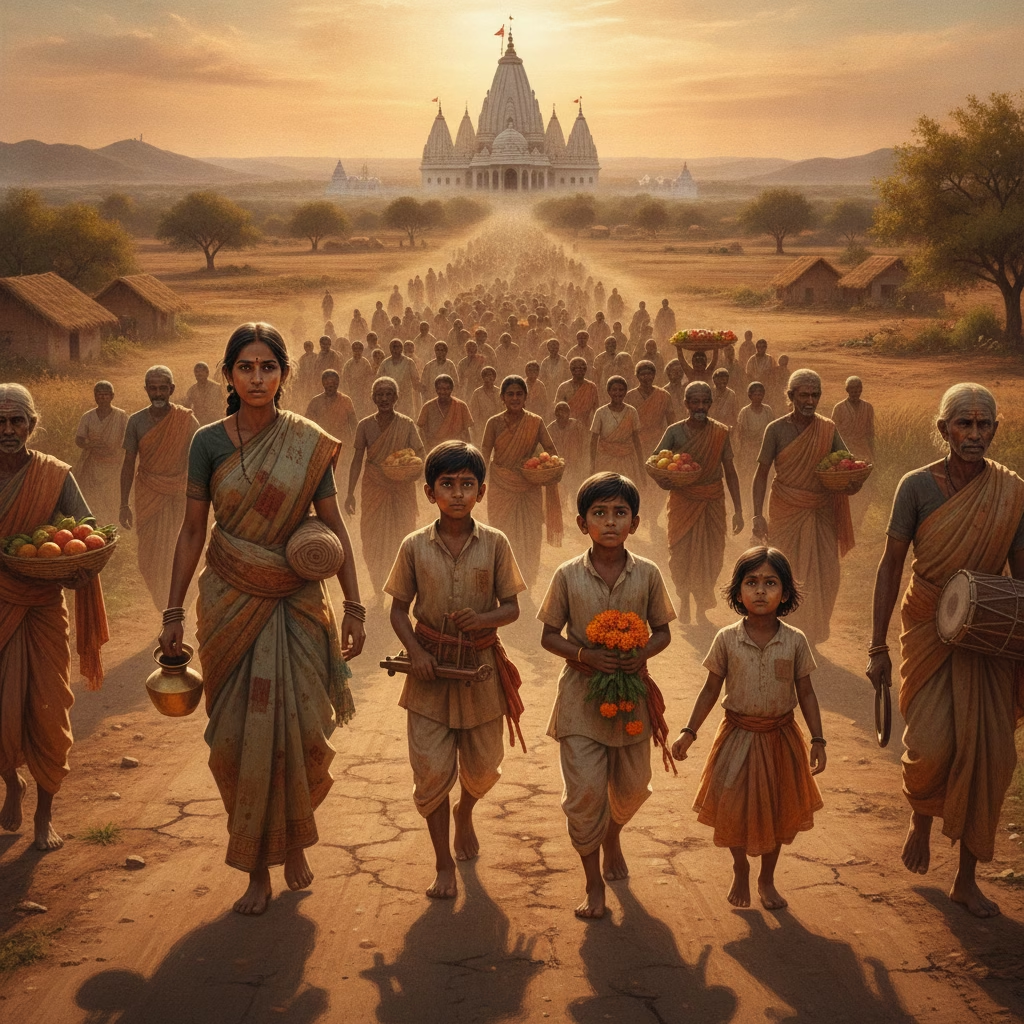
The four siblings decided to undertake a pilgrimage to Pandharpur, the sacred town where Vithoba—a form of Vishnu-Krishna—was worshipped. This journey would become legendary.
As they walked the dusty roads of medieval Maharashtra, something remarkable happened. Common people joined them. Farmers left their fields. Potters left their wheels. Weavers left their looms. They came to hear these young teachers who spoke of God not in incomprehensible Sanskrit, but in their own Marathi tongue.
The siblings taught that devotion (bhakti) to Vithoba was open to everyone, regardless of caste or gender. This was the Varkari tradition taking shape—a spiritual movement that would inspire saint-poets like Eknath and Tukaram in later centuries and continues to thrive today.
Their pilgrimage route became sacred. Every year since, hundreds of thousands of devotees walk the same paths to Pandharpur, singing devotional songs (abhangas) composed by Dnyaneshwar and the saints who followed him. The Varkari tradition that Dnyaneshwar helped found became one of the most significant Bhakti movements in all of India.
The outcasts had become spiritual leaders. The children denied the sacred thread had woven something far more powerful: a tradition that needed no thread, no ritual purity, no caste hierarchy—only sincere devotion.
The Moving Wall
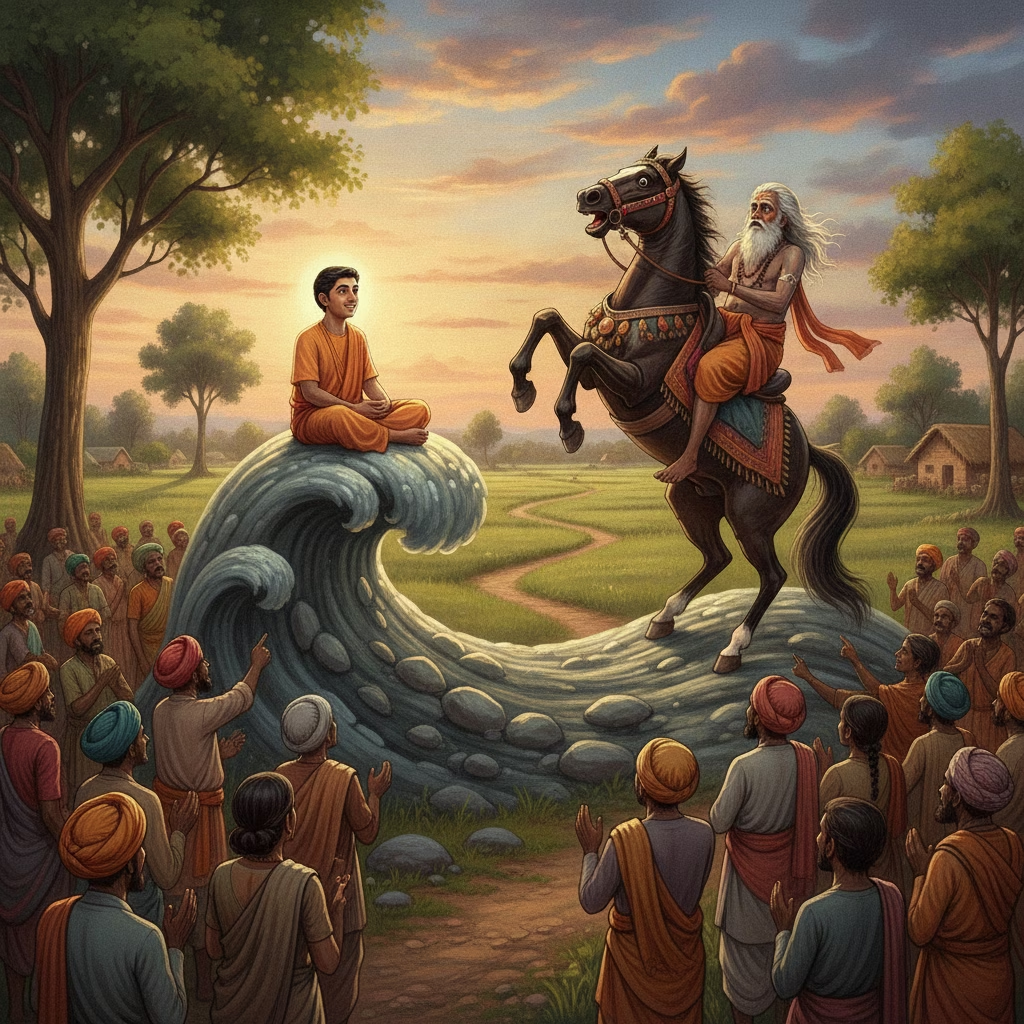
Legends accumulated around Dnyaneshwar during his short life. One story, preserved in the hagiographic accounts, tells of his encounter with Changdev, an elderly accomplished yogi who was reportedly over 1,400 years old through his mastery of yoga.
Changdev, proud of his spiritual attainments, heard of this young teacher and decided to test him. He rode to meet Dnyaneshwar on horseback, a display of his status. Dnyaneshwar, with characteristic humility and playfulness, responded by sitting on a wall with his siblings—and making the wall move like a wave, riding it to meet the elder yogi.
The accounts also describe Dnyaneshwar making a buffalo recite Vedic verses, challenging the Brahmin notion that sacred knowledge belonged only to certain castes. Whether literal truth or symbolic story, these legends conveyed a powerful message: true spiritual attainment transcended social conventions and ritual orthodoxy.
Changdev, humbled by the young saint's wisdom and power, became his devotee. The old yogi's pride dissolved before genuine realization. In Dnyaneshwar's presence, accomplishment mattered less than awakening.
The Language of the People
What made Dnyaneshwar's impact so profound was not just what he taught, but how he taught it. By choosing Marathi over Sanskrit, he made a political and spiritual statement: divine wisdom belongs to everyone.
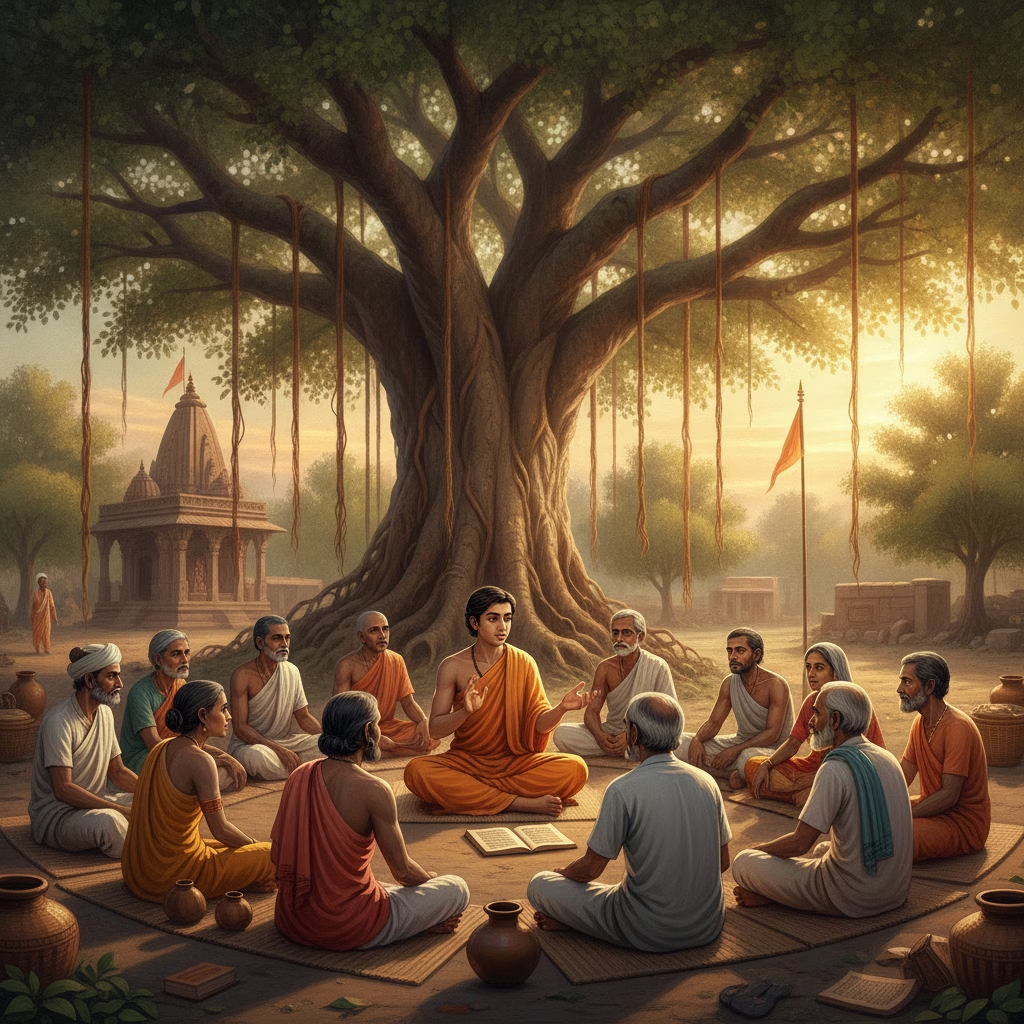
Under the banyan trees of Maharashtra's villages, common people gathered to hear the Dnyaneshwari recited. For the first time, they understood the Gita's teachings directly. They learned that the path to liberation didn't require mastery of Sanskrit, expensive rituals, or Brahmin intermediaries. It required devotion, self-knowledge, and ethical living—things available to everyone.
Dnyaneshwar's ideas reflected the non-dualistic Advaita Vedanta philosophy—the teaching that the individual soul and the universal consciousness are ultimately one. But he expressed this profound truth in language a farmer could understand, through metaphors drawn from daily life.
His emphasis on Yoga provided practical methods for spiritual development. His emphasis on Bhakti toward Vithoba gave people a personal relationship with the divine. Together, these elements created a complete spiritual path accessible to all.
The three brothers and sister Muktabai all became celebrated yogis and Bhakti poets, each contributing to this literary and spiritual flowering. But Dnyaneshwar's genius burned brightest, even as it would burn briefest.
The Living Samadhi
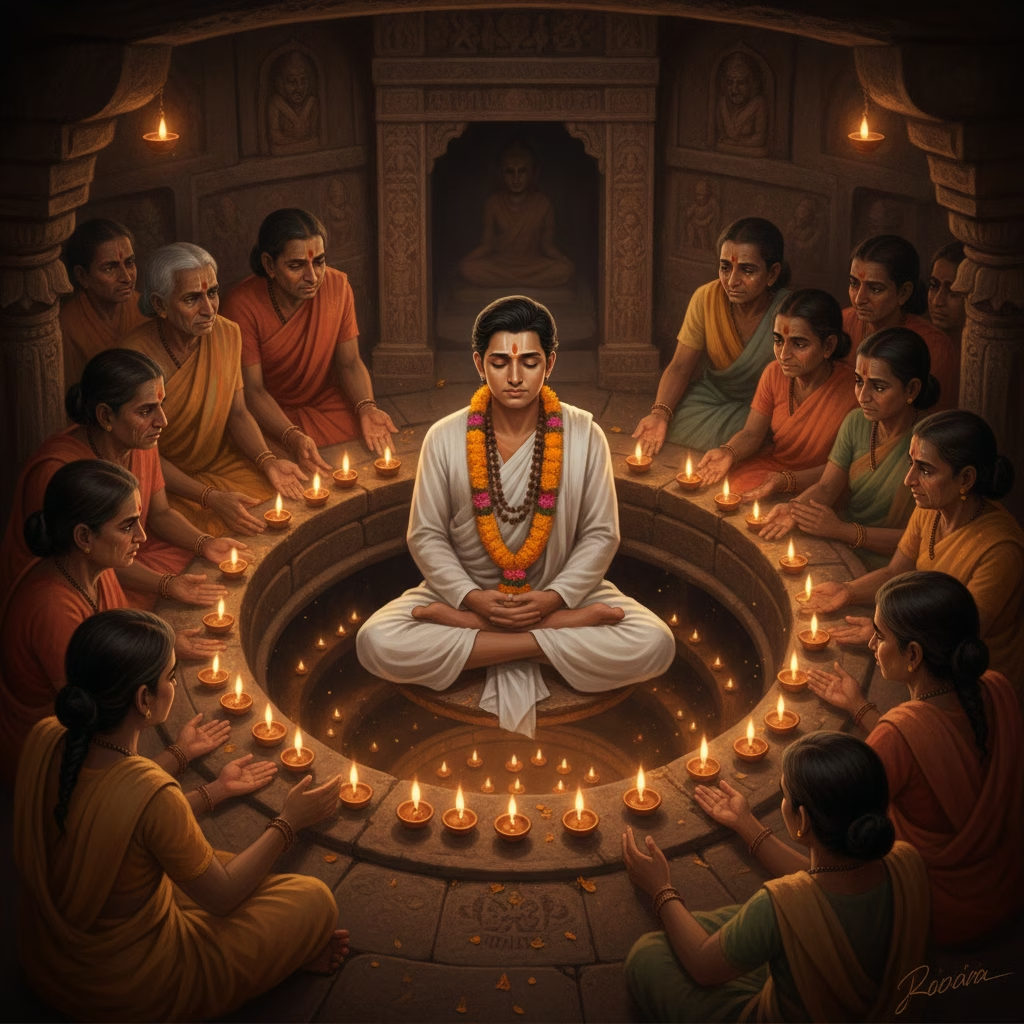
In 1296 CE, at just twenty-one years old, Dnyaneshwar made an extraordinary decision. He would undertake samadhi—not death, but a conscious departure from the body, a yogic practice of the highest order.
In Alandi, the town where he had been an outcast child, Dnyaneshwar descended into an underground chamber. His siblings and followers gathered, tears streaming down their faces. He seated himself in meditation posture and, according to tradition, entombed himself alive, entering a state of deep meditation from which he would not return.
According to Wikipedia, Dnyaneshwar "undertook samadhi at Alandi in 1296 by entombing himself in an underground chamber." This practice, called jīva-samādhi, represented the ultimate yogic accomplishment—the conscious merging of individual consciousness with the universal.
He had lived just twenty-one years. In that brief time, he had created the oldest surviving works in Marathi literature, founded a spiritual movement that would inspire generations, and transformed the religious landscape of Maharashtra. His legacy would inspire saint-poets for centuries. The Varkari tradition he helped establish continues today, with annual pilgrimages to Pandharpur drawing hundreds of thousands of devotees.
The tomb in Alandi became a pilgrimage site. The outcast boy became Maharashtra's most beloved saint. The child denied a sacred thread became the thread connecting millions to the divine.
Four orphaned siblings, rejected by society, had transformed rejection into revolution. They had taken their pain and turned it into poetry, their exclusion into inclusion, their suffering into a path of devotion open to all. In doing so, they didn't just create Marathi literature—they created a vision of spirituality where birth mattered less than devotion, where caste mattered less than consciousness, where the language of the people became the language of God.
Seven centuries later, their pilgrimage continues.