

Overview
Dal Makhani stands as one of the most celebrated dishes in North Indian cuisine, representing a modern culinary innovation that has become deeply embedded in Indian food culture. This luxurious lentil preparation, characterized by its velvety texture and rich, buttery flavor, originated in the Punjab region and quickly became a staple of Indian restaurants worldwide. The dish exemplifies the evolution of traditional Indian cuisine in the post-Partition era, when displaced communities brought their culinary heritage to new territories and adapted it to changing tastes and circumstances.
Unlike ancient recipes passed down through generations, Dal Makhani is a relatively modern creation, born in the mid-20th century in the bustling streets of Delhi. Its creators, Kundan Lal Gujral and Kundan Lal Jaggi, transformed simple black lentils (urad dal) into a dish that would define Punjabi restaurant cuisine. The addition of butter and cream—ingredients that were not traditionally used in such abundance in home-cooked dal—elevated this humble legume dish into something extraordinary, creating a bridge between rustic Punjabi fare and the emerging restaurant culture of urban India.
The cultural significance of Dal Makhani extends beyond its taste. It represents the resilience and innovation of the Punjabi community during one of the most tumultuous periods in South Asian history. Today, this dish is not merely food but a symbol of comfort, celebration, and the enduring appeal of Punjab's generous, robust culinary traditions.
Etymology and Names
The name "Dal Makhani" is derived from two words: "dal," meaning lentils in Hindi and Urdu, and "makhani," which translates to "buttery" in Hindi, from "makhan" (butter). The name perfectly captures the essence of this dish—lentils prepared with generous amounts of butter and cream, creating a rich, indulgent texture that distinguishes it from simpler lentil preparations.
The dish is known by several alternative names across North India and Pakistan. "Urad ki dal" simply refers to the primary ingredient—urad dal or black gram. In some households, particularly in Punjab, it's affectionately called "Maa ki dal" (mother's dal), suggesting both its nurturing qualities and the traditional role of women in perfecting this time-intensive recipe. The name "Mash ki dal" is commonly used in Pakistan, where "mash" is the local term for black gram.
The term "makhani" connects this dish to a broader family of North Indian recipes, including the famous Butter Chicken (Murgh Makhani) and Paneer Makhani, all created by the same culinary innovators and sharing the signature use of butter and cream in a tomato-based gravy.
Historical Origins
Dal Makhani's history is remarkably well-documented compared to many traditional Indian dishes. The dish was created by Kundan Lal Gujral and Kundan Lal Jaggi, who established the legendary Moti Mahal restaurant in Delhi. These entrepreneurs, originally from Peshawar (now in Pakistan), migrated to Delhi during the Partition of India in 1947, bringing with them culinary expertise and innovation that would transform Indian restaurant cuisine.
The creation of Dal Makhani occurred in the context of post-Partition Delhi, where displaced Punjabi communities were rebuilding their lives and businesses. The founders of Moti Mahal had operated a small eatery in Peshawar and sought to recreate their success in their new home. Their innovation lay in adapting traditional Punjabi home-cooking techniques to the demands of restaurant service while elevating humble ingredients through luxurious additions.
Culinary Innovation in Post-Partition India
The late 1940s and 1950s marked a transformative period in Indian urban cuisine. As refugees settled in cities like Delhi, they brought diverse culinary traditions that began to cross-pollinate. The Moti Mahal restaurant became a crucible for this innovation, experimenting with traditional dishes by adding richness and complexity suited to restaurant dining and celebratory meals.
Dal Makhani emerged from the practice of slow-cooking black lentils overnight, a traditional method in Punjabi households, but with the addition of cream and butter in quantities that would have been impractical or unaffordable for daily home cooking. This transformation exemplified how restaurant culture was creating a new category of "special occasion" versions of everyday foods.
From Innovation to Institution
What began as a restaurant innovation quickly spread throughout North India. By the 1960s and 1970s, Dal Makhani had become synonymous with Punjabi cuisine, appearing on the menus of restaurants across the country. Its popularity was aided by its vegetarian status, making it accessible during religious fasts and appealing to India's large vegetarian population, while its rich flavor satisfied those seeking indulgent dining experiences.
Ingredients and Preparation
Key Ingredients
The foundation of Dal Makhani is whole black urad dal (Vigna mungo), also known as black gram or black lentils. Unlike split lentils, these retain their skin, which contributes to the dish's dark color and earthy flavor. Often, kidney beans (rajma) are added in small quantities, though this is optional and varies by recipe and region.
The defining characteristic of Dal Makhani is its generous use of dairy products. Fresh butter and cream transform the humble lentils into a luxurious dish. Traditional recipes call for white butter (makhan) rather than the clarified ghee used in many other Indian dishes, contributing to the distinctive flavor profile.
The aromatic base includes tomatoes, ginger, and garlic, which are fundamental to North Indian cooking. The tomatoes provide acidity and body to the gravy, balancing the richness of the dairy components. Ginger and garlic add depth and warmth, their pungency mellowing during the long cooking process.
Traditional Preparation
The preparation of authentic Dal Makhani is a labor of love requiring patience and time. The process begins with soaking the urad dal overnight, allowing the legumes to hydrate fully. This soaking period is crucial for reducing cooking time and ensuring the lentils cook evenly.
The cooking process traditionally involves simmering the soaked lentils for several hours until they become completely soft and begin to break down, creating a naturally creamy consistency. In traditional Punjabi households and authentic restaurants, the dal would be placed on very low heat overnight, sometimes for 8-10 hours, allowing the flavors to develop fully and the starches to release, thickening the dish naturally.
The tempering or tadka is prepared separately: butter is heated in a pan, and cumin seeds are added until they crackle, followed by finely chopped ginger and garlic. Pureed tomatoes are then added and cooked until the oil separates. Ground spices—red chili powder, coriander powder, and garam masala—are stirred in, creating an aromatic base that is then combined with the cooked lentils.
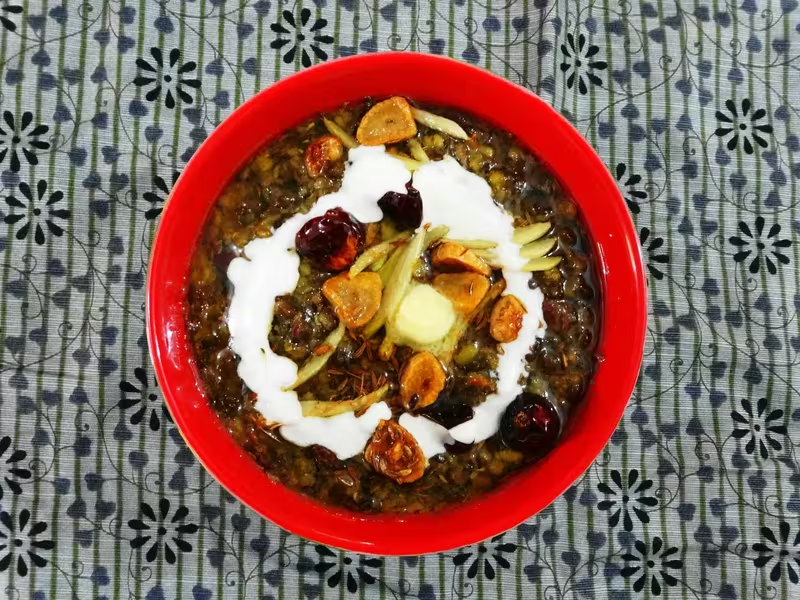
The final stage involves the addition of fresh cream and additional butter, stirred gently into the dal. Dried fenugreek leaves (kasuri methi) are crushed and sprinkled in, adding a distinctive bitter-sweet note that is characteristic of restaurant-style Dal Makhani. The dish is garnished with a dollop of butter or cream and served hot with bread.
Regional Variations
While Dal Makhani originated in Punjab and Delhi, its popularity has led to variations across India and Pakistan. The traditional Punjabi version emphasizes slow cooking and uses generous amounts of dairy, resulting in a thick, almost porridge-like consistency with a dark brown color from the overnight cooking.
The restaurant-style version popularized by Moti Mahal and replicated in urban restaurants tends to be even richer, with more cream and butter than home-cooked versions. The color is often lighter due to the higher cream content, and the texture is silkier and more gravy-like.
Modern health-conscious adaptations have emerged, using less butter and cream, sometimes substituting with milk or yogurt. While these versions sacrifice some of the traditional richness, they make the dish more accessible for regular consumption. Some contemporary recipes incorporate olive oil or reduce dairy content significantly, creating lighter versions that maintain the essential flavor profile while reducing calories and fat.
In Pakistani cuisine, where it's known as "Mash ki dal," the preparation remains similar, though regional spice preferences may result in variations in heat levels and aromatics used.
Cultural Significance
Comfort Food and Celebration
Dal Makhani occupies a unique position in North Indian food culture as both comfort food and celebratory dish. In Punjabi households, it represents weekend cooking or special occasions when the family has time for slow food preparation. The dish's association with leisure and abundance—requiring overnight cooking and generous use of expensive ingredients like cream and butter—makes it a natural choice for celebrations and family gatherings.
In restaurant culture, Dal Makhani has become synonymous with North Indian cuisine, often served at weddings, festivals, and special dinners. Its vegetarian status makes it inclusive for diverse gatherings where dietary restrictions must be accommodated, yet its richness ensures it doesn't feel like a compromise.
Social and Religious Context
As a vegetarian dish, Dal Makhani holds particular significance in Indian food culture. It provides a protein-rich, satisfying option for vegetarians, who constitute a significant portion of India's population. The dish is suitable for most Hindu religious occasions and festivals, though its richness and dairy content place it in the "rajasik" category according to Ayurvedic classification—foods that are considered stimulating and rich, suitable for active life but not for ascetic practices.
The use of black lentils carries its own cultural significance. Urad dal has been cultivated in the Indian subcontinent for thousands of years and features in various traditional dishes across regions. In Punjabi culture specifically, it's valued for its nutritional properties and is believed to provide strength and warmth, making it particularly popular during winter months.
Family Traditions
Despite being a relatively modern creation, Dal Makhani has been adopted into family traditions across North India. Many families have developed their own variations, adjusting spice levels, cream content, and cooking times to suit their preferences. The dish is often prepared by senior women in the household, who guard their specific recipes and techniques, passing them down through generations.
The overnight slow-cooking tradition has created a particular domestic rhythm: the dal is set to cook on low heat before the family sleeps, filling the house with its aroma through the night, and is ready for the next day's meal. This process creates anticipation and marks the occasion as special.
Culinary Techniques
The preparation of Dal Makhani showcases several important techniques in Indian cooking. The slow-cooking method, while not as elaborate as dum pukht (sealed pot cooking), shares the principle of low, sustained heat allowing flavors to develop and meld. This patience-intensive technique is fundamental to achieving the dish's characteristic deep flavor and creamy texture.
The tempering or tadka technique is crucial. By frying spices in hot butter, their essential oils are released and their flavors intensified. This method creates a flavor foundation that permeates the entire dish. The timing of adding each ingredient during tempering affects the final flavor profile—cumin seeds must crackle but not burn, ginger and garlic should turn golden, and tomatoes must cook until their raw taste disappears.
The technique of stirring cream and butter into the hot dal requires careful attention. These dairy products must be incorporated gently to prevent curdling, usually added off the heat or on very low heat while stirring continuously. This creates the characteristic smooth, velvety texture that defines good Dal Makhani.
The crushing of dried fenugreek leaves (kasuri methi) between the palms before adding releases their aromatic oils and distributes their flavor evenly. This final addition is timed carefully—too early and the subtle bitterness is lost, too late and it doesn't integrate properly.
Evolution Over Time
From its origins in the 1940s-50s, Dal Makhani has evolved considerably while maintaining its essential character. Early versions were simpler, with less cream and butter than contemporary restaurant preparations. As the dish gained popularity and dairy products became more affordable and accessible, recipes became increasingly rich.
The restaurant industry drove significant changes in Dal Makhani preparation. Competition among restaurants led to progressively creamier, butterier versions, creating a feedback loop where diners came to expect and demand this ultra-rich style. This evolution represents a broader trend in Indian restaurant cuisine, where dishes became richer and more elaborate than their home-cooked counterparts.
The global spread of Indian cuisine introduced Dal Makhani to international audiences, leading to further adaptations. In Western countries, the dish often appears in Indian restaurants as a premium vegetarian option, sometimes adapted to local tastes with reduced spicing or different presentations. Fusion experiments have produced variations incorporating local ingredients or techniques while maintaining the essential character of the dish.
Recent health consciousness has sparked a counter-trend toward lighter versions. Contemporary recipes often reduce butter and cream, incorporate more tomatoes for body, or use yogurt as a partial substitute for cream. These adaptations acknowledge the dish's origins while making it more suitable for regular consumption in health-conscious modern diets.
Famous Establishments
The story of Dal Makhani cannot be told without mentioning Moti Mahal in Delhi, where the dish was created. This restaurant became legendary not only for Dal Makhani but also for Butter Chicken, another iconic creation of its founders. Though the original establishment has evolved and expanded, the Moti Mahal name remains synonymous with authentic North Indian restaurant cuisine.
Throughout North India, particularly in Delhi, Punjab, and major urban centers, numerous establishments have built their reputations on their versions of Dal Makhani. Each claims some distinction—the longest cooking time, the most traditional method, or the richest flavor. These restaurants have become destinations for food enthusiasts seeking authentic preparations of this beloved dish.
Health and Nutrition
From a nutritional perspective, Dal Makhani is a protein-rich dish, with the black lentils providing significant plant-based protein, fiber, and minerals including iron, magnesium, and potassium. The lentils are also a good source of B vitamins, particularly folate. At approximately 350 calories per serving, it provides substantial energy and nutrition.
However, the traditional preparation's high content of butter and cream also makes it rich in saturated fats and cholesterol. A serving can contain 15-20 grams of fat, much of it saturated, which has implications for cardiovascular health when consumed regularly. The dish is also relatively high in sodium, particularly in restaurant preparations.
In traditional Indian dietary understanding, particularly Ayurvedic principles, Dal Makhani would be classified as "rajasik"—a food that is rich, stimulating, and passion-inducing. It's considered appropriate for people engaged in active work and life but not suitable for those seeking to maintain a purely "satvik" (pure, calming) diet.
Modern nutritionists recommend enjoying Dal Makhani in moderation, perhaps as an occasional treat rather than a regular staple. Health-conscious adaptations that reduce butter and cream while increasing the proportion of tomatoes and using low-fat dairy can maintain much of the flavor while significantly reducing the caloric and fat content.
Modern Relevance
Today, Dal Makhani enjoys unprecedented popularity, having transcended its Punjabi origins to become a pan-Indian favorite. It appears on menus of Indian restaurants worldwide, from London to Los Angeles, Sydney to Singapore, serving as an ambassador of North Indian cuisine. Its vegetarian nature makes it accessible to diverse audiences, including those who don't eat meat for ethical, religious, or health reasons.
The dish has adapted to modern lifestyles through convenience products—ready-to-eat versions, restaurant-quality preparations in retail packaging, and pressure cooker recipes that reduce cooking time from overnight to under an hour. While these adaptations sacrifice some authenticity, they have made the dish accessible to busy urban households and younger generations who lack time for traditional slow cooking.
Social media has created a new chapter in Dal Makhani's story, with food bloggers and home cooks sharing their variations, techniques, and presentations. Instagram-worthy presentations with dramatic swirls of cream and artistic garnishes have become popular, while YouTube tutorials demystify the preparation process for home cooks worldwide.
Despite modernization and adaptation, there remains strong interest in authentic, traditional preparations. Food enthusiasts seek out restaurants that still slow-cook their dal overnight, and home cooks proud of their traditional recipes maintain these time-intensive methods. This tension between convenience and authenticity reflects broader conversations about food culture, heritage, and the pace of modern life.
Dal Makhani's journey from a post-Partition innovation to a global favorite demonstrates the dynamic nature of culinary traditions. It proves that "traditional" doesn't necessarily mean ancient—new dishes can become deeply embedded in food culture within generations, especially when they capture essential flavors, techniques, and cultural values that resonate across communities.
See Also
- Delhi - The city where Dal Makhani was created and popularized
- Butter Chicken - Created by the same innovators, sharing similar cooking techniques
- Punjabi Cuisine - The broader culinary tradition from which Dal Makhani emerged