
The brush moved with practiced precision, each stroke revealing what had been hidden for millennia. The archaeologist's hand trembled—not from age or exhaustion, but from the dawning realization of what lay beneath his fingers. In the scorching heat of the Mohenjo-daro excavation site, 3.9 meters below the surface of Block 1's Southern Portion, something impossible was emerging from the earth.
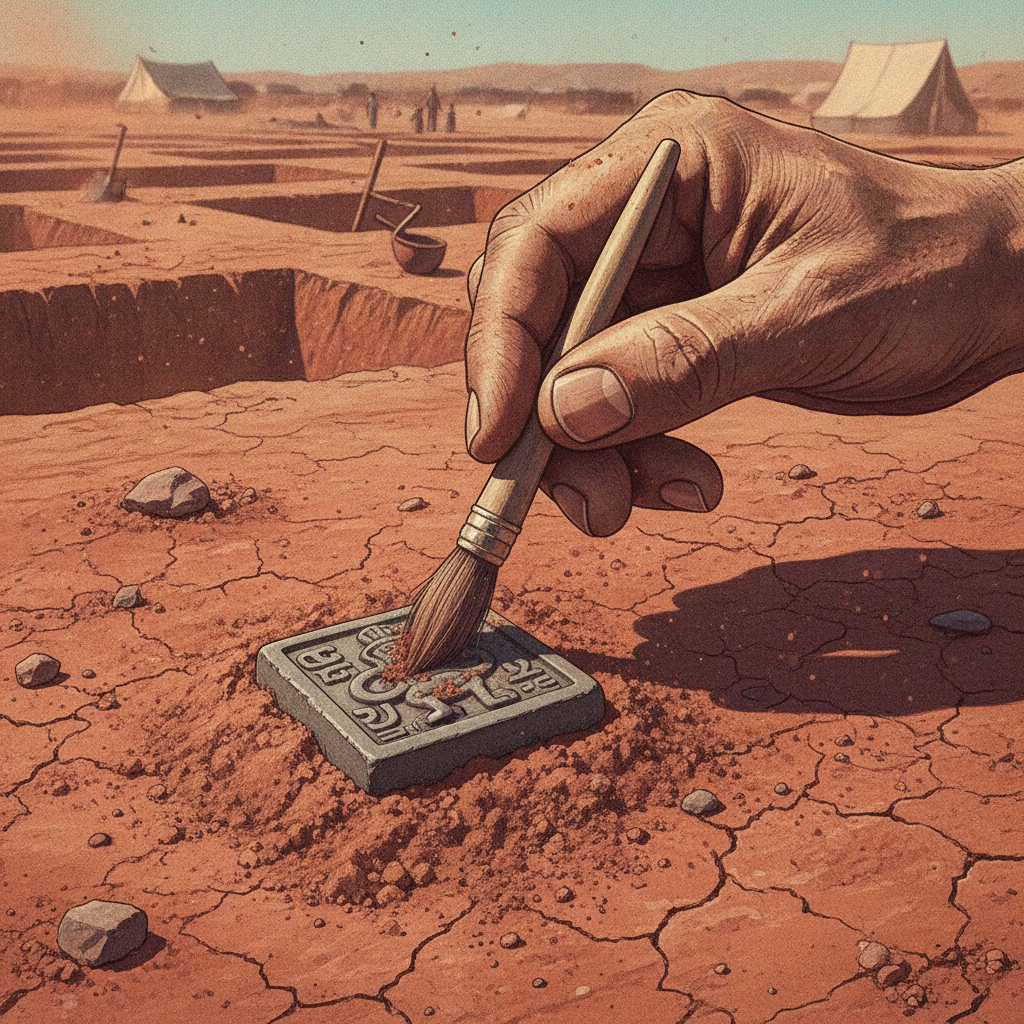
It was 1928, perhaps 1929—the records would later show some uncertainty about the exact date. The region was under British rule, and the Archaeological Survey of India had been methodically excavating the ruins of this ancient Indus Valley city in what is now Pakistan. Among the thousands of seals recovered from the site, most depicted animals: bulls, elephants, unicorns. This one was different.
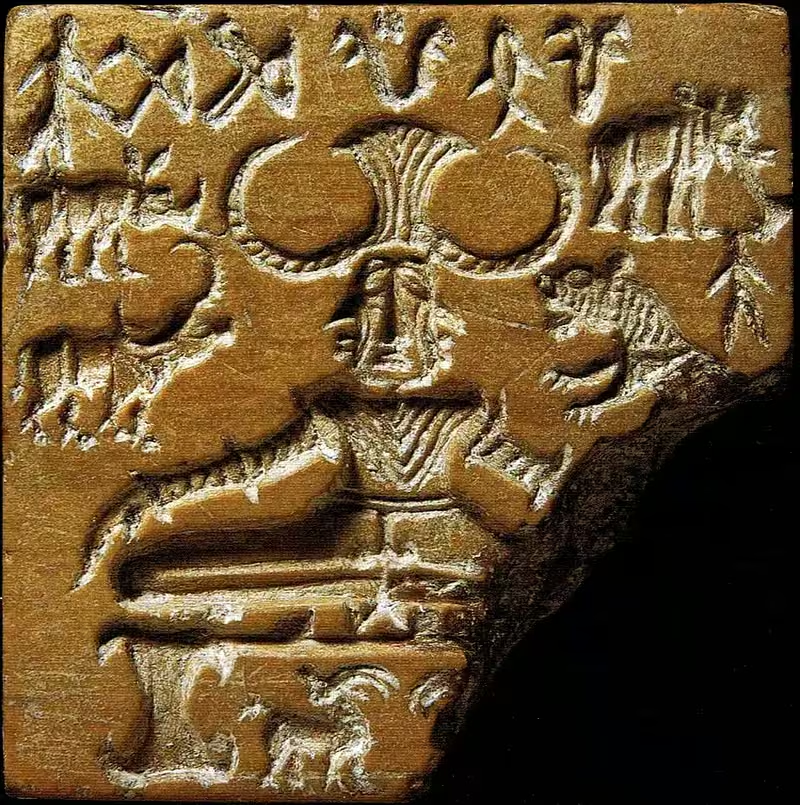
The seal measured just 3.56 centimeters by 3.53 centimeters, with a thickness of 7.6 millimeters—small enough to fit in the palm of a hand. Carved from steatite, a soft stone that hardens after firing, it bore an image that would spark debates lasting nearly a century. As the last grains of earth fell away, the archaeologist could make out a figure seated in the center, surrounded by animals. But it was the details that made his breath catch.
The figure appeared to have multiple faces—possibly three, perhaps even four. It wore an elaborate headdress crowned with massive striated horns flanking a central fan-shaped structure. The posture was unmistakable: legs bent at the knees, heels touching, toes pointing downward. The arms extended outward, resting lightly on the knees with thumbs facing away from the body. Eight small bangles and three large ones adorned the arms. Necklaces covered the chest. A double band wrapped around the waist.
Around this central figure prowled four wild animals: an elephant and a tiger on one side, a water buffalo and an Indian rhinoceros on the other. Below the platform on which the figure sat, two deer or ibexes looked backward, their curved horns nearly meeting in the center. Seven symbols from the still-undeciphered Indus script ran across the top.
The implications were staggering. Based on Ernest Mackay's later analysis, this seal dated to the Intermediate I Period—approximately 2350 to 2000 BCE. That was two thousand years before the Vedic period, before the earliest Hindu texts, before the religion as we know it had taken shape. Yet here was a figure that looked remarkably like a god who wouldn't be named for millennia.

When the seal reached John Marshall, Director-General of the Archaeological Survey of India, he spent hours examining it under lamplight in his study. Marshall was no stranger to significant discoveries—he had overseen excavations at both Mohenjo-daro and Harappa, revealing to the world a civilization that rivaled ancient Egypt and Mesopotamia. But this small square of carved stone presented a puzzle unlike any other.
The seated posture resembled yogic positions that wouldn't be documented for centuries. The horned headdress evoked deities from multiple ancient traditions. The surrounding animals suggested dominion over the natural world. Marshall traced the contours of what appeared to be three faces with his magnifying glass. Was there a fourth face on the back? The carving was too worn to tell for certain.
One detail particularly intrigued him: the figure appeared to be ithyphalic—displaying prominent male genitalia. This interpretation would later be questioned by many scholars, but Jonathan Mark Kenoyer, a leading Indus Valley Civilization specialist, would still maintain this view in a 2003 publication. Whether the figure was meant to represent fertility, power, or something else entirely remained unclear.
What made the Pashupati seal stand out among the thousands recovered from Indus Valley sites was its complexity and its focus on a human figure. Most seals featured animals as their primary and largest element. This reversal—a human surrounded by animals rather than animals alone—suggested something significant. This wasn't just a merchant's mark or an administrative tool. This was religious iconography.
Marshall examined similar seals that shared some elements. One, catalogued as DK 12050 and also from Mohenjo-daro, showed a nude three-faced horned deity seated on a throne in a yogic position, wearing bangles. But it had no animals. The gender of that figure remained disputed despite what appeared to be a beard. The Pashupati seal's combination of elements was unique.
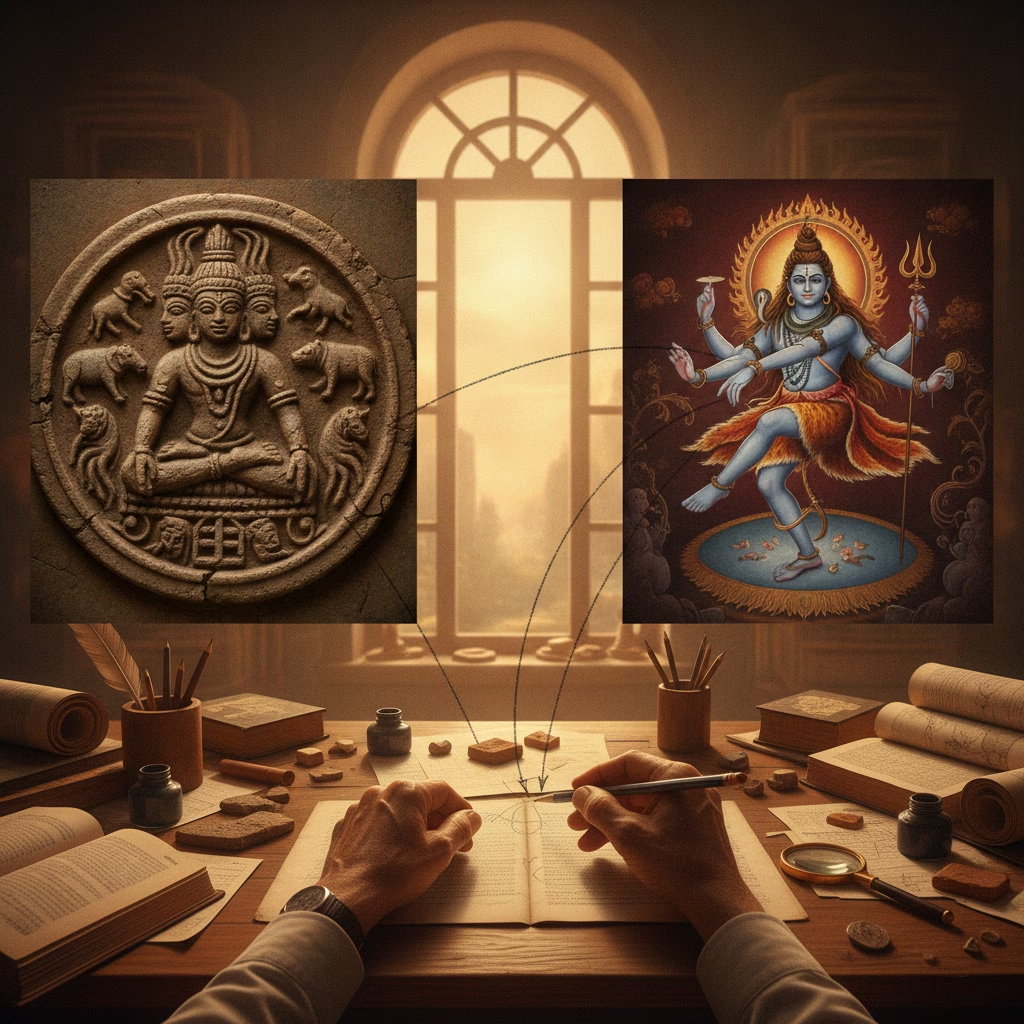
Marshall made a bold claim that would reverberate through archaeological and religious circles for generations: this was Pashupati, "Lord of Animals," an early form of the Hindu god Shiva. The name itself was one of Shiva's many epithets. The yogic posture, the meditation, the mastery over wild beasts, the possible third eye, the phallic symbolism—all aligned with later Shiva iconography.
If Marshall was correct, the implications were profound. Here was evidence of religious continuity spanning more than four thousand years. The Indus Valley Civilization, which had flourished and mysteriously declined around 1900 BCE, might have seeded beliefs that would later flower into Hinduism. The gods hadn't appeared fully formed in the Vedic period—they had ancestors, proto-forms, earlier iterations carved in steatite and buried in ancient cities.
The theory was revolutionary and controversial. It suggested that Hinduism's roots ran deeper than the Aryan migration, deeper than the Vedas, back into the indigenous civilizations of the subcontinent. It implied cultural and religious continuity across a vast temporal chasm, bridging the collapse of the Indus Valley Civilization and the rise of Vedic culture.
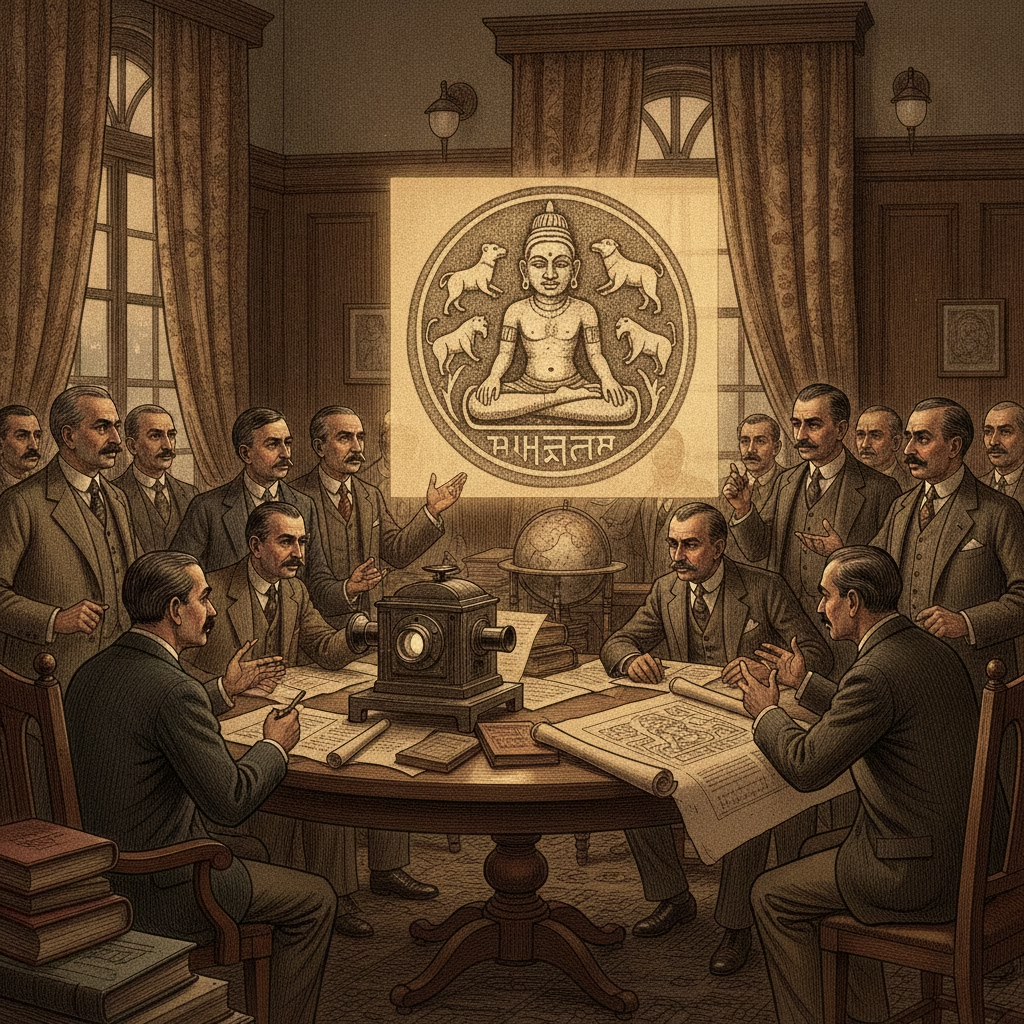
Not everyone agreed. Skeptics pointed out the dangers of reading later religious concepts into earlier artifacts. The Indus script remained undeciphered—we couldn't know what the people of Mohenjo-daro called this figure or what they believed about it. The similarities to Shiva might be coincidental or the result of universal religious archetypes rather than direct continuity.
Some scholars questioned whether the figure was even a deity. Could it be a priest? A king? A mythological hero? The horns might reference buffalo or bull cults common in ancient Near Eastern religions. The yogic posture might simply be a comfortable sitting position. The animals might represent the four cardinal directions rather than divine dominion over nature.
The ithyphallic interpretation came under particular scrutiny. Was that really what the carving showed, or were scholars projecting later Shaivite symbolism onto ambiguous details? The seal's small size and the wear of millennia made definitive answers impossible.
Yet the "Proto-Shiva" or "Pashupati" name stuck. Even those who disputed Marshall's interpretation couldn't deny the seal's significance. Whether or not it depicted an early form of Shiva, it clearly showed sophisticated religious thought in the Indus Valley Civilization. These people had complex beliefs about divine figures, meditation, and humanity's relationship with the natural world.
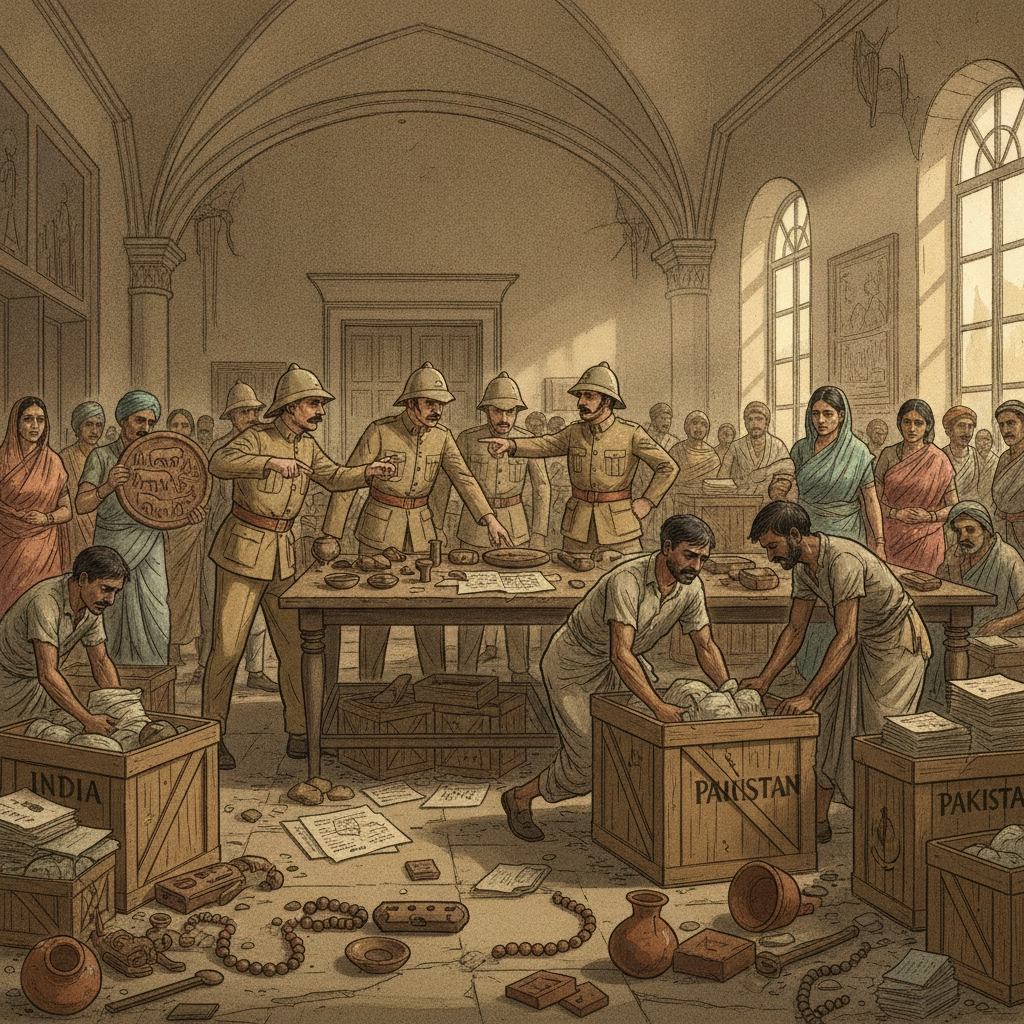
The seal's journey didn't end with its discovery. Initially, the finds from Mohenjo-daro were deposited in the Lahore Museum. But as independence approached, they were moved to the Archaeological Survey of India headquarters in New Delhi, where a new "Central Imperial Museum" was being planned. When Partition came in 1947, dividing British India into India and Pakistan, the archaeological treasures had to be divided too.
The Pashupati seal was allocated to the Dominion of India. It would eventually find its home in the National Museum of India, founded in 1949. Meanwhile, similar artifacts, including the related seal DK 12050, went to museums in what became Pakistan, including collections in Islamabad.
This physical separation of artifacts mirrored the political division of the subcontinent, yet the seal itself represented something that transcended modern borders—a shared heritage reaching back to when the Indus River valley was home to one of humanity's earliest urban civilizations.
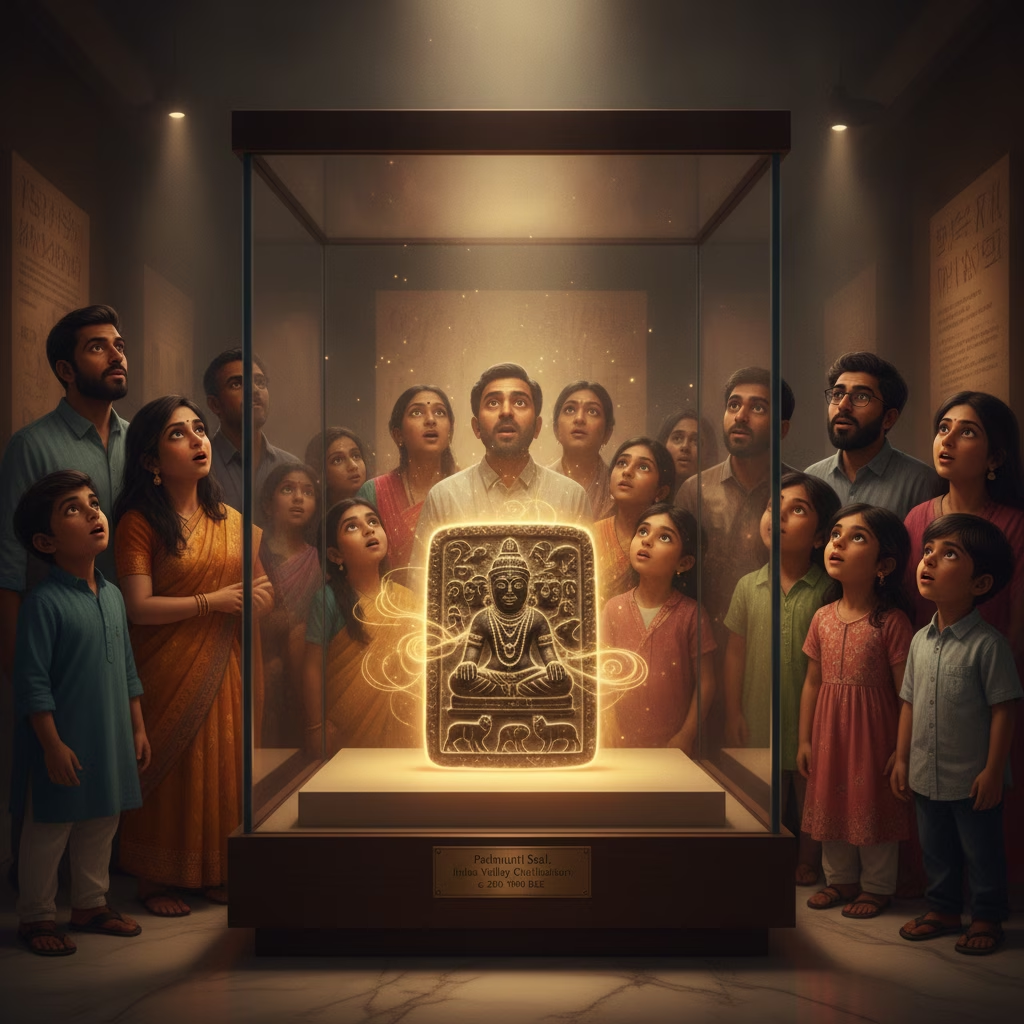
Today, visitors to the National Museum of India can see the Pashupati seal displayed behind protective glass. It remains one of the museum's most significant artifacts, drawing scholars, pilgrims, and curious tourists alike. Some see it as proof of Hinduism's ancient roots. Others view it as a fascinating window into a lost civilization whose beliefs we may never fully understand.
The debates continue. Modern archaeologists apply new technologies and methodologies to Indus Valley artifacts, seeking answers to questions Marshall and his contemporaries could only speculate about. Yet the seal keeps its secrets. The Indus script remains undeciphered. The civilization that created it left no clear descendants, no Rosetta Stone to unlock their language and beliefs.
What we're left with is a small square of carved stone, roughly the size of a postage stamp, depicting a figure that may or may not be a god, surrounded by animals that may or may not symbolize divine power, in a posture that may or may not represent meditation. And yet, despite all this uncertainty, the Pashupati seal continues to bridge millennia, connecting the mysterious Indus Valley Civilization to the living religious traditions of the subcontinent.
Perhaps that's the seal's greatest power—not what it proves, but what it suggests. It hints at continuities we can barely glimpse, at beliefs that survived the collapse of cities and the passage of centuries, at human impulses toward the divine that transcend time and culture. In the trembling hands of that archaeologist in 1928, brushing away the earth of ages, was a reminder that history is never as simple as we imagine, and that the past still has the power to shake our understanding of who we are and where we come from.
The Pashupati seal shouldn't exist—not if we believe religious traditions spring fully formed from historical moments. But there it is, small and enigmatic, suggesting that the story of faith and culture in the subcontinent is far older and more complex than we ever imagined. And in its silence, it speaks volumes.