

Eight Days to Delhi: Baji Rao's Impossible Ride
The messenger arrived at Pune after dark, his horse lathered and trembling. The news he carried would test the limits of what one man—and one army—could achieve.
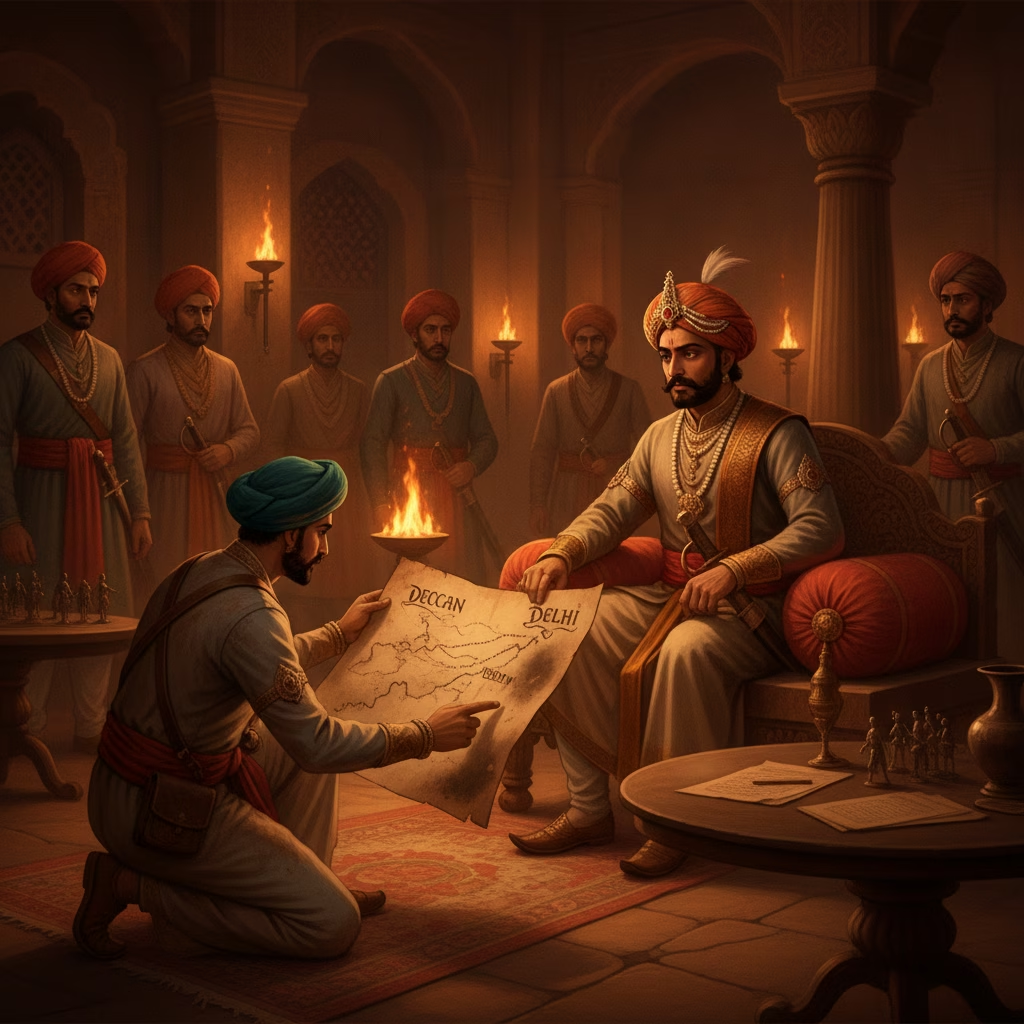
In the spring of 1737, Peshwa Baji Rao I sat in his war room as the intelligence was laid before him. Mughal forces were gathering strength near Delhi, preparing to challenge Maratha influence in the north. The message was clear: if the Marathas wanted to maintain their grip on northern India, they needed to act.
But there was a problem—a problem of geography and time.
Baji Rao's base of power lay in Pune, in the western Deccan Plateau of present-day Maharashtra. Delhi sat roughly 600 miles to the north. By conventional military wisdom, it would take an army weeks to march that distance. Weeks during which the Mughals would receive intelligence of their approach. Weeks to prepare defenses, to choose favorable ground, to fortify their positions.
The Peshwa studied the maps spread before him. Since taking leadership of the Maratha Empire in 1720, Baji Rao had transformed what had been a regional insurgency into something far more formidable. After the death of the Mughal emperor Aurangzeb in 1707, he had seized the opportunity to expand Maratha power across vast swaths of the subcontinent. Under his command, the Maratha Kingdom had grown into a large realm that now challenged Mughal supremacy itself.
The Marathas were a warrior group from the western Deccan Plateau, descendants of the fighters who had rallied to Shivaji's banner in the previous century to establish "Hindavi Swarajya"—self-rule of Hindus. They were cavalrymen, born to the saddle, masters of mobility and surprise. But even for the Marathas, 600 miles was 600 miles.
Or was it?
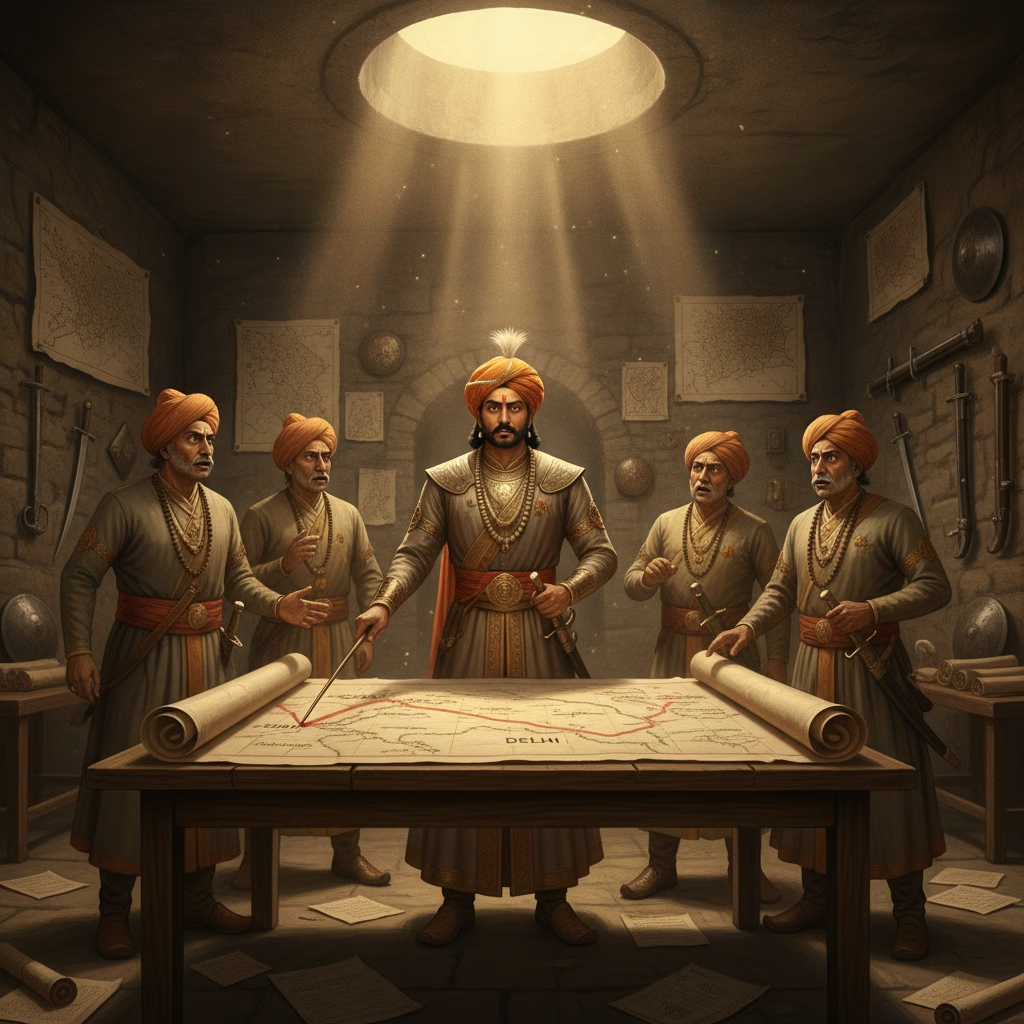
Baji Rao made a decision that night that would become legend. He would not march his army north. He would ride.
The plan was audacious to the point of madness. He would select an elite force of cavalry—light, fast, and deadly—and cover the 600 miles in eight days. Not eight weeks. Eight days. They would ride at a pace that defied human endurance, changing horses at pre-arranged stations, sleeping in the saddle if they slept at all, and arrive at Delhi before the Mughals even knew they had left Pune.
His generals protested. The horses would collapse. The men would fall from their saddles. The force would arrive too exhausted to fight. But Baji Rao understood something his critics did not: surprise was worth more than numbers. Shock was worth more than rest. If he could appear outside Delhi like a phantom, strike before the Mughals could react, he would achieve something no conventional campaign could match.
He would prove that the Marathas controlled not just territory, but time itself.
The Peshwa's strategic vision extended beyond this single engagement. By 1737, the Marathas recognized the Mughal emperor as their nominal suzerain—a diplomatic fiction that masked the reality. In practice, as the historical record shows, "Mughal politics were largely controlled by the Marathas between 1737 and 1803." This ride to Delhi would be the exclamation point on that claim.
Baji Rao selected his riders carefully. Only the best horsemen. Only those who could endure. He arranged for fresh mounts to be stationed along the route at carefully calculated intervals. He planned the path to avoid major towns where word might spread. And he set a departure time: before dawn, when the world was still dark.
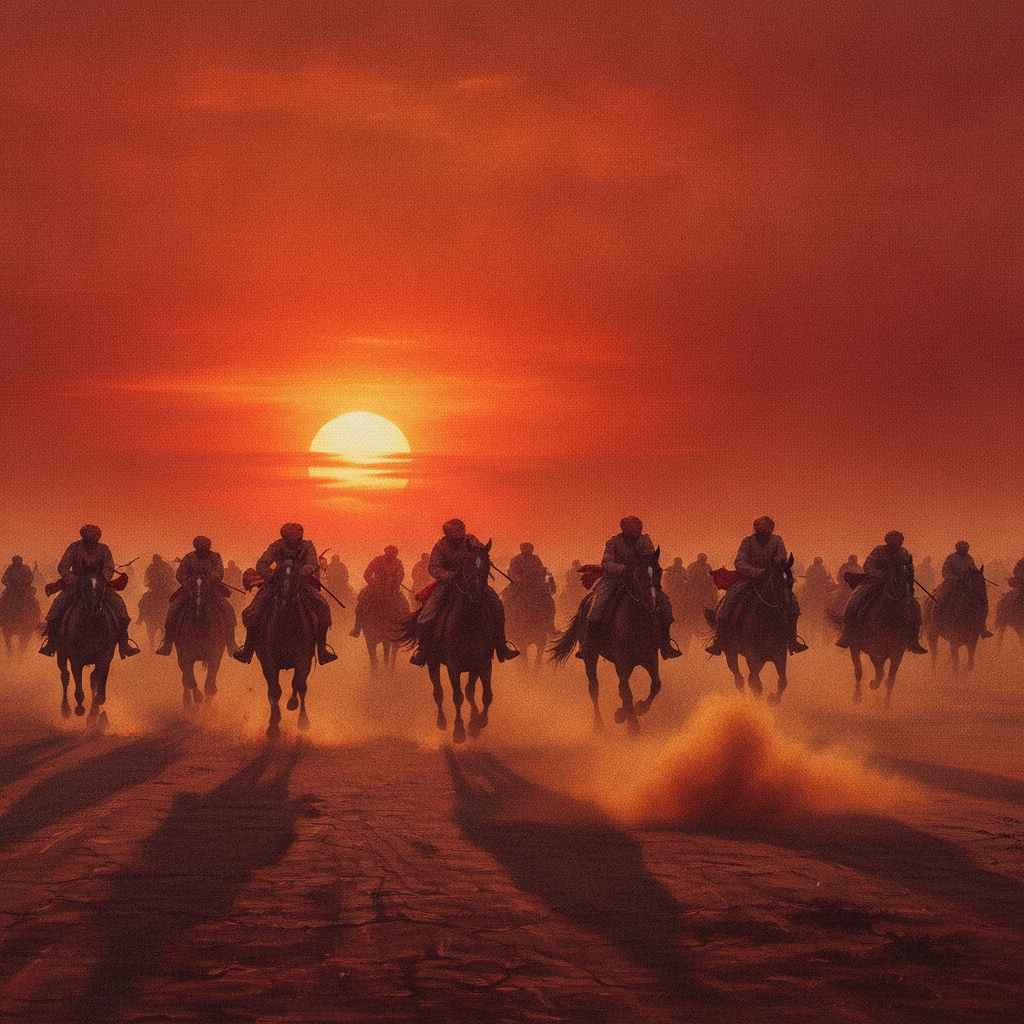
They rode out of Pune in the pre-dawn darkness of late March 1737. The column stretched for perhaps a quarter-mile—elite Maratha cavalry, light armor, minimal supplies. Everything was calculated for speed.
The first day set the tone for all that followed. They rode from before sunrise until after sunset, pausing only to water the horses and wolf down whatever food they carried. The pace was relentless: walk, trot, canter, gallop, then back to walk to let the horses recover. The rhythm became mechanical, hypnotic.
The Deccan Plateau gave way to the plains. The landscape blurred into an endless succession of dust, heat, and the thunder of hooves. Men learned to sleep while riding, slumping forward in the saddle during the walking intervals, jerking awake when the pace quickened. At the pre-arranged stations, they would leap from exhausted horses onto fresh ones, barely breaking stride.
By the second day, the weakest riders had begun to fall behind. Baji Rao pressed on. By the third day, horses were being ridden to the edge of collapse and beyond. By the fourth day, men were hallucinating from exhaustion, seeing water where there was only dust, shade where there was only sun.
But they kept riding.
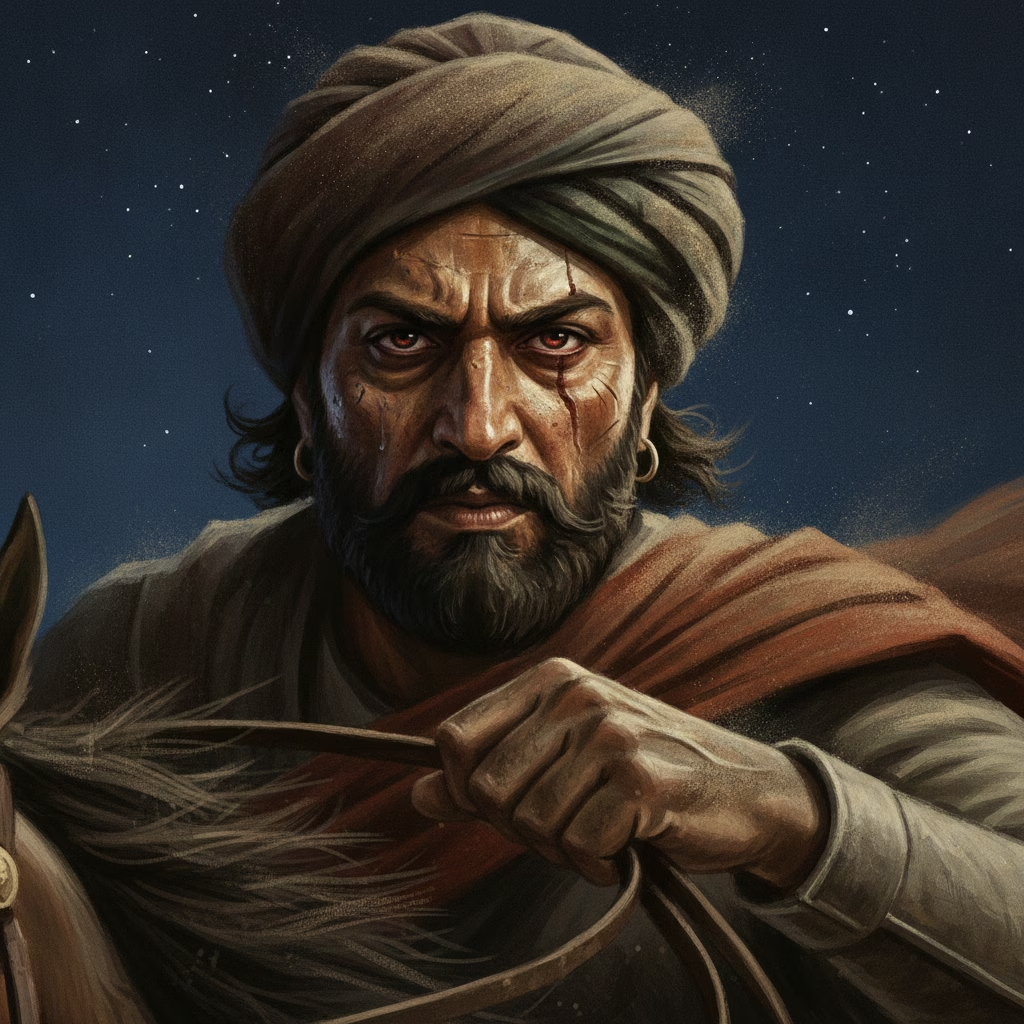
Baji Rao himself led from the front, never asking his men to endure what he would not. His face became a mask of dust and dried sweat. His hands bled where the reins had rubbed them raw. His legs cramped in the stirrups. But his eyes never lost their focus, never wavered from the invisible point on the horizon that marked their destination.
The Maratha warriors who rode with him understood what was at stake. They were not just covering distance; they were rewriting the rules of warfare in India. The Mughals, for all their power and prestige, moved like elephants—slow, ponderous, predictable. The Marathas would prove they could move like lightning.
On the fifth day, they crossed into territory where Mughal influence was stronger. Now stealth became as important as speed. They avoided villages, rode through the night when necessary, and maintained absolute discipline. No fires. No unnecessary noise. Just the endless rhythm of hooves on earth.
By the sixth day, some of the horses had died. They were left where they fell. More riders had dropped out, unable to continue. They would follow as best they could. The column had shrunk, but those who remained were forged into something harder than steel.
On the seventh day, they could smell Delhi. Not literally, perhaps, but they knew. The landscape had changed. They were close.
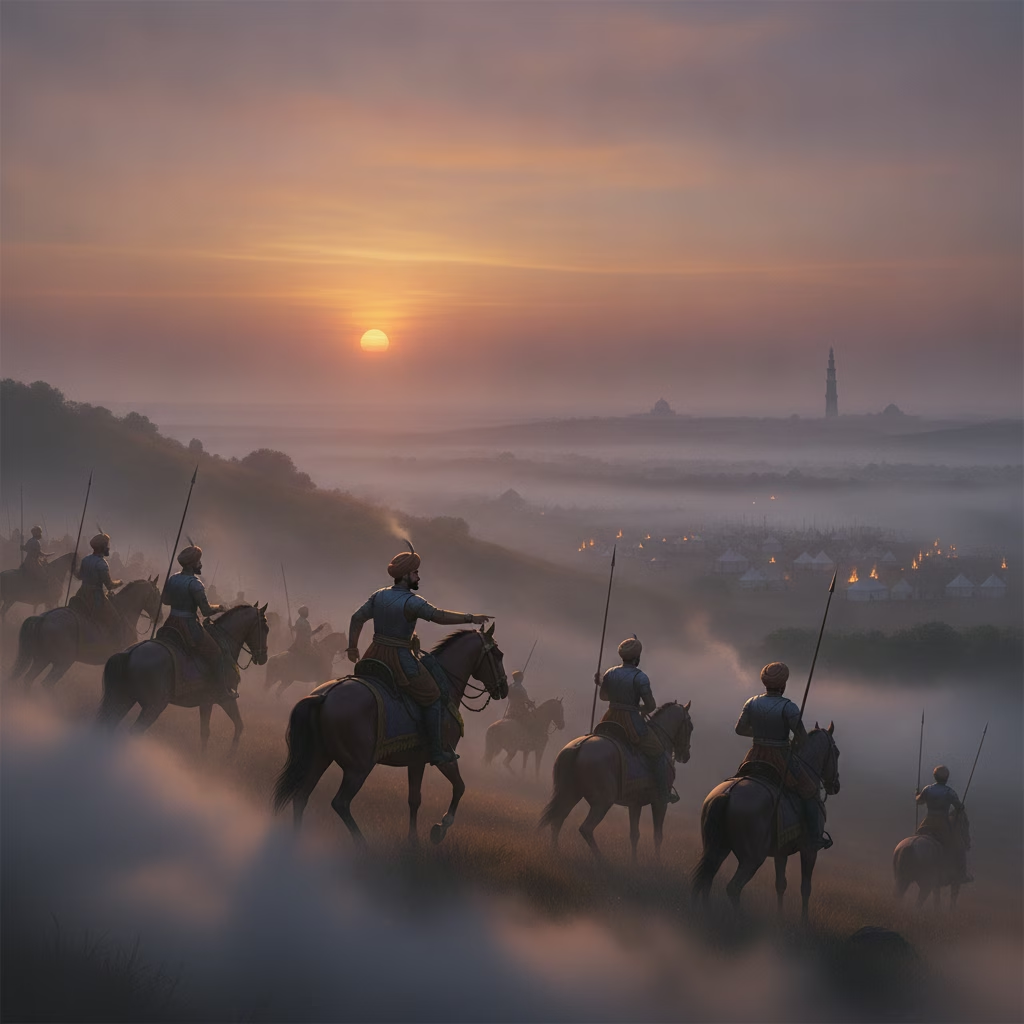
As dawn broke on the eighth day, Baji Rao's scouts reported back: the Mughal camp lay just ahead, outside Delhi. The enemy forces were numerous but completely unprepared. They had received no warning of any Maratha approach. Why would they? The Marathas were 600 miles away in the Deccan.
Except they weren't.
Baji Rao surveyed the Mughal positions from a ridge as the sun climbed higher. His force was exhausted, reduced, battered by the brutal ride. But they had achieved the impossible. They were here. And the Mughals had no idea.
The Peshwa gave his final orders quietly. They would rest for two hours—just enough to let the horses recover slightly and the men gather their strength. Then they would attack at mid-morning, when the sun would be in the Mughals' eyes and the camp would be at its most relaxed.
As his men rested, Baji Rao allowed himself a moment to appreciate what they had accomplished. In eight days, they had covered a distance that should have taken a month. They had done it without losing cohesion, without alerting the enemy, without sacrificing the element of surprise.
Now came the payoff.
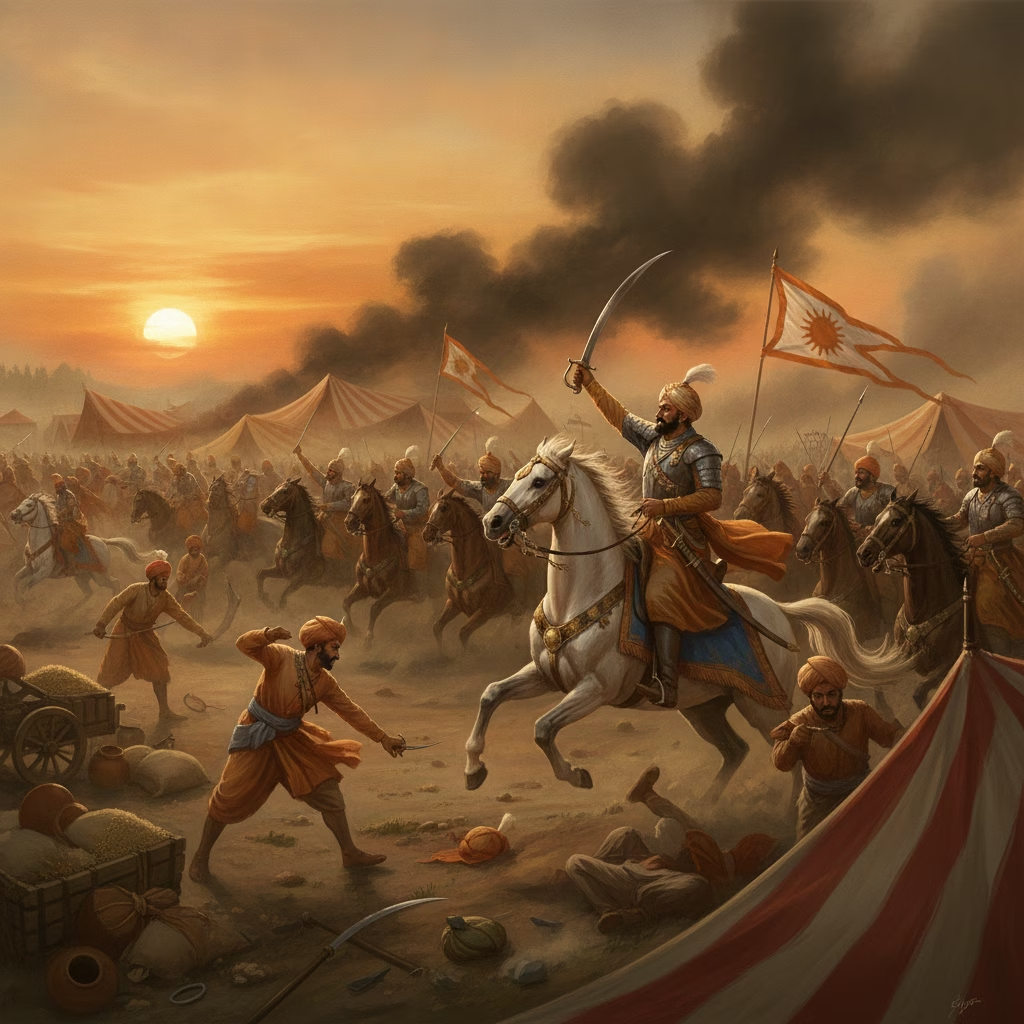
The attack, when it came, was devastating.
Maratha cavalry erupted from the ridge like a thunderbolt, crashing into the Mughal camp before the defenders could even comprehend what was happening. Tents collapsed. Soldiers scrambled for weapons they couldn't find. Officers shouted contradictory orders into the chaos.
Baji Rao led the charge personally, his sword flashing in the morning sun. The exhaustion of the eight-day ride fell away in the heat of battle. His cavalry swept through the camp like a scythe through wheat, exploiting every moment of confusion, every second of panic.
The Battle of Delhi, as it came to be known, was over almost before it began. The Mughal forces, caught completely off-guard, broke and scattered. Some fled toward Delhi itself. Others simply threw down their weapons and surrendered. A few tried to mount a defense, but without coordination or preparation, they were quickly overwhelmed.
By afternoon, Baji Rao controlled the field. The Mughal threat to Maratha interests in the north had been neutralized—not through a long campaign of attrition, but through a single, audacious stroke of military genius.
News of the victory spread quickly. The Peshwa who had ridden 600 miles in eight days to surprise-attack Mughal forces outside their own capital became legend. The feat announced to all of India that the Marathas were no longer insurgents or rebels. They were empire-makers.
The Battle of Bhopal later that same year would establish the stable borders of the Maratha confederacy, extending from Maharashtra in the south to Gwalior in the north—about a third of the entire subcontinent. But it was the impossible ride to Delhi that made those borders possible. It was the eight days that changed everything.
The Legacy of the Ride
Baji Rao I would continue to lead the Maratha Empire until his death in 1740. Under his leadership, the Marathas transformed from a regional power into the dominant force in Indian politics. The ride to Delhi became the template for Maratha military strategy: mobility, surprise, and audacity over conventional siege warfare and set-piece battles.
The broader historical significance cannot be overstated. As Wikipedia notes, the Maratha Empire "expanded into a large realm in the 18th century under the leadership of Peshwa Bajirao I," and by 1737, the Marathas had effectively taken control of Mughal politics—a control they would maintain until 1803.
The eight-day ride proved that distance was no longer destiny. That speed could trump strength. That one man's vision, executed with perfect discipline, could reshape the political map of an entire subcontinent.
Three centuries later, military historians still study Baji Rao's campaign as a masterclass in rapid cavalry operations. The numbers seem impossible—75 miles per day, day after day, across rough terrain in the heat of an Indian spring. But the historical record is clear: it happened.
Baji Rao I rode 600 miles in eight days. And when he arrived, he changed the course of Indian history.