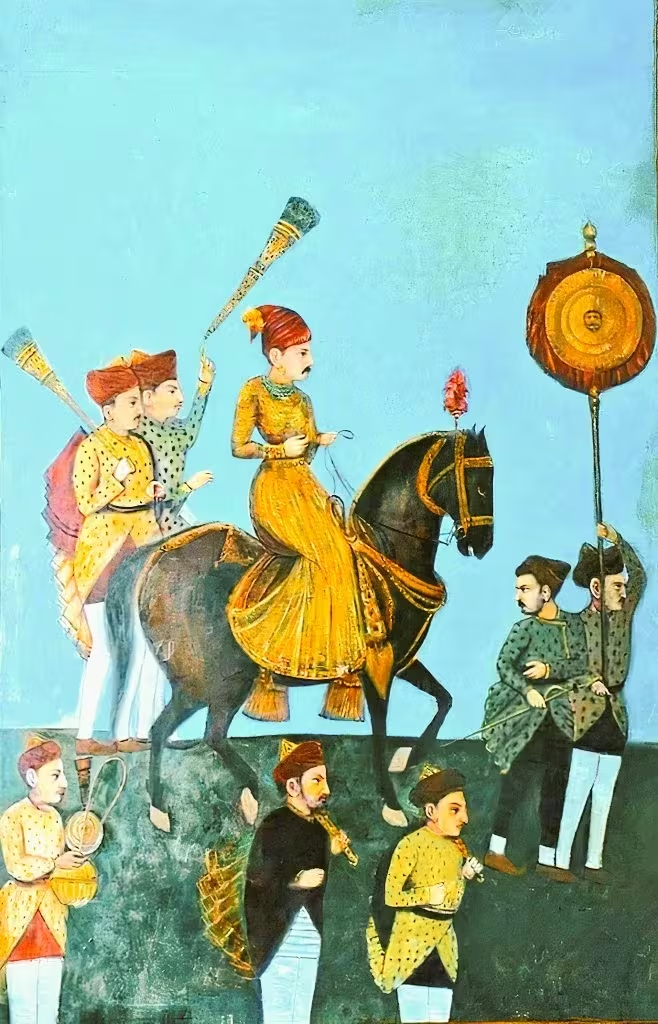

The King Who Ruled from Exile: Rajaram's 600-Mile Flight to Jinji
The news arrived at Raigad Fort like a thunderclap in March 1689. Sambhaji, the fierce Chhatrapati of the Marathas, had been captured and executed by Aurangzeb's forces. The Mughal Emperor, in his relentless campaign to subjugate the Deccan, had struck at the very heart of Maratha sovereignty.
The Reluctant Coronation
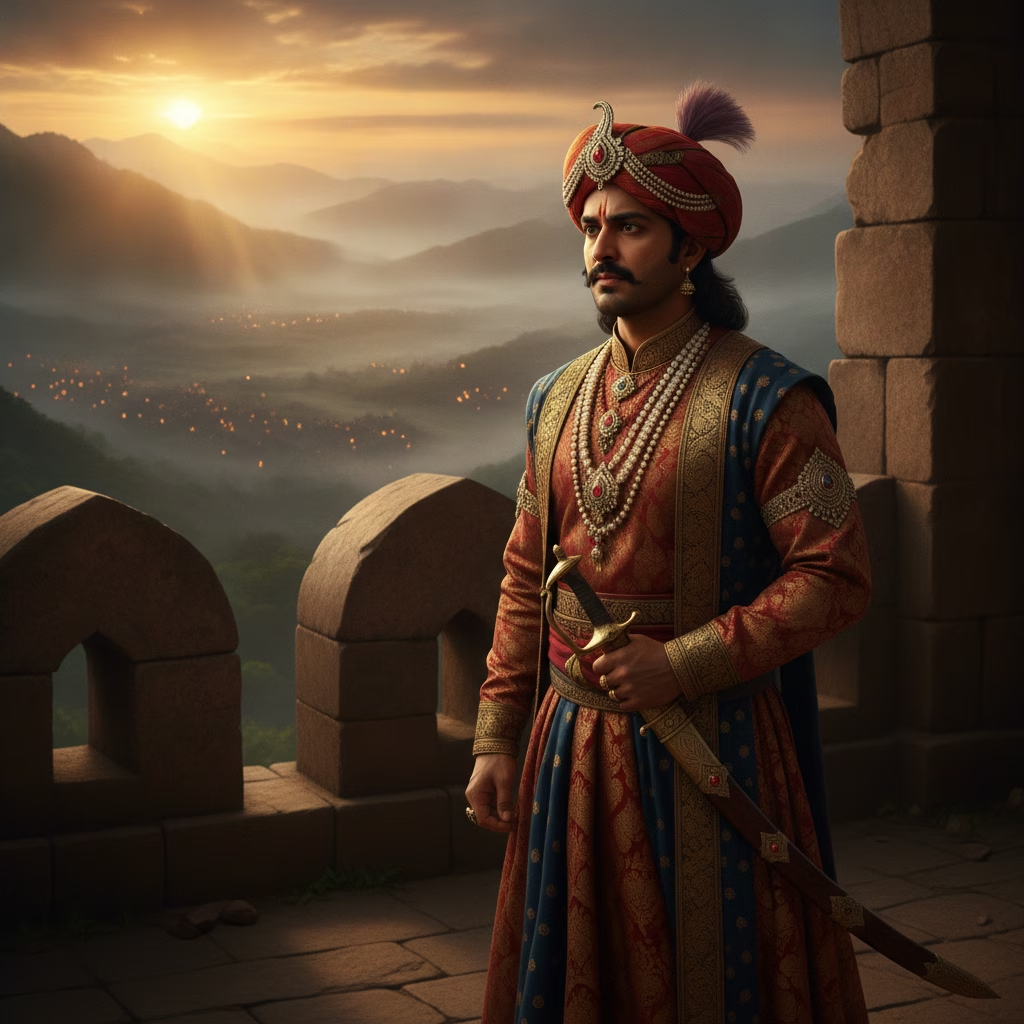
On March 12, 1689, nineteen-year-old Rajaram Bhonsale stood atop the ramparts of Raigad Fort, the mountain stronghold his father Shivaji had made the Maratha capital. The morning mist clung to the valleys below, but on the horizon, something else caught his eye—the first wisps of smoke from Mughal campfires.
He had not sought this crown. Born on February 24, 1670, to Shivaji's second wife Soyarabai, Rajaram had always lived in the shadow of his charismatic older half-brother Sambhaji. Thirteen years separated them, and in those years lay worlds of difference. Where Sambhaji had been groomed for kingship, Rajaram had been raised in relative obscurity.
Yet here he stood, informally crowned as the third Chhatrapati of the Maratha Kingdom, initially as regent for his captive nephew Shahu I. The ceremony had been hasty, stripped of the grandeur such occasions demanded. There was no time for elaborate rituals when Aurangzeb himself had turned the full might of the Mughal Empire toward crushing the Maratha resistance.
As Rajaram inspected the fortresses along his route toward Pratapgad, he ordered each one provisioned and armed. He moved with purpose, though his heart was heavy with the vow he had made: to avenge his brother's brutal execution. But vengeance, he was learning, required survival first.
Just thirteen days after his coronation, on March 25, Mughal forces under Itikad Khan—who would later be known as Zulfikar Khan—began laying siege to the region around Raigad. The noose was tightening faster than anyone had anticipated.
The Daring Escape South
By autumn, the situation had become untenable. Aurangzeb, determined to capture Raigad at any cost, poured reinforcements into the siege. When the Mughals invaded Panhala Fort where Rajaram had taken refuge, the young king faced an impossible choice: stay and likely face capture and execution like his brother, or flee to fight another day.
Rajaram chose survival—not for himself alone, but for the kingdom his father had built and his brother had died defending.
What followed was one of the most audacious escapes in Indian military history. With a 300-strong Maratha contingent fighting a rearguard action against the Mughals, Rajaram slipped through the besieging lines at Panhala. His destination: Jinji Fort in present-day Tamil Nadu, over 600 miles to the south, far beyond Aurangzeb's immediate reach.
The journey took him through Kavlya ghat, past Pratapgad and Vishalgad forts, each mile fraught with danger. Mughal patrols scoured the countryside. Spies lurked in every town. One false step, one moment of recognition, and the Maratha cause would die with him.
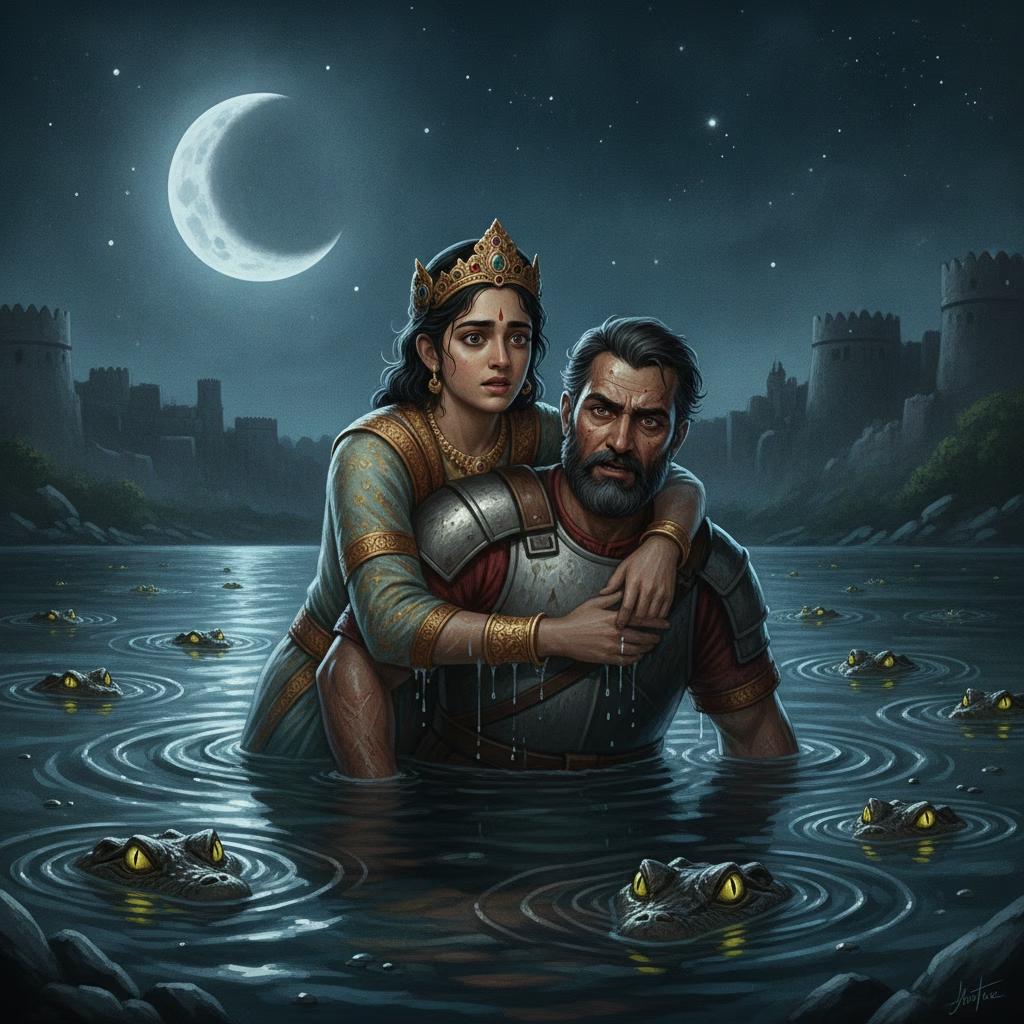
The most perilous moment came at the Tungabhadra River. Swollen with monsoon waters and infested with crocodiles, it seemed an impassable barrier. But Bahirji Ghorpade, one of Rajaram's most loyal generals, offered his back. In a scene that would become legendary, the young king clung to his general's shoulders as they swam across the dark waters, the eyes of crocodiles glinting in the moonlight around them.
On the far bank, they entered the territory of Kasim Khan, traveling in disguise through enemy lands. Their salvation came from an unexpected quarter: Queen Chennamma of Keladi, who ruled the region near present-day Sagar in Karnataka. Despite the risk of Aurangzeb's wrath, she kept Mughal forces at bay, ensuring Rajaram's safe passage through her territory.
Aurangzeb's fury at this defiance was swift. He dispatched three commanders—Jannisar Khan, Matabar Khan, and Sharza Khan—to punish Chennamma, capturing her forts and forcing her to flee to Bhuvangiri. But the Maratha general Santaji Ghorpade defeated all three, protecting the queen and preventing any pursuit of Rajaram.
After a month and a half of desperate flight, Rajaram reached Jinji Fort on November 1, 1689. The details of his escape were later recorded in the Rajaramacharita, an incomplete poetical biography written in Sanskrit by his Rajpurohita, Keshav Pandit—a testament to a journey that had carried the Maratha throne 600 miles from its ancestral homeland.
Fortress Under Siege
Jinji was a fortress of formidable natural defenses, perched atop granite hills in the Tamil country. But it was also a gilded cage. When Rajaram arrived, his treasury was virtually empty. The wealth of Raigad, the administrative machinery of the Maratha state, the symbolic heart of his father's kingdom—all lay hundreds of miles to the north, now under Mughal control.
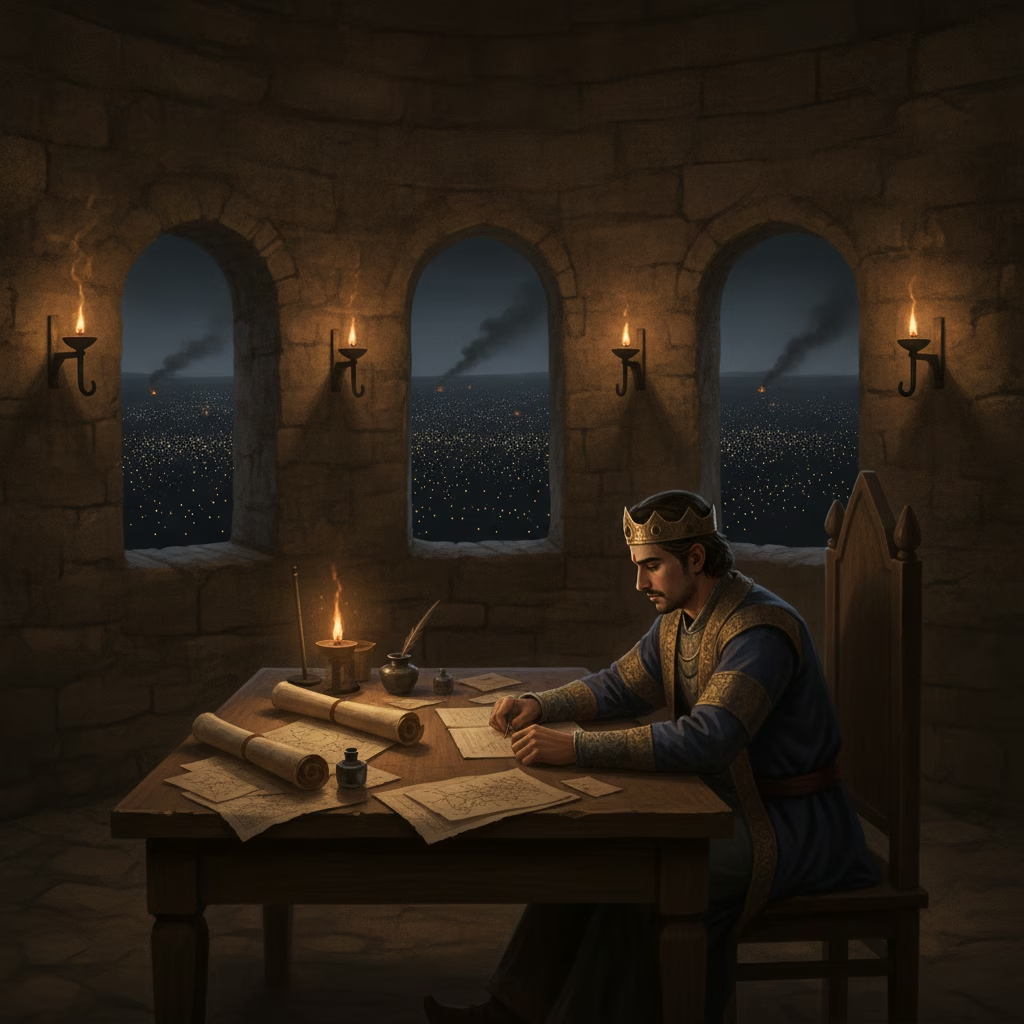
From this remote southern outpost, the young king faced the challenge of governing a kingdom whose territories he could not directly access. He sat in his sparse throne room, lit by oil lamps, the stone walls bare of the treasures that had once adorned Raigad, studying maps and composing letters to his commanders in the field.
In September 1690, Aurangzeb dispatched Zulfiqar Khan to besiege Jinji. Through the narrow fortress windows, Rajaram could see the lights of the Mughal army spreading across the plain below like a constellation of hostile stars. The siege would drag on for years—through 1694, through 1695, a grinding war of attrition.
With no money to pay his supporters, Rajaram was forced to offer feudal estates and titles as inducements to retain their allegiance. Both he and Aurangzeb competed for the loyalty of Maratha chiefs, each offering lands and honors. It was a bidding war the young king could ill afford, yet he had no choice. Without supporters, he was merely a man in a fortress. With them, he remained a king.
The General in Widow's Weeds
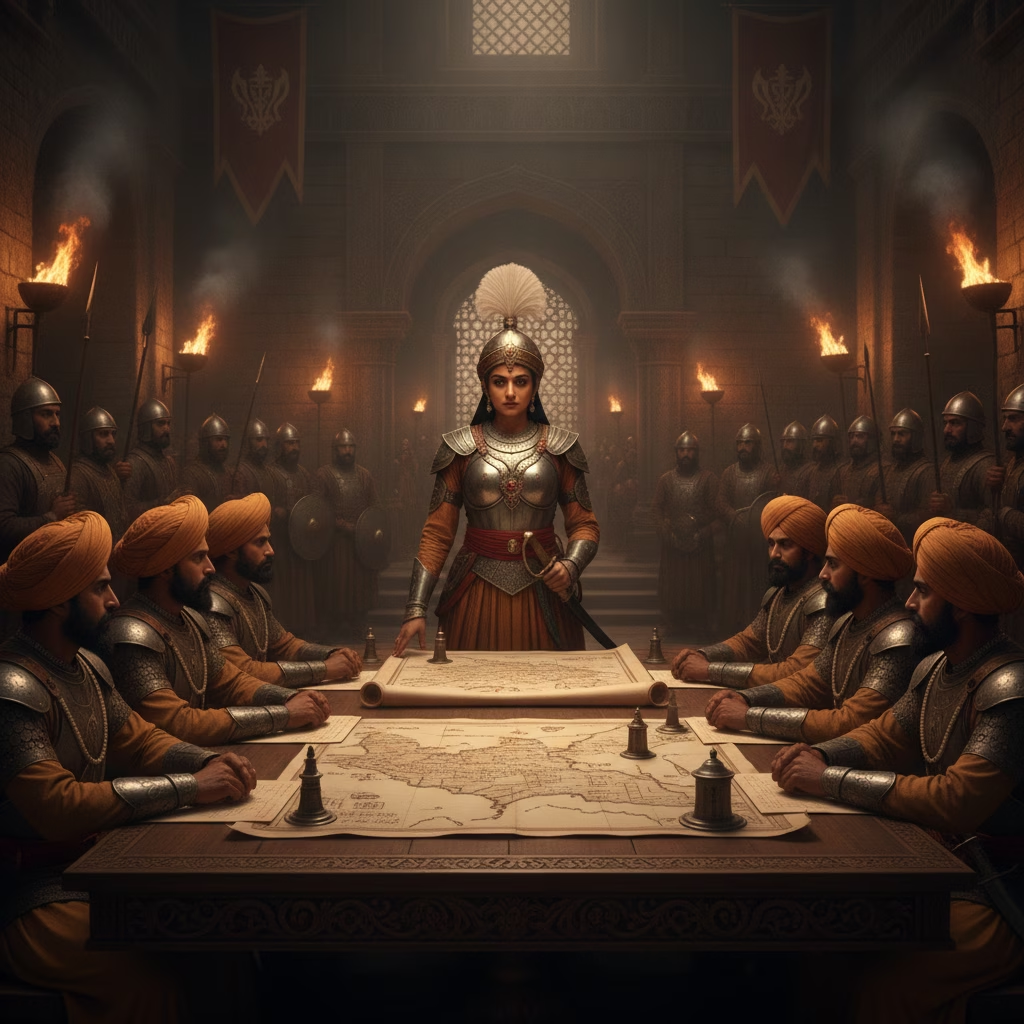
Six hundred miles to the north, in the Maratha heartland, another drama was unfolding. While Rajaram governed from his southern exile, the burden of military leadership fell to an unexpected figure: Tarabai, daughter of the great Maratha general Hambirrao Mohite and Rajaram's own wife.
When Rajaram eventually died in 1700, Tarabai would become regent for their infant son Shivaji II. But even during Rajaram's lifetime, with the king isolated in distant Jinji, she emerged as a formidable military commander. In the war councils of the Maratha chiefs, this young woman—who had lost her father-in-law Shivaji before she was born and seen her husband forced into exile—proved herself a strategic mastermind.
The Maratha resistance under her influence became a guerrilla war of devastating effectiveness. While Aurangzeb's massive armies could capture forts, they could not hold the countryside. Maratha cavalry units struck supply lines, raided Mughal camps, and melted away into the hills before reinforcements could arrive.
It was an inversion of traditional power structures that would have been unthinkable in the Mughal court: a king governing from a besieged fortress in the far south, while his brother's widow commanded armies in the north. Yet this unconventional arrangement kept the Maratha cause alive during its darkest hour.
News from the North
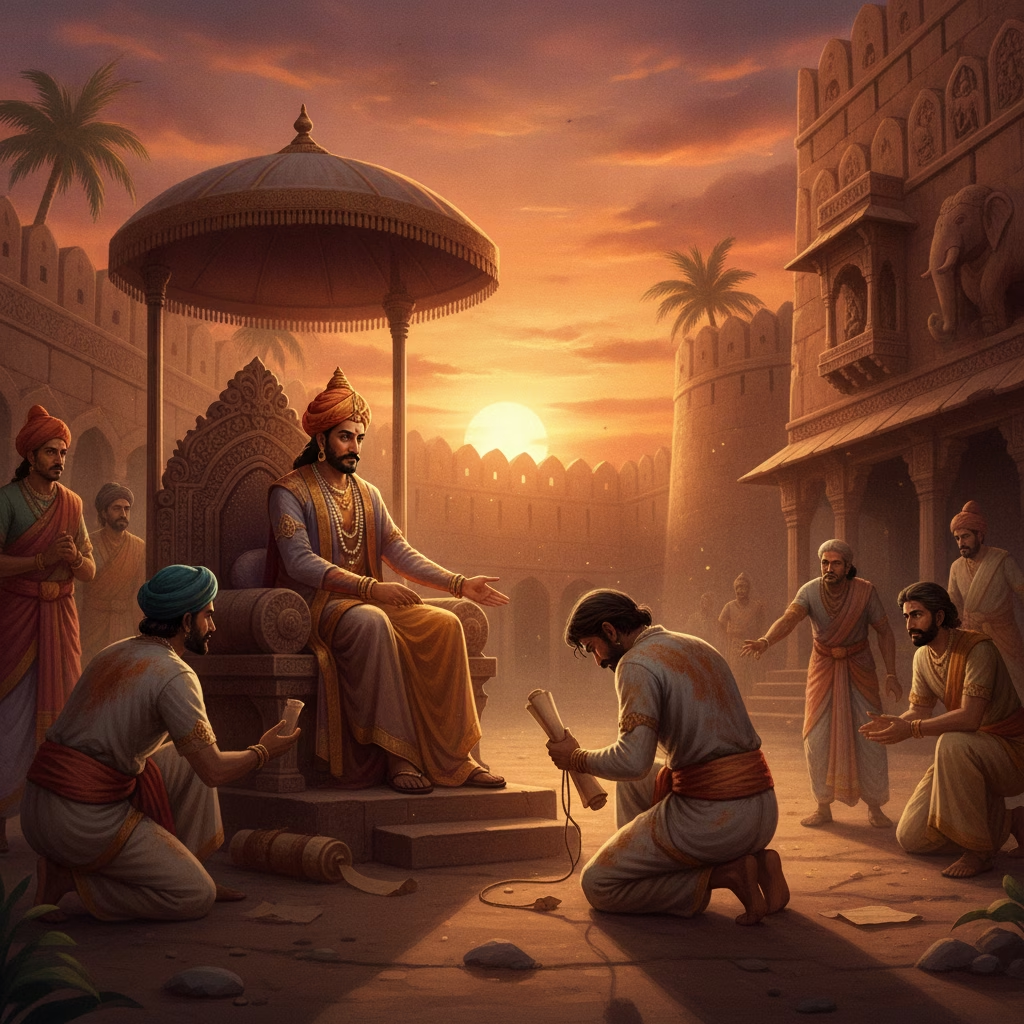
The dispatches arrived at Jinji irregularly, carried by riders who risked their lives crossing 600 miles of contested territory. Each letter brought news of victories and setbacks, of forts lost and retaken, of Maratha chiefs who remained loyal and others who had accepted Mughal titles.
Rajaram received one such messenger in the fortress courtyard at sunset, the dust-covered rider kneeling with urgent dispatches. As his advisors gathered anxiously, the king read of Tarabai's latest campaigns, of Santaji Ghorpade's raids, of the slow grinding war that was bleeding Aurangzeb's treasury even as it tested Maratha endurance.
The news was never entirely good, never entirely bad. The Marathas were surviving, adapting, transforming from a territorial kingdom into something more fluid and harder to crush—a confederacy of mobile forces that could strike anywhere and vanish into the landscape Shivaji had known so well.
But survival came at a cost. Rajaram was king of a realm he could not directly rule, dependent on commanders he could not personally oversee, governing through letters that might take weeks to arrive and responses that might come too late to matter.
The Weight of Distance
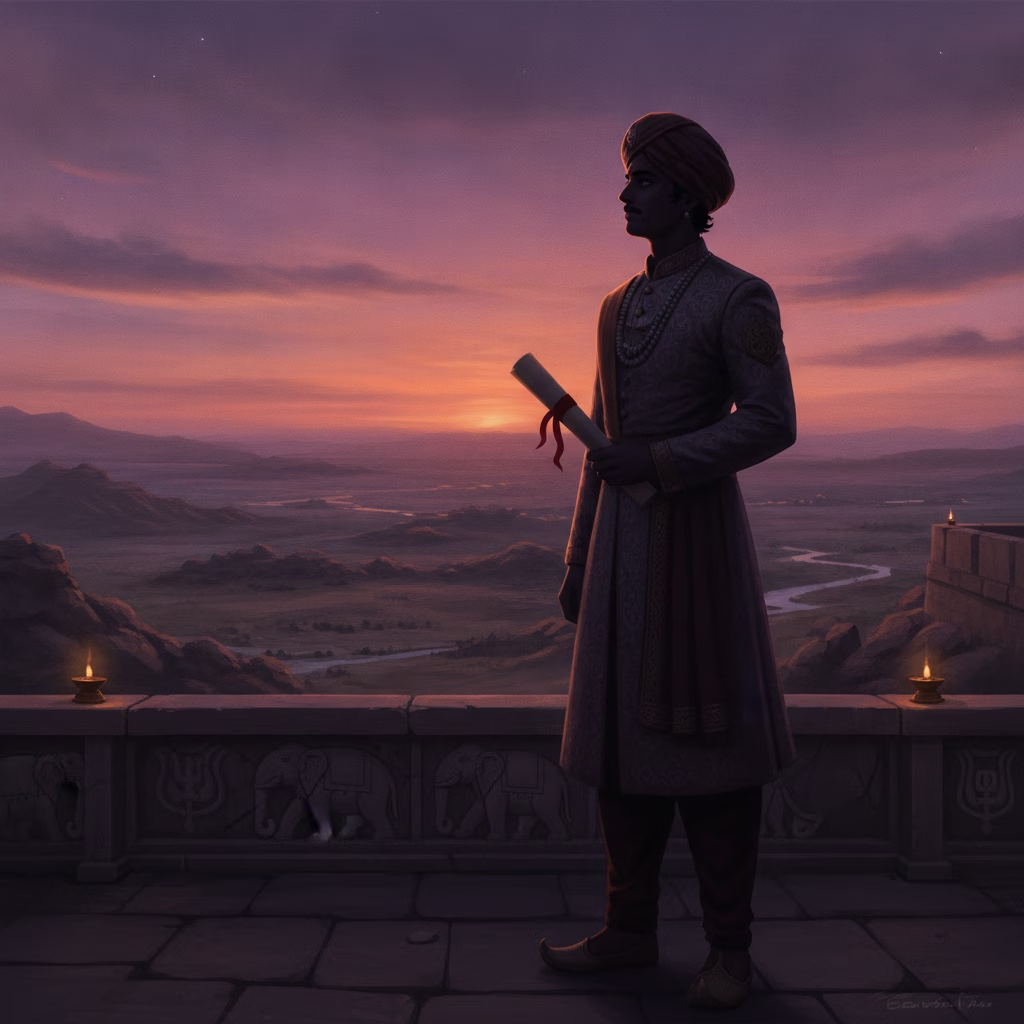
As twilight settled over Jinji Fort, Rajaram stood alone on a balcony, looking northward toward a homeland 600 miles away. In his hand, he held the latest letter from Tarabai, detailing troop movements and strategic decisions made in his name but without his direct input.
The arrangement was working, after a fashion. The Maratha resistance continued. Aurangzeb, despite his overwhelming military superiority, was being drawn into a war of attrition that would consume the last years of his life and drain his empire's resources.
Yet Rajaram felt the weight of impossible choices. He had saved the throne by fleeing south, but in doing so, he had transformed the nature of Maratha kingship itself. He was a king in exile, a sovereign who ruled through intermediaries, a Chhatrapati whose crown sat uneasily on his head in a fortress far from the land his father had fought to free.
History would remember him as the king who sustained the Maratha war of independence from the remote fort of Gingee (Jinji). But in that moment, as the purple-orange sky darkened toward night, he was simply a young man who had made the hardest decision of his life—to live rather than die gloriously, to govern rather than fight, to trust others with the military leadership while he preserved the symbol of Maratha sovereignty in his southern sanctuary.
The siege of Jinji would eventually fall in 1698, but by then, the pattern was set. The Marathas had learned to fight without a fixed capital, to resist without territorial certainty. Rajaram would die in 1700, and Tarabai would continue the struggle as regent for their son.
But on that evening in the mid-1690s, all that lay in an uncertain future. For now, there was only the distance—600 miles that separated a king from his kingdom, a husband from his wife, a man from the destiny he had inherited but could not fully claim.
And somewhere in that distance, in the space between exile and resistance, the Maratha cause endured.