
The Physician's Dilemma: A Cure Kept Secret in Ancient Pataliputra
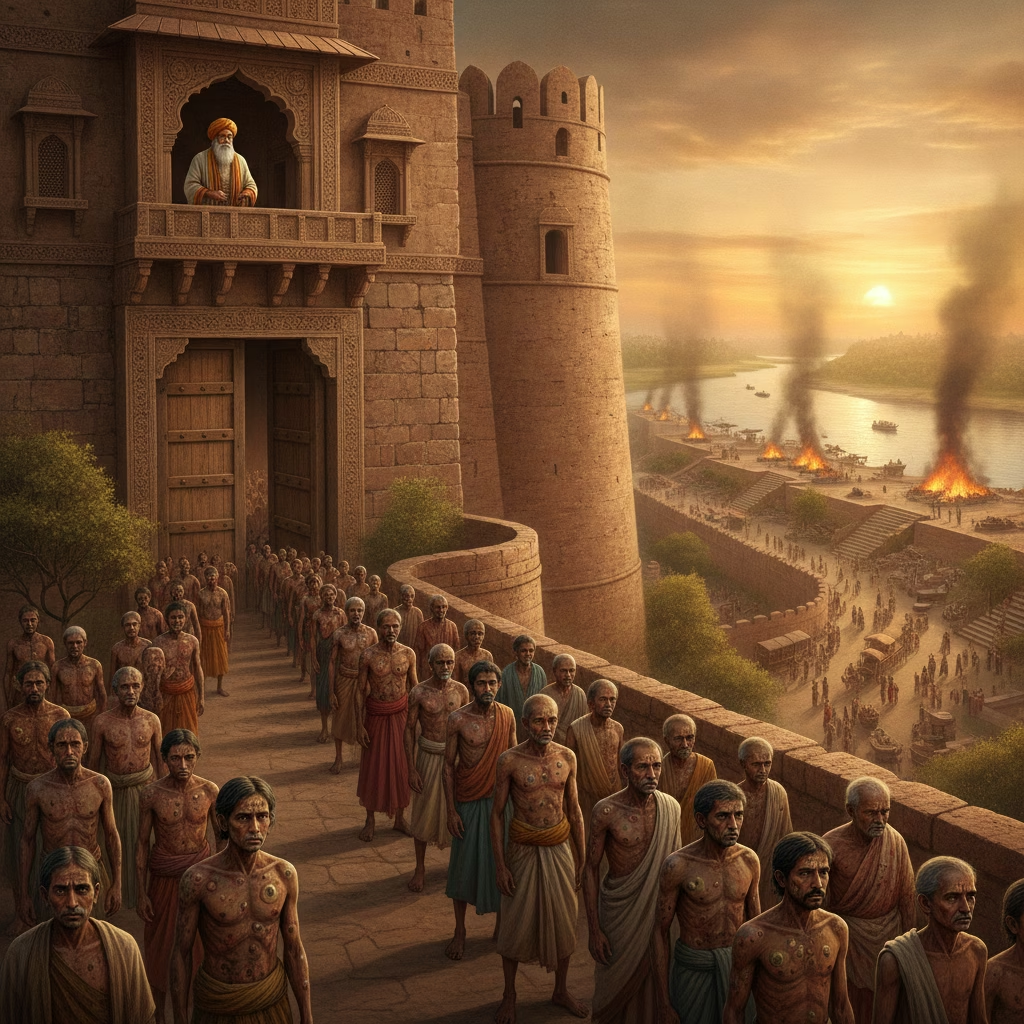
The smoke from the funeral pyres rose in thick columns along the ghats, darkening the sky above the confluence where the Ganges met the Son. Vaidya Dhanvantari stood at the palace gates, watching the city he had sworn to protect consume itself in fever and fear.
The Epidemic Arrives
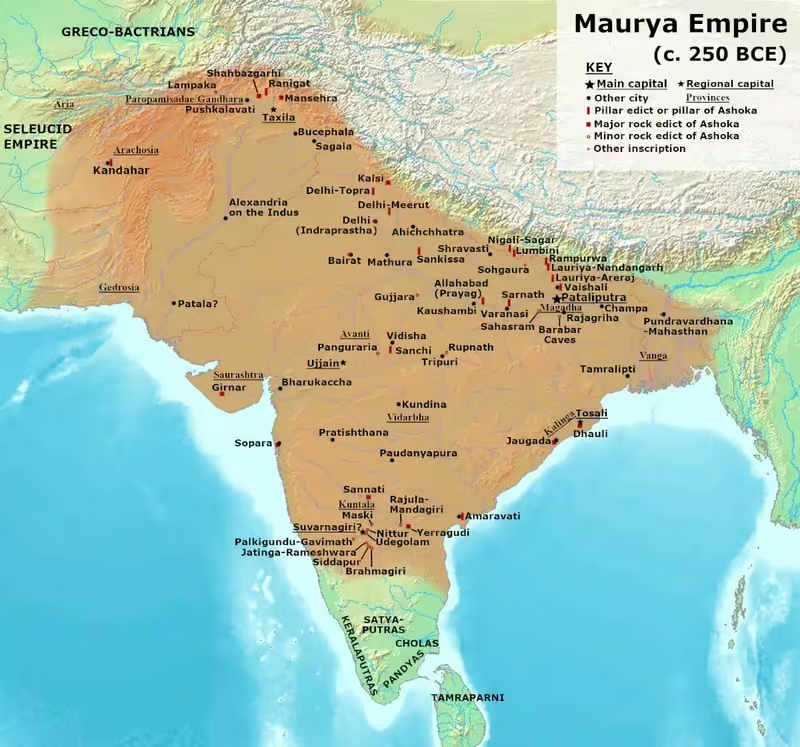
Pataliputra—Kusumapura, the City of Flowers—had never seemed less aptly named. The smallpox had arrived with the merchant caravans three weeks prior, carried along the same riverine trade routes that had made the capital wealthy beyond measure. Now those very routes that connected the city to all of India brought only death.
Dhanvantari had served as court physician for twelve years, through monsoons and droughts, through the emperor's campaigns and celebrations. He had treated arrow wounds and snake bites, fevers and fractures. But he had never seen anything like this.
The disease showed no mercy, no preference. It struck the Brahmin and the Shudra alike, the merchant's daughter and the washerman's son. In the crowded streets of what Megasthenes, the Greek ambassador, had called one of the world's largest cities—home to perhaps four hundred thousand souls—the contagion spread like fire through dry grass.
Every morning, the crowds at the palace gates grew larger. They came from all sixty-four gates of the city's massive fortifications, traveling along streets that stretched ten miles in length. They came with children in their arms, with elderly parents on makeshift litters, with hope dying in their eyes.
"Vaidya-ji, please," a woman called from the crowd, holding up a child covered in the telltale pustules. "My daughter burns with fever. The others say you can help."
But Dhanvantari could offer only palliative care—cool cloths, herbal teas to ease the fever, prayers to Dhanvantari, the divine physician for whom he was named. He could comfort, but he could not cure. And so the pyres multiplied along the riverside, their smoke obscuring the 570 towers that crowned Pataliputra's walls.
The Experimental Treatment
It was in the third week of the epidemic that Dhanvantari retreated to his chambers, exhausted and desperate. The palace, with its sophisticated planning and efficient administration that Megasthenes had so admired, had become a fortress against the dying rather than a beacon of hope.
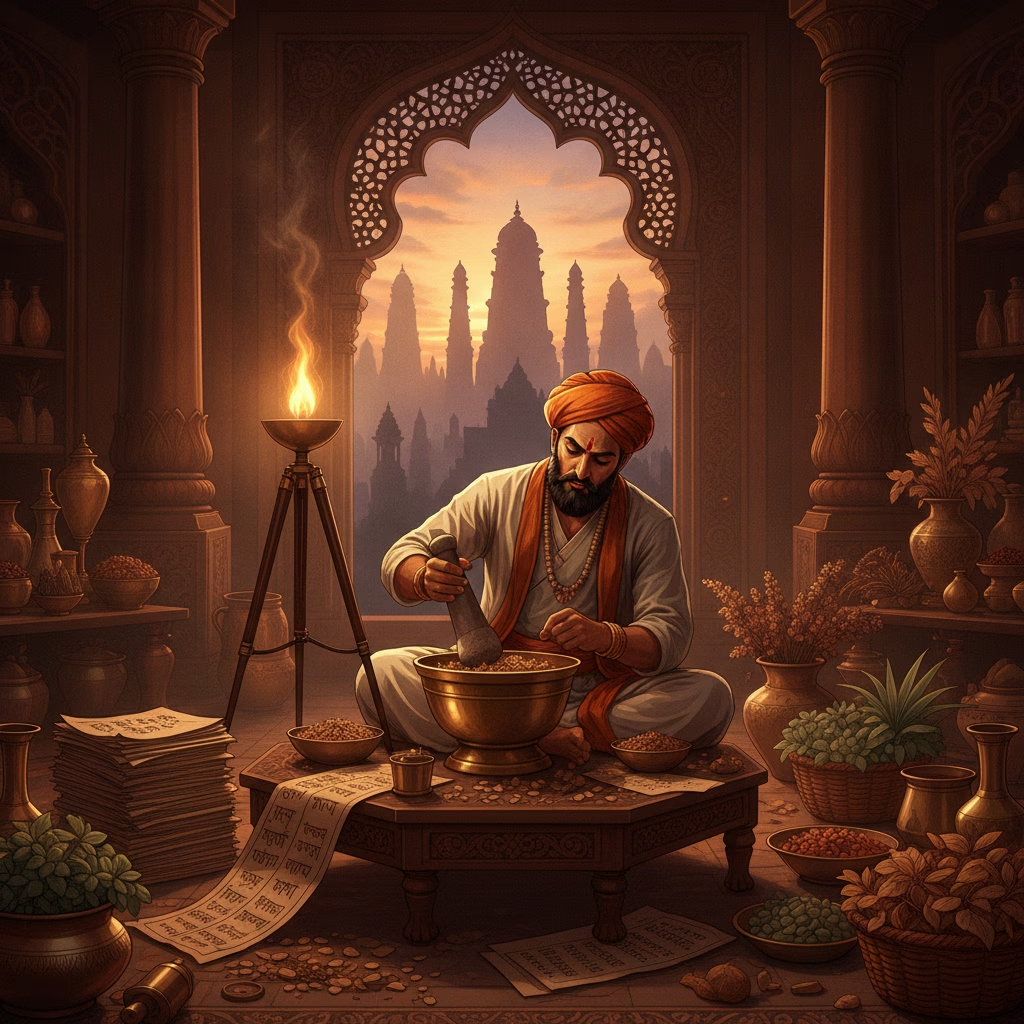
He lit the oil lamps and spread his texts before him—ancient palm-leaf manuscripts passed down through generations of healers. Pataliputra had always attracted intellectuals from across the subcontinent, scholars like the legendary Chanakya who had walked these very streets. The city's libraries held knowledge from every corner of the empire.
In the texts, Dhanvantari found references to an old practice, nearly forgotten: the deliberate introduction of a mild form of disease to prevent a severe one. Cowherds, it was said, who contracted cowpox never fell ill with smallpox. Could the principle be applied?
For three nights, he worked by lamplight, grinding herbs, preparing tinctures, studying the progression of the disease in his patients. Through the carved window, he could see the silhouettes of the city's towers against the pre-dawn sky, standing sentinel over the suffering below.
The treatment he devised was dangerous, perhaps heretical. He would take matter from the pustules of those with mild cases and introduce it—carefully, methodically—into small cuts on the arms of the healthy. The body, he theorized, would learn to fight the invader while it was weak, and be prepared when the true enemy arrived.
On the fourth night, working in absolute secrecy, he tested it on himself. He made a small incision on his forearm and applied the prepared matter. Then he waited.
The fever came gently, almost apologetically. A few pustules appeared on his arm, but nothing like the devastating eruptions he had witnessed. Within a week, he had recovered. More importantly, when he deliberately exposed himself to virulent cases, he remained healthy.
He began with volunteers from the lower quarters—people who had nothing left to lose, who had watched their families die and now faced the disease themselves. He explained the risk, the uncertainty, the experimental nature of his treatment. Some refused. Others, seeing death's certainty without it, agreed.
Success and Discovery
The results were undeniable. Of the twenty people Dhanvantari treated in secret, eighteen survived. Of those who refused treatment, fewer than half lived. The difference was stark, miraculous, impossible to ignore.
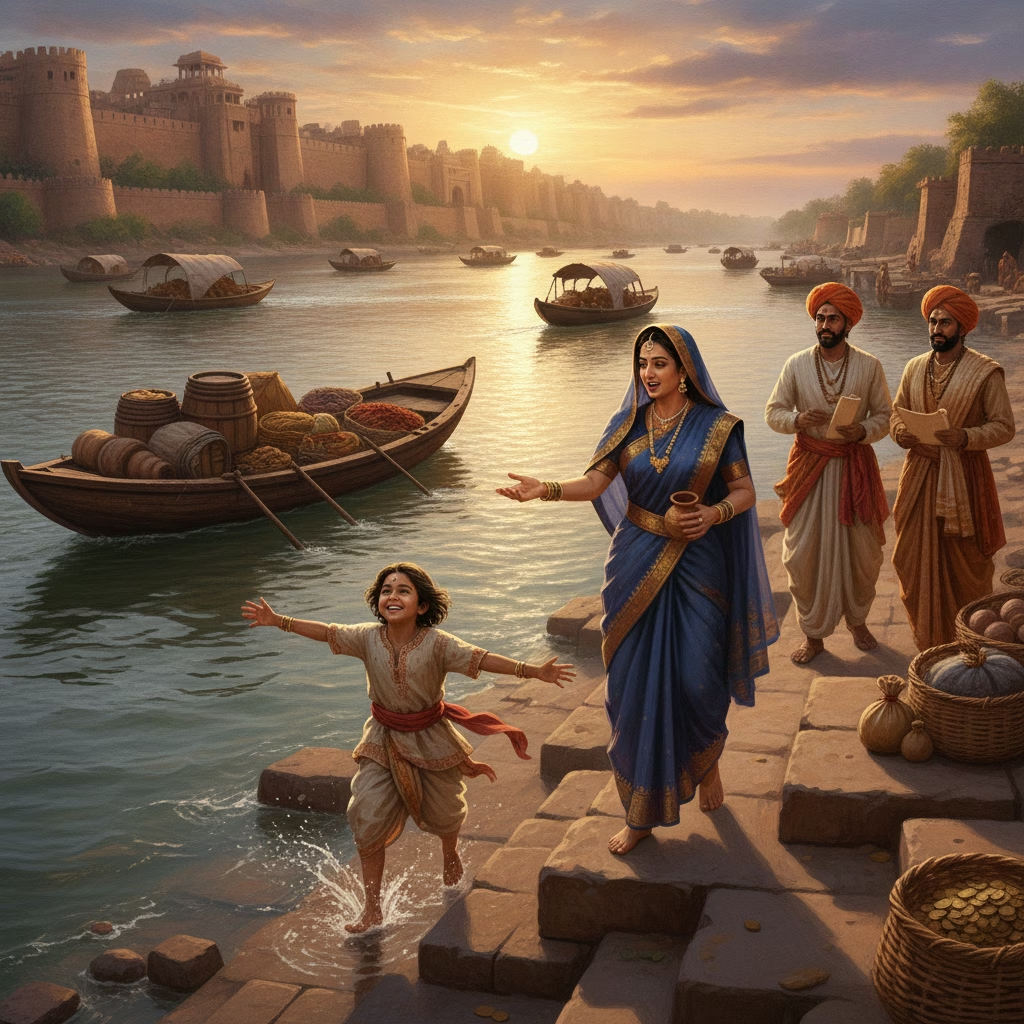
Word spread through the markets and along the ghats where the Ganges, Gandhaka, and Son rivers met. The city, which extended across a circumference of nearly thirty-four kilometers, had always been a place where information flowed as freely as the rivers themselves. Merchants told other merchants. Washerwomen told their neighbors. Within days, desperate families were seeking out the physician who could work miracles.
Dhanvantari found himself torn. His oath demanded he help all who came to him. But his treatment required time, careful preparation, close observation. He could not treat thousands, not alone.
He trained two assistants, swearing them to secrecy about the method. Together, they worked from dawn until long after dark, treating as many as they could. The funeral pyres began to diminish. Along the riverside steps, recovered children played again, their mothers weeping with gratitude.
One such mother, a merchant's wife, stopped Dhanvantari at the market. "My daughter lives because of you," she said, tears streaming down her face. "The gods have blessed Pataliputra with your presence."
But not everyone saw it as a blessing.
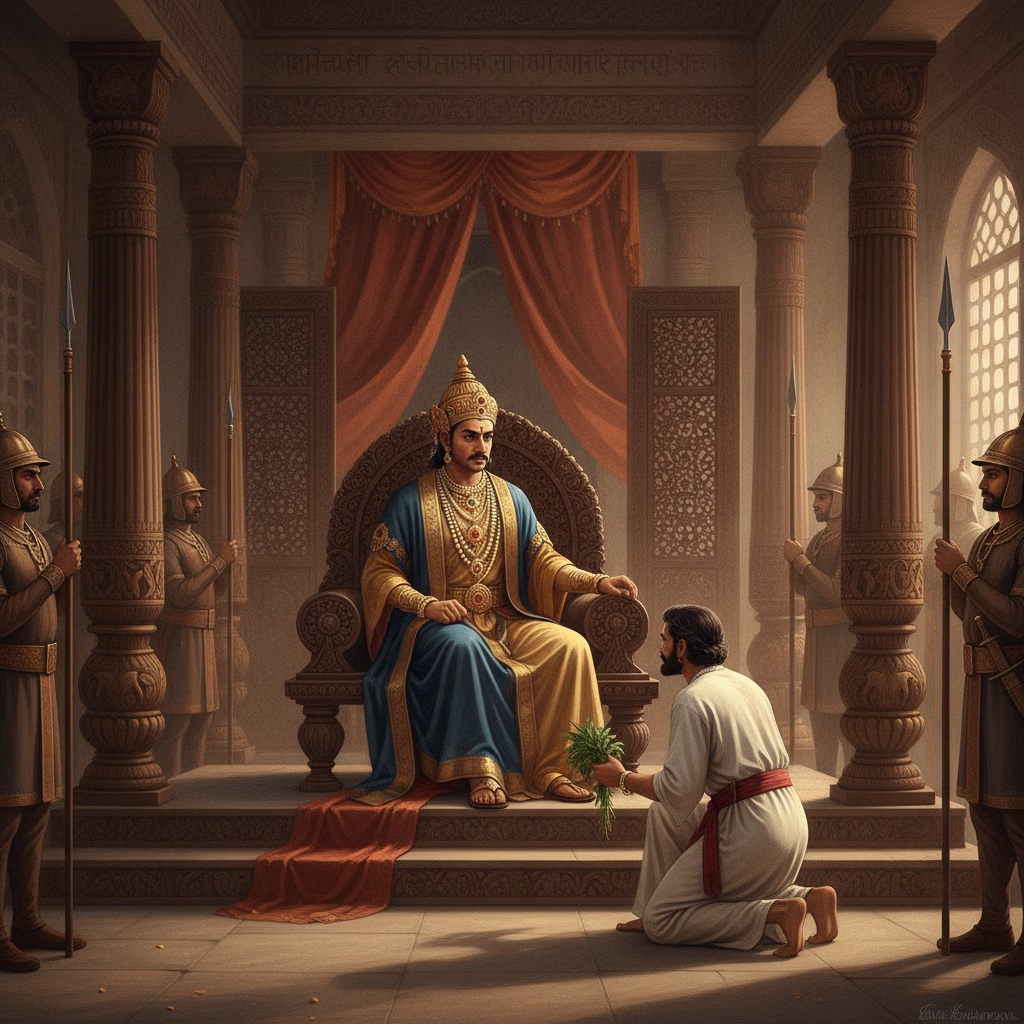
The Emperor's Command
The summons came at midday, delivered by the palace guard. The emperor would see him immediately.
Dhanvantari had served the emperor faithfully, had treated his children through childhood illnesses, had advised him on matters of health and hygiene for the palace. But he had never been summoned with such urgency, such formality.
The throne room was cool despite the heat outside, its wooden pillars carved with scenes of conquest and prosperity. The emperor sat elevated, surrounded by advisors and guards. His expression was unreadable.
"You have discovered something," the emperor said without preamble. "A treatment for the smallpox."
"Yes, Your Majesty. A method of inoculation that—"
The emperor raised his hand. "I have heard the reports. Remarkable. The gods have indeed favored us."
Dhanvantari bowed, relief flooding through him. "I hope to train more physicians, Your Majesty. To spread the treatment throughout the city, and then—"
"No."
The word fell like a stone.
"Your Majesty?"
The emperor leaned forward. "You will treat the palace household. The military. The administrative officials essential to the functioning of the state. But this knowledge goes no further."
"But the people—"
"The people will recover or they will not, as the gods will it. But our rivals—the kingdoms to the south, the northwest—they watch us always, waiting for weakness. If they learn we possess this knowledge, they will seek it out. And if they acquire it, they will use it to strengthen their own populations, their own armies, while planning to strike at us."
One of the advisors spoke up. "The empire's security depends on maintaining our advantages, Vaidya. Surely you understand this."
Dhanvantari's mind reeled. "Your Majesty, this is a treatment for disease, not a weapon of war."
"Everything is a weapon of war," the emperor replied coldly. "Population is power. Health is strength. Would you hand our enemies the means to grow stronger while we fight this plague?"
"I would save lives, Your Majesty. All lives. That is my oath."
"Your oath is to serve your emperor," the advisor interjected. "And through him, the empire."
The emperor's voice softened slightly. "Dhanvantari, I understand your distress. You are a healer; it is your nature to help all who suffer. But I am a ruler, and I must think of the greater good. Treat those I have specified. When the epidemic passes, we will reconsider. But for now, this knowledge remains within the palace walls."
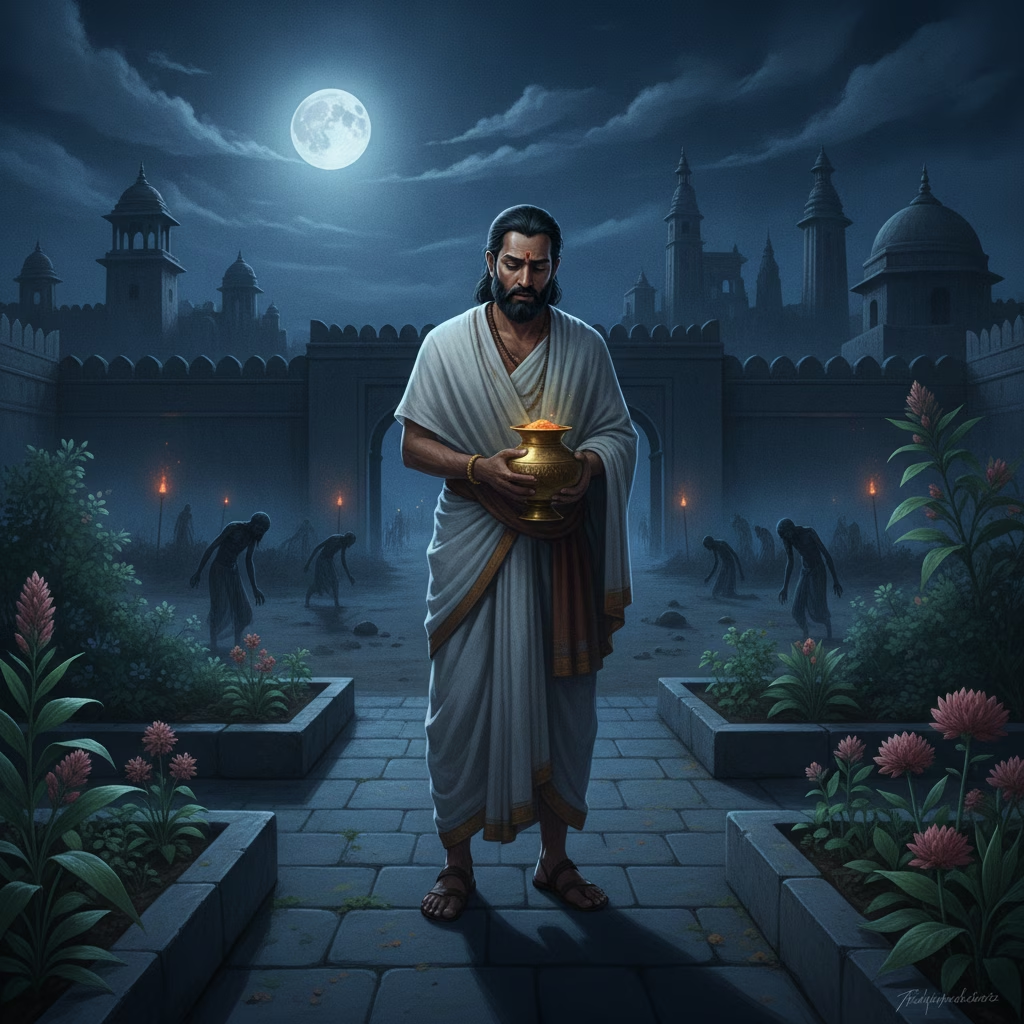
The Weight of Conscience
That night, Dhanvantari stood in the palace garden, surrounded by the medicinal plants he had cultivated over the years. In his hands, he held a brass vessel containing the prepared inoculation matter—enough to save perhaps fifty lives.
Beyond the palace walls, he could hear the sounds of the city: the calls of the night watchmen, the distant crying of a sick child, the chanting from the temples where people prayed for deliverance. Pataliputra, the magnificent capital that had been built at the confluence of rivers for its strategic advantage, now felt like a prison.
The emperor's logic was not without merit. Dhanvantari had lived through two wars, had seen what rival kingdoms could do when they sensed weakness. The Mauryan Empire's strength depended on its military might, its administrative efficiency, its ability to project power across the subcontinent. If smallpox weakened the population while enemies remained strong...
But what was an empire worth if it abandoned its own people? What was power built on the corpses of children who could have been saved?
He thought of the woman at the market, thanking him for her daughter's life. He thought of the twenty families in the lower quarters who had trusted him with their lives. He thought of the hundreds more who came daily to the palace gates, seeking help he was now forbidden to provide.
Pataliputra had been praised by Megasthenes for its efficient self-government, its sophisticated administration. But what good was efficiency if it did not serve the people? What was sophistication without compassion?
The moon rose over the city's towers, illuminating the smoke that still rose from the ghats, though less than before. Fewer pyres meant fewer deaths—among those he had already treated. But how many more would die tomorrow? Next week? Next month?
Dhanvantari made his decision.
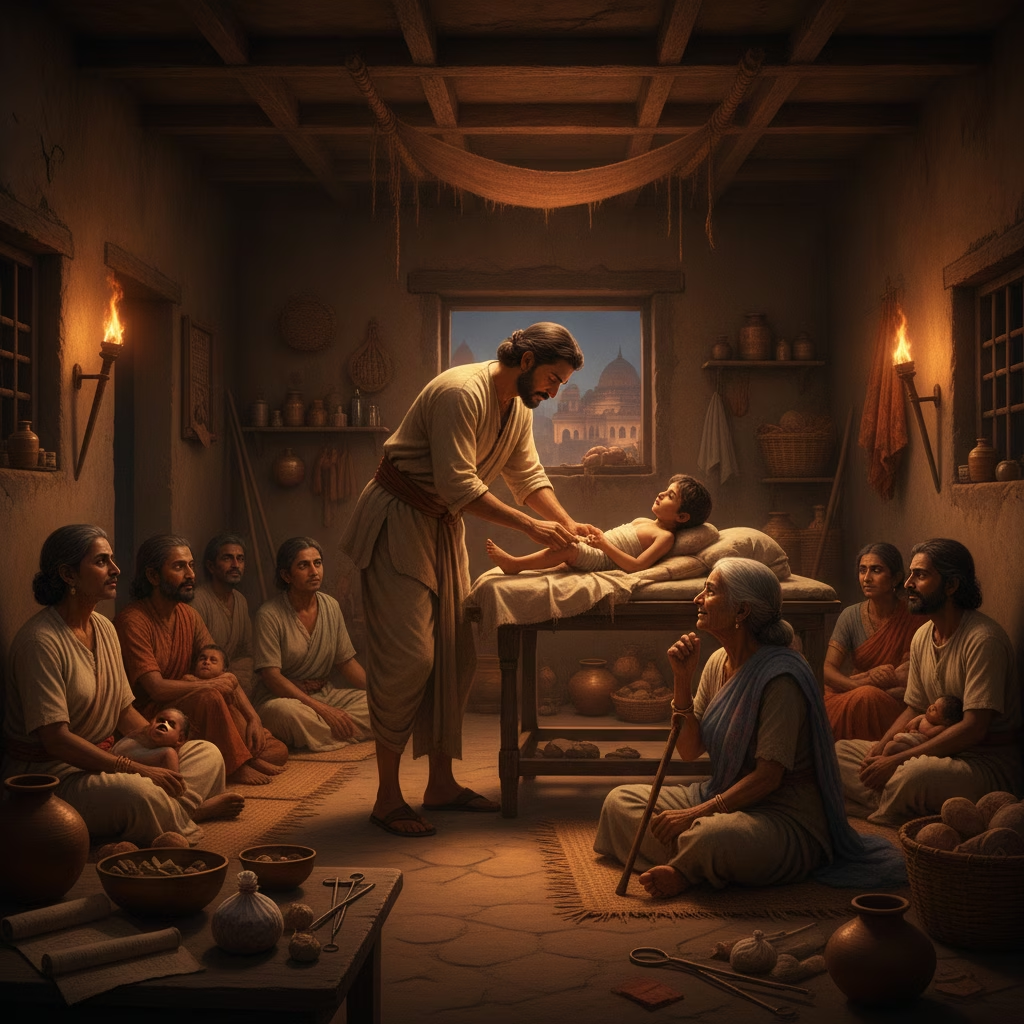
The Secret Treatment
He began that very night, slipping out through a side gate known only to palace staff. In the lower quarters, in homes lit by single oil lamps, he treated families in secret. His two assistants, when they learned of his decision, joined him without hesitation.
They worked in darkness, in silence, moving from house to house like shadows. Each treatment took time—the careful preparation, the precise incision, the instructions for care. They could not save everyone, but they could save some.
During the day, Dhanvantari fulfilled the emperor's command, treating palace officials and military officers. But his nights belonged to the people of Pataliputra, to the washermen and the merchants, the weavers and the potters, the flower-sellers who gave the city its other name.
It could not last forever. He knew that. Eventually, someone would notice, would report to the palace. But each night he bought time, each treatment saved a life, and each life saved was a small act of defiance against the logic of empire.
One night, as he treated a young boy in a humble dwelling, the child's grandfather spoke. "You risk much for us, Vaidya-ji. Why?"
Dhanvantari paused in his work. "Because I am a physician," he said simply. "And you are alive. That is reason enough."
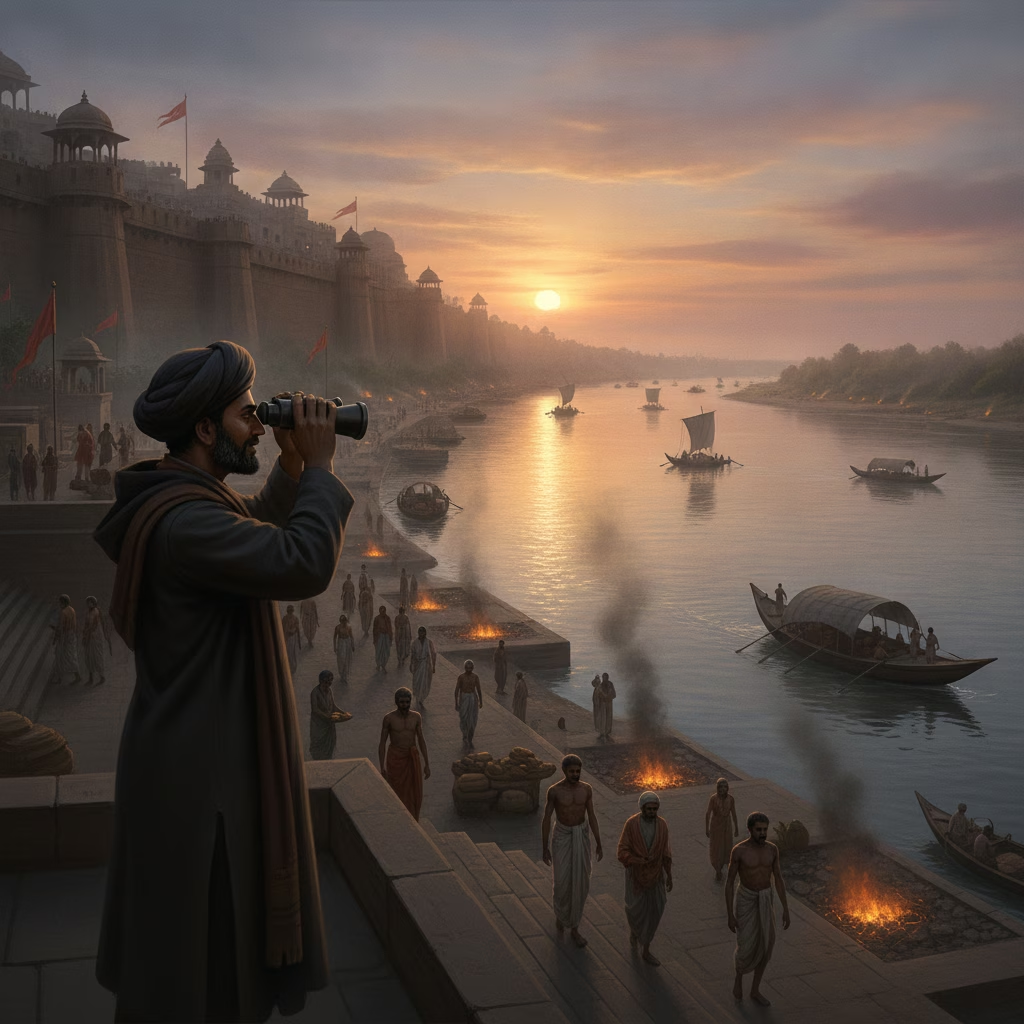
Dawn Over the Rivers
Three months after the epidemic began, it ended. Not completely—smallpox would return, as it always did—but this outbreak had burned itself out. The funeral pyres dwindled to nothing. The crowds at the palace gates dispersed. Life in Pataliputra, the great capital at the confluence of rivers, slowly returned to normal.
The emperor never learned of Dhanvantari's nighttime treatments, or if he did, he chose to say nothing. Perhaps he recognized that some acts of disobedience serve a higher loyalty. Perhaps he simply did not wish to lose his best physician.
Dhanvantari stood at the riverside as dawn broke over the Ganges, watching the boats resume their trade routes, carrying goods and people and, inevitably, disease to and from the city. He had saved hundreds, perhaps thousands. But he had not saved everyone. The knowledge he possessed could have saved more, if only it had been shared freely, without the constraints of empire and strategy.
Years later, other physicians would rediscover the inoculation method. It would spread across India, across the world, saving millions. But that morning, watching the sun rise over the rivers that fed the city, Dhanvantari wondered about the cost of secrets, the price of power, and the true meaning of healing.
Pataliputra would stand for centuries more, capital of the Mauryas and later the Guptas, one of the world's great cities. But its greatest legacy, Dhanvantari believed, was not its walls or towers or efficient administration. It was the lives of ordinary people—the children who played on the ghats, the merchants who traded in its markets, the families who lived and loved within its gates.
Those were the lives worth saving. Those were the lives he had sworn to protect. And in the end, despite emperors and empires, despite strategy and secrets, he had kept his oath.
The city awakened around him. The epidemic was over. But the questions it raised—about duty and loyalty, about individual lives and collective security, about the obligations of those with knowledge and power—those questions would echo through history, unanswered and unanswerable, as enduring as the rivers themselves.