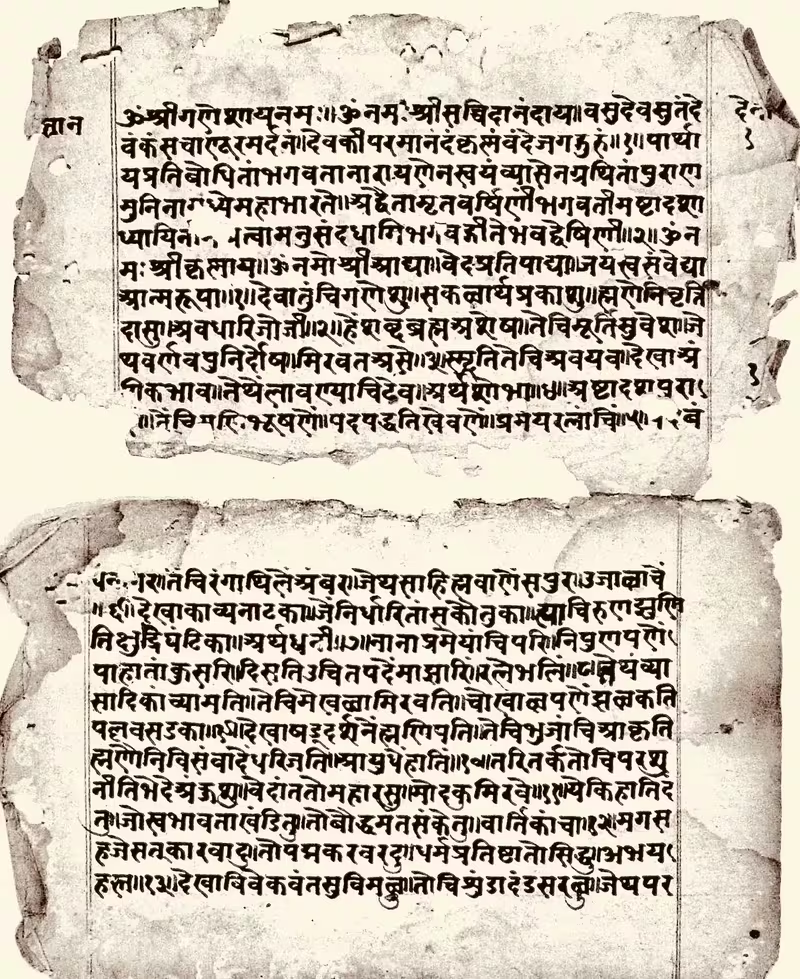

When a Buffalo Recited the Vedas: Dnyaneshwar's Challenge to Caste
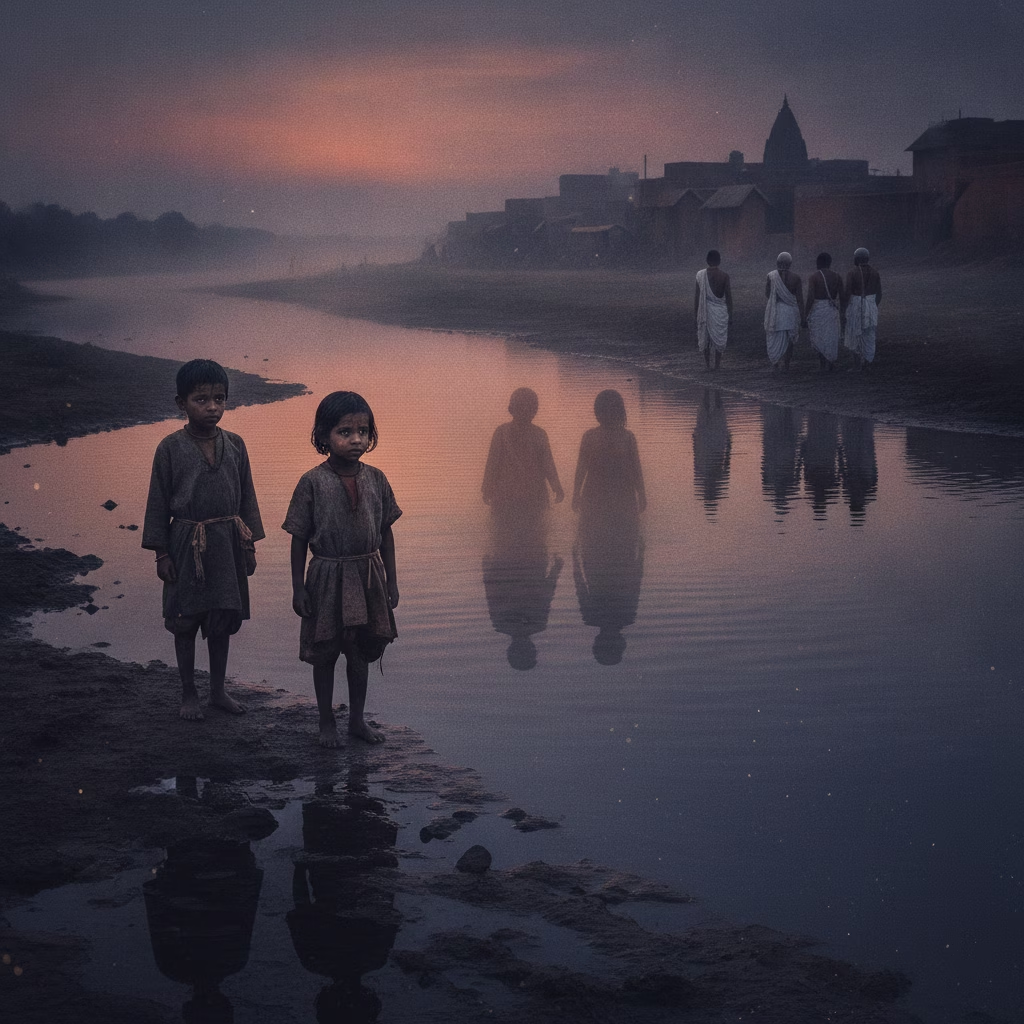
The waters of the Indrayani River had swallowed their parents. Now, four children stood on its banks, orphaned and outcast in a world that had already condemned them before they could speak their first words.
The Outcasts of Alandi
The year was 1275 CE, and the Yadava kingdom ruled from Devagiri enjoyed relative peace under King Ramadevarava. But for the children of Vitthal Kulkarni—Nivruttinath, Dnyaneshwar, Sopan, and Muktabai—there would be no peace, no acceptance, no place in the ordered world of medieval Maharashtra.
Their father's sin had been simple: he had become a sannyasin, a renunciate, and then returned to married life. In the eyes of the Brahmin community, this was an unforgivable heresy. When Vitthal Kulkarni had traveled to Kashi seeking spiritual knowledge, he met his guru Ramashram and took vows of renunciation. But fate intervened when Ramashram later visited Alandi and encountered Vitthal's wife Rukminibai, blessing her with the words, "May you lead a happy married life."
When the guru discovered that his disciple had abandoned his wife without her consent, he ordered Vitthal to return to Alandi and resume his duties as a householder. Vitthal obeyed, and Rukminibai bore four children. But the Brahmin community saw only pollution.
The family was excommunicated. No one would perform the sacred thread ceremony for the boys, the ritual that would admit them fully into Brahmin society. No one would sell them food in the market. No one would speak to them. The children of a renunciate-turned-householder were yatis—outcasts who existed in a liminal space, neither fully in the world nor properly outside it.
Desperate for atonement, Vitthal Kulkarni approached the Brahmins of Paithan, asking what penance could wash away his sin. Their answer was unequivocal: death. Only by giving up their lives could Vitthal and Rukminibai restore the cosmic order they had disrupted.
And so, the parents walked into the Indrayani River and never emerged. The four children, the eldest barely in his teens, watched the waters close over the only protection they had ever known.
Initiation into the Nath Tradition
But the story of the Kulkarni children did not end in that river. It transformed there, like base metal in the alchemist's crucible.
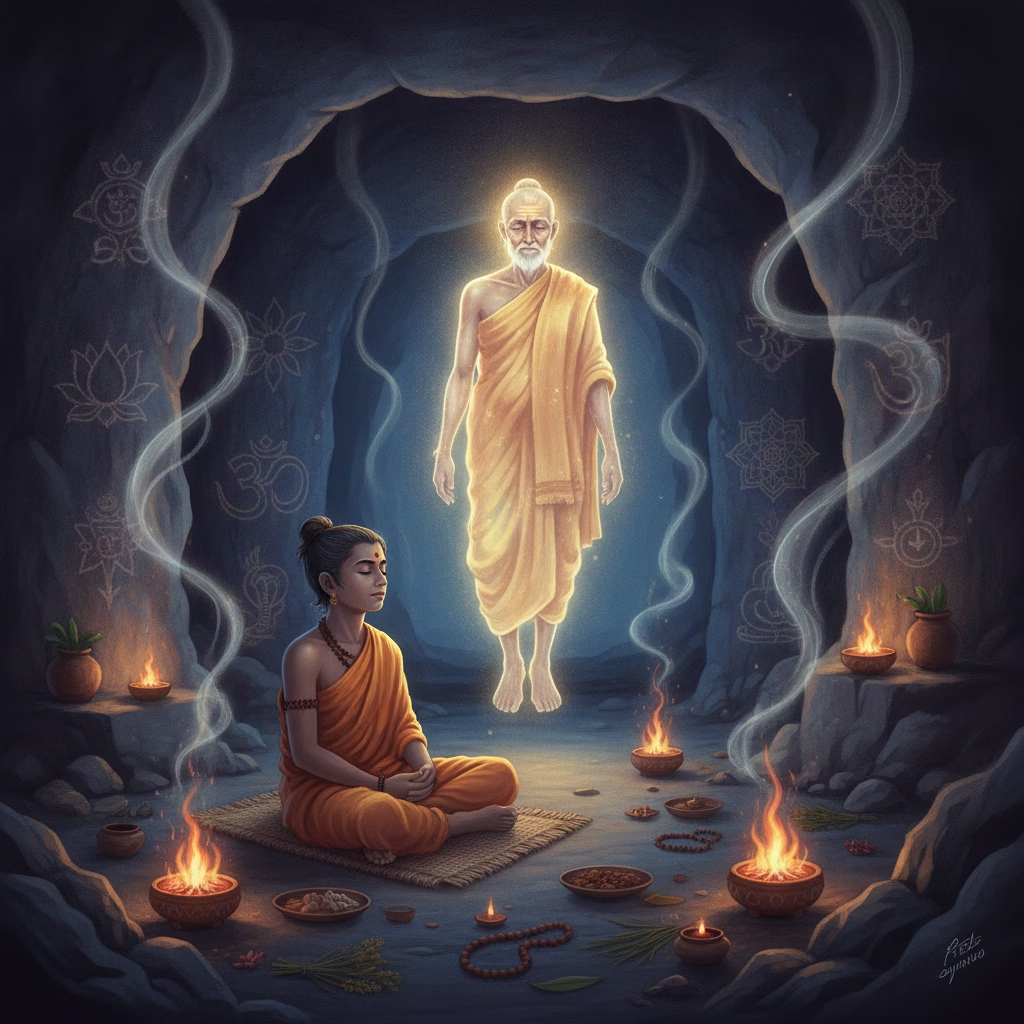
Years earlier, when the family had fled to Nashik to escape persecution, young Nivruttinath had become separated during an encounter with a tiger. Hiding in a cave, terrified and alone, the boy had met someone who would change not just his life but the spiritual landscape of Maharashtra: Gahaninath, a master of the Nath yogic tradition.
The Nath yogis were different from the orthodox Brahmins who had condemned the Kulkarni family. They believed that spiritual realization came not from birth or ritual purity, but from direct experience of the divine through yoga and meditation. They were wanderers, mystics, practitioners of a tradition that traced itself back to the legendary Matsyendranath and Gorakhnath.
Gahaninath initiated Nivruttinath into the profound wisdom of the Naths, teaching him that the divine dwells equally in all beings, that caste and social status are illusions that obscure the fundamental unity of existence. When Nivruttinath returned to his family, he carried this knowledge like a lamp in the darkness of their ostracism.
After their parents' death, Nivruttinath became the spiritual guide for his younger siblings. He initiated all three—Dnyaneshwar, Sopan, and Muktabai—into the Nath tradition. The four orphans, rejected by conventional society, found refuge in a spiritual path that rejected convention itself.
Young Dnyaneshwar proved to be an extraordinary student. By his teenage years, he had mastered not only the yogic practices of the Nath tradition but also the philosophical depths of Advaita Vedanta, the non-dualistic philosophy that sees all of reality as expressions of a single, undivided consciousness. He combined this philosophical sophistication with an intense devotion (bhakti) to Vithoba, the beloved deity of Maharashtra, worshipped as an incarnation of Vishnu.
The four siblings became celebrated yogis and poets, composing devotional songs (abhangas) in Marathi, the language of common people, rather than Sanskrit, the language of the Brahmin elite. They were creating something new: a spiritual movement that would speak to farmers, artisans, and merchants, not just to those born into privilege.
The Challenge from Orthodox Brahmins
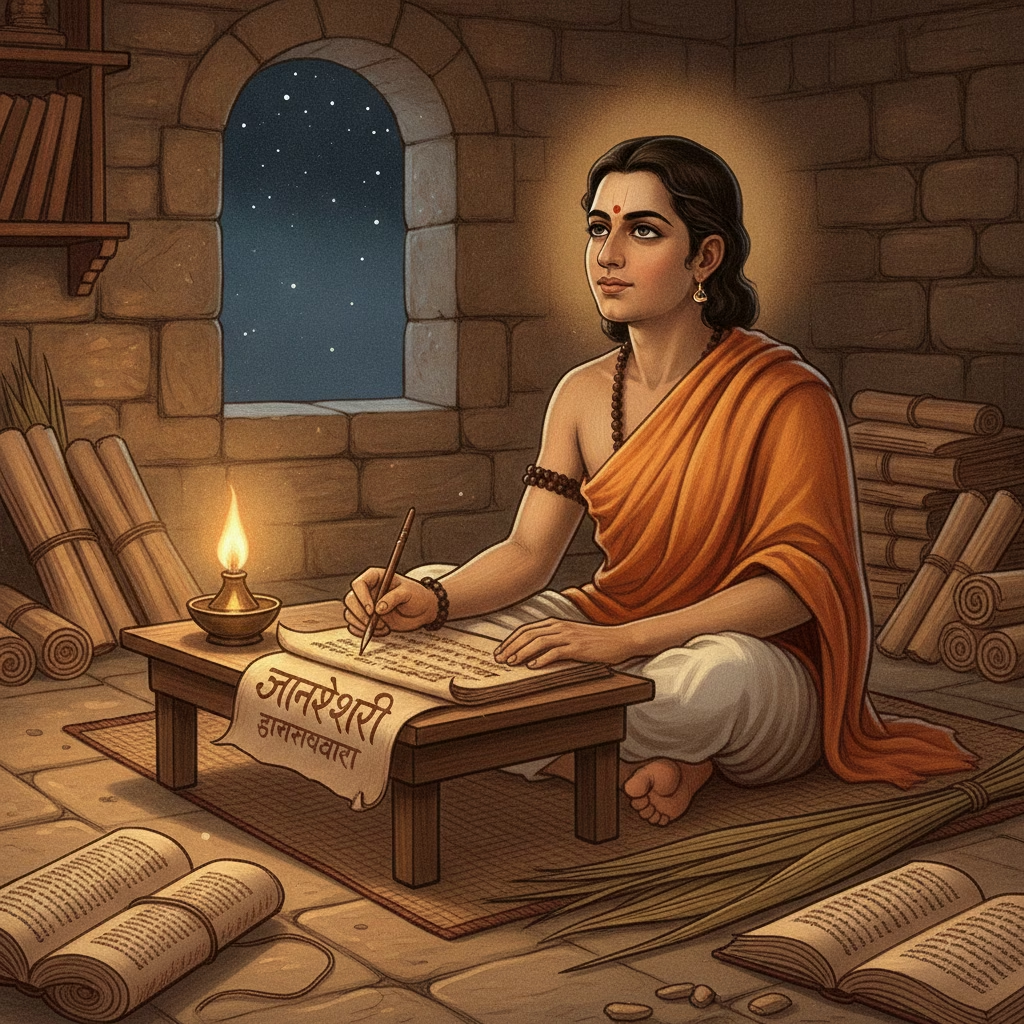
By 1290 CE, when Dnyaneshwar was just fifteen years old, he had completed a work that would become one of the treasures of Indian literature: the Dnyaneshwari, a commentary on the Bhagavad Gita written in Marathi verse.
This was revolutionary. The Gita, one of Hinduism's most sacred texts, had always been the domain of Sanskrit scholars. Commentaries existed in Sanskrit by the great philosophers Shankara and Ramanuja. But Dnyaneshwar wrote for the people of Maharashtra in their own language, making the profound teachings of the Gita accessible to anyone who could understand Marathi.
The Dnyaneshwari was not merely a translation. It was a brilliant synthesis of Advaita Vedanta philosophy, yogic practice, and devotional love, all expressed in poetry of stunning beauty. Dnyaneshwar explained the Gita's teachings on karma, dharma, and moksha (liberation) in ways that resonated with lived experience, using metaphors drawn from the agricultural life of Maharashtra.
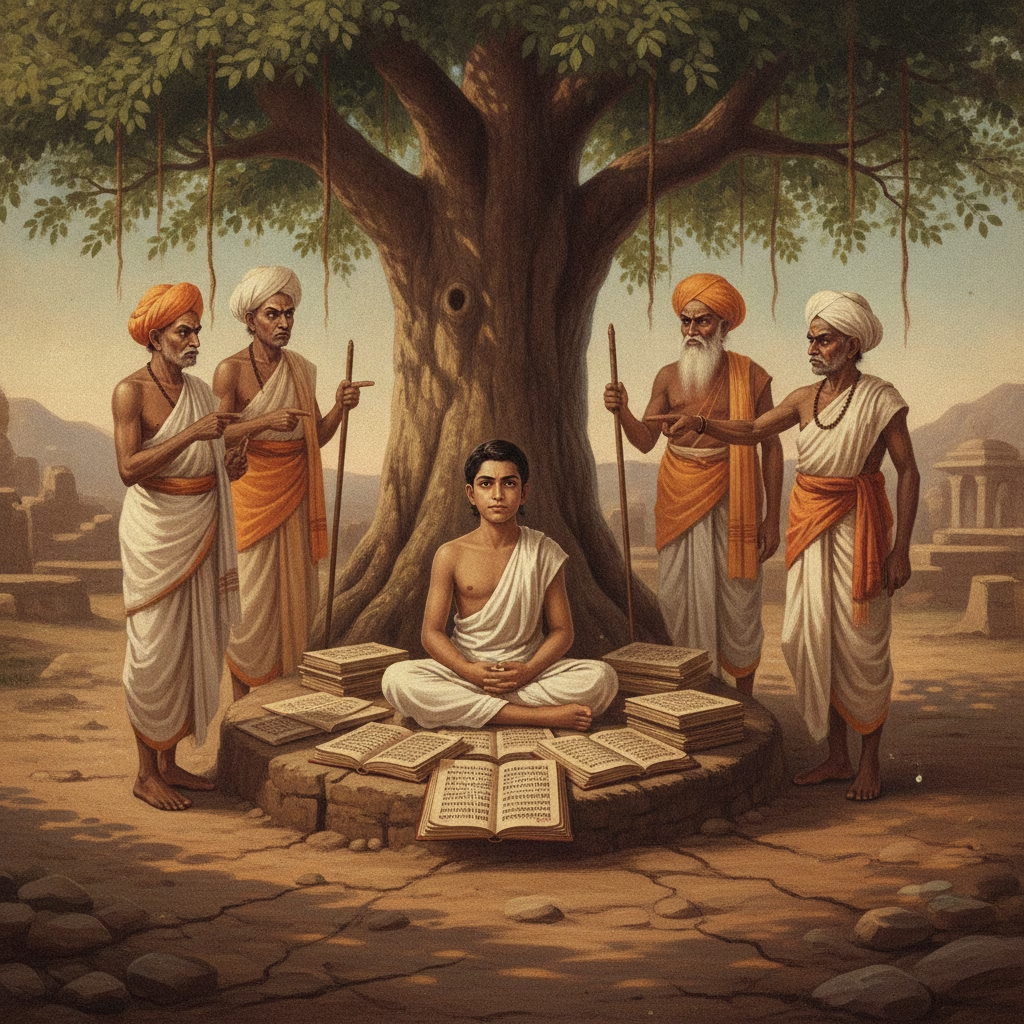
But the orthodox Brahmins who had condemned his family saw only an outcast presuming to interpret sacred texts. Who was this yati, this polluted child of a fallen renunciate, to speak about the Vedas and the Gita? By what authority did he claim to teach spiritual wisdom?
The challenges came repeatedly. Dnyaneshwar and his siblings sought acceptance, even traveling to Paithan to request that the Brahmins perform the rituals that would end their excommunication. But the Brahmins demanded proof of Dnyaneshwar's spiritual authority—proof that would satisfy their doubts and justify breaking the rules that had governed caste hierarchy for centuries.
Dnyaneshwar knew that rational arguments would not suffice. The Brahmins' objections were not intellectual but social and ritualistic. They needed to see something that would shatter their certainty that divine knowledge flowed only through the channels of caste purity.
The Buffalo Recites the Vedas
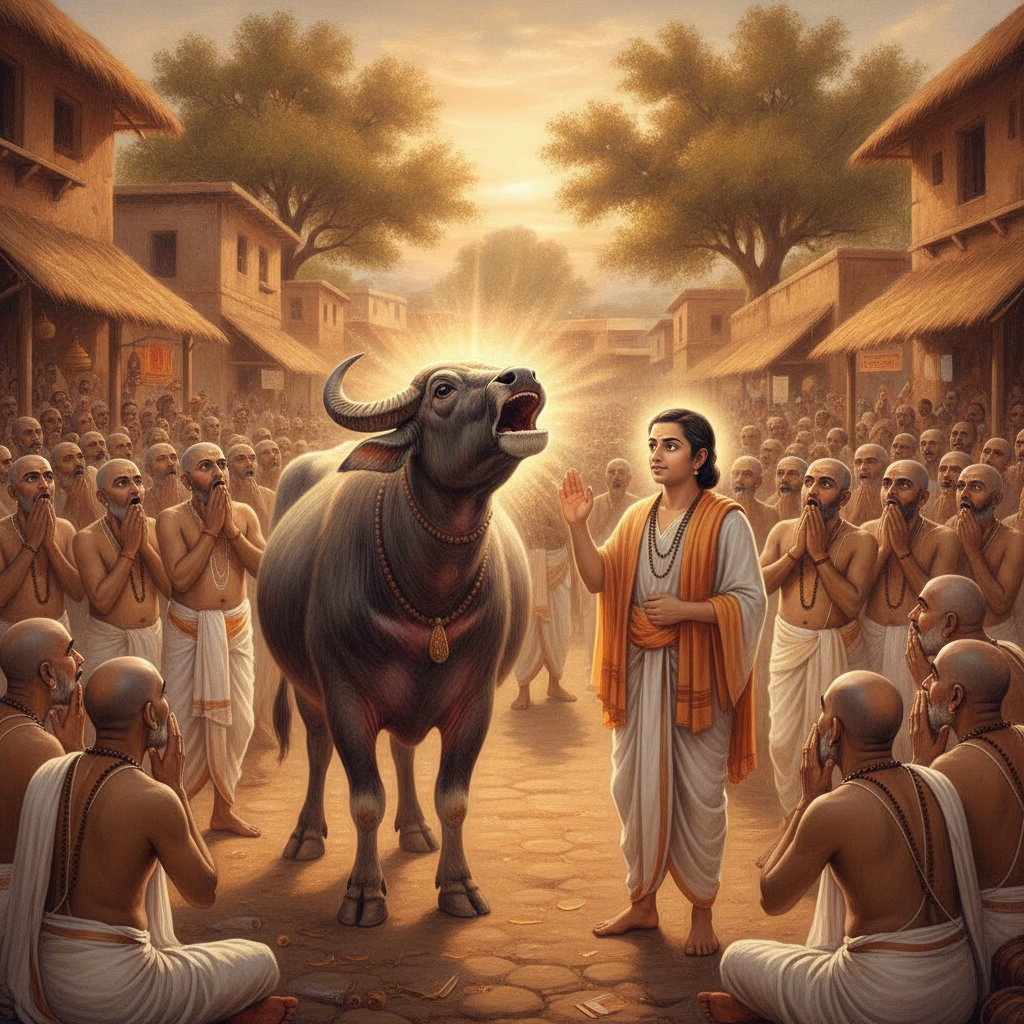
The village square in Paithan filled with people. Word had spread that the young outcast saint would demonstrate his spiritual powers. The Brahmins gathered, skeptical and hostile, arms crossed over their chests. Common villagers crowded at the edges, curious about what would happen.
Dnyaneshwar stood calmly in the center of the square. Beside him stood an ordinary water buffalo, the kind that pulled plows through the fields of Maharashtra, that wallowed in mud, that was considered among the lowest and most impure of creatures.
The message was clear even before Dnyaneshwar spoke: if divine knowledge could manifest through this buffalo, then all arguments about caste purity and spiritual hierarchy would crumble.
Dnyaneshwar placed his hand on the buffalo's head. He closed his eyes in meditation, entering the deep state of yogic concentration he had mastered under his brother's guidance. The crowd fell silent.
Then, according to the legend preserved by his disciples and celebrated in countless retellings, the impossible happened: the buffalo opened its mouth and began to recite verses from the Vedas, the most sacred texts of Hinduism, the texts that only high-caste Brahmins were permitted to study and recite.
The Sanskrit verses flowed from the buffalo's mouth with perfect pronunciation, perfect intonation, perfect understanding. The animal that should have been incapable of human speech, let alone the sophisticated phonetics of Vedic Sanskrit, became a vessel for the divine knowledge that the Brahmins claimed as their exclusive inheritance.
The Brahmins stood frozen, their certainties shattered. Some covered their mouths in shock. Others fell to their knees. The cosmic order they had defended so rigidly had just been revealed as a human construction, not a divine mandate.
Dnyaneshwar's point was profound: consciousness itself is divine. The supreme reality (Brahman) dwells in all beings equally—in Brahmins and outcastes, in humans and animals, in the learned and the illiterate. The ability to channel divine knowledge depends not on birth or ritual purity but on spiritual realization, on the dissolution of ego that allows the divine to speak through any form.
The Legacy of Radical Inclusion
The miracle of the buffalo established Dnyaneshwar's authority, but his true legacy lay in his writings and in the movement he helped create. The Dnyaneshwari became the foundational text of Marathi literature, studied and sung by generations. His other major work, Amrutanubhav ("The Nectar of Self-Awareness"), explored the nature of non-dual consciousness with poetic brilliance.
Dnyaneshwar wrote in Marathi deliberately, as an act of spiritual democracy. He believed that the profound truths of existence should not be locked away in Sanskrit, accessible only to the educated elite. Every farmer, every woman, every person regardless of caste should be able to hear the teachings of the Gita and understand the path to liberation.
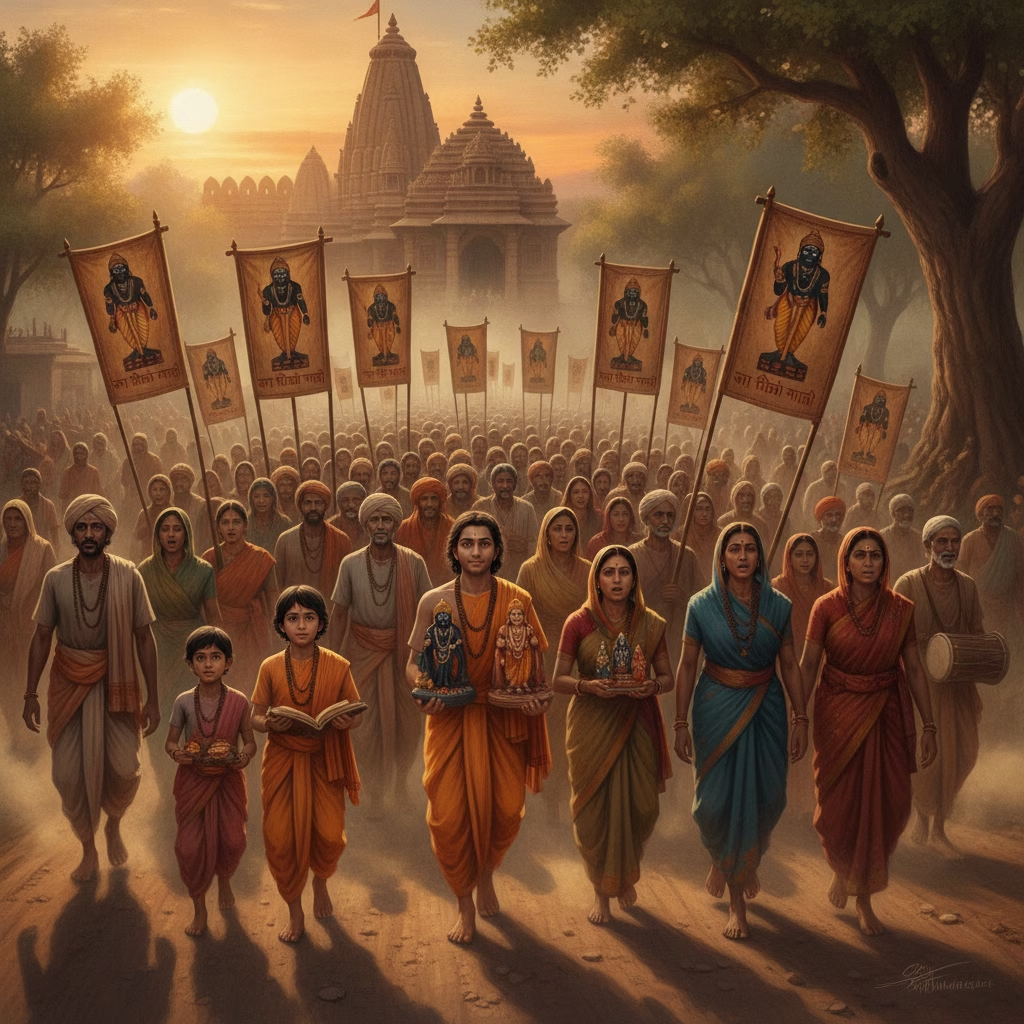
This philosophy became central to the Varkari tradition, the devotional movement centered on the worship of Vithoba at Pandharpur. The Varkaris emphasized that devotion (bhakti) and the repetition of God's name were paths to liberation available to everyone. No priest was needed to mediate between the devotee and the divine.
The Varkari Movement Takes Root
Dnyaneshwar and his siblings became the founders of a tradition that would transform Maharashtra's spiritual landscape. The Varkari movement attracted people from all castes and walks of life. Farmers and cobblers, women and men, the educated and the illiterate—all could walk together on pilgrimage to Pandharpur, singing devotional songs and experiencing spiritual communion.
The movement produced a remarkable succession of saint-poets. Namdev, a tailor, composed abhangas of stunning beauty. Two centuries later, Eknath would write his own commentary on the Gita in Marathi, explicitly following Dnyaneshwar's example. Tukaram, a shopkeeper, would become one of Maharashtra's most beloved poets, his songs still sung daily in millions of homes.
All of them traced their spiritual lineage back to Dnyaneshwar, the outcast boy who made a buffalo recite the Vedas, who proved that divine knowledge recognizes no boundaries of birth or species.
The Living Samadhi
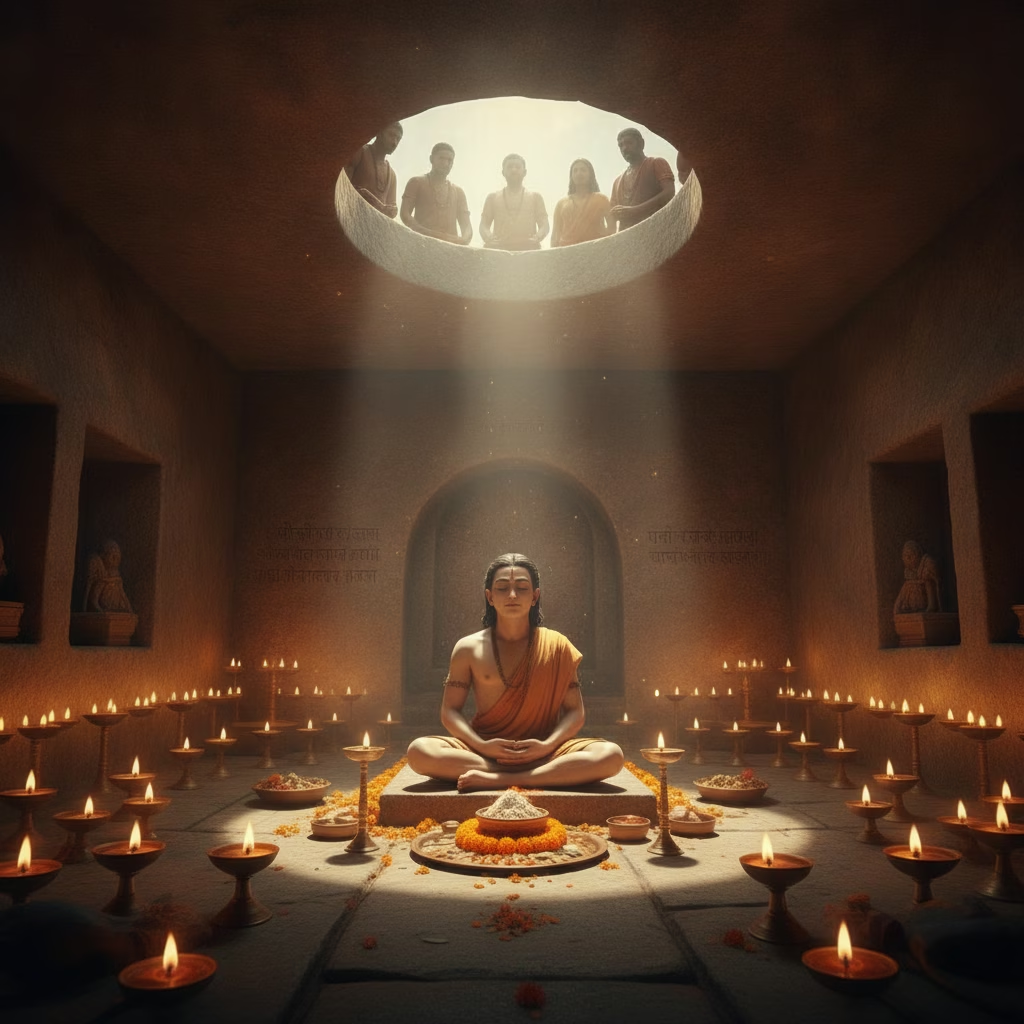
In 1296 CE, at the age of just twenty-one, Dnyaneshwar made a decision that would complete his legend. He announced that he would enter samadhi—not death, but a state of deep meditative absorption from which the body does not return.
At Alandi, the village where his parents had died and where he had faced the worst persecution, Dnyaneshwar had an underground chamber prepared. On the appointed day, he descended into it, sat in meditation posture, and instructed his followers to seal the chamber.
According to tradition, Dnyaneshwar entered a state of consciousness beyond life and death, his body preserved in eternal meditation. The chamber became a shrine, and Alandi became one of Maharashtra's most important pilgrimage sites.
The young saint who had lived only twenty-one years left behind two of Marathi literature's greatest works, helped found a spiritual movement that would flourish for centuries, and demonstrated through the legend of the buffalo that the divine transcends all human categories and hierarchies.
Today, more than seven centuries later, millions of Varkari pilgrims walk to Pandharpur twice each year, singing the abhangas of Dnyaneshwar and the saint-poets he inspired. The boy who was denied the sacred thread became the thread that wove together a tradition of radical spiritual inclusion, proving that wisdom and devotion belong to all who seek them, regardless of birth, caste, or even species.
The buffalo that recited the Vedas remains one of Indian legend's most powerful symbols: a reminder that the divine speaks through the most unexpected voices, and that true spiritual authority comes not from social position but from the depth of one's realization of the unity underlying all existence.