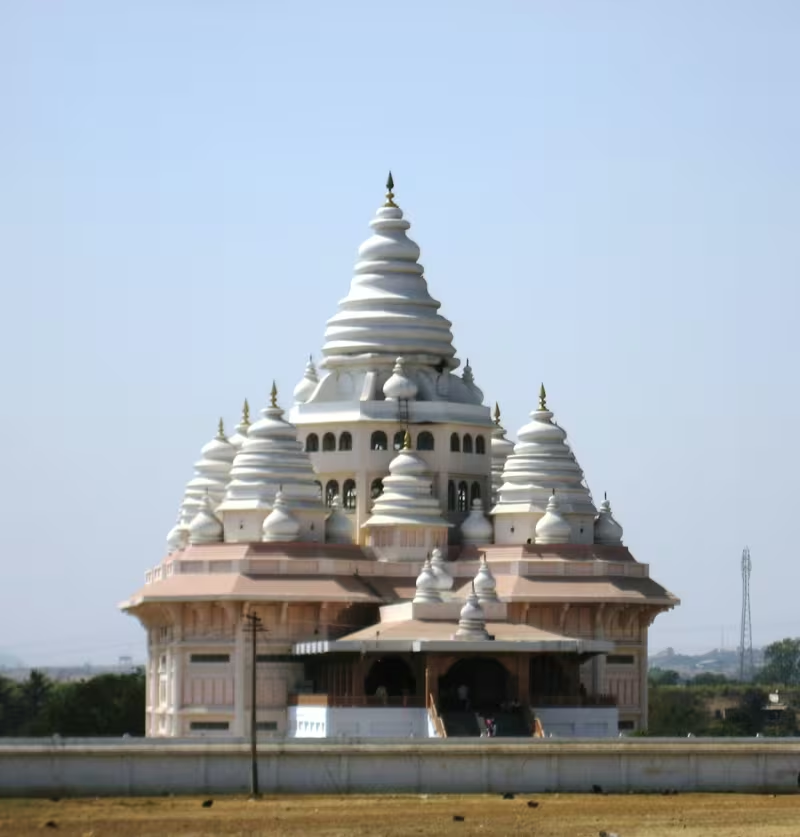

The Grocer Who Sang: Tukaram's Journey from Ruin to Devotion
The grain sacks that once bulged with prosperity now lay flat against the earthen floor of Tukaram Bolhoba Ambile's shop. Outside, the sun beat mercilessly on the village of Dehu, its heat shimmering off the parched fields that stretched toward the distant hills of 17th-century Maharashtra. The grocer stood in his doorway, watching skeletal figures shuffle past—neighbors he'd known all his life, now reduced to walking ghosts by the famine that had settled over the land like a curse.
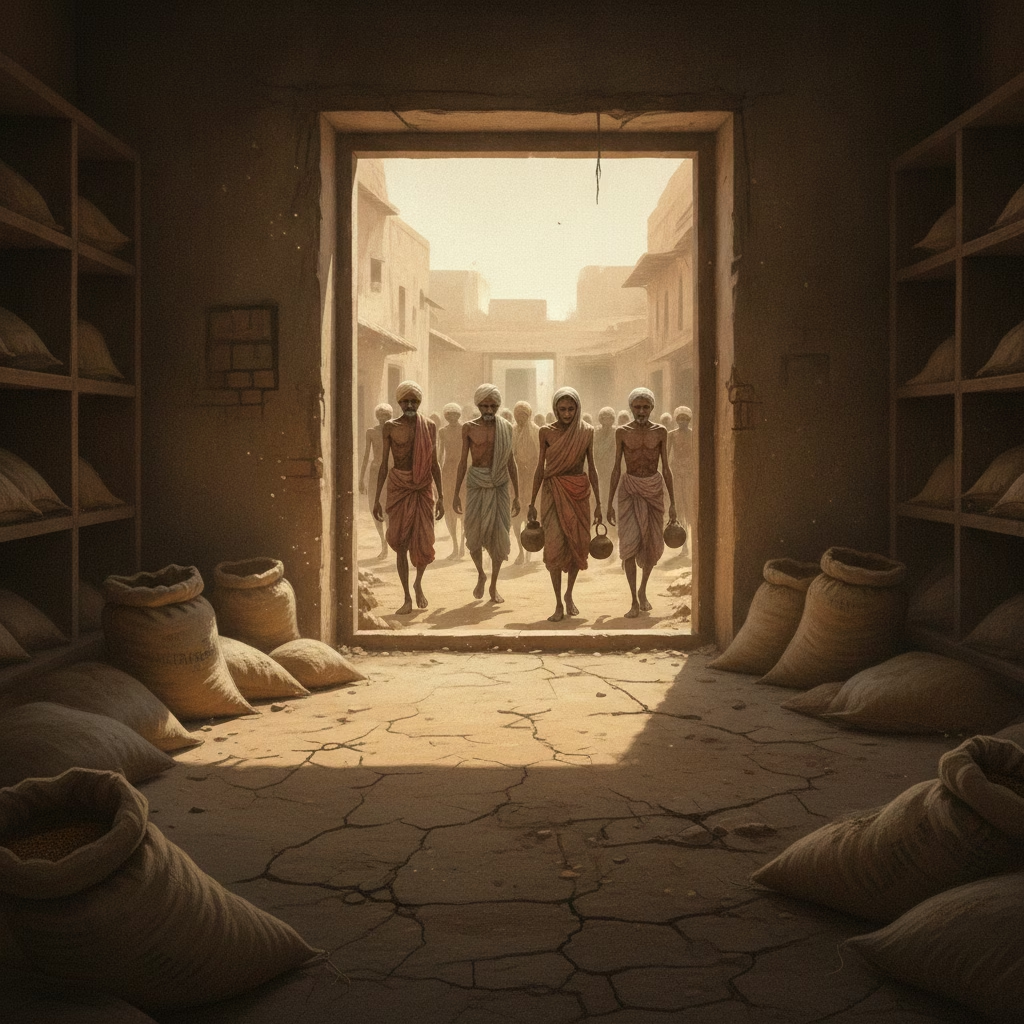
Tukaram's hands trembled as he touched the empty shelves. Just two years earlier, these same shelves had groaned under the weight of lentils, rice, and millet. Customers had lined up outside, coins jingling in their purses. Now the coins were gone, the customers were gone, and—most unbearably—his wife and children were gone too. The famine had taken them one by one, their bodies wasting away despite everything he'd tried. He'd sold his inventory at loss, given away what little remained, watched helplessly as hunger hollowed out their cheeks and dimmed their eyes.
He was born into the Kunbi caste, neither at the top nor the absolute bottom of the rigid hierarchy that governed every aspect of life in Maharashtra. Low enough that Brahmins wouldn't take water from his hands. High enough that he'd once dared to dream of modest prosperity. The shop had been that dream made real—until the rains failed, and the dream turned to ash.
Now, at an age when most men doubled down on business, Tukaram found he couldn't bear to look at the scales and measures anymore. Each one reminded him of the weight of rice he couldn't afford to feed his dying children. Each one whispered of his failure.
The River of Devotion
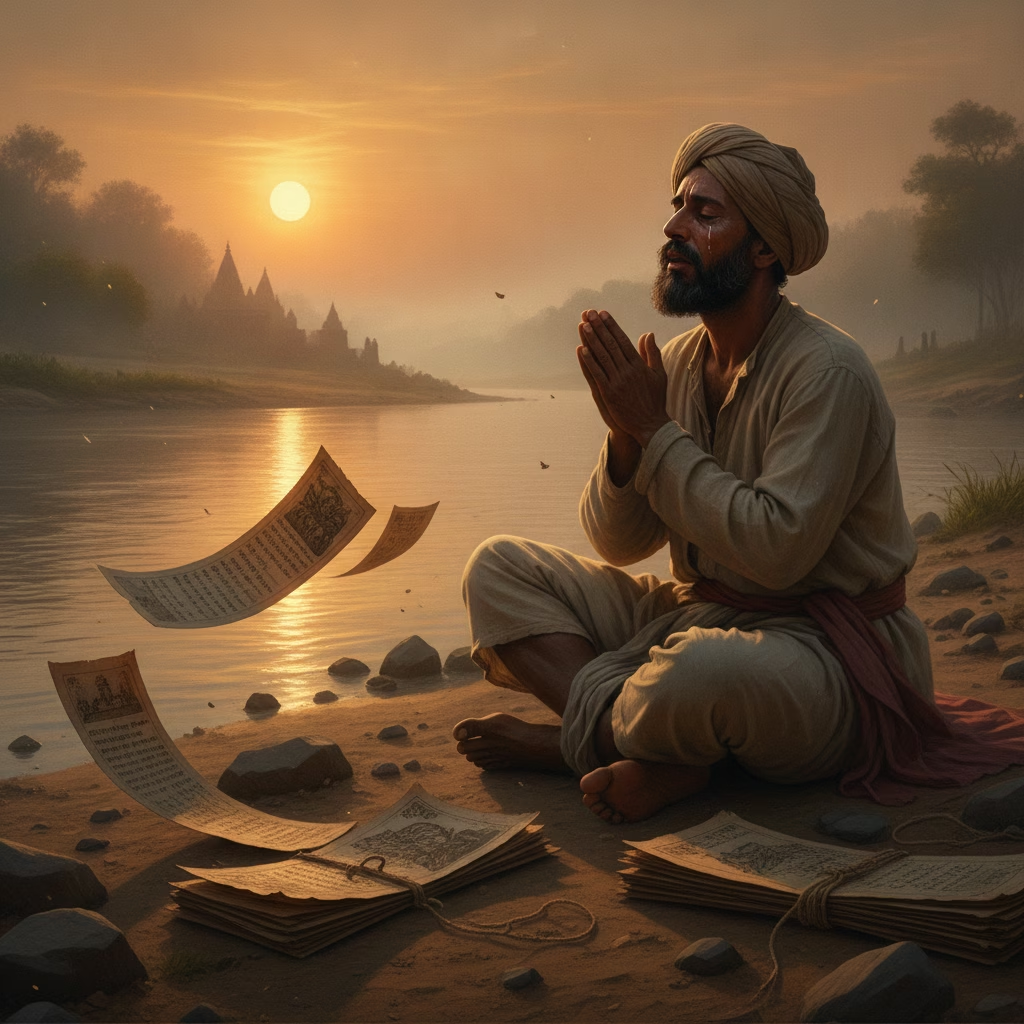
The Indrayani River still flowed, even when everything else had dried up. Tukaram found himself drawn to its banks in the early mornings, when mist rose from the water and the world felt suspended between darkness and light. He'd heard the stories all his life—of Vithoba, the god who stood with his hands on his hips in the temple at Pandharpur, waiting eternally for his devotees. Of Namdev and Dnyaneshwar, the saint-poets who had sung their way to the divine centuries before.
In his grief, Tukaram began to speak to Vithoba. Not in the formal Sanskrit he couldn't properly understand, but in his own Marathi, the language of farmers and grocers and washerwomen. Simple words tumbling out of a broken heart: "I am a fool, confused, lost, liking solitude because I am wearied of the world."
The words formed patterns, rhythms. The abhanga meter—the "unbroken" verse form that the old saints had used—came naturally to his tongue. He found palm leaves and began to write. One verse became ten, ten became a hundred. Each one was a conversation with the divine, a pouring out of anguish and longing and, slowly, a strange kind of joy.
His relatives thought he'd gone mad. "The shop, Tukaram!" they pleaded. "You'll lose everything!" But what was there left to lose? His family was gone. His prosperity was gone. All that remained was this inexplicable pull toward something larger than survival, something that made the emptiness bearable.
Songs in the Gathering Place
Word spread through Dehu that the grocer had become a bhakta, a devotee. At first, people came out of curiosity—what kind of man abandons his livelihood to sit by the river singing? But when they heard Tukaram's verses, something shifted. These weren't the incomprehensible mantras of the temple priests. These were songs about their own struggles, their own doubts, their own desperate hope that the divine might care about ordinary people.
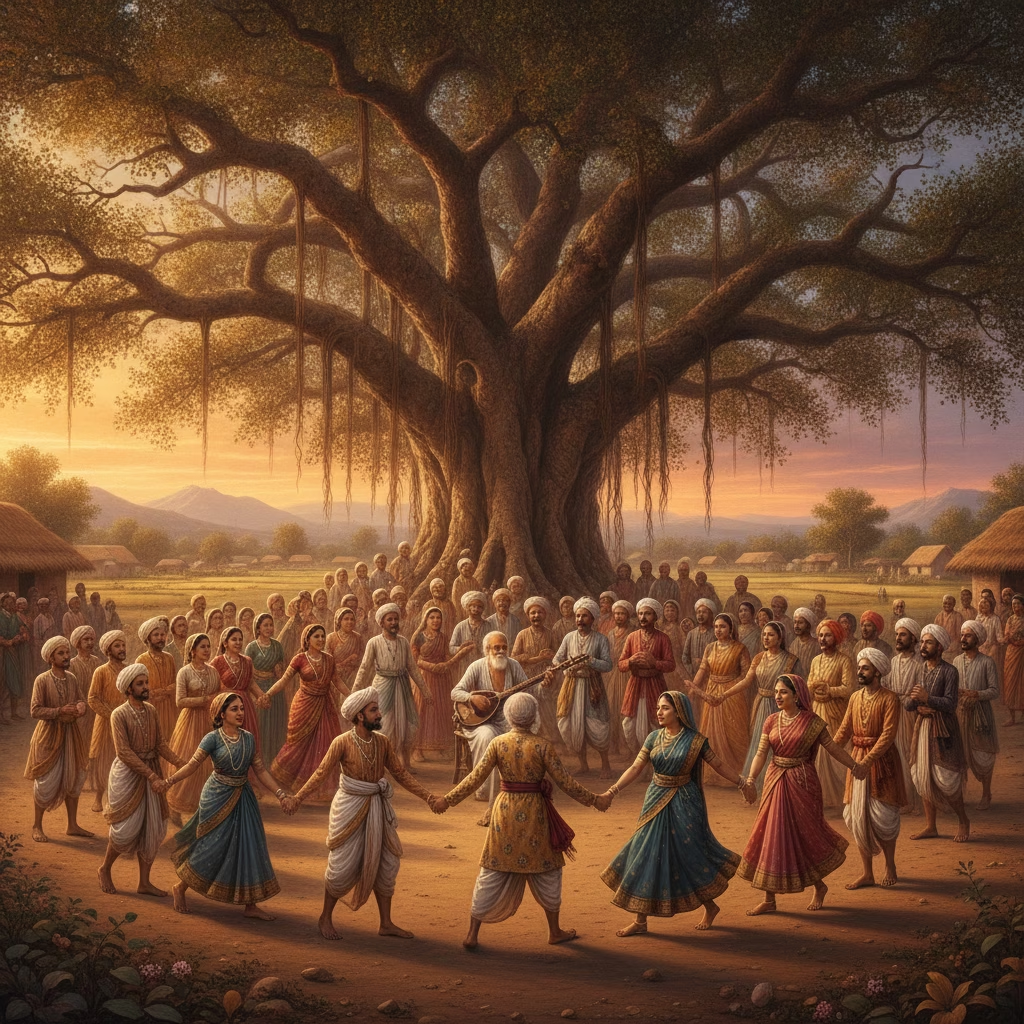
Tukaram began leading kirtan—community gatherings where everyone sang together. Under the sprawling banyan tree at the edge of the village, voices rose in unison. The verses were simple enough that anyone could learn them, profound enough that they lingered in the heart long after the singing stopped. Men and women came, high-caste and low-caste, Brahmins and Dalits, all circling together in devotion.
This was revolutionary, though Tukaram didn't think of it that way. He simply believed what he sang: that Vithoba didn't care about caste, that devotion mattered more than ritual, that "pride of caste never made any man holy." When Bahinabai, a Brahmin woman, prostrated herself before him and called him her guru, he accepted her without hesitation—even knowing her husband beat her for it, even knowing it scandalized the village.
The kirtan gatherings grew larger. People walked from neighboring villages to hear the grocer-poet sing. They copied down his verses, memorized them, sang them in their own homes. In a time of famine and suffering, Tukaram's abhangas offered something precious: the possibility that their pain mattered to the divine, that their devotion counted for something regardless of their birth.
The Thorn Stick
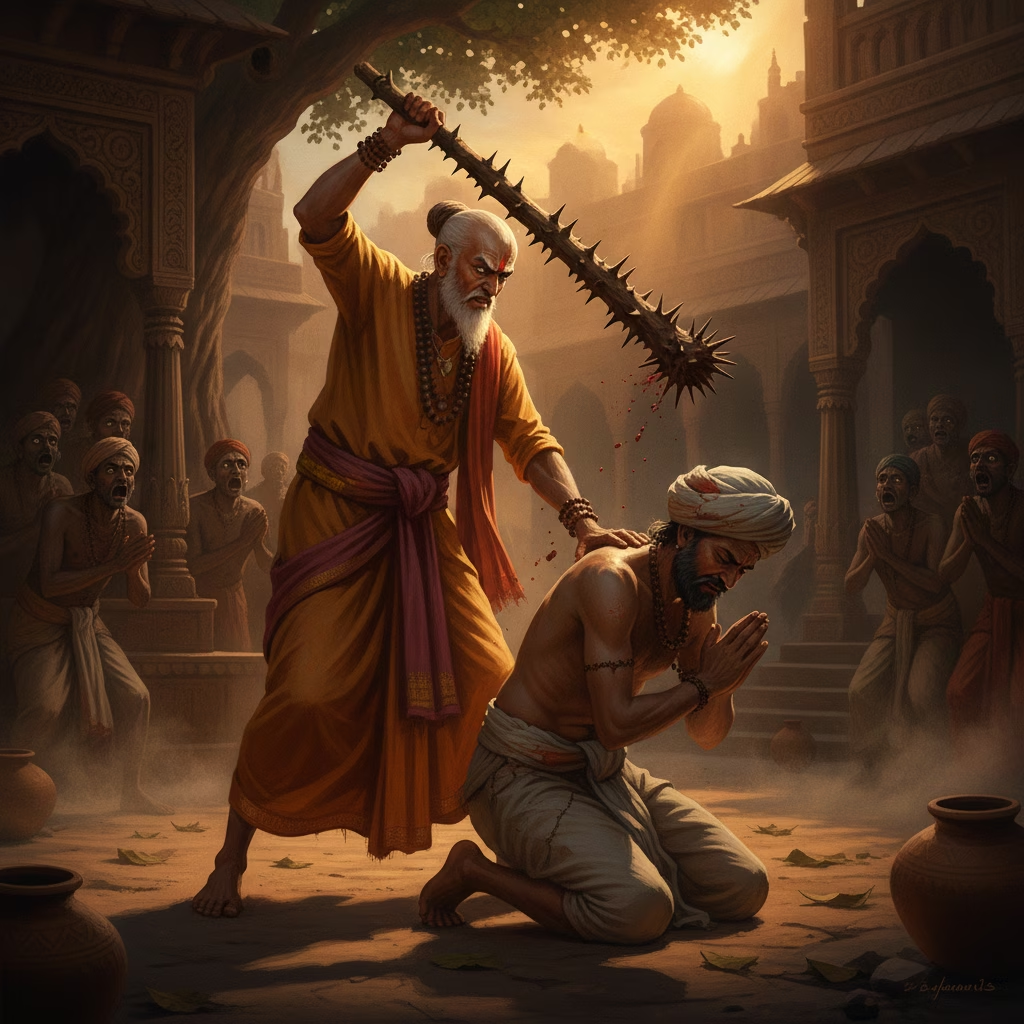
Mambaji Gosavi watched the crowds gathering around Tukaram with growing fury. For years, Mambaji had run the matha—the monastery—in Dehu, collecting donations, performing elaborate pujas, maintaining the proper order of things. He was a man of learning, of status, of connections to wealthy patrons. And now this low-caste grocer was drawing away his followers with simple songs?
Mambaji initially tried to co-opt Tukaram's popularity, asking him to perform puja at his temple. But Tukaram's verses kept getting more pointed, questioning the value of empty ritual, suggesting that paid priests might be obstacles rather than pathways to the divine. The crowds kept growing, and Mambaji's donations kept shrinking.
The attack came on a dusty afternoon in the village square. Mambaji, his face twisted with rage, struck Tukaram with a thorn stick, the sharp barbs tearing flesh. "Heretic!" he screamed. "You corrupt the people with your false teachings! You, who cannot even read the Vedas properly, dare to speak of God?"
Tukaram didn't fight back. He stood there, blood running down his arms, and met Mambaji's eyes with something that looked like compassion. The crowd watched in shocked silence. Later, Tukaram would write: "When someone strikes you, bear it patiently. The Lord sees everything."
But Mambaji wasn't finished. He went to the Brahmin authorities, arguing that Tukaram's verses contradicted tradition, that they encouraged the lower castes to forget their place, that such reformist ideas threatened the social order itself. The pressure mounted. Destroy the verses, they demanded, or face consequences.
The River's Edge
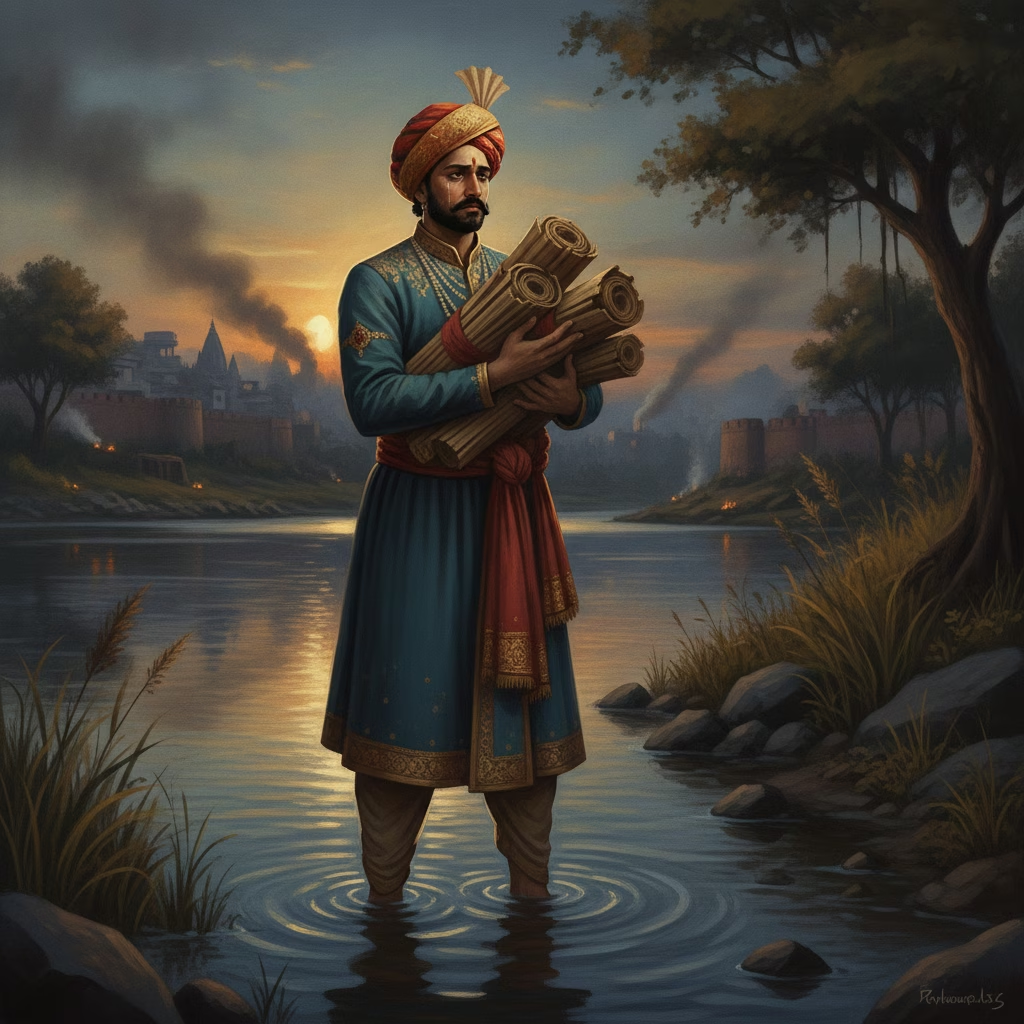
Tukaram stood at the edge of the Indrayani River, holding bundles of palm leaves—thousands of verses composed over years of devotion. His hands shook. The authorities had given him a choice: throw the heretical writings into the river, or face exile, perhaps worse. Around him, supporters wept and pleaded. "Hide them!" they begged. "We'll keep them safe!"
But Tukaram had always taught surrender to the divine will. If Vithoba wanted these verses preserved, they would be preserved. If not, then perhaps his pride in his own poetry needed to be drowned along with the palm leaves. With tears streaming down his face, he released the bundles into the current.
For thirteen days, according to the legend that would grow around this moment, Tukaram fasted by the river, neither eating nor drinking. He sat in meditation, communing with Vithoba, wrestling with despair and faith. And on the thirteenth day, the story goes, he found the bundles of verses washed up on the riverbank, intact and readable—a miracle that even his detractors couldn't fully explain away.
Whether miracle or fortunate chance, Tukaram emerged from those thirteen days transformed. He began composing with even greater fervor, his verses now explicitly addressing the opposition he faced, defending the right of all people to approach the divine directly, without intermediaries or elaborate rituals.
The Legacy Takes Root
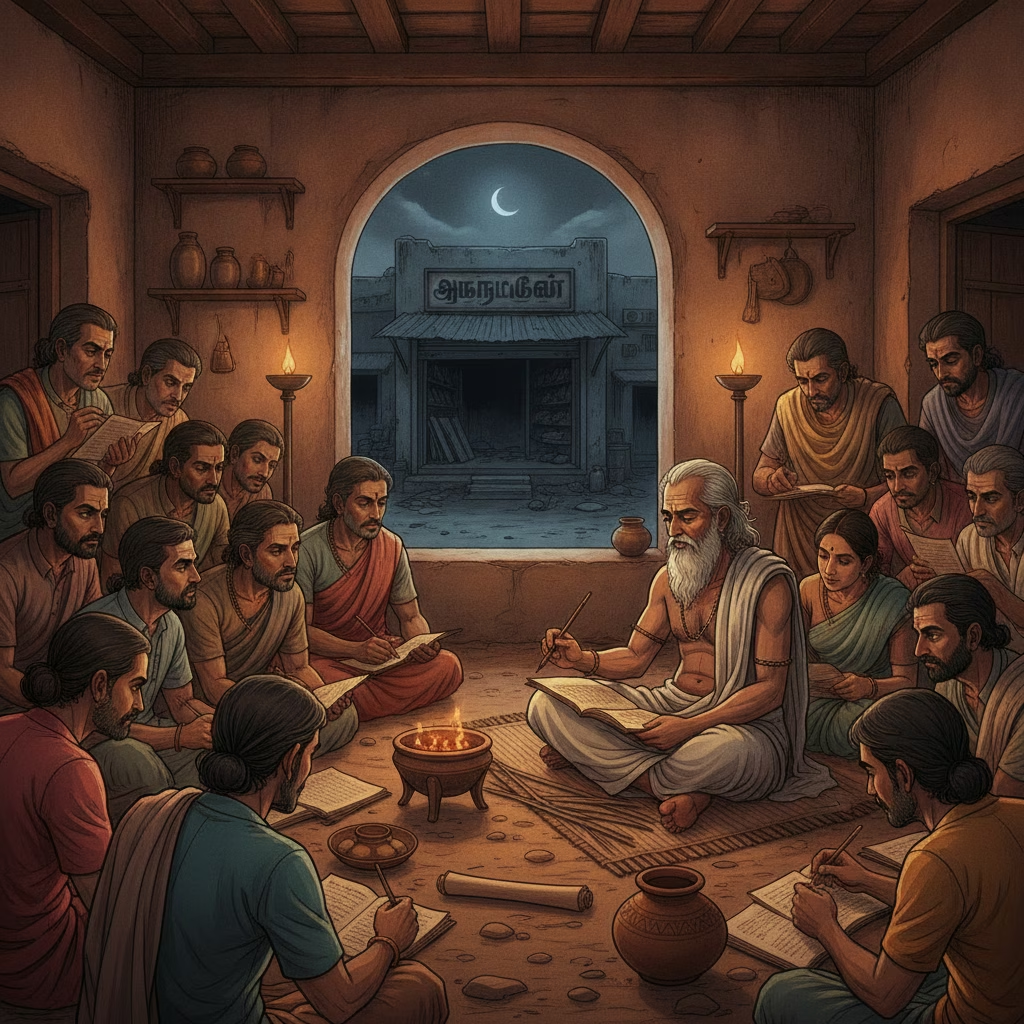
The grocery shop stood abandoned now, its shelves thick with dust. But Tukaram's home overflowed with disciples who came to write down his verses, to learn his songs, to carry his message across Maharashtra. Among them were people from every level of society—even, eventually, a chastened Mambaji Gosavi, who after facing his own humiliations came to recognize the authenticity of Tukaram's devotion.
Tukaram's influence reached beyond the village. Stories circulated that he had met Shivaji himself, the warrior building a Maratha empire to challenge Mughal dominance. Whether they actually met remains debated, but scholars like Eleanor Zelliot would later note that Bhakti poets like Tukaram significantly influenced Shivaji's rise, providing a cultural foundation for Marathi identity and resistance.
The verses kept coming—eventually thousands of abhangas that would be collected, preserved, and sung by generations of devotees in the Varkari tradition. Some advocated pure devotion and surrender. Others challenged caste hierarchy and religious hypocrisy. Some embraced monistic philosophy, seeing God in everything. Others emphasized dualism, maintaining the distinction between devotee and divine. Tukaram never systematized his theology, never tried to resolve these tensions. His poetry was lived experience, not philosophical treatise.
The Saint's Sunset

By the time Tukaram died in 1650, he had become something his younger self—the ambitious grocer—could never have imagined: a saint whose verses were on the lips of thousands, whose kirtan gatherings had spread across the region, whose teachings on social reform and direct devotion had planted seeds that would flower for centuries.
The shop that crumbled became irrelevant. The prosperity he'd lost was replaced by a different kind of wealth. The family taken by famine was mourned but also, in some mysterious way, transformed into a doorway—the suffering that broke him open enough to let the divine pour through.
Today, according to Wikipedia, Tukaram's abhangas remain "popular in Maharashtra" and are considered "a pinnacle of Bhakti literature." His verses are still sung in kirtan gatherings, still challenge caste hierarchies, still offer the radical message that a low-caste grocer's devotion matters as much as a Brahmin priest's ritual.
Standing on the hill above Dehu at sunset, an old man with nothing left to lose and everything to give, Tukaram had sung his way into immortality—not through the prosperity he'd once sought, but through the surrender he'd never planned on. His greatest verse, perhaps, was his life itself: the transformation of unbearable loss into inexhaustible song.