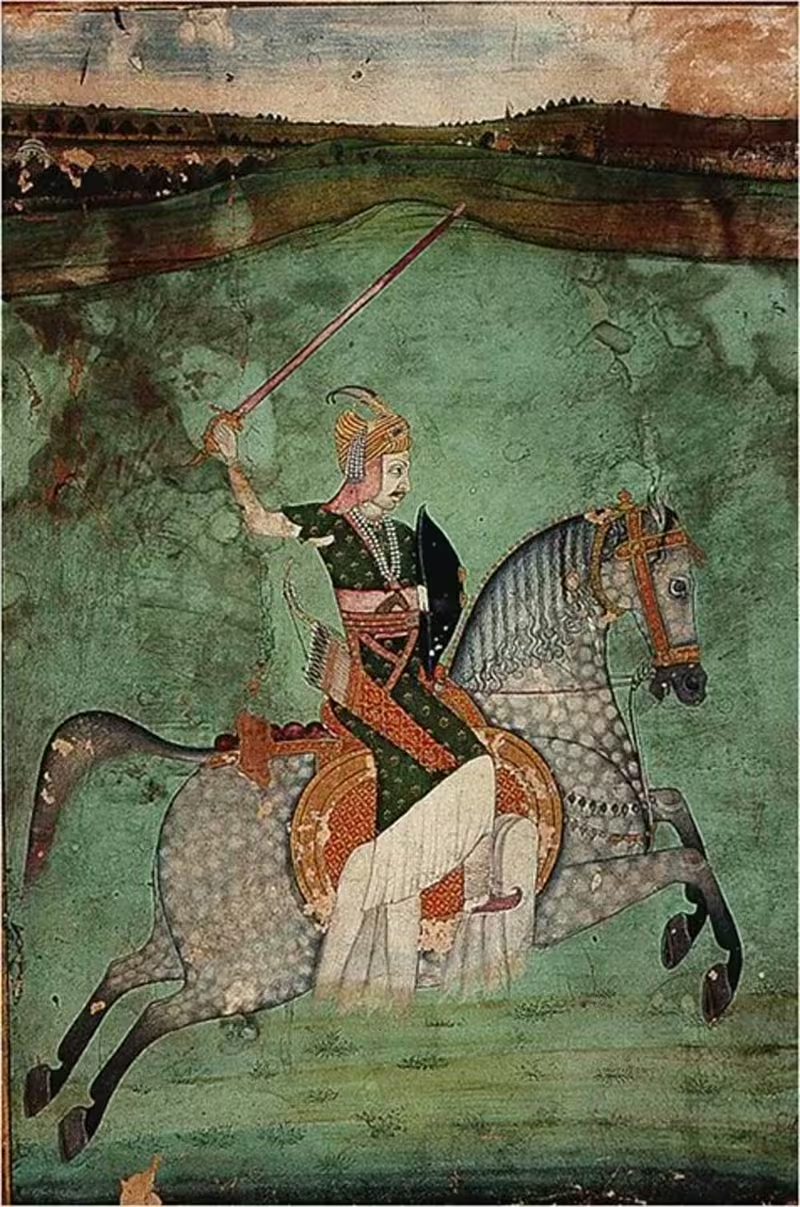

The Bloodless Victory: How Bajirao Conquered the Nizam Without Fighting
In the annals of military history, some victories are remembered for their bloodshed, others for their brilliance. The Battle of Palkhed belongs firmly in the latter category—a masterclass in strategic thinking that achieved total victory without a single major clash of arms.
The Nizam's Challenge
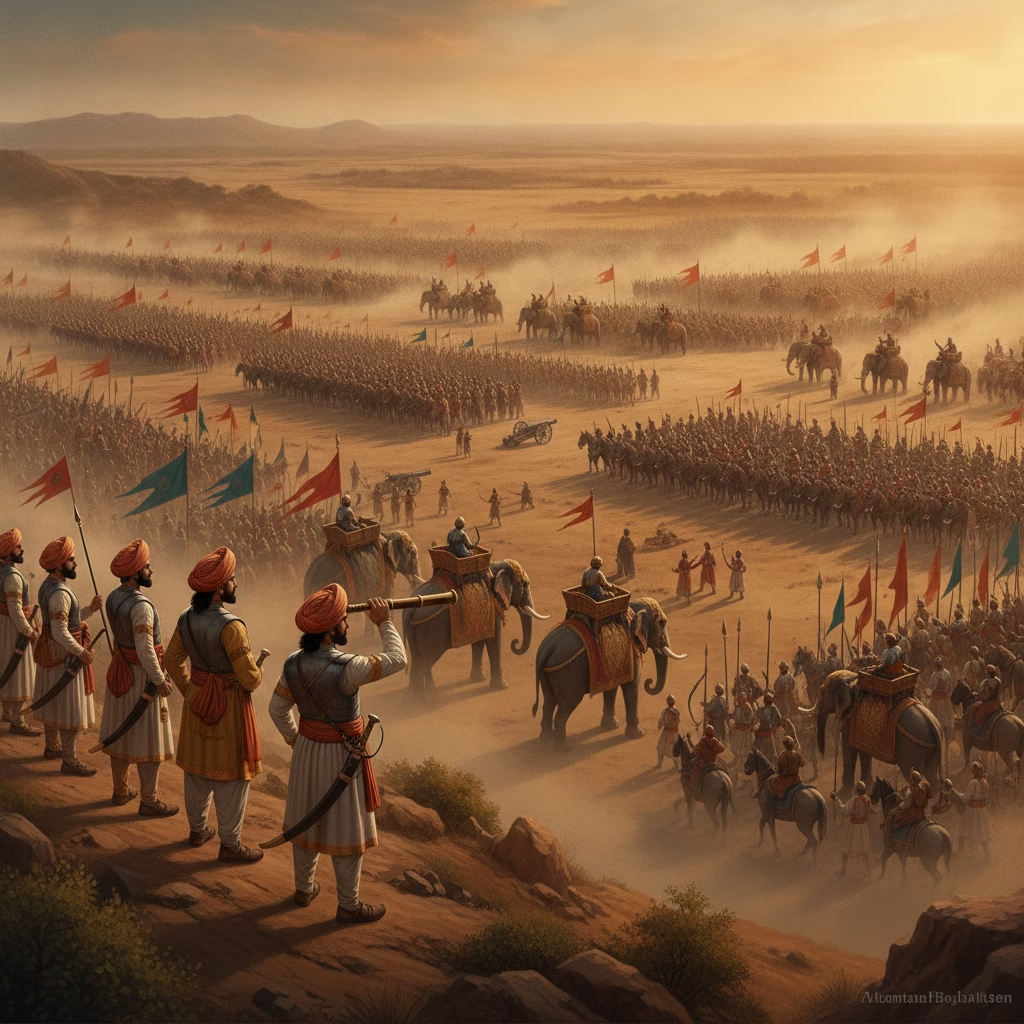
By 1727, the Deccan had become a powder keg of competing ambitions. The Nizam of Hyderabad, Qamar-ud-din Khan, was no ordinary adversary. As the Mughal viceroy of the Deccan, he had carved out a de facto autonomous kingdom from the crumbling empire, commanding vast resources and a formidable military machine.
The conflict was about more than territory—it was about legitimacy and power. The Nizam challenged Shahu's right to collect chauth, the traditional Maratha tax on the Deccan's six provinces. This wasn't merely a financial dispute; it was a direct challenge to Maratha authority in the region they considered their heartland.
Bajirao I, appointed Peshwa at the remarkably young age of twenty in 1720, understood what was at stake. According to Wikipedia, he was "the 7th Peshwa of the Maratha Empire" and had already proven himself as more than just his father's son. Where others saw the Nizam's massive army as an insurmountable obstacle, Bajirao saw an opportunity to demonstrate a new kind of warfare.
The young Peshwa had inherited more than just his father Balaji Vishwanath's position. He had inherited a vision of Maratha expansion and the tactical acumen to achieve it. Born into a Brahmin family in Sinnar near Nashik on August 18, 1700, Bajirao's education had included the traditional reading, writing, and Sanskrit learning expected of his caste. But he had never remained "confined to his books," as the historical records note. From an early age, he had accompanied his father on military campaigns, absorbing the realities of warfare that no classroom could teach.
Bajirao's Aggressive Strategy
In the court at Satara, not everyone shared Bajirao's confidence. The conservative elements among the Maratha nobility counseled caution. The Nizam's army was enormous, well-equipped, and led by a commander with decades of experience. Why provoke such a formidable enemy?
But Bajirao had a different philosophy entirely. He had been present during his father's expedition to Delhi in 1719 and had seen firsthand that the Mughal Empire was "disintegrating and would be unable to resist northward Maratha expansion." The young Peshwa convinced Shahu that "the Maratha Empire had to go on the offensive to defend itself."
His famous words captured his strategic vision: "Let us strike at the trunk of the withering tree and the branches will fall off themselves." The Nizam was one such trunk—a pillar of the old Mughal order that needed to be toppled to make way for Maratha supremacy.
Bajirao surrounded himself with young, aggressive commanders who shared his vision. He promoted talented officers like Malhar Rao Holkar and Ranoji Shinde, men who would later become legendary in their own right. These weren't hidebound traditionalists but innovative warriors willing to embrace new tactics.
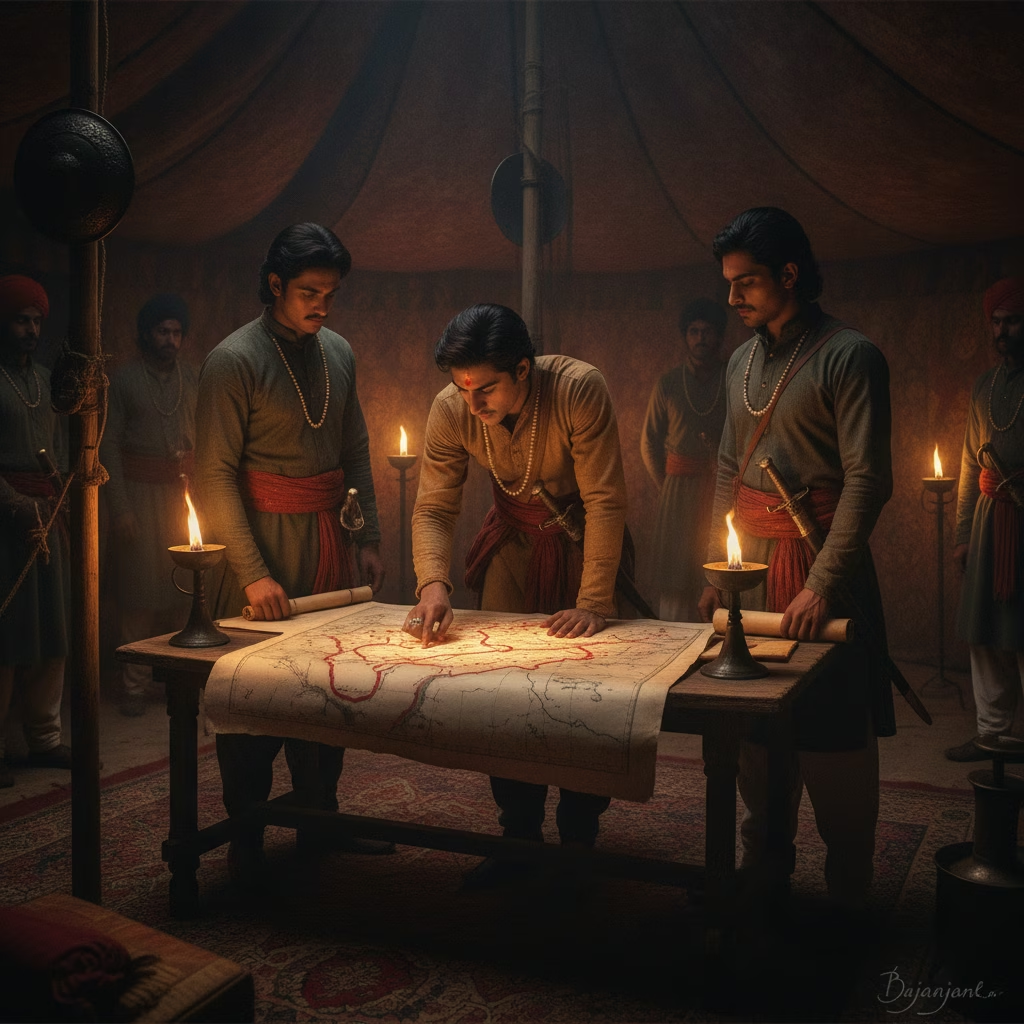
As he planned his campaign against the Nizam, Bajirao wasn't thinking about conventional battle. He was thinking about leverage, about finding the enemy's critical vulnerability and exploiting it ruthlessly. The Nizam had numbers, but numbers could become a liability under the right circumstances.
The March to Palkhed
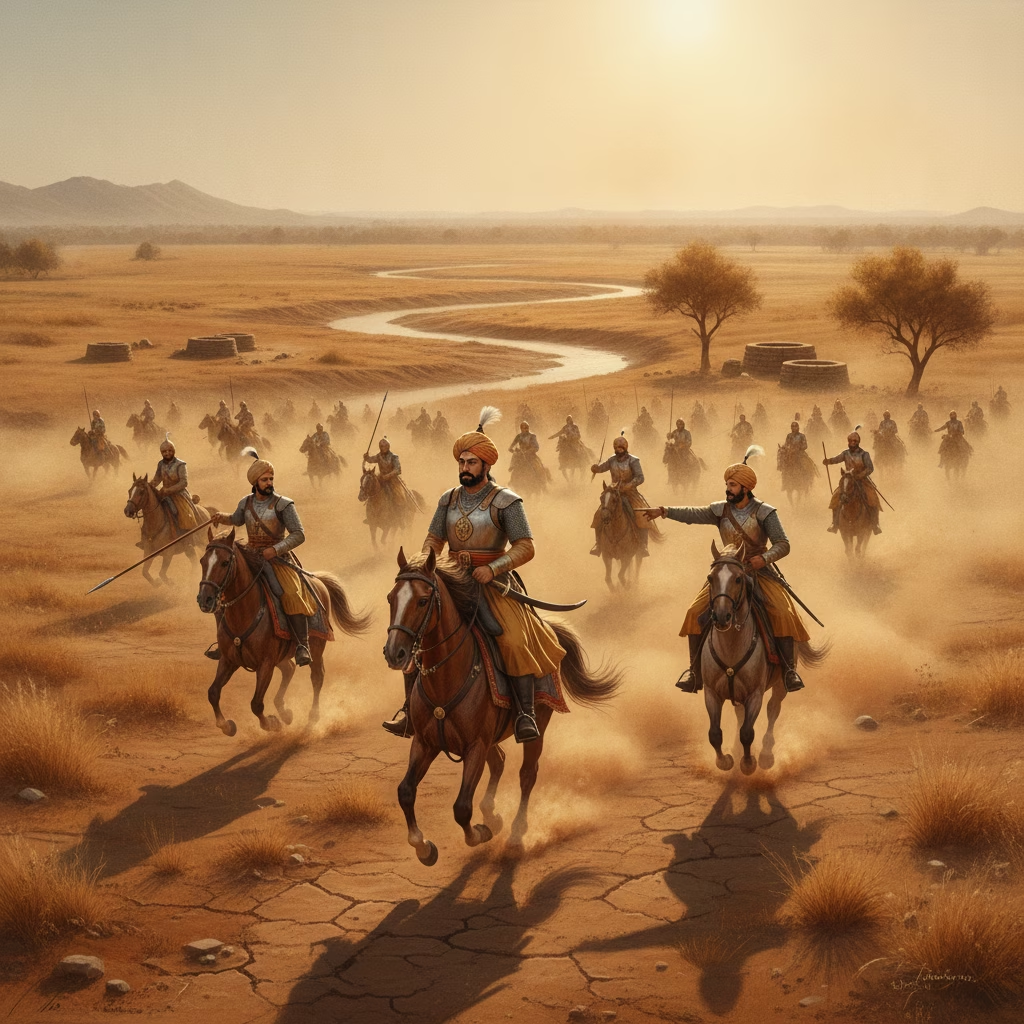
In early 1728, Bajirao led his forces toward the region of Palkhed in the Deccan. His army moved with characteristic Maratha speed, covering ground that would have exhausted conventional forces. But this wasn't just a race to battle—it was a reconnaissance mission of the most critical kind.
Bajirao's scouts ranged far and wide across the terrain, mapping not enemy positions but something far more fundamental: water sources. In the Deccan's dry season, water wasn't merely a convenience—it was survival itself. Every well, every stream, every tank and reservoir was noted and catalogued.
The landscape told its own story. Dried riverbeds snaked across the plains, testimony to the region's seasonal aridity. Wells were scattered and finite. A small, mobile force could sustain itself by moving between water sources. But a massive army? That was a different proposition entirely.
Bajirao had learned from his father's experiences and his own early campaigns that warfare wasn't always about who had the most soldiers or the sharpest swords. Sometimes it was about understanding the terrain better than your enemy, about seeing possibilities where others saw only obstacles.
As his forces approached Palkhed, the Nizam's vast army came into view—a sea of tents, cavalry, infantry, and artillery that stretched across the horizon. It was an intimidating sight, designed to overwhelm and demoralize. But Bajirao wasn't looking at the army. He was looking at the wells.
The Water Siege
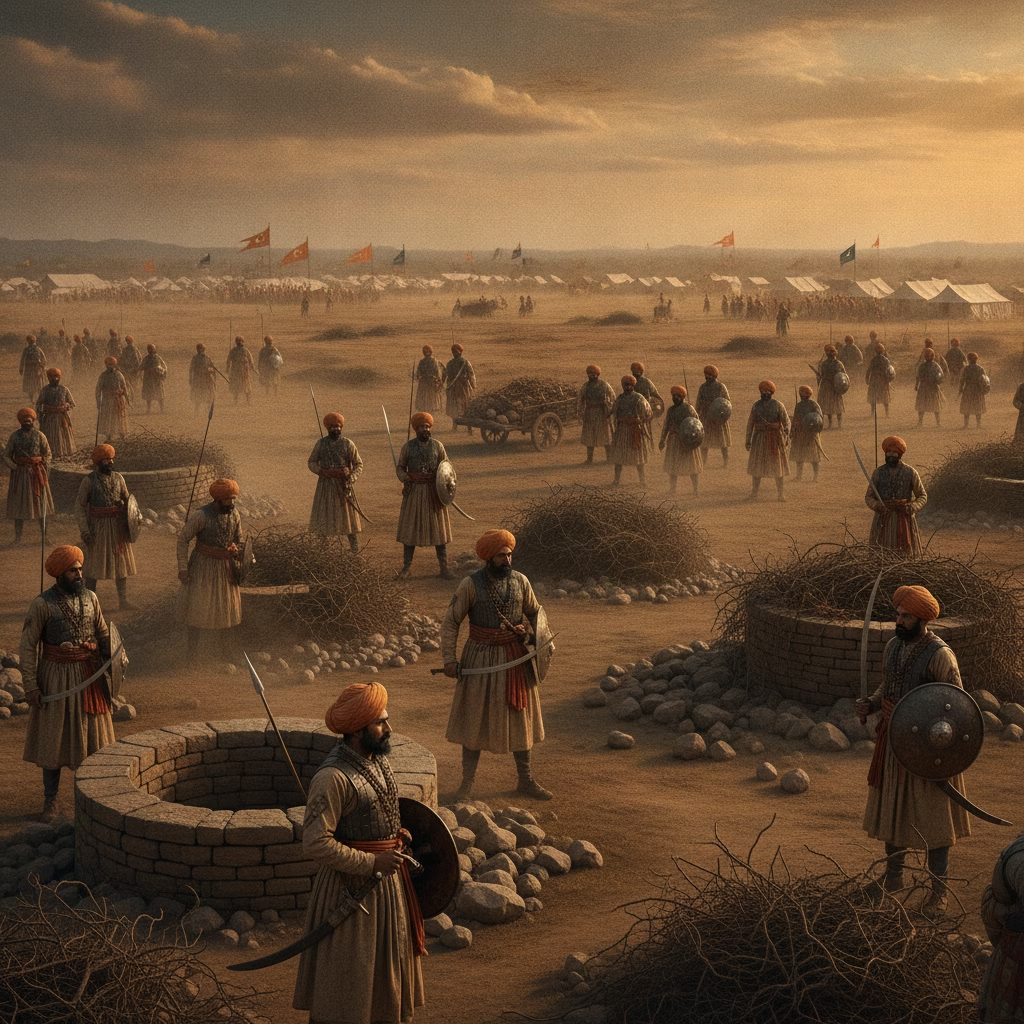
What happened next would be studied in military academies for generations. Instead of engaging the Nizam's superior numbers, Bajirao executed a maneuver of breathtaking audacity and precision. His forces systematically occupied every water source in the region.
It wasn't dramatic. There were no grand cavalry charges or thundering artillery barrages. Maratha soldiers simply moved to each well, each tank, each stream in the area around the Nizam's position. Some they occupied with armed guards. Others they rendered unusable, filling them with earth and stones.
The Nizam's commanders initially didn't grasp what was happening. Bajirao's main force remained visible but just out of reach, refusing to be drawn into battle. The Maratha cavalry, legendary for their mobility, danced around the edges of the Mughal positions, always moving, never committing.
Within days, the reality of Bajirao's strategy became horrifyingly clear to the Nizam's army. The massive force that had seemed so imposing now became a liability. Thousands of soldiers and horses required enormous quantities of water daily. The Deccan sun beat down mercilessly. The wells within the camp ran dry.
Bajirao had turned the Nizam's greatest asset—his numerical superiority—into his fatal weakness. Every additional soldier was another mouth that needed water. Every war horse, every elephant, every camp follower increased the desperate thirst that gripped the army.
Desperation in the Camp
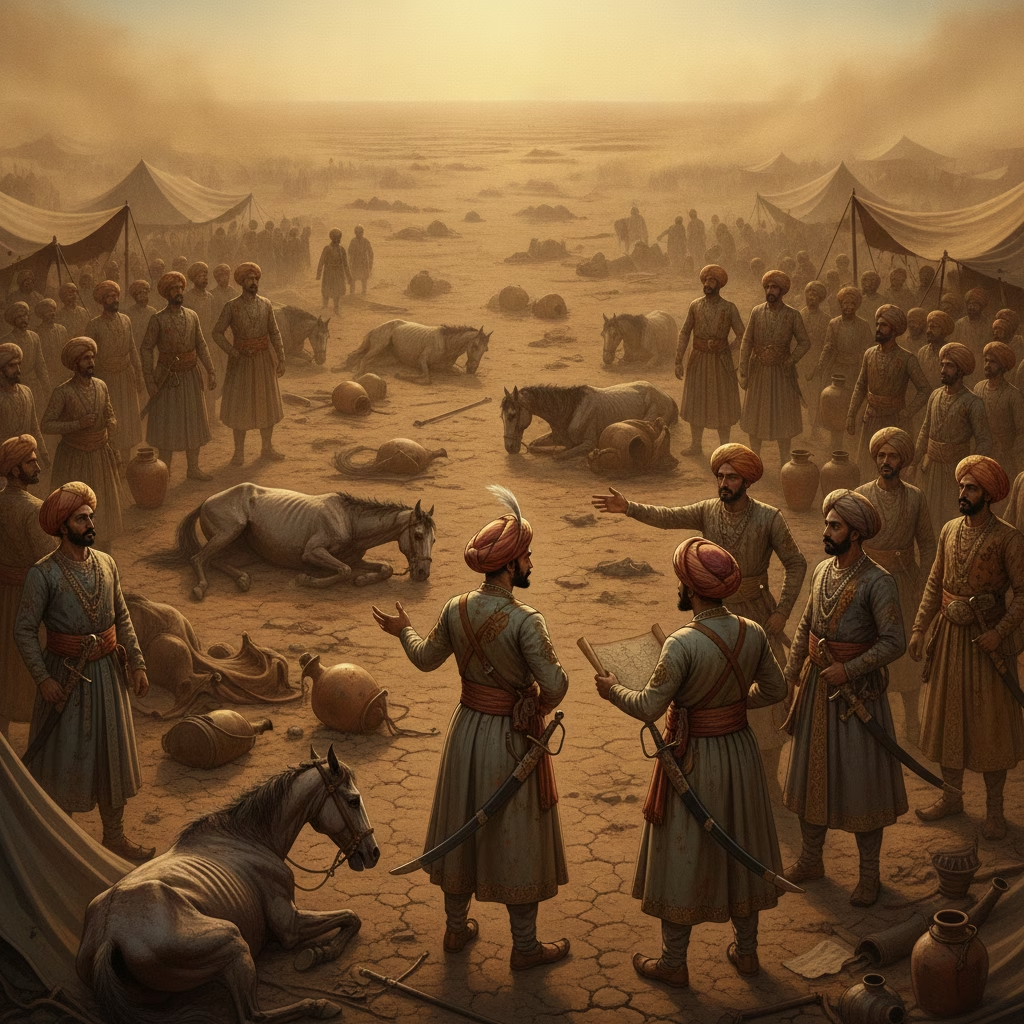
As the days stretched on, the Nizam's camp descended into crisis. Soldiers rationed their dwindling water supplies with increasing desperation. Horses weakened, their effectiveness as cavalry mounts evaporating along with their strength. The rigid discipline of the army began to fray.
The Nizam's officers proposed various solutions. Send raiding parties to seize water sources? Bajirao's mobile forces cut them down or drove them back. March the entire army to a distant water source? The Maratha cavalry would harass them every step of the way, turning an orderly march into a catastrophic rout. Attack Bajirao's positions directly? That would mean fighting uphill against an enemy who held all the advantages, with an army already weakened by thirst.
Every option led to disaster. The Nizam, a seasoned commander who had fought countless battles, found himself in a trap without walls, defeated by an enemy he had barely engaged. The realization must have been bitter: he had been outgeneraled by a Peshwa barely into his twenties.
Historical accounts suggest the suffering in the camp was severe. Men licked dew from tent fabric in the early mornings. Discipline broke down as soldiers fought over the last drops in water skins. The proud army that had marched to crush the Maratha upstarts was being crushed by the land itself—or rather, by a commander who understood how to weaponize that land.
The Surrender
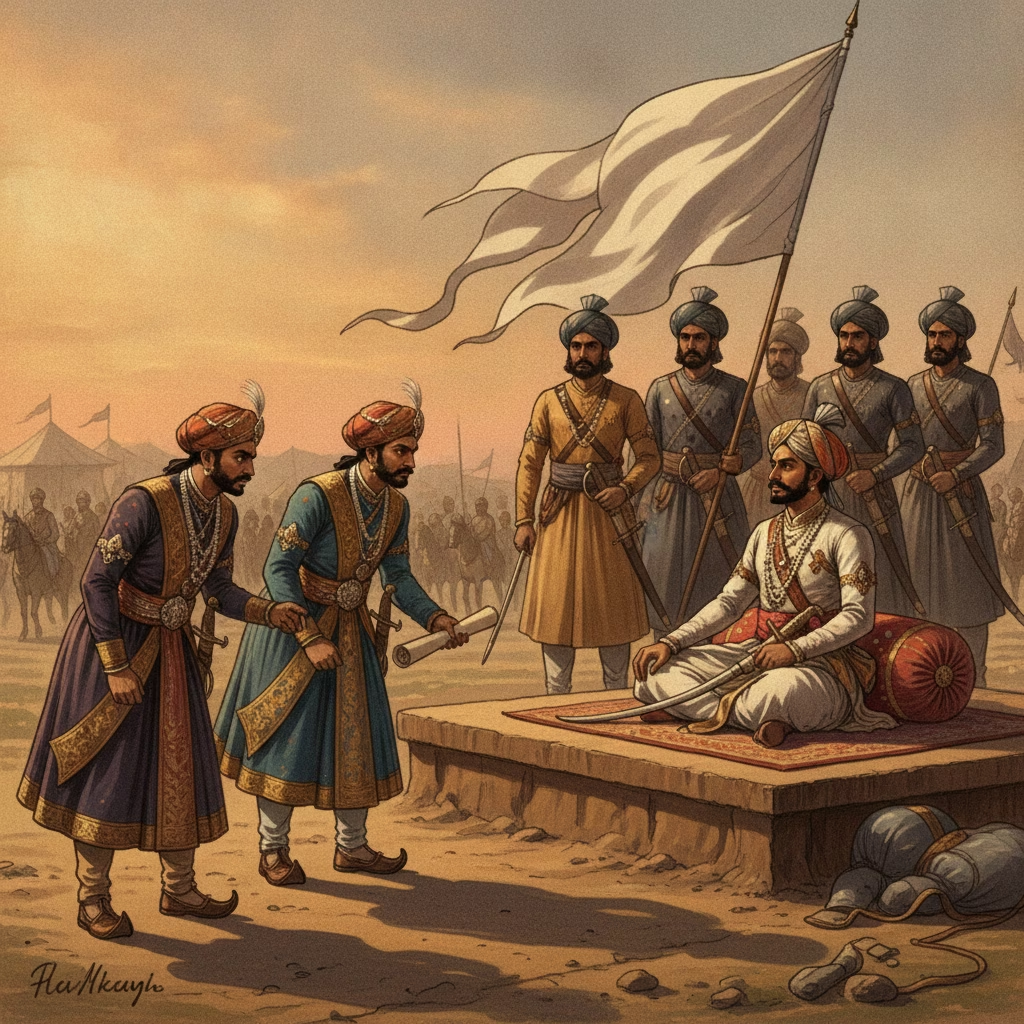
The Nizam had no choice. His emissaries approached Bajirao's position under flags of truce, their desperation evident in every gesture. The negotiations were brief. What bargaining power did the Nizam possess when his army was dying of thirst?
The terms were dictated by Bajirao, and they were comprehensive. The Nizam would recognize Maratha rights to collect chauth in the Deccan. He would acknowledge Shahu's supremacy in the region. The territories disputed between them would fall under Maratha control.
According to Wikipedia, this "victory solidified the Marathas' authority in the Deccan region." But it was more than that—it was a demonstration of a new kind of warfare, one that prioritized intelligence and maneuver over brute force.
Bajirao granted the Nizam's army safe passage and access to water once the terms were accepted. There was no massacre, no humiliation beyond the surrender itself. The young Peshwa understood that today's defeated enemy might be tomorrow's ally—or at least, neutral party. The goal was Maratha supremacy, not pointless vengeance.
Legacy of a Bloodless Victory
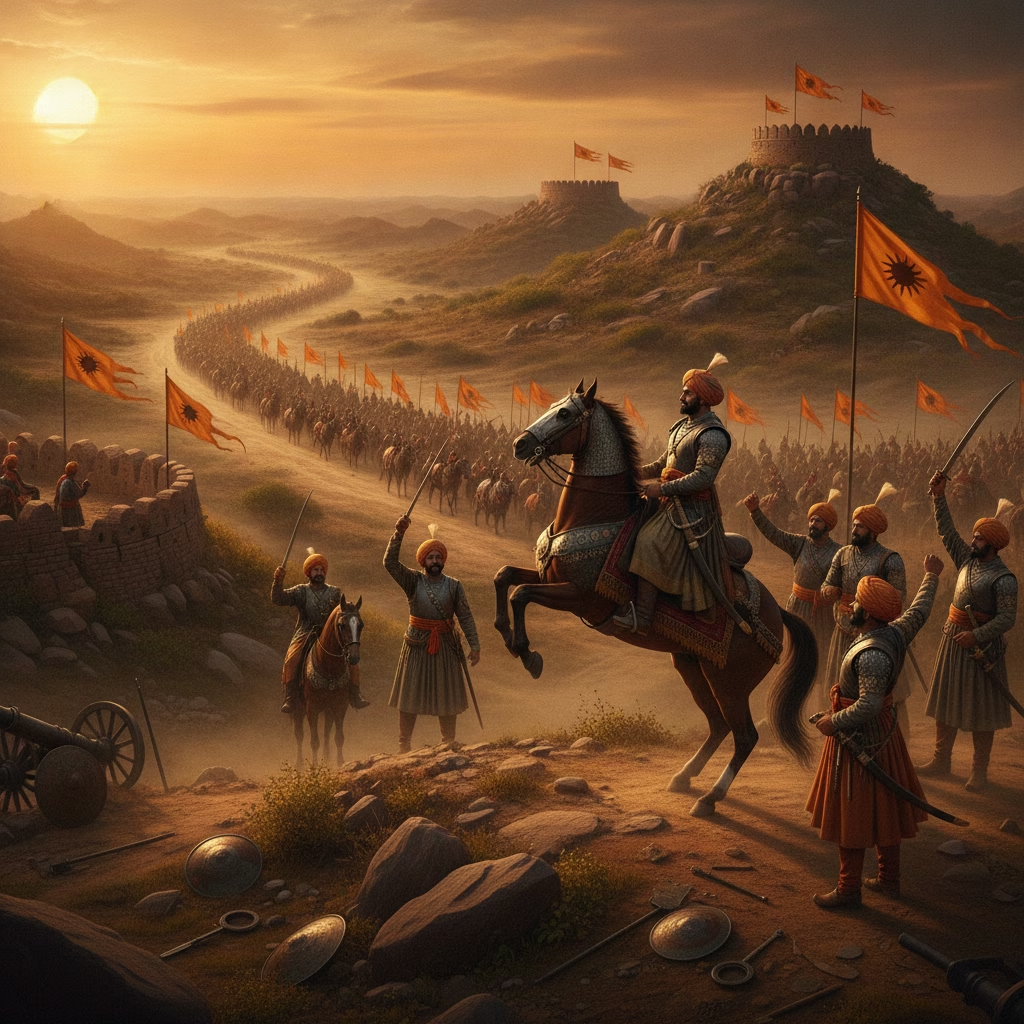
As the Nizam's defeated army withdrew and Maratha flags flew over Palkhed, Bajirao had achieved something remarkable. He had won a decisive victory against a superior force without fighting a major battle. The casualties were minimal. The strategic gains were enormous.
The Battle of Palkhed became a defining moment in Bajirao's career, though he would go on to even greater triumphs. The Battle of Delhi in 1737 "may be said to mark the pinnacle of his military career," according to historical sources, and he would secure Malwa after defeating combined Mughal-Nizam-Nawab forces at the Battle of Bhopal that same year.
But Palkhed remained special—a pure expression of strategic genius uncomplicated by the chaos of combat. It demonstrated the principle that Sun Tzu had articulated centuries earlier: the supreme art of war is to subdue the enemy without fighting.
Bajirao I never lost a battle in his entire career. He died on April 28, 1740, at the age of thirty-nine, having transformed the Maratha Empire from a regional power into the dominant force across the Indian subcontinent. His son Balaji Bajirao (Nanasaheb) succeeded him as Peshwa, continuing the expansion his father had begun.
The Peshwa's personal life—his marriage to Kashibai, his controversial relationship with Mastani—has captured popular imagination in novels and films. But his true legacy lies in campaigns like Palkhed, where brilliance of mind proved more powerful than strength of arms.
In an era often remembered for its brutality, Bajirao showed that victory could be achieved through understanding—understanding terrain, understanding logistics, understanding that sometimes the greatest weapon isn't a sword but the ability to deny your enemy something as simple, and as essential, as water.