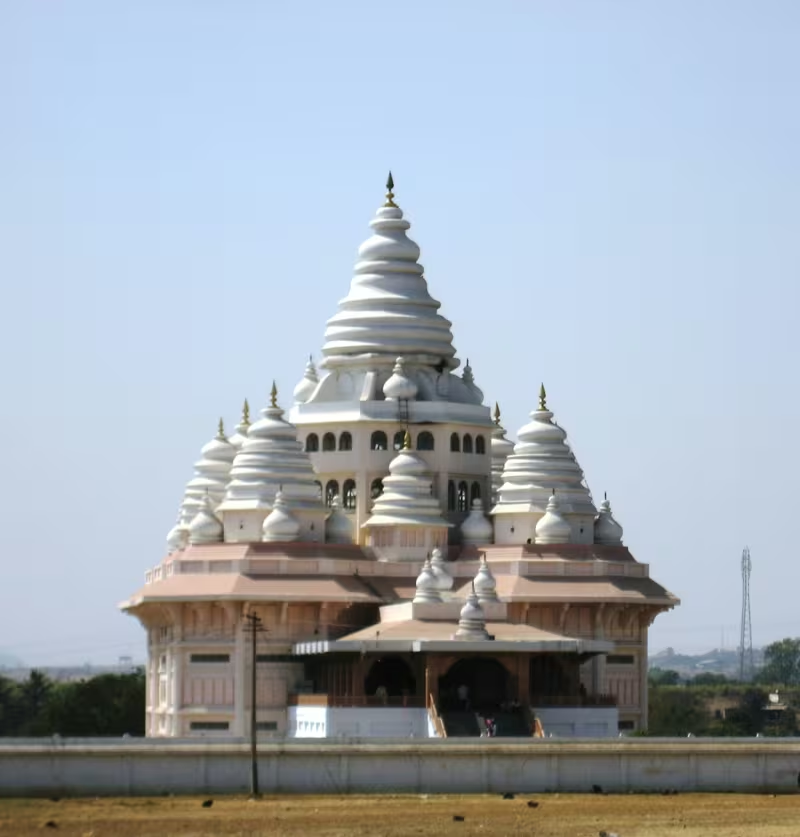

When Tukaram Cast His Songs to the River
The songs came to him in the fields, while tending his small shop, during the long nights when sleep would not come. Tukaram—the grocer from Dehu, the devotee of Vithoba—had been composing abhangas for years, pouring his heart's devotion into verses that sang in the common tongue of Marathi, not the Sanskrit of the learned.
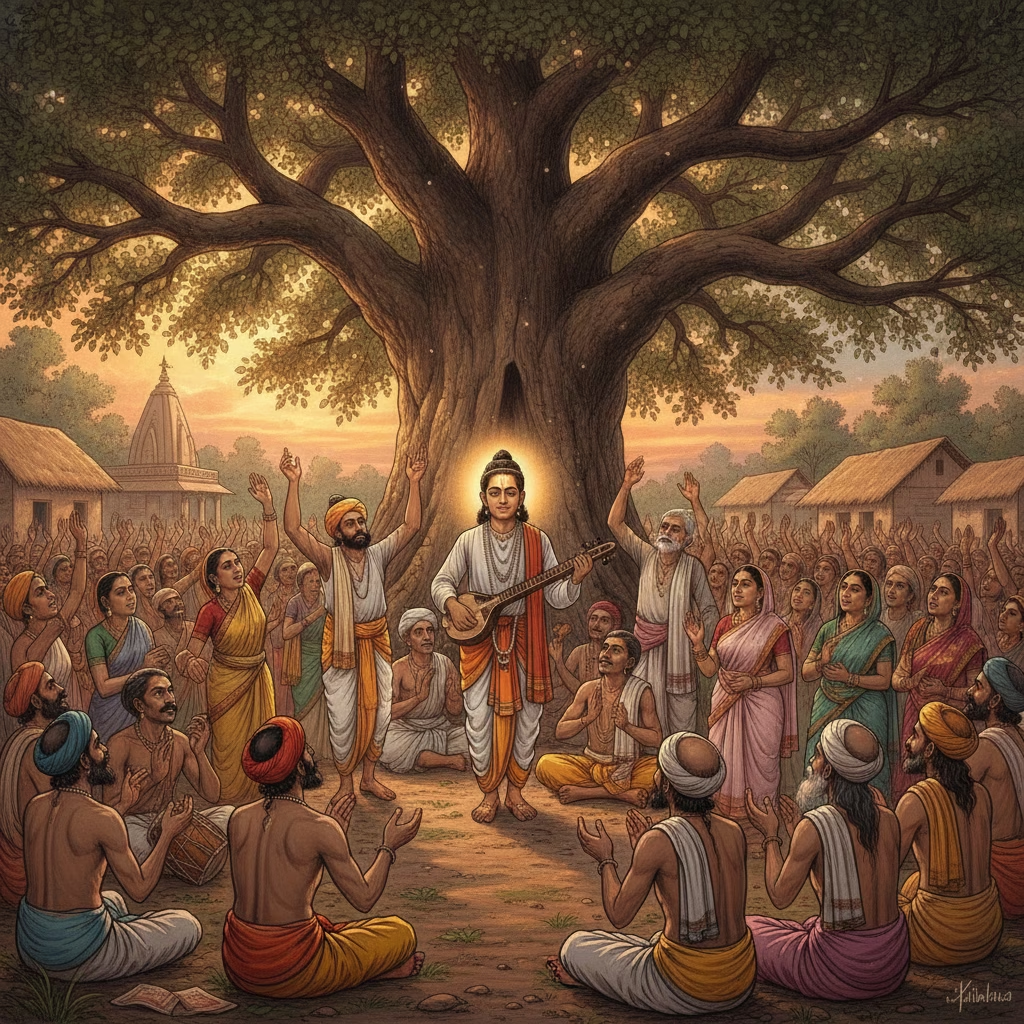
By the 1640s, Tukaram's fame had spread far beyond his village in the Pune region of Maharashtra. Every evening, people gathered under the ancient banyan tree near his home for kirtan—those ecstatic sessions of devotional singing and dancing that Tukaram believed were not merely a path to bhakti, but bhakti itself. The crowd was unlike any traditional religious gathering: wealthy merchants sat beside landless laborers, Brahmin women sang alongside those from castes considered "untouchable," and everyone's voice carried equal weight in the chorus of devotion to Vithoba.
Tukaram's abhangas were revolutionary not in their intention—he claimed no desire to upset the social order—but in their very existence. Written in the language of farmers and traders, they made the divine accessible to anyone who could understand Marathi. "The greatest merit in kirtan," he would say, "is that it creates a spiritual path not only for the devotee, but for others as well."
His verses challenged without confrontation. "Pride of caste never made any man holy," he sang. "The Vedas and Shastras have said that for the service of God, castes do not matter." These were dangerous ideas in 17th-century India, where religious authority and social hierarchy were intimately intertwined.
Among his devoted followers was Bahinabai, a Brahmin woman who had defied her husband's fury to accept Tukaram as her guru. Her presence at the kirtans—a high-caste woman learning from a grocer—embodied everything that made Tukaram's movement threatening to the orthodox establishment.
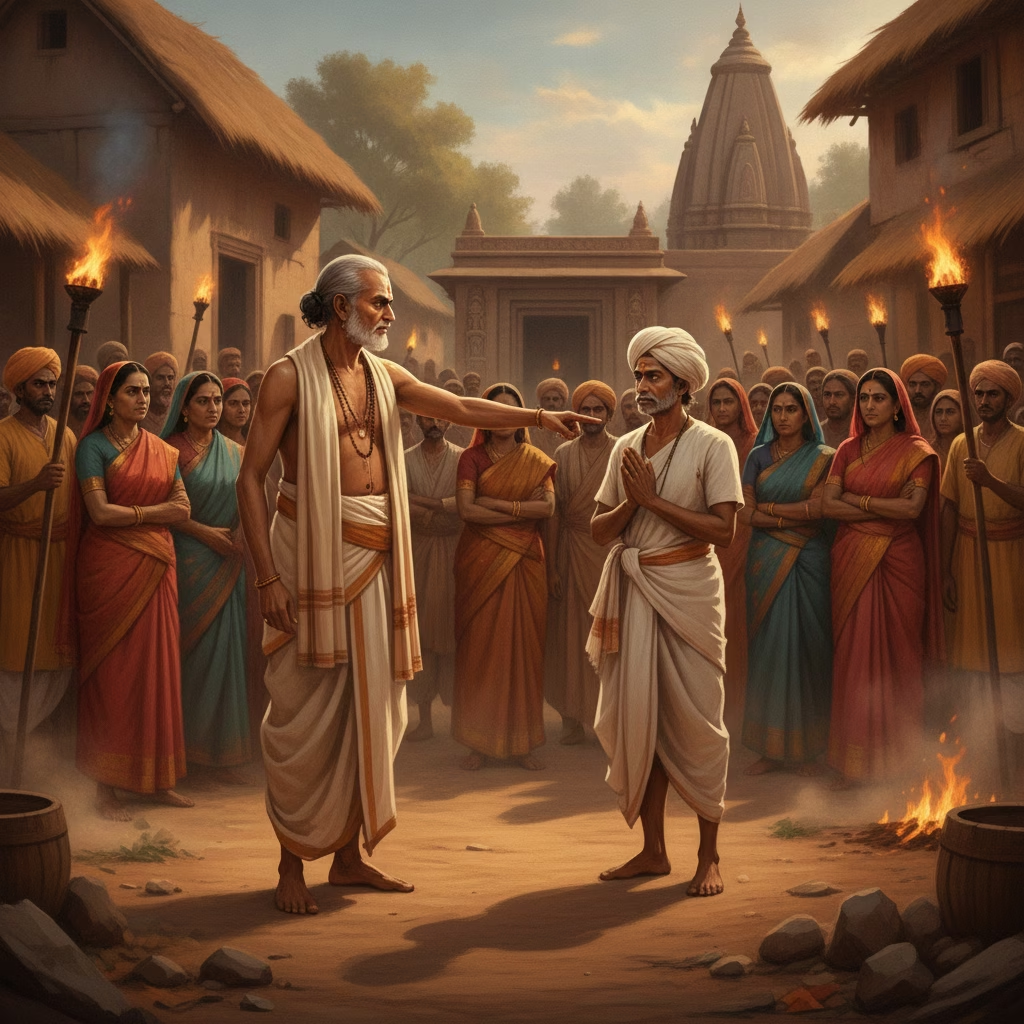
The opposition began as whispers, then grew into open hostility. Mambaji Gosavi, who ran an influential matha (monastic establishment) in Dehu, watched Tukaram's growing popularity with increasing alarm. Initially, Tukaram had entrusted Mambaji with performing puja at his temple, a gesture of respect toward traditional religious authority. But as villagers began seeking spiritual guidance from the humble grocer rather than the established religious leader, Mambaji's respect curdled into jealousy.
The confrontation came one afternoon in the village square. Mambaji, unable to contain his rage, attacked Tukaram with a thorn stick, shouting abuse as the saint-poet stood without resistance. The physical assault was shocking, but it was Mambaji's theological accusations that cut deeper: Tukaram was leading people astray, corrupting traditional teachings, destroying the proper order of spiritual authority.
Other orthodox voices joined the chorus. How dare this grocer, this Shudra, presume to compose religious poetry? Who gave him the authority to interpret spiritual truths? His abhangas, they claimed, were leading people away from proper Vedic observance, from the rituals and sacrifices that had sustained Hindu practice for millennia.
Tukaram's response to the attacks was characteristic: he composed more abhangas. "When monism is expounded without faith and love," he sang, "the expounder as well as the hearer are troubled and afflicted." He denounced mechanical rites performed without devotion, arguing that direct bhakti—love of God—was the truest path.
But such responses only inflamed his opponents further. They saw in Tukaram's words not humility but arrogance, not devotion but heresy.
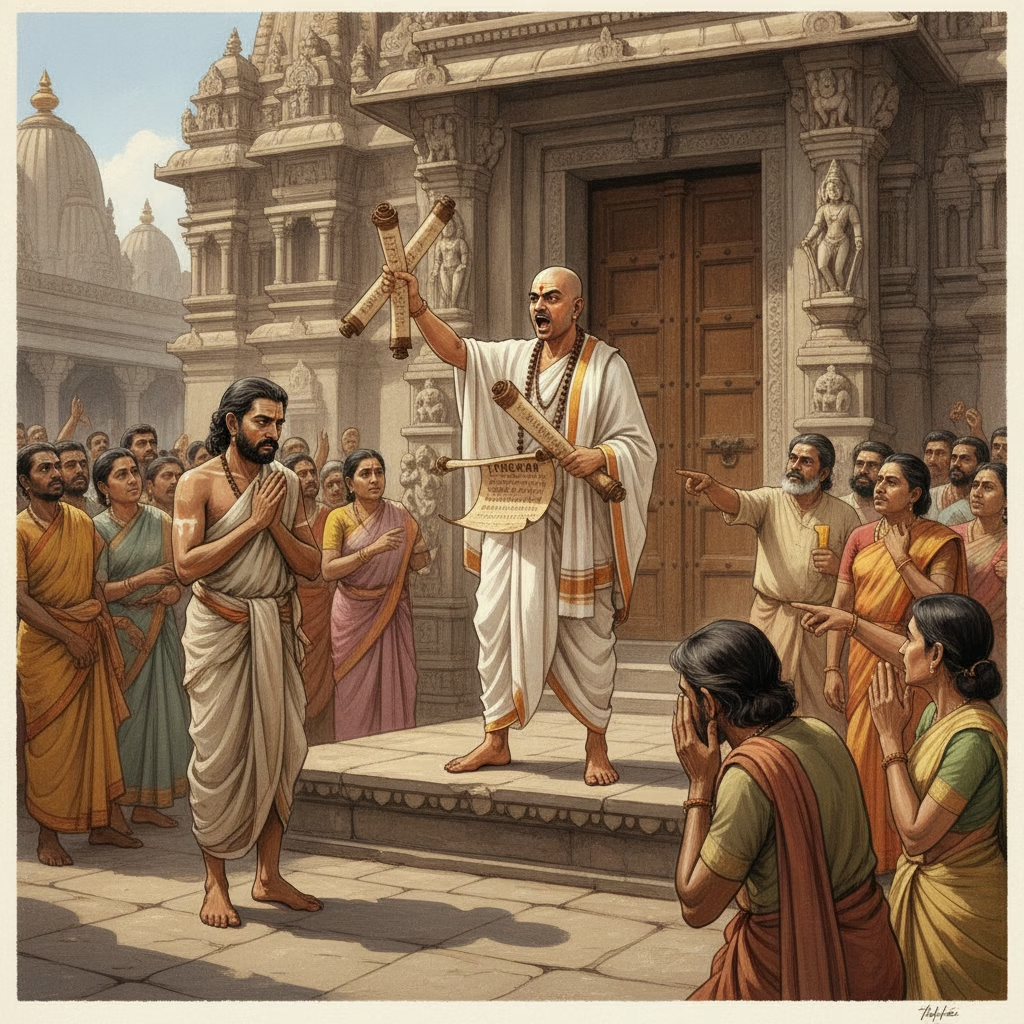
The final blow came from an unexpected quarter. A prominent Brahmin scholar from Pune—a man renowned for his learning in the Vedas and Shastras—arrived in Dehu. He had heard of Tukaram's abhangas and requested to examine them. For Tukaram, this seemed like an opportunity: perhaps a respected scholar could help legitimize his work, could show the orthodox opposition that devotional poetry in Marathi did not contradict Vedic truth.
Tukaram gathered his life's work—thousands of abhangas composed over nearly two decades, written on palm leaves and cloth, each one a prayer, a teaching, a moment of communion with Vithoba. He presented them to the scholar with hope and humility.
The scholar spent days reviewing the collection. When he finally emerged to deliver his judgment, a crowd had gathered. His verdict was devastating.
"These compositions are heretical," he declared, his voice carrying the weight of Brahmanical authority. "They violate Vedic tradition. They are written in common language, accessible to those who have no right to such knowledge. They challenge established hierarchies ordained by scripture. They encourage people to bypass proper religious authority and approach the divine directly."
He held up the palm leaves containing Tukaram's abhangas as if they were contaminated. "These are not worthy of preservation. They corrupt the faithful and lead souls astray. They should be destroyed."
The words struck Tukaram like physical blows. These abhangas were not merely poems to him—they were his conversations with God, his offerings at Vithoba's feet, the fruit of years spent in devotional practice. Each verse represented a moment of grace, an insight granted through devotion, a truth experienced in the depths of meditation.
But who was he to argue with such learned authority? He was Tukaram Bolhoba Ambile, a grocer, a man of no formal education, someone who had learned spiritual truths not from texts but from the saints whose abhangas he had absorbed—Namdev, Dnyaneshwar, Kabir, Eknath. Perhaps the scholar was right. Perhaps his presumption in composing religious poetry had been a form of spiritual pride. Perhaps his abhangas were indeed unworthy.
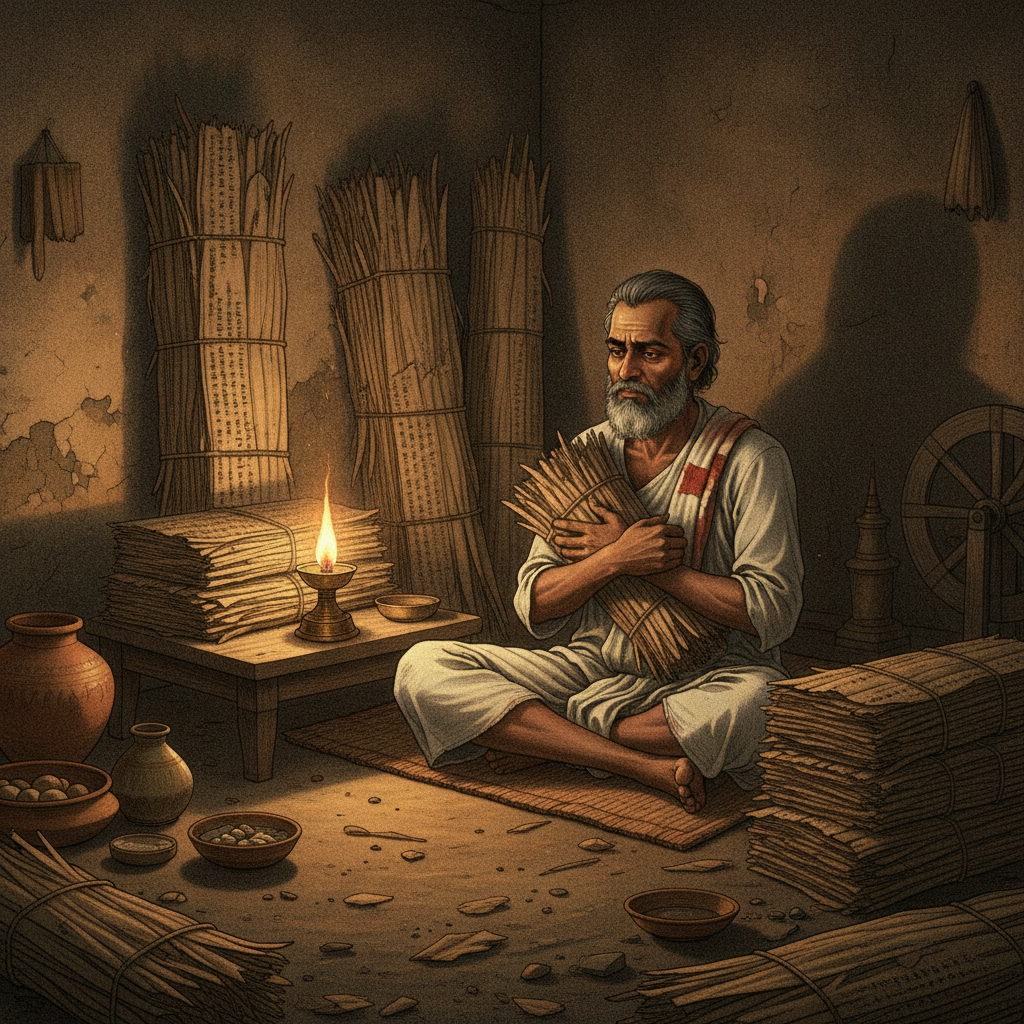
That night, Tukaram sat alone in his modest home, surrounded by his life's work. The palm leaves and cloth scrolls seemed to reproach him in the flickering lamplight. He picked up one abhanga, then another, reading verses that had once flowed from his heart like water from a spring.
Here was the poem he had composed after his wife and child died in a famine, when grief had driven him deep into devotion. Here was the verse that had come to him during an ecstatic kirtan, when the boundary between singer and song had dissolved. Here was the abhanga that Bahinabai said had saved her from despair.
But the scholar's words echoed in his mind: heretical, unworthy, corrupting. Who was he to trust his own experience over established authority? Was his devotion genuine, or was it pride disguised as humility? Had he been serving Vithoba, or serving his own ego?
The internal conflict tore at him. Tukaram had never claimed to be a great scholar or theologian. He had never systematically organized his philosophy—scholars would later note how his abhangas oscillated between dualistic and monistic views of God, how he never harmonized the various strands of Vedantic thought in his work. He was simply a devotee trying to express his love for Vithoba in the only language he knew.
But perhaps that was not enough. Perhaps it was, as the scholar said, presumptuous.
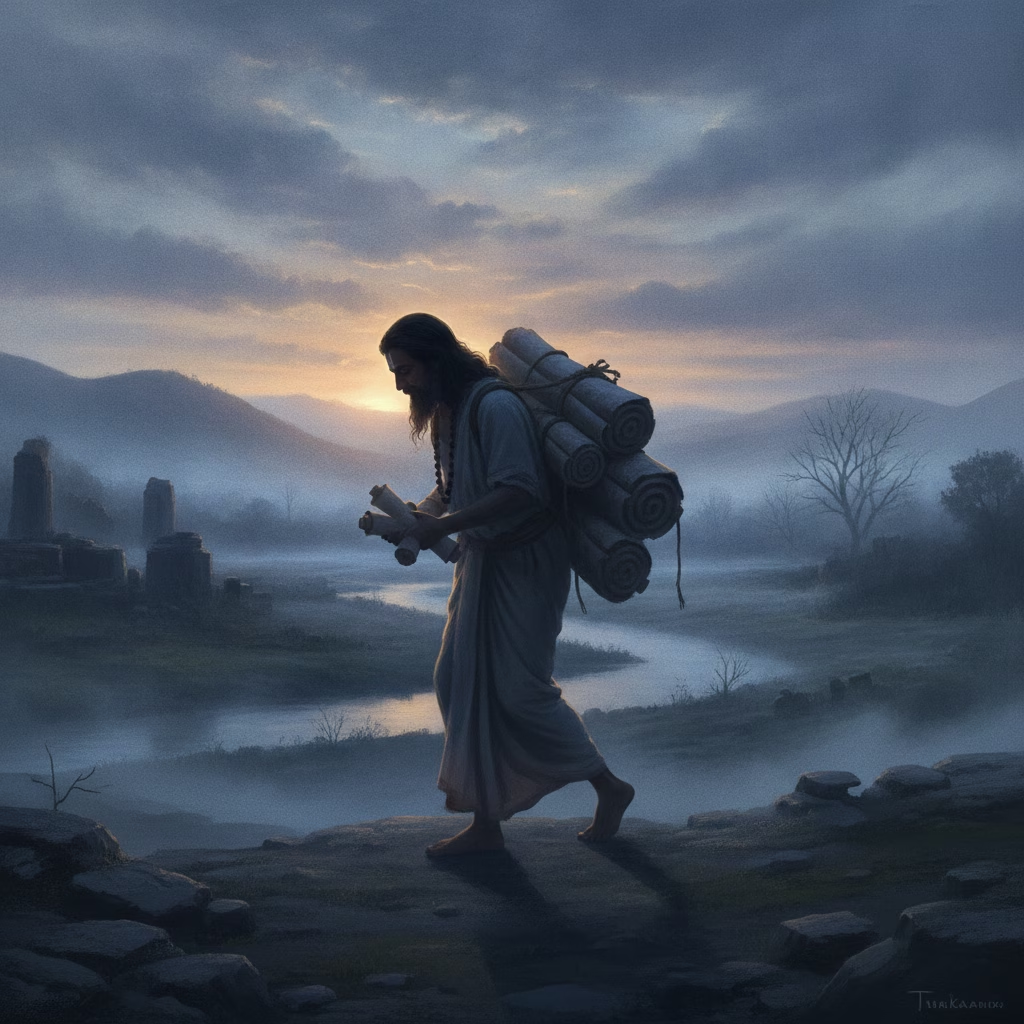
Before dawn, Tukaram made his decision. He gathered all his abhangas—every palm leaf, every cloth scroll, thousands of compositions representing nearly twenty years of devotional practice. He bundled them carefully, tenderly, as one might handle a beloved child being sent away.
The path to the Indrayani River was familiar; he had walked it countless times for ritual baths and meditation. Now he walked it in darkness, carrying the weight of his life's spiritual work. The river that flowed past Dehu was sacred, a tributary of the Bhima, its waters considered purifying.
If his abhangas were truly heretical, truly unworthy, then he would offer them back to God. He would surrender not just the poems but his attachment to them, his pride in composition, his desire for recognition. He would let the river carry them away, and with them, any claim to spiritual authority he might have presumed.
The pre-dawn air was cool and still. The only sounds were his footsteps and the eternal murmur of the flowing water.
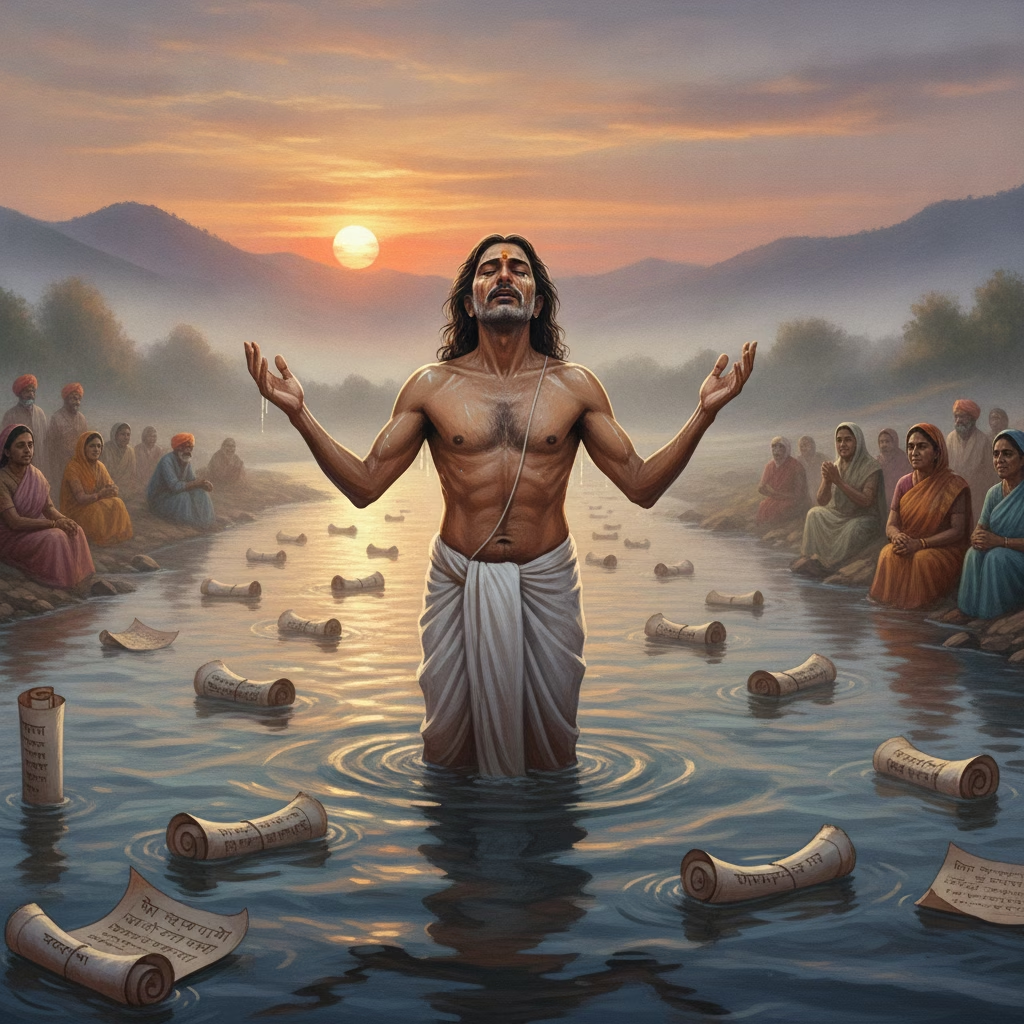
At the river's edge, Tukaram stood for a long moment, holding his bundled abhangas. The sky was beginning to lighten in the east. Soon the village would wake, and people would come to the river for their morning ablutions. But for now, he was alone with his decision.
He thought of Vithoba—that form of Vishnu who stood with hands on hips in the temple at Pandharpur, the god who had been the recipient of every devotional verse Tukaram had composed. If these abhangas truly pleased Vithoba, would the god not preserve them? And if they were indeed heretical and unworthy, was it not better that they be destroyed?
"I surrender this to you," Tukaram whispered. "If these songs have any worth, it is yours alone. If they are worthless, let them dissolve like salt in water."
He released the bundles into the Indrayani. The palm leaves and cloth scrolls floated for a moment on the surface, then began to sink, carried by the current. Years of devotional composition disappeared into the dark water. Tukaram watched until the last trace vanished, then raised his hands in prayer.
Tears streamed down his face—not tears of regret, but of surrender. He had let go of everything he had created, everything he had thought defined his spiritual life. Now there was nothing left but the devotion itself, stripped of all external expression.
He sat by the river as dawn broke, empty and strangely peaceful.
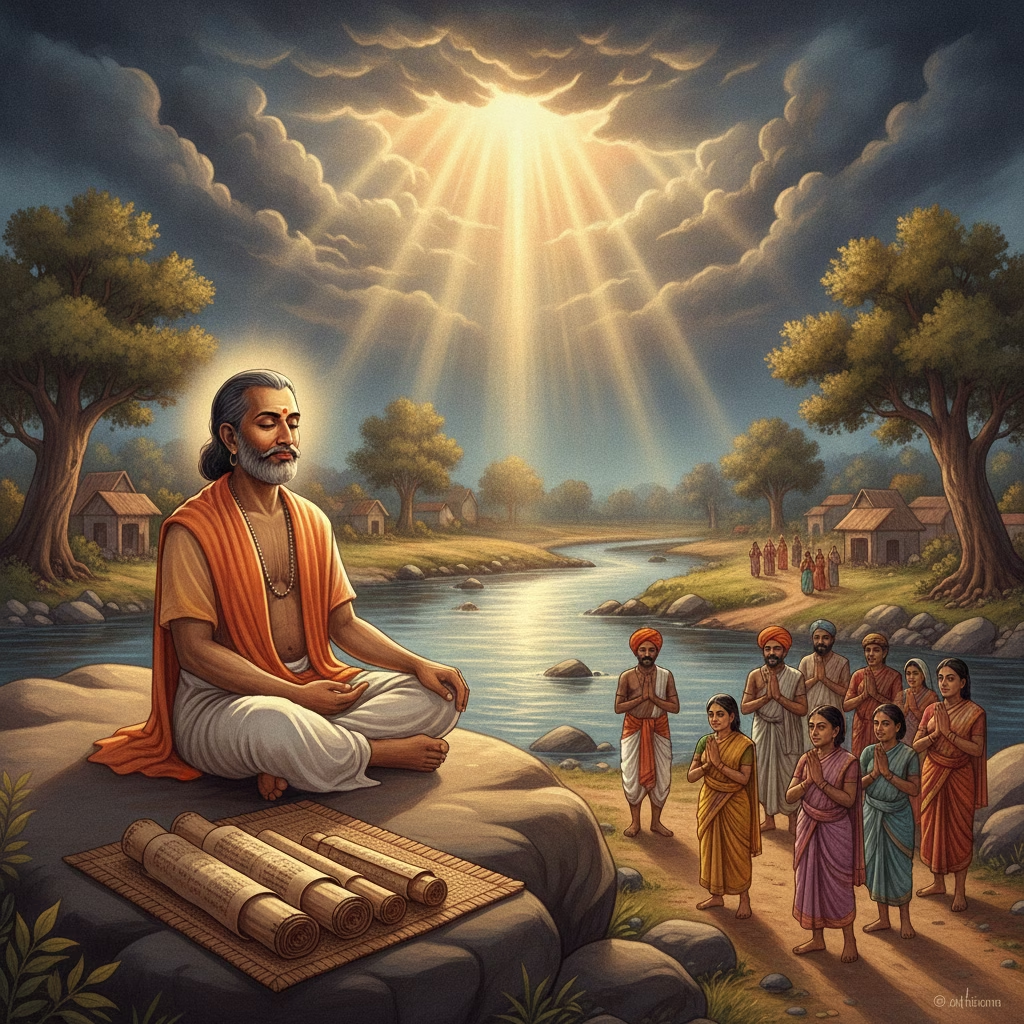
What happened next would become one of the most famous legends in Marathi religious tradition. According to the accounts that have been passed down through generations, Tukaram remained by the river in meditation and prayer. Days passed—some accounts say thirteen days, a sacred number.
And then, the story goes, the abhangas returned.
Whether carried back by the current, discovered by devotees downstream, or—as legend insists—miraculously restored by divine intervention, Tukaram's compositions were recovered from the Indrayani. The palm leaves and cloth scrolls, rather than being destroyed by the water, were said to have been preserved.
When word spread through Dehu that Tukaram's abhangas had been saved from the river, it was interpreted as divine vindication. Even Mambaji Gosavi, who had been among Tukaram's fiercest opponents, eventually became his devotee—though only, as historical accounts note, after facing considerable personal humiliation.
The Brahmin scholar's condemnation was forgotten. Tukaram's abhangas—eventually compiled into the Tukaram Gatha containing some 4,500 compositions created between 1632 and 1650—became the cornerstone of the Varkari devotional tradition. Today they are considered among the pinnacles of Bhakti literature, sung by millions during the annual pilgrimage to Pandharpur.
Whether the story of the river miracle is historical fact or devotional legend matters less than what it represents: the validation of vernacular spirituality, the triumph of heartfelt devotion over rigid orthodoxy, and the idea that true spiritual worth cannot be destroyed by institutional authority.
Tukaram died in 1650, but his songs—the ones he was willing to surrender completely—have lived for centuries, proving that sometimes the greatest act of faith is letting go of everything we think we've accomplished, and trusting that what is truly divine will endure.
The Indrayani still flows past Dehu, carrying its waters toward the Bhima and eventually to the sea. And on its banks, devotees still sing Tukaram's abhangas, those songs that were once cast away and then restored, as if to remind us that genuine devotion, once offered with a pure heart, can never truly be lost.