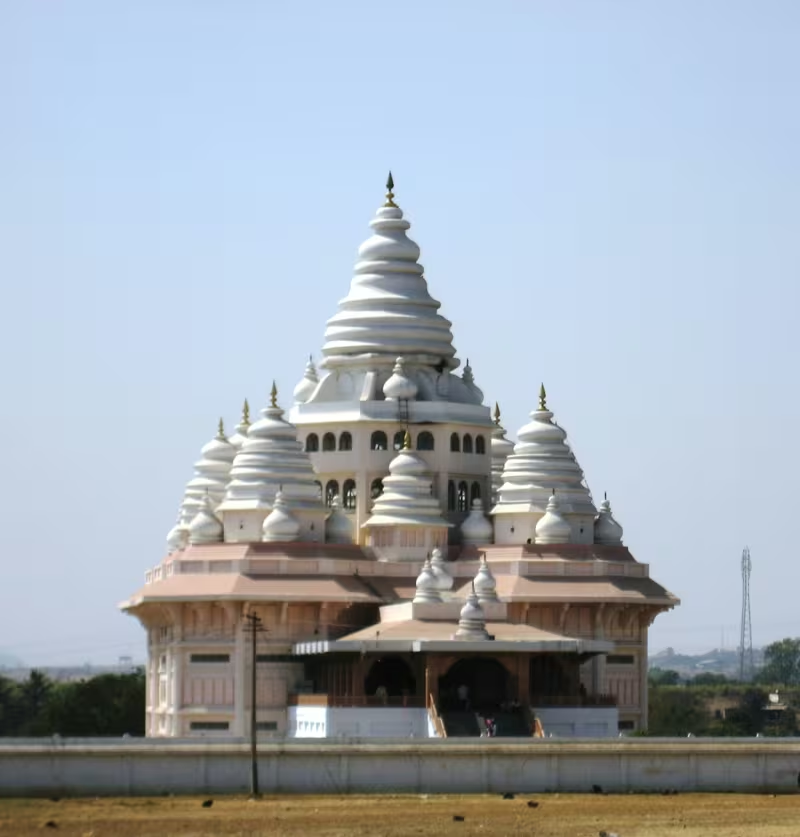

The Shudra Poet Who Defied the Brahmins: Tukaram's Battle for Devotion
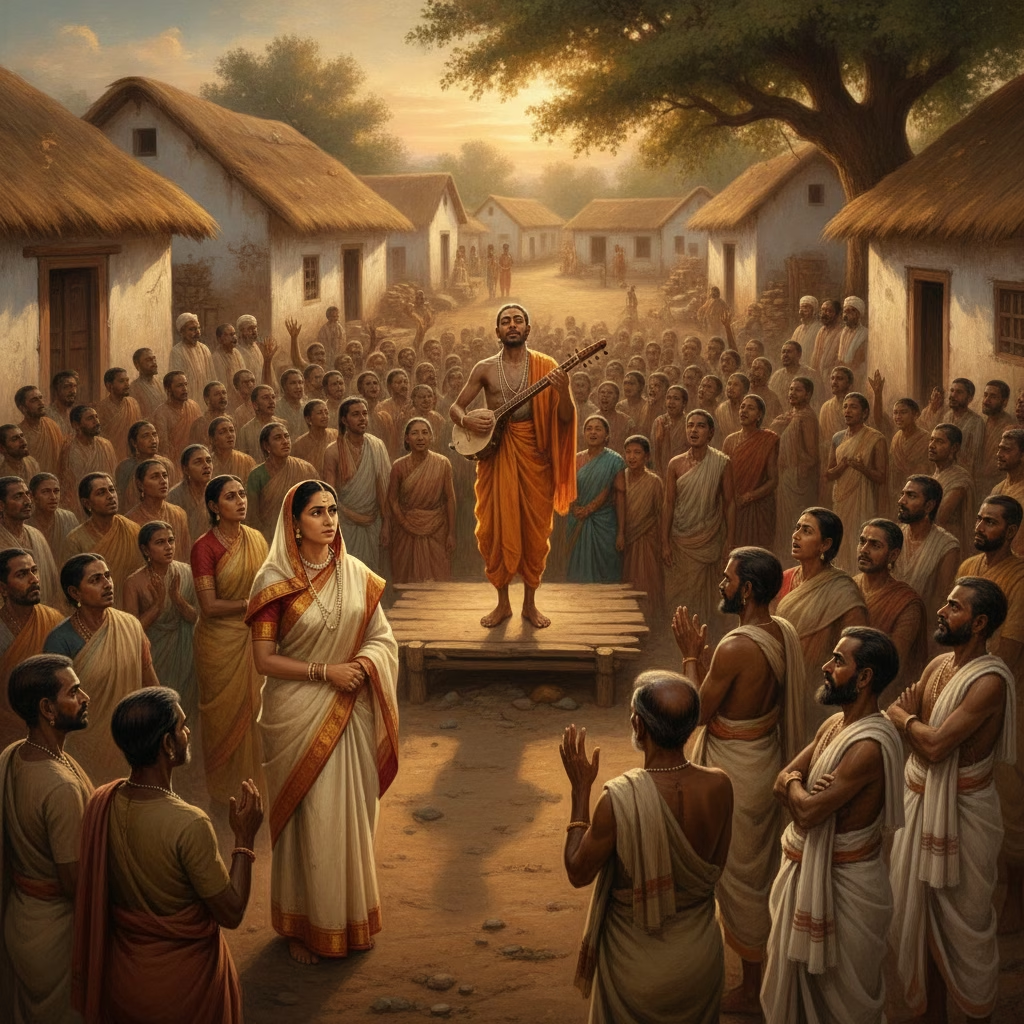
In the villages of 17th-century Maharashtra, a revolution was being sung. Not proclaimed from palace balconies or written in Sanskrit treatises, but carried on the voices of common people—farmers, laborers, women—who gathered in dusty squares to sing the abhangas of a Shudra poet named Tukaram.
His crime, according to the orthodox establishment, was simple: he dared to teach spiritual truths without permission.
The Poet's Rising Fame
Tukaram Bolhoba Ambile was not supposed to become one of Maharashtra's most beloved saints. Born into the Shudra varna—the lowest of the four traditional castes—he belonged to a community explicitly barred from studying the Vedas or teaching religious doctrine. Yet by the 1640s, his devotional verses to Vithoba, a form of Vishnu worshipped in the Varkari tradition, had spread like wildfire through the Deccan countryside.
What made Tukaram's poetry so dangerous to the orthodox establishment was not merely its content, but its accessibility. Unlike the formal Sanskrit verses of court poets or the sophisticated Marathi of earlier bhakti saints, Tukaram composed in the vernacular language of ordinary people. His abhangas—devotional poems in the simple ovi meter—used folksy expressions, everyday metaphors, and direct emotional appeals that required no scholarly interpretation.
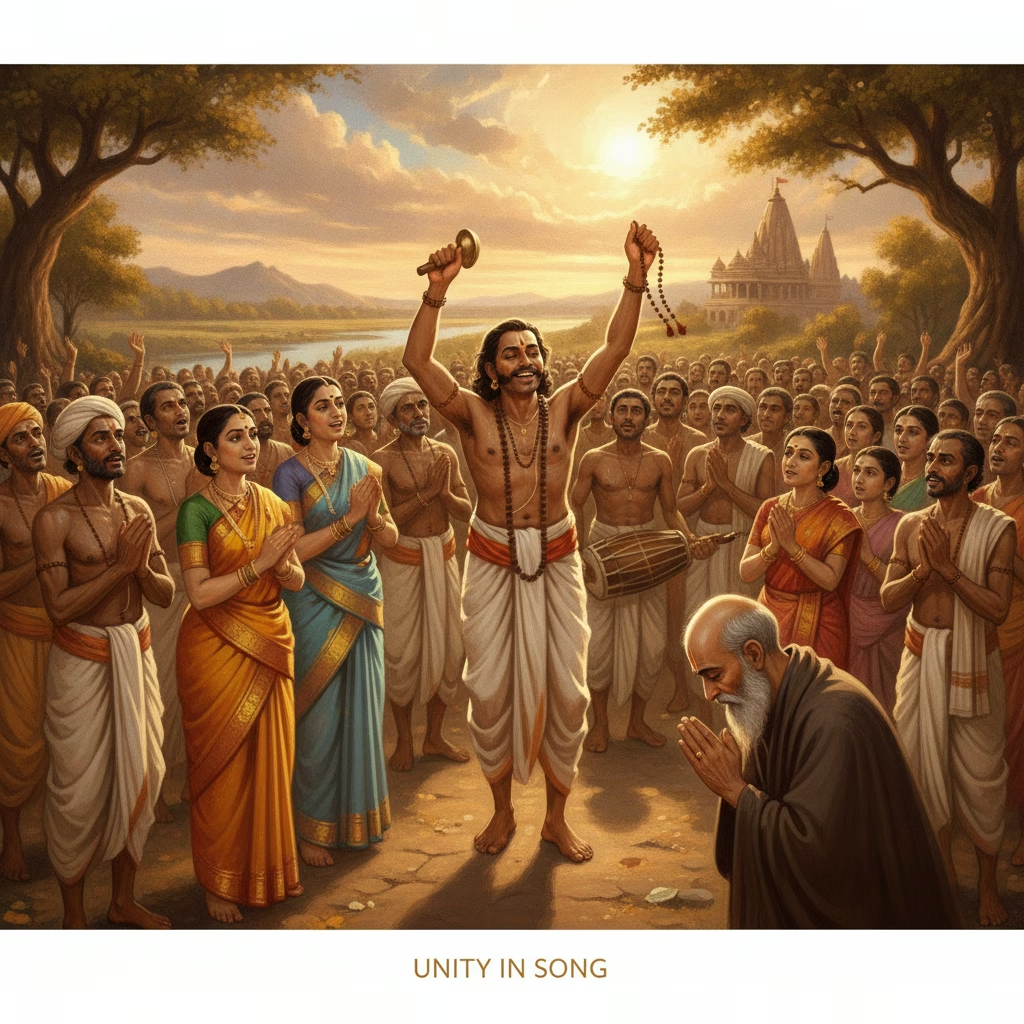
"The greatest merit in kirtan," Tukaram taught, "is that it creates a spiritual path not only for the devotee, but for others." He encouraged community kirtans—group gatherings where people sang and danced together in devotion. These events became social levelers, spaces where caste distinctions dissolved in collective ecstasy.
The composition of his followers revealed the threat he posed to social order. Farmers and merchants, yes, but also Brahmins drawn to his message of direct devotion over empty ritual. Most scandalously, women—including Bahinabai, a Brahmin woman who would face her husband's fury for choosing Tukaram as her guru. In accepting disciples without regard to gender or caste, Tukaram was not merely breaking convention; he was dismantling the very scaffolding of religious authority.
His verses made the challenge explicit: "Pride of caste never made any man holy," he sang. "The Vedas and Shastras have said that for the service of God, castes do not matter."
By the mid-1640s, Tukaram's kirtans regularly drew hundreds. Villages that had once gathered at established mathas—monastic institutions run by orthodox religious leaders—now flocked to hear the Shudra poet. The traditional gatekeepers of spiritual knowledge watched their authority erode with each abhanga that spread from village to village.
Orthodox Opposition Emerges
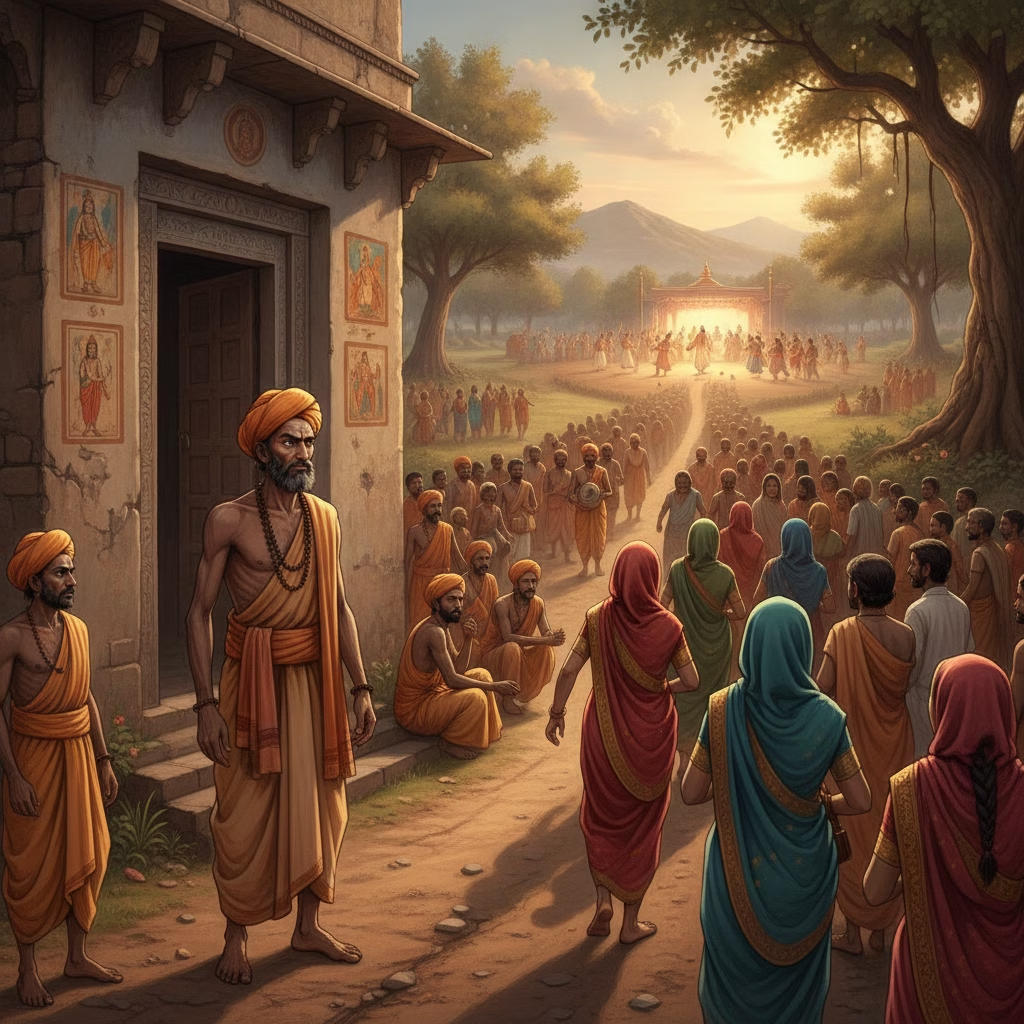
Mambaji Gosavi had every reason to feel threatened. As the head of a prominent matha in Dehu, he commanded respect, maintained a retinue of followers, and controlled access to religious instruction. Tukaram had even initially entrusted him with performing puja at his temple—a gesture of respect toward established religious authority.
But respect flowed in only one direction. As Tukaram's popularity grew, Mambaji watched his own influence wane. Villagers who once sought his blessings now sang Tukaram's abhangas. Devotees who once filled his matha now gathered in open fields for kirtans. The Shudra poet was not merely competing with him; he was making him irrelevant.
Jealousy curdled into rage. According to historical accounts, Mambaji confronted Tukaram physically, attacking him with a thorn stick and hurling abusive language. But violence alone could not stem the tide of Tukaram's growing movement. A more systematic opposition was required.
Mambaji found ready allies among orthodox Brahmins who saw in Tukaram's teachings a fundamental challenge to Brahmanical authority. The poet's message was clear and corrosive to their position: spiritual truth was accessible to all, regardless of birth; devotion mattered more than ritual purity; love of God transcended caste hierarchy.
The establishment's complaint was not merely theological. Tukaram was, they argued, violating dharma itself—the cosmic order that assigned each caste its proper role. Shudras were meant to serve, not teach. By composing religious poetry and accepting disciples, Tukaram was committing a form of spiritual trespass, entering spaces forbidden to him by birth.
Mambaji blamed Tukaram for "the loss of traditional abhangas"—a telling accusation. The old devotional poetry, even when composed in Marathi, had maintained respect for caste boundaries and ritual orthodoxy. Tukaram's verses conveyed reformist ideas that directly challenged these foundations. In an era when religious authority translated directly into social power, such challenges could not be tolerated.
The Heretical Teachings
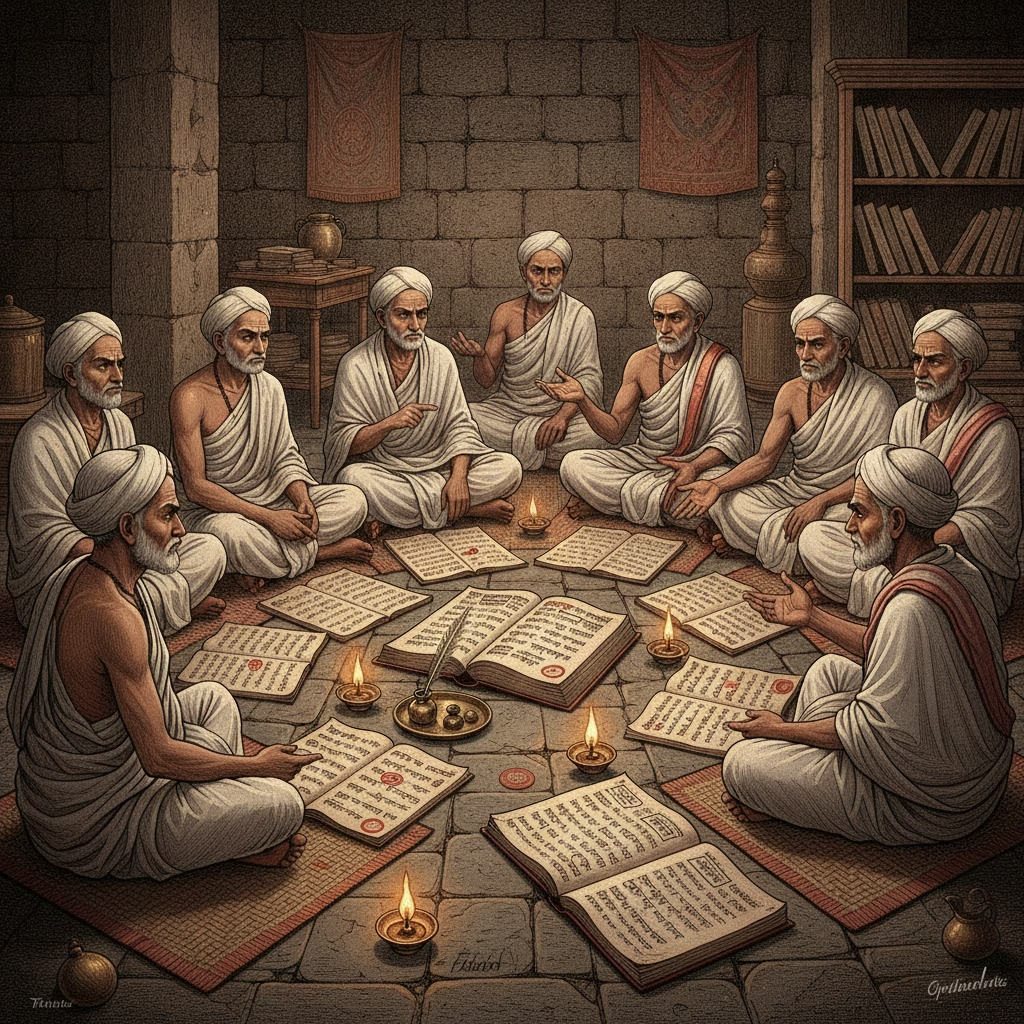
The case against Tukaram was built verse by verse. Orthodox Brahmin scholars compiled his most offensive statements, creating a dossier of heresy that would justify silencing him.
The evidence was damning by orthodox standards. Tukaram had proclaimed: "An outcast who loves the Name of God is verily a Brahmin." This was not poetic license but theological revolution—the assertion that devotion, not birth, determined spiritual status.
He had denounced the very practices that sustained Brahmin authority: "Mechanical rites, rituals, sacrifices"—all dismissed as inferior to direct devotion. If people could reach God through simple bhakti, what need had they for priestly intermediaries?
His philosophical positions were equally problematic. Tukaram oscillated between Vedantic schools, sometimes embracing the monism of Adi Shankara ("the whole universe is filled by God"), other times favoring the dualism of Madhvacharya and Ramanuja. In one abhanga, he even criticized monism when "expounded without faith and love," calling such teachers "buffoons" and "shameless ones who speak heresy in opposition to the Vedas."
This theological flexibility was itself suspect. Orthodox scholars spent lifetimes mastering single interpretative traditions. Tukaram, unschooled in formal philosophy, drew freely from multiple sources—Namdev, Dnyaneshwar, Kabir, Eknath—creating a syncretic devotional practice that served emotional truth over systematic consistency.
But the most dangerous element of Tukaram's teaching was its social implications. He pointed out "social injustices, caste hierarchy, and the misconduct of certain religious leaders" directly in his kirtans and abhangas. These were not abstract theological debates but specific accusations against living people and existing institutions.
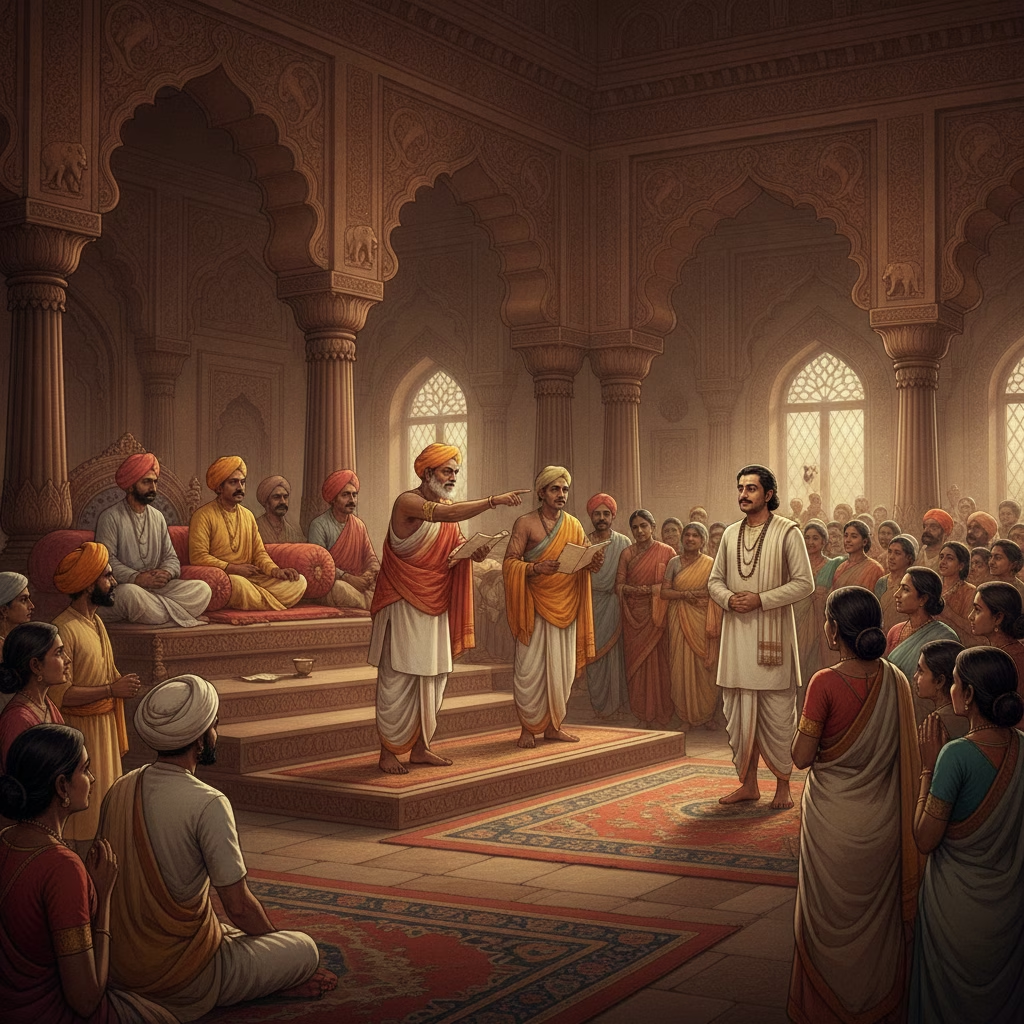
The petitioners prepared their case: Tukaram, a Shudra, was unlawfully teaching religious doctrine, accepting disciples across caste lines, and spreading ideas that undermined dharmic social order. The penalty they sought was clear—he must be silenced.
The Confrontation
The exact details of the formal petition remain shadowy in historical records, but its impact was undeniable. Local authorities, pressured by influential Brahmins, moved against Tukaram. The charge: violation of caste restrictions on religious teaching.
The confrontation represented a clash between two visions of religious authority. The orthodox position held that spiritual knowledge was hereditary, passed down through Brahmin lineages trained in Vedic interpretation. Access to this knowledge was restricted by birth, and teaching it without proper authorization was a violation of cosmic order.
Tukaram's position, articulated through his verses rather than formal argument, held that divine truth was accessible to all through devotion. "It is our faith that makes thee a god," he had boldly told Vithoba. If faith created the divine relationship, then no human authority could restrict it.
The authorities faced a dilemma. Tukaram had violated clear caste restrictions, but he had also attracted a massive popular following. Silencing him by force risked creating a martyr and sparking broader unrest. Yet allowing him to continue teaching would set a precedent that could unravel the entire caste-based system of religious authority.
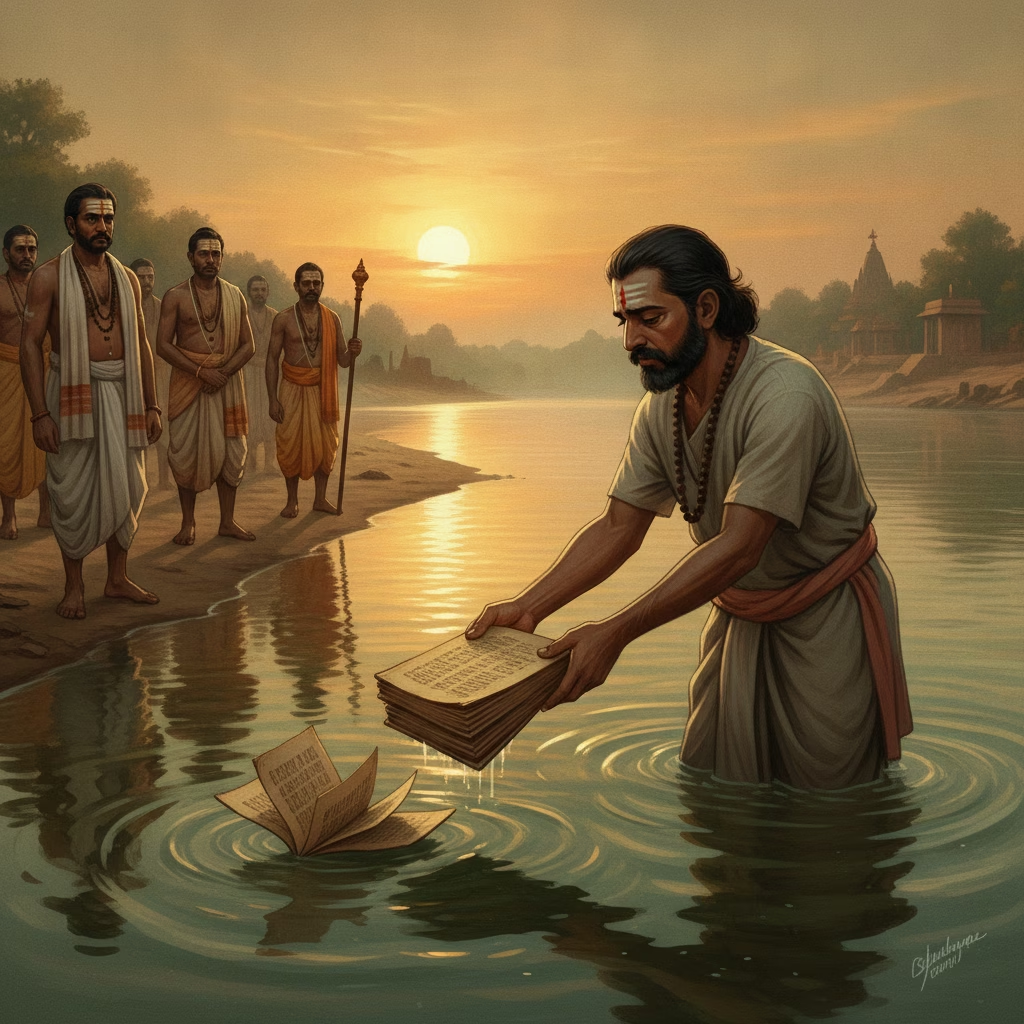
The solution they reached was characteristically bureaucratic: Tukaram would not be imprisoned or physically harmed, but his manuscripts—the written abhangas that were spreading his teachings—must be destroyed.
The River's Judgment
What happened next has become legend, though historians debate the details. According to tradition, Tukaram was forced to cast his manuscripts into the Indrayani River. Some accounts say he did so under direct coercion; others suggest he chose this act as a form of spiritual surrender, leaving judgment to God.
The symbolism was powerful. Water would dissolve the ink, destroy the paper, erase the words that had caused such controversy. The orthodox establishment had achieved its goal—the physical texts were gone.
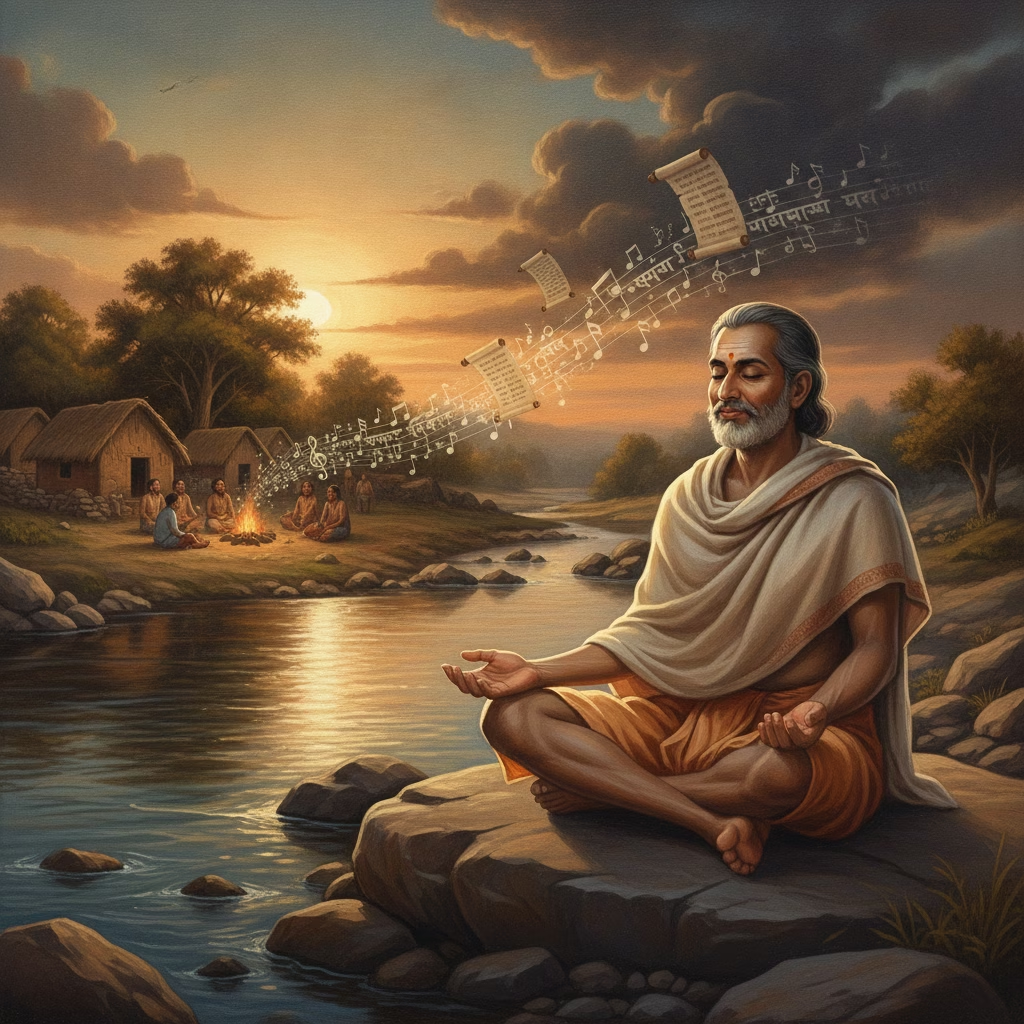
But they had fundamentally misunderstood the nature of Tukaram's revolution. His verses had never depended on manuscripts. They lived in the memories of thousands who had sung them in kirtans, who had memorized them through repetition, who had made them part of their daily devotional practice.
You cannot drown songs that people carry in their hearts.
Tukaram himself withdrew into intense meditation and fasting. Historical accounts describe a period of profound spiritual crisis, during which he reportedly received divine visions affirming his mission. Whether literal or metaphorical, these visions represented a psychological truth: Tukaram had to decide whether to submit to orthodox authority or continue his path despite official sanction.
The Verses Return
The legend says that after thirteen days, the manuscripts miraculously reappeared, floating on the river's surface. Skeptical historians note that this probably represents a poetic account of what actually happened: Tukaram's followers, who had memorized his verses, began writing them down again.
The distinction hardly matters. What the story captures is a deeper truth about the failure of censorship. The orthodox establishment had tried to silence Tukaram by destroying his texts, but the texts were merely vessels for ideas that had already taken root in popular consciousness.
Villagers continued singing his abhangas. Kirtans continued gathering crowds. Women continued finding in his verses permission to pursue their own spiritual paths. Lower-caste devotees continued hearing in his words an affirmation of their spiritual worth.
Tukaram resumed his teaching, now with even greater moral authority. He had been tested by the establishment and had not recanted. His willingness to sacrifice his manuscripts demonstrated that his devotion was genuine, not driven by ego or desire for fame.
The movement he had started could no longer be contained. His philosophy—that "the service of God" transcended caste, that devotion mattered more than ritual purity, that spiritual truth was accessible to all—spread throughout Maharashtra and beyond.
Legacy of Defiance
The final irony came when Mambaji Gosavi, Tukaram's chief persecutor, eventually became his devotee. Historical accounts note that this conversion came "only after facing considerable personal humiliation"—suggesting that Mambaji's opposition had backfired, isolating him from the very community whose orthodoxy he claimed to defend.
Tukaram's influence extended into the highest circles. Eleanor Zelliot notes that poets from the Bhakti movement, including Tukaram, significantly influenced Shivaji's rise to power. Some accounts claim Tukaram once saved Shivaji from pursuing Mughal forces—a story that, whether historically accurate or not, reveals how deeply Tukaram had penetrated Marathi consciousness.
By the time of his death in 1650, Tukaram had fundamentally altered the religious landscape of Maharashtra. His abhangas—estimated at over 4,000 verses—became the cornerstone of the Varkari tradition. His insistence on kirtan as communal devotional practice created a form of religious gathering that persists today in the annual pilgrimage to Pandharpur, where hundreds of thousands still sing his verses.
The Brahmins who had petitioned to silence him had failed completely. Not only did Tukaram's teachings survive, they became canonical. Today, his abhangas are studied in universities, performed in concerts, and revered as pinnacles of Bhakti literature.
The historical record leaves us with a question: What made Tukaram's defiance successful when so many other challenges to orthodox authority failed? Perhaps it was his strategic genius in using the vernacular language and accessible poetic forms. Perhaps it was the historical moment—the 17th century saw Bhakti movements challenging orthodoxy across India. Perhaps it was simply that his message of universal access to divine love was too powerful to suppress.
Or perhaps the answer lies in something Tukaram himself wrote: "Tuka indeed is playing in the world uncontaminated by it like the Sun which stands absolutely transcendent." He had found a way to operate within the social world while remaining spiritually independent of its hierarchies.
The Shudra poet who was forbidden to teach became one of India's most influential spiritual teachers. The manuscripts they tried to drown became treasured literature. The movement they tried to suppress became a tradition.
Some silences, it turns out, only amplify the voices they attempt to erase.