
The Sixth Animal: What Textbooks Won't Tell You About the Pashupati Seal
The Discovery in the Dust
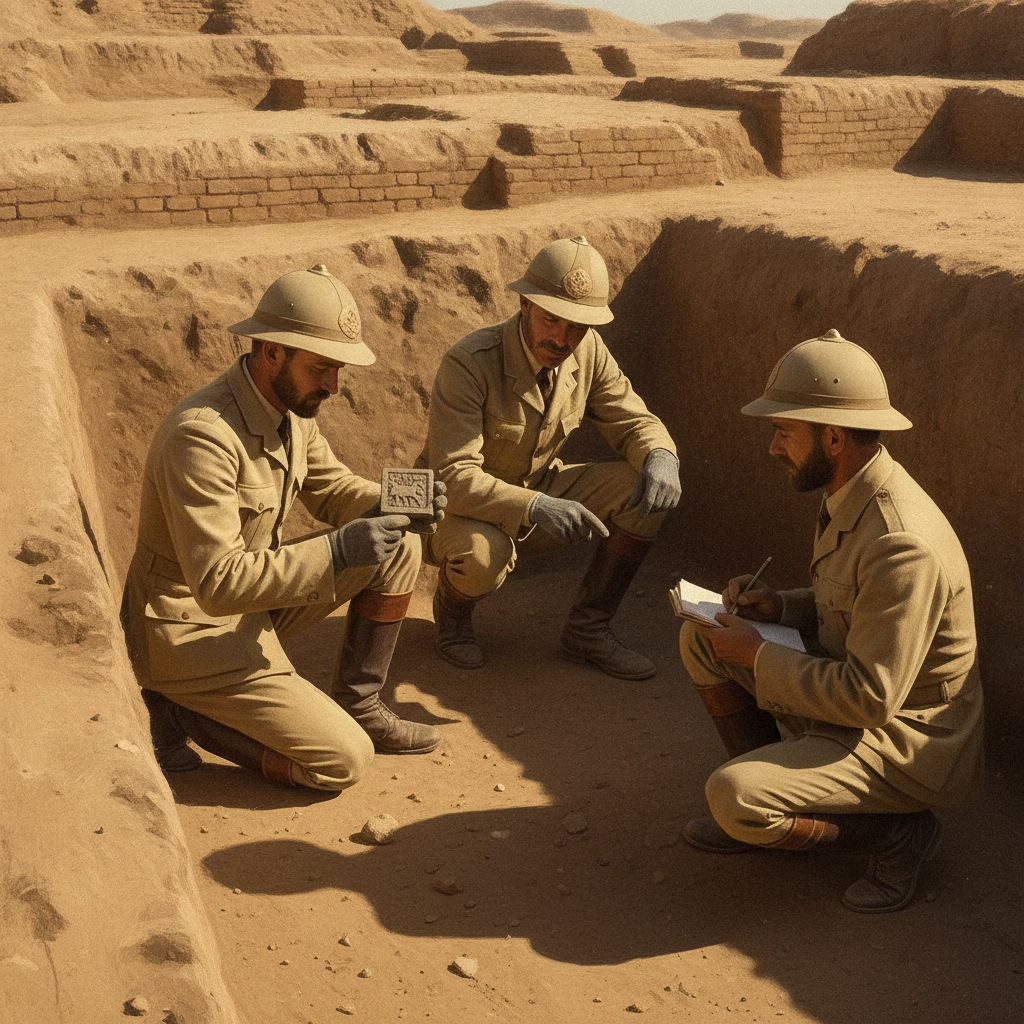
On a sweltering day in 1928 or 1929—the exact date lost to the imprecision of colonial record-keeping—excavators working in Block 1 of Mohenjo-daro's DK-G Area brushed soil from a small, square object 3.9 meters below the surface. The steatite seal, measuring just 3.56 by 3.53 centimeters with a thickness of 7.6 millimeters, could fit comfortably in the palm of your hand. But what was carved into its surface would spark nearly a century of scholarly debate.
The Archaeological Survey of India, operating under British rule, was systematically uncovering one of the great urban centers of the Indus Valley Civilization. Among thousands of seals depicting bulls, unicorns, and geometric patterns, this one stood out immediately. Unlike most Indus seals where animals dominated the composition, this seal featured a human figure as its central, largest element—an unusual choice that suggested uncommon significance.
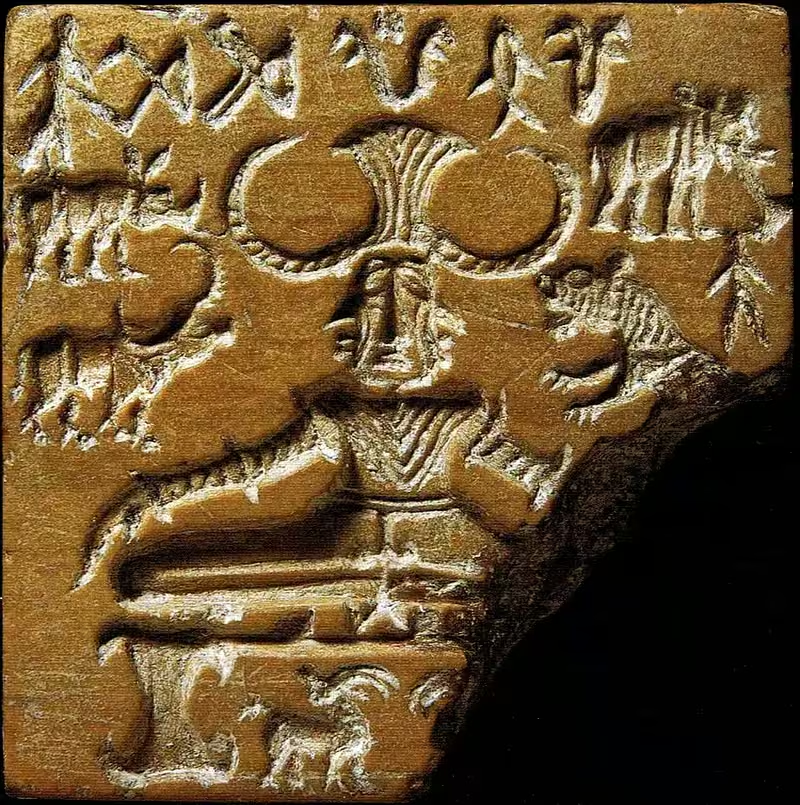
The figure sat cross-legged on a platform, arms extended to rest on knees, wearing an elaborate headdress with a fan-shaped center flanked by two large, striated horns. Eight small bangles and three large ones adorned the arms. Necklaces covered the chest. And surrounding this figure: animals. Large, carefully rendered wild animals that would become the focus of endless interpretation.
Ernest Mackay, who directed the excavations, would later date the seal to the Intermediate I Period—approximately 2350 to 2000 BCE. Four thousand years ago, someone had carved this intricate scene into stone. But why? And what, exactly, were they trying to depict?
Marshall's Proto-Shiva Theory
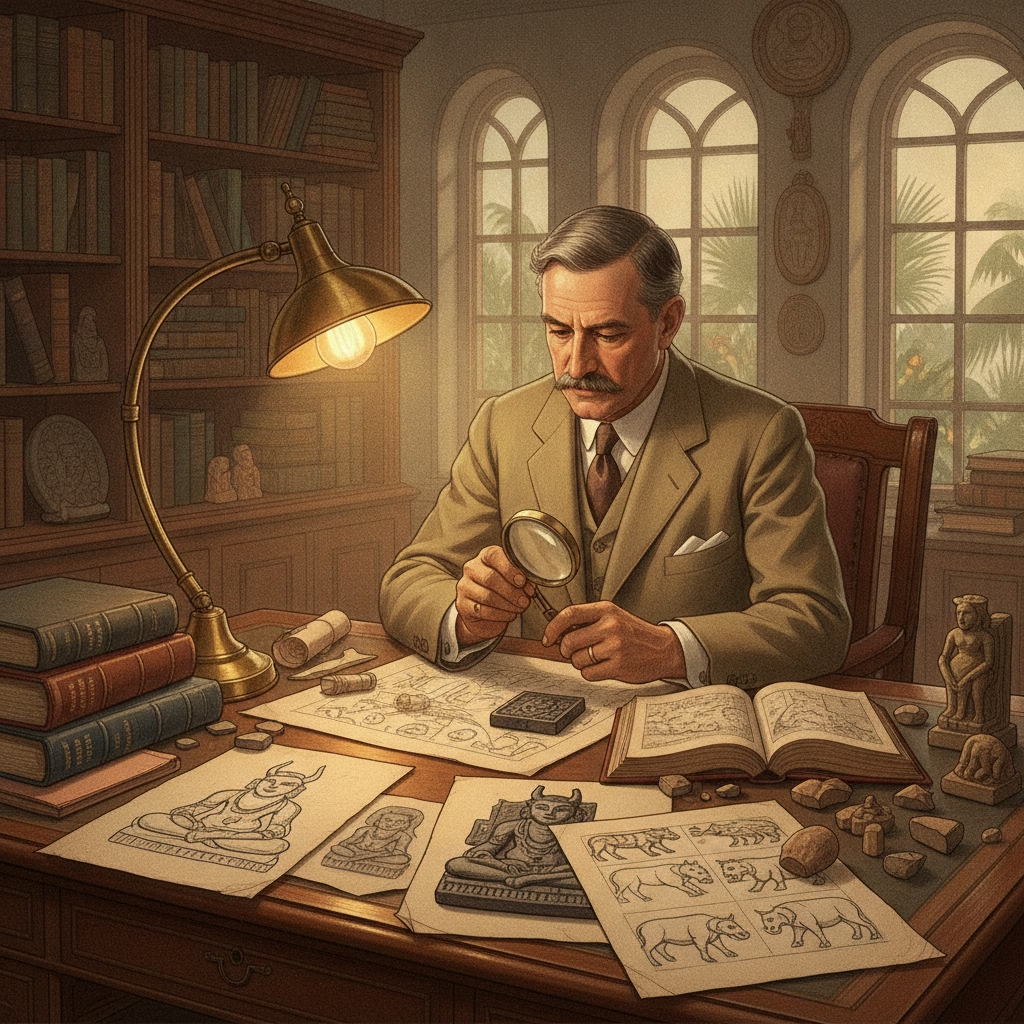
John Marshall, Director-General of the Archaeological Survey of India, examined the seal with the confidence of a man accustomed to making pronouncements about ancient civilizations. What he saw—or thought he saw—would shape the interpretation of Indus Valley religion for generations.
Marshall identified the central figure as possibly tricephalic: having three heads. The figure appeared to be ithyphallic, suggesting fertility symbolism, though this interpretation would later be questioned by many scholars (IVC specialist Jonathan Mark Kenoyer still held this view as late as 2003). The horned headdress, the yogic posture, the surrounding animals—Marshall connected these elements to create a compelling narrative.
This, he declared, was Pashupati: "Lord of Animals," an epithet of the Hindu god Shiva. The seal represented a proto-Shiva deity, evidence of religious continuity stretching from the Indus Valley Civilization to modern Hinduism. It was a claim that elevated the seal from archaeological curiosity to religious icon.
Marshall counted the animals carefully. To one side of the figure: an elephant and a tiger. To the other: a water buffalo (Bubalus arnee) and an Indian rhinoceros. Four magnificent beasts, representing the wild fauna of the ancient Indus region. And beneath the platform, almost as an afterthought in his analysis, two deer or ibexes looking backwards, their curved horns almost meeting in the center.
Four animals surrounding the deity. Two more beneath. But Marshall's focus remained on the large animals flanking the figure—the obvious ones, the impressive ones. The creatures beneath the platform received barely a mention in his groundbreaking interpretation.
The seal had one of the most complicated designs among the thousands discovered from the Indus Valley Civilization. At the top, seven Indus script symbols remained tantalizingly undeciphered, the last symbol displaced downward for lack of horizontal space. Every element seemed deliberately placed, carefully considered. Nothing was accidental.
So why did everyone keep saying "five animals"?
The Partition and the Seal's Journey
By 1947, the Pashupati seal had become more than an archaeological artifact. It was a symbol, a piece of heritage, a political object in the painful division of the subcontinent.
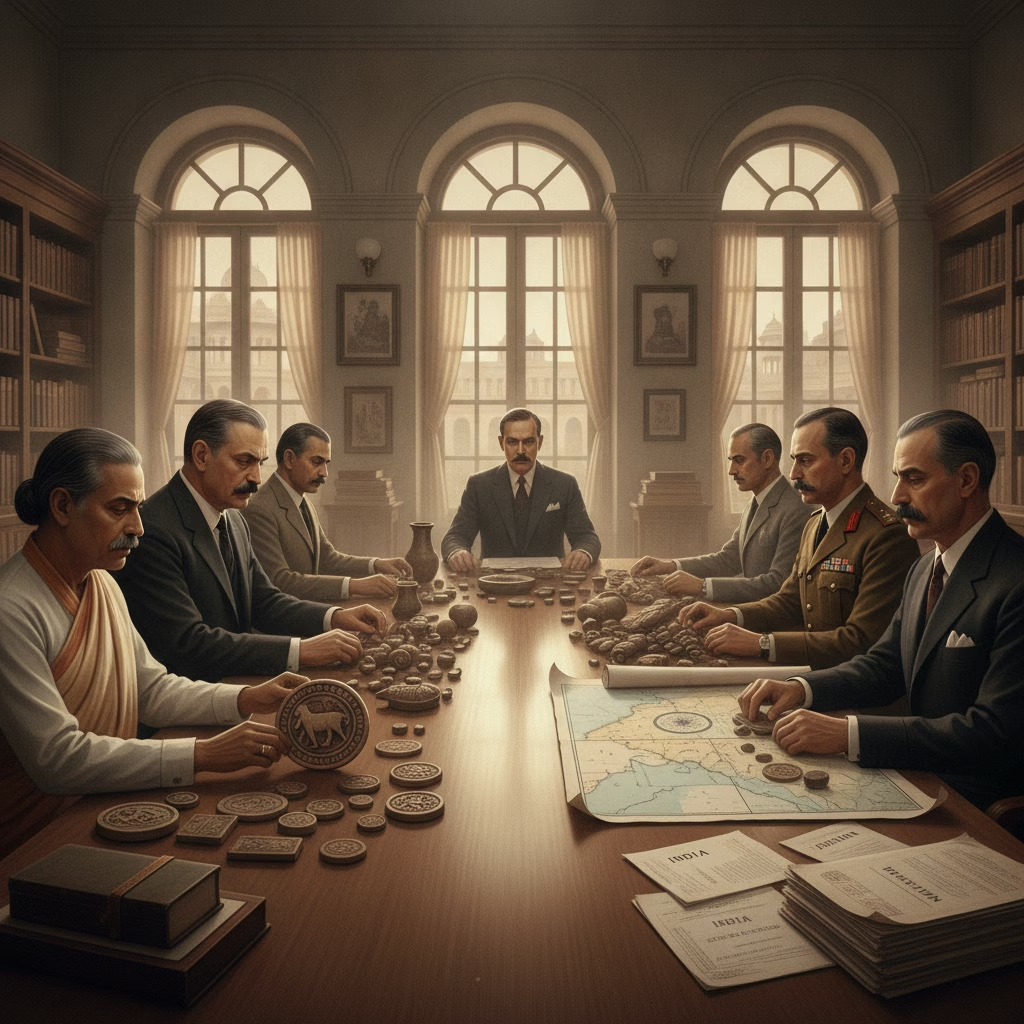
The finds from Mohenjo-daro had initially been deposited in the Lahore Museum, then moved to the Archaeological Survey of India headquarters in New Delhi, where a new "Central Imperial Museum" was being planned. As independence approached and Partition became inevitable, officials faced an agonizing task: dividing 12,000 objects from Mohenjo-daro between two new nations.
The process was meticulous and heartbreaking. Some necklaces and girdles had their beads separated into two piles, as if ancient jewelry could be split like disputed property. Pakistan would receive the famous Priest-King figure. India would retain the Dancing Girl. And the Pashupati seal? It was allocated to the Dominion of India.
When the National Museum of India was finally founded in 1949, the seal took its place as one of the crown jewels of the collection. Textbooks featured it prominently. Scholars referenced it constantly. Tour guides pointed it out to visitors as evidence of India's ancient religious traditions.
But in all those textbooks, all those scholarly articles, all those museum labels, the count remained the same: five animals. Four large beasts surrounding the deity, plus one more—sometimes the two deer were counted as a single element, sometimes only one was mentioned. The number varied slightly depending on the source, but the interpretation remained fixed.
No one seemed to notice—or at least, no one seemed to think it mattered—that there were actually six distinct animals carved into that tiny piece of steatite.
Counting the Animals
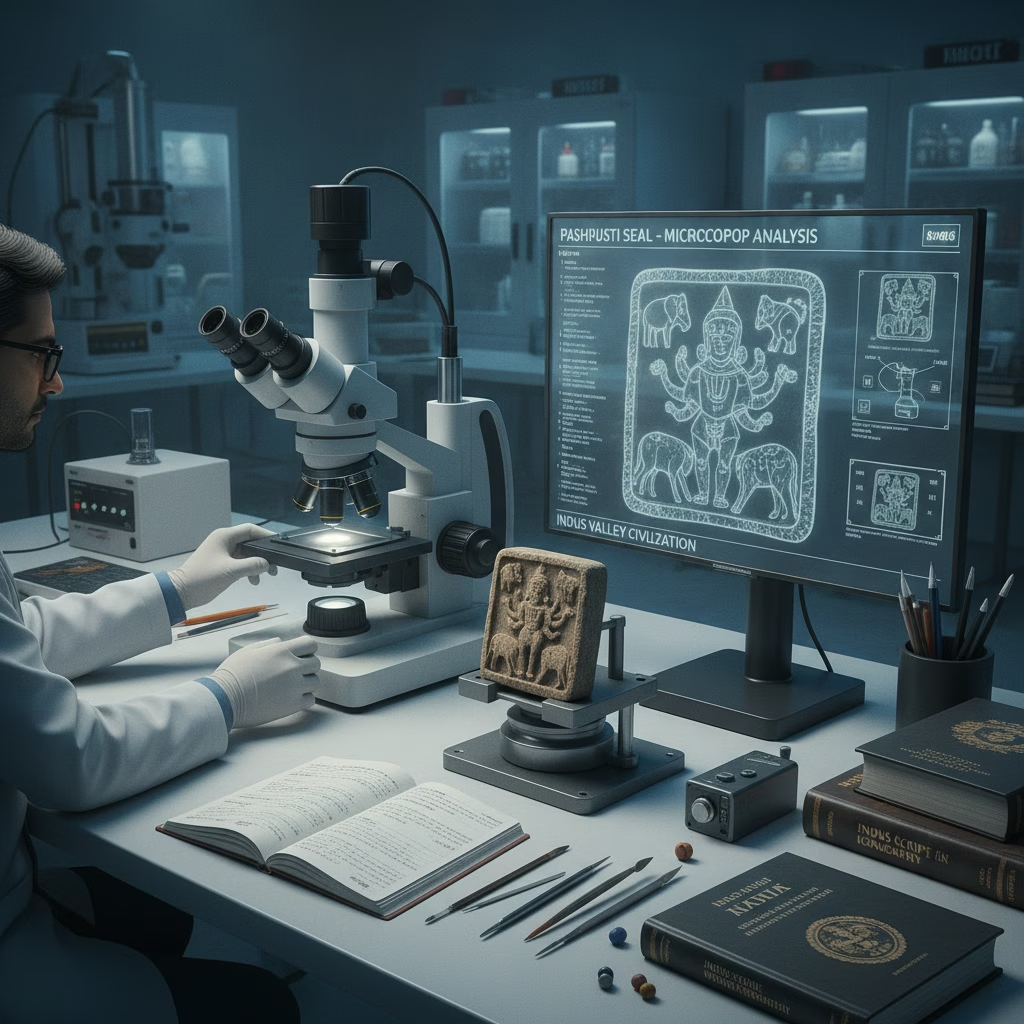
Modern conservation techniques allow us to examine the seal with unprecedented clarity. High-resolution imaging, careful lighting, digital enhancement—tools Marshall could never have imagined reveal details invisible to the naked eye or even to his magnifying glass.
The four large animals remain unmistakable: elephant, tiger, water buffalo, rhinoceros. These are the animals that dominated Marshall's interpretation, the "wild animals" that supported his Pashupati theory. Each is rendered with careful attention to anatomical detail—the elephant's trunk, the tiger's stripes, the buffalo's horns, the rhinoceros's distinctive profile.
But beneath the platform, the composition becomes more complex. Two creatures face backward, their bodies turned away from the central figure, their heads twisted to look behind them. Their curved horns rise gracefully, almost touching in the middle of the composition.
Marshall called them "two deer or ibexes." Most subsequent scholars followed his lead, treating them as a pair, a single compositional element. Some textbooks mention only one, as if the second were merely decorative repetition.
Yet these are two distinct animals. Two separate carvings. Two individual creatures, each with its own body, its own head, its own carefully rendered horns. In a seal where every element appears deliberately placed, where the artist worked within severe spatial constraints (note that seventh script symbol, displaced downward for lack of room), why would two animals be carved when one would suffice?
The answer might lie not in what we see, but in what we've been taught to overlook. The four large animals surrounding the figure are obvious, impressive, impossible to miss. But the two beneath the platform—smaller, more subtle, positioned in subordinate space—have been systematically undercounted, merged into a single element, or ignored entirely in popular accounts.
Six animals. Not five. The number matters.
The Significance of Six
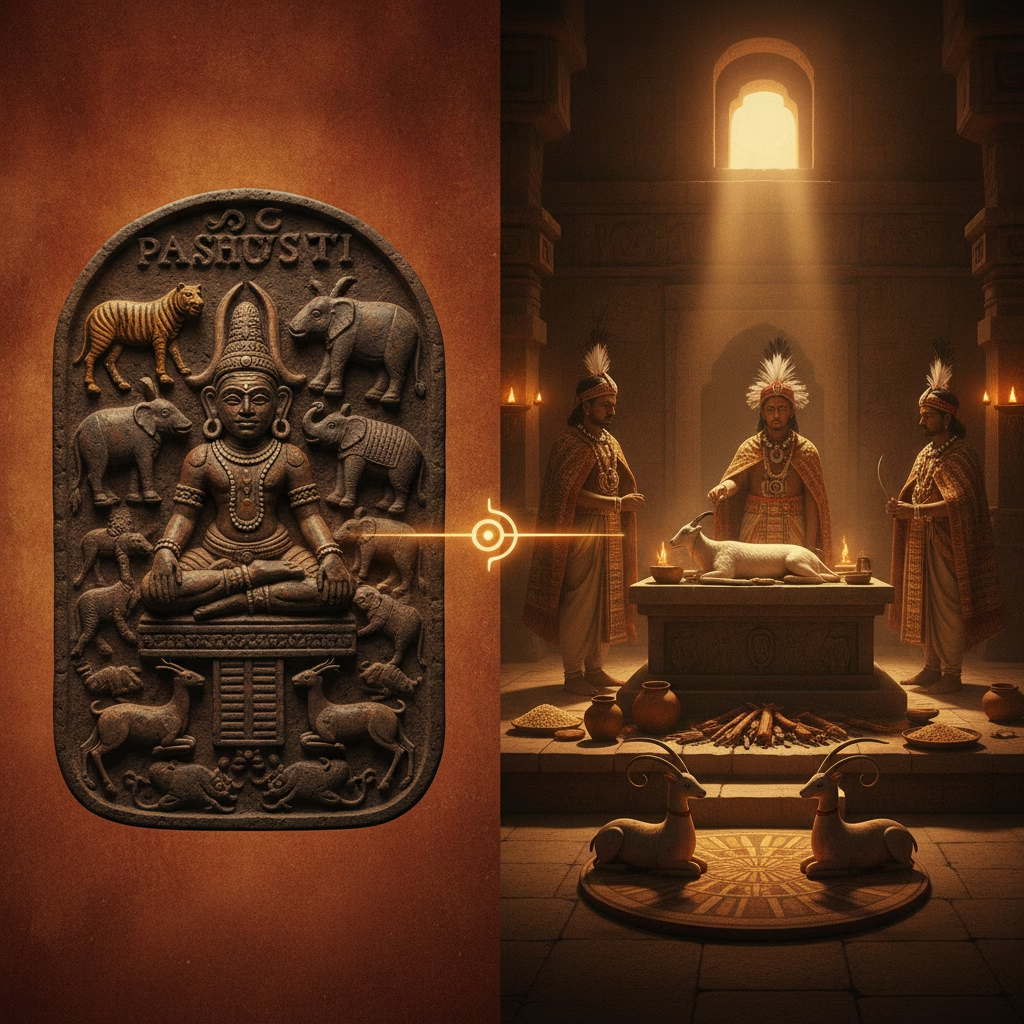
In Vedic tradition, the number six carries specific symbolic weight. Six seasons divide the year. Six schools of Hindu philosophy emerged. Six chakras (in some traditions) mark points of spiritual energy. But more relevant to the Pashupati seal might be the concept of the six domestic animals—the pashus that appear repeatedly in early Sanskrit texts.
The deer or ibex beneath the platform occupy a liminal space in ancient South Asian culture. Not quite wild, not quite domestic, these animals were central to early sacrificial practices. They appear frequently in Indus Valley art, often in contexts suggesting ritual significance.
What if the seal's composition is more sophisticated than Marshall imagined? Four wild animals representing the untamed world, the realm of the forest, the domain over which Pashupati holds sway. And beneath the platform—in subordinate but significant position—two deer representing the domesticated, the sacrificial, the animals that mediate between human and divine realms.
This reading would make the seal not just a depiction of a deity surrounded by animals, but a complex theological statement about the relationship between wild and domestic, divine and human, transcendent power and ritual practice.
Or consider an alternative interpretation: the seal might not be religious at all. Some scholars have suggested it represents a scene of royal or political authority, with the animals symbolizing different clans, regions, or tribute-bearing groups. In this reading, the two deer beneath the platform might represent a subordinate group or a specific ritual obligation.
What's striking is how rarely these six animals—counted accurately—appear in popular accounts. The phrase "five animals" has become fossilized in textbook descriptions, repeated so often that it's rarely questioned. Even scholars who acknowledge the two deer often treat them as a single compositional unit rather than as distinct elements.
What We Choose to See
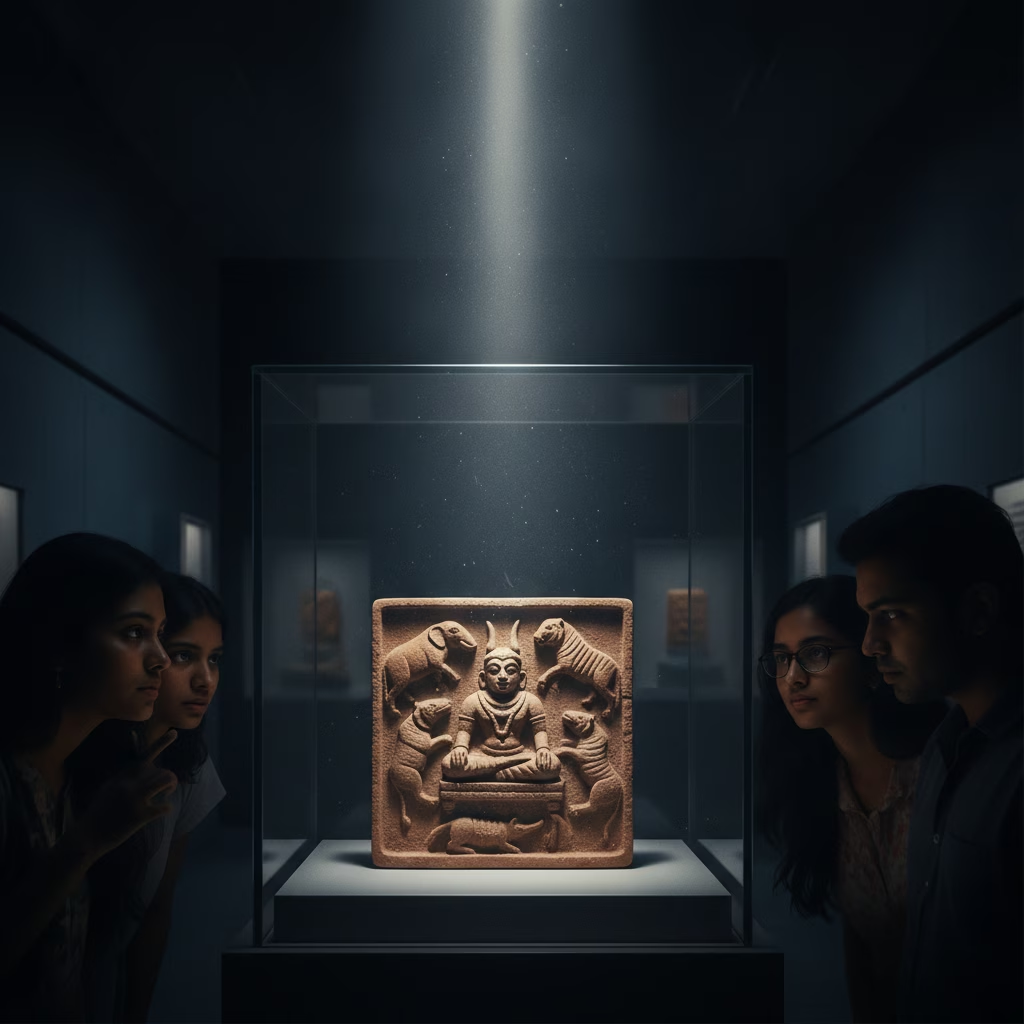
The Pashupati seal sits today in the National Museum of India, protected behind climate-controlled glass, illuminated by carefully calibrated lighting. Thousands of visitors pass by each year. Most see what they've been told to see: a proto-Shiva figure surrounded by five animals.
But lean closer. Look beneath the platform. Count carefully.
Six animals. Six distinct creatures, each carved with intention, each occupying its designated space in a composition where nothing is accidental. The sixth animal—or rather, the proper counting of both deer as separate entities—doesn't overturn Marshall's interpretation entirely. But it complicates it, enriches it, suggests layers of meaning that a century of scholarship has overlooked.
This is the nature of archaeological interpretation: we see what we're prepared to see, what our theories and expectations allow us to notice. Marshall, working in the early twentieth century with colonial-era assumptions about religious continuity, saw what he needed to see to support his proto-Shiva theory. Subsequent scholars, working within the paradigm he established, repeated his count without questioning it.
The seal remains one of the most enigmatic artifacts from the Indus Valley Civilization. We still cannot read the script at its top. We still debate whether the central figure has three heads or merely an elaborate headdress. We still argue about gender, posture, and symbolic meaning.
But at least we can count correctly. Six animals surround the figure. Not five. The sixth creature—barely visible beneath the platform, systematically undercounted in textbooks, merged with its companion into a single element—deserves to be seen, acknowledged, and interpreted on its own terms.
What else have we been missing? What other details, hiding in plain sight on thousands of Indus seals, await proper attention? The Pashupati seal reminds us that even the most studied artifacts can surprise us, that careful observation can overturn decades of received wisdom, and that sometimes the most important discoveries come not from excavating new sites but from looking more carefully at what we've already found.
The sixth animal was always there. We just needed to learn how to see it.