
The Peshwa's Forbidden Love: Bajirao and Mastani's Defiance
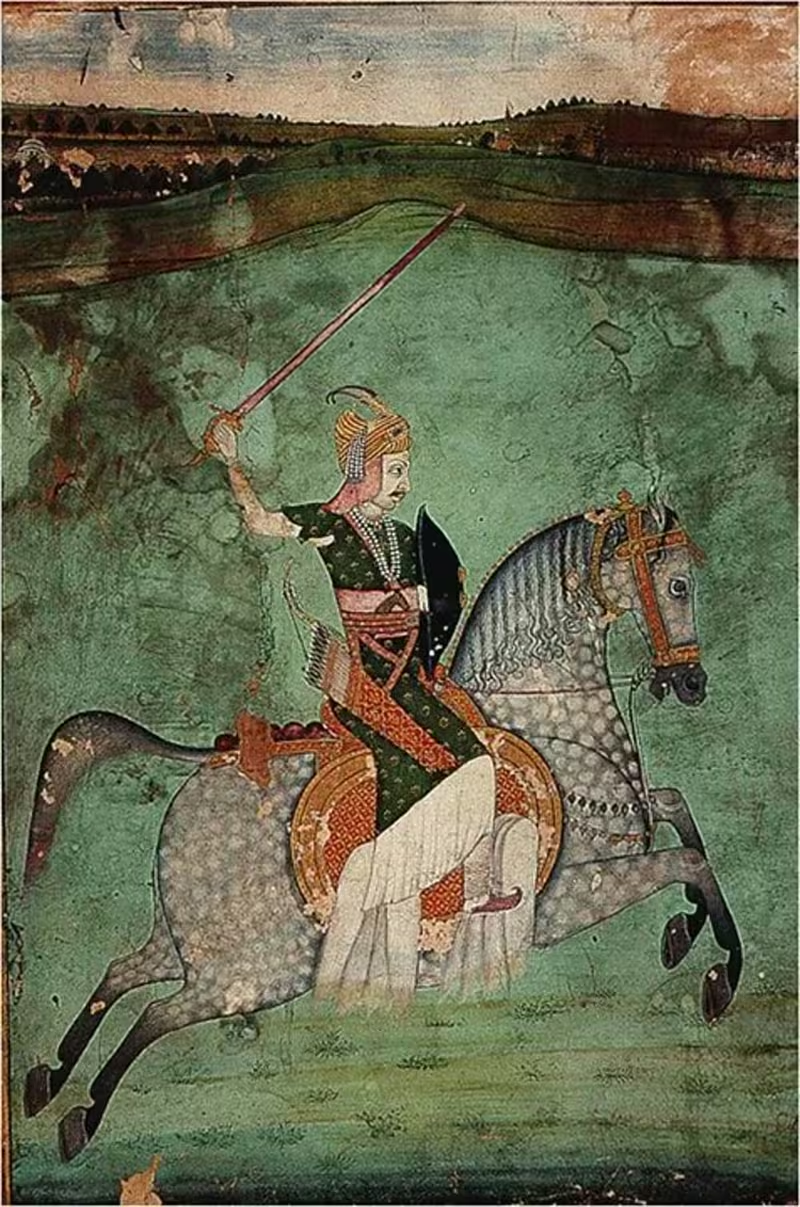
In the annals of Indian history, few love stories have sparked as much controversy as that of Bajirao I and Mastani. The greatest Peshwa of the Maratha Empire—a man who never lost a single battle—would find his most formidable opponent not on any battlefield, but within the walls of his own court and the traditions of his Brahmin heritage.
The Warrior Meets His Destiny
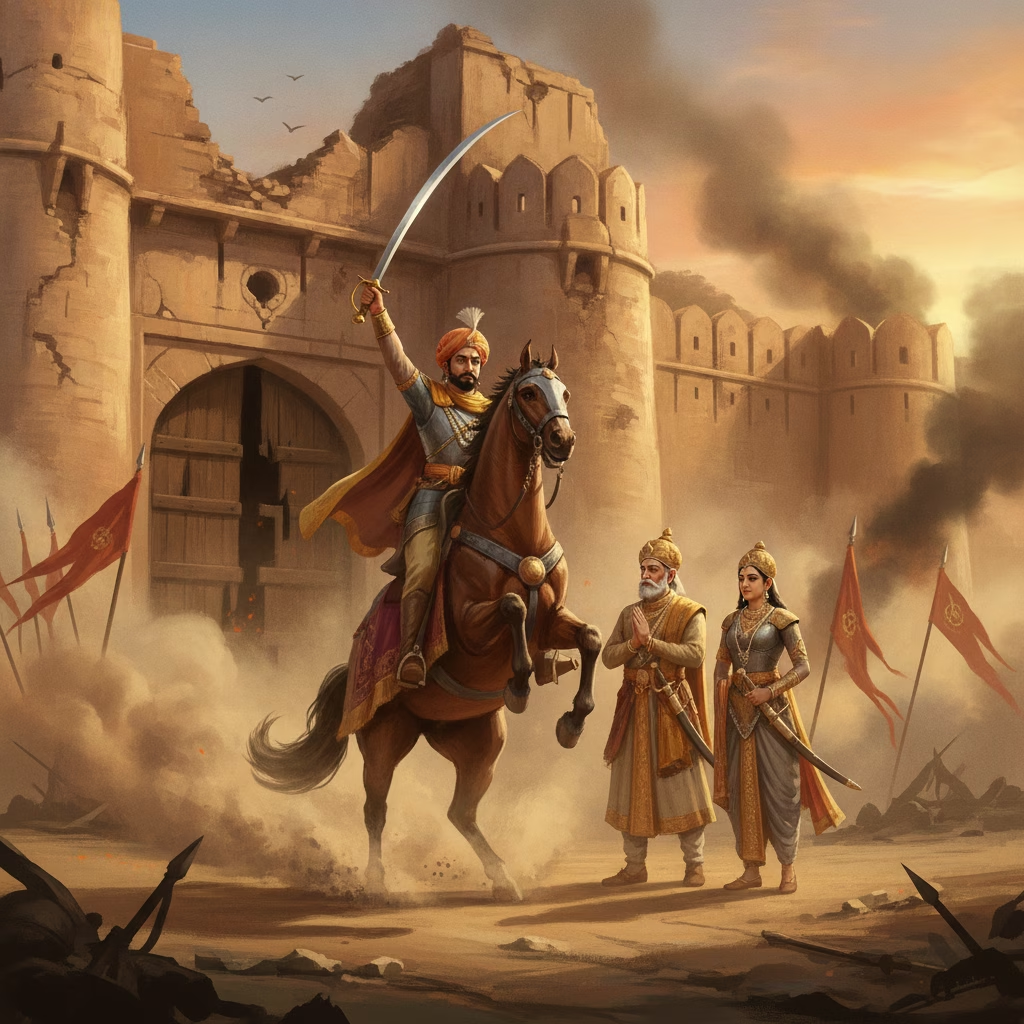
The year was sometime in the late 1720s when Bajirao I, already legendary for his military brilliance, received an urgent plea from Bundelkhand. The aging Bundela ruler Chhatrasal found himself besieged by Mughal forces, his kingdom on the brink of collapse. For the Peshwa, this was more than a military opportunity—it was a chance to further weaken Mughal authority in central India.
Bajirao's cavalry swept across the plains like a monsoon storm. According to Wikipedia, he "rescued the Bundela ruler Chhatrasal from a Mughal siege, gaining independence for Bundelkhand." The Mughal commanders, accustomed to slower, more conventional warfare, found themselves outmaneuvered by Bajirao's lightning tactics. Within weeks, the siege was broken.
Gratitude in royal courts often takes tangible form. Chhatrasal, overwhelmed with relief and admiration, made Bajirao an extraordinary offer: a substantial jagir (land grant) and something far more personal—his daughter's hand in marriage.
But this was no ordinary princess. Mastani was a warrior in her own right, trained in combat and statecraft. She was also the daughter of Chhatrasal's Muslim concubine, making her a bridge between two worlds—Rajput and Muslim, a fusion that would prove both her greatest asset and her most insurmountable obstacle.
For Bajirao, the arrangement made political sense. Accepting Chhatrasal's offer would cement an alliance in a strategically vital region. What he could not have anticipated was that duty would transform into something far more dangerous: genuine love.
Love Beyond Duty
Bajirao was already married. His first wife, Kashibai, came from an impeccable Brahmin lineage—the daughter of Mahadji Krishna Joshi from a wealthy banking family. By all accounts, theirs was a successful marriage. Wikipedia notes that "Bajirao always treated his wife Kashibai with love and respect. Their relationship was healthy and happy." They had already produced four sons, including Balaji Bajirao (Nanasaheb), who would eventually succeed his father as Peshwa.
In 18th-century India, powerful men often took multiple wives, and polygamy was not uncommon among royalty and nobility. But Mastani was different. She was not merely a political alliance to be maintained at arm's length. She was educated, accomplished in the arts of war and peace, and by all accounts, captivating.
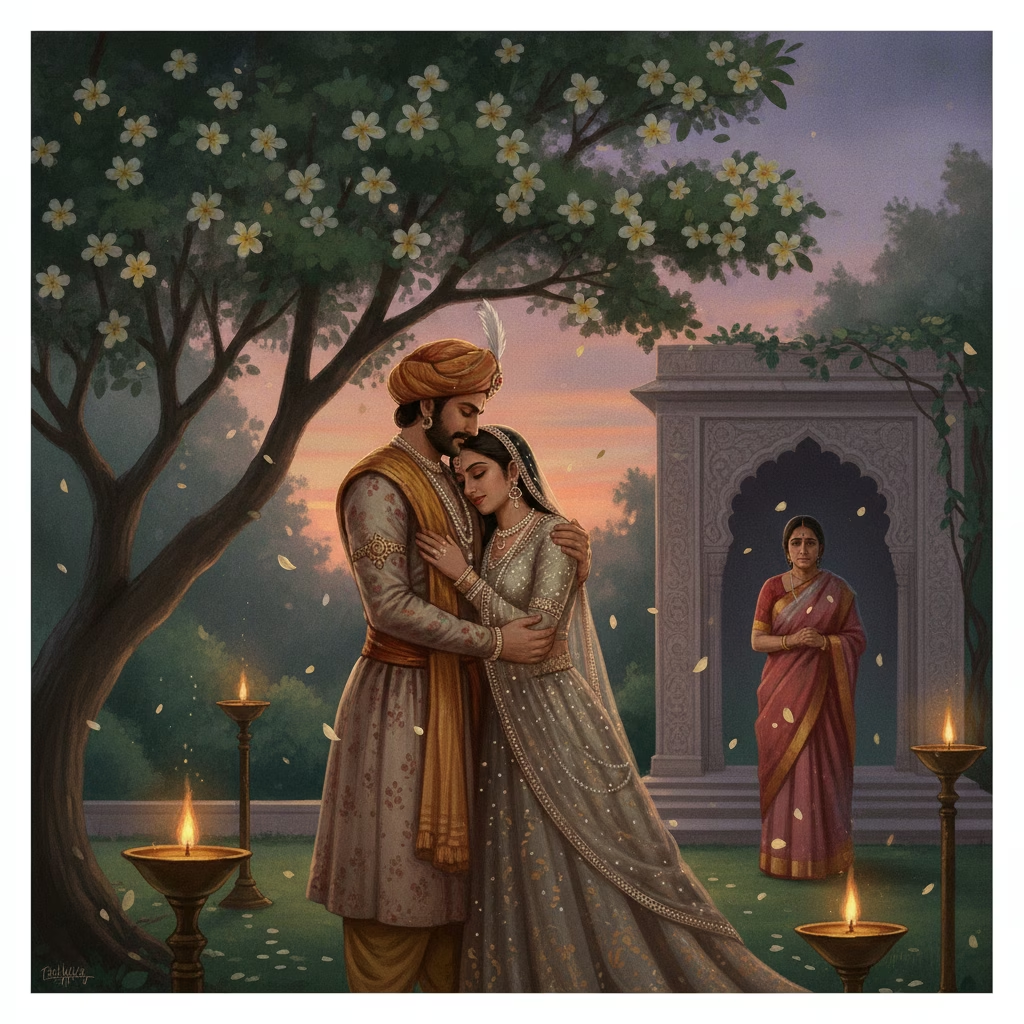
What began as a political arrangement arranged to please Chhatrasal evolved into something the Maratha court had not anticipated: a genuine romantic partnership. Bajirao, the calculating military genius who could outthink any opponent on the battlefield, found himself emotionally outmaneuvered.
He took Mastani as his second wife, not merely as a concubine or secondary spouse, but as a full partner. He built her a separate residence, honored her publicly, and made no secret of his affection. This was not the discreet arrangement that court politics typically demanded—this was open defiance of unspoken rules.
Kashibai, by all accounts, maintained her dignity throughout. She continued to fulfill her role as the Peshwa's first wife, raising her sons and managing the household. But the arrival of Mastani had introduced a complication that would soon metastasize into a full-blown crisis.
The Son Who Cannot Be Named
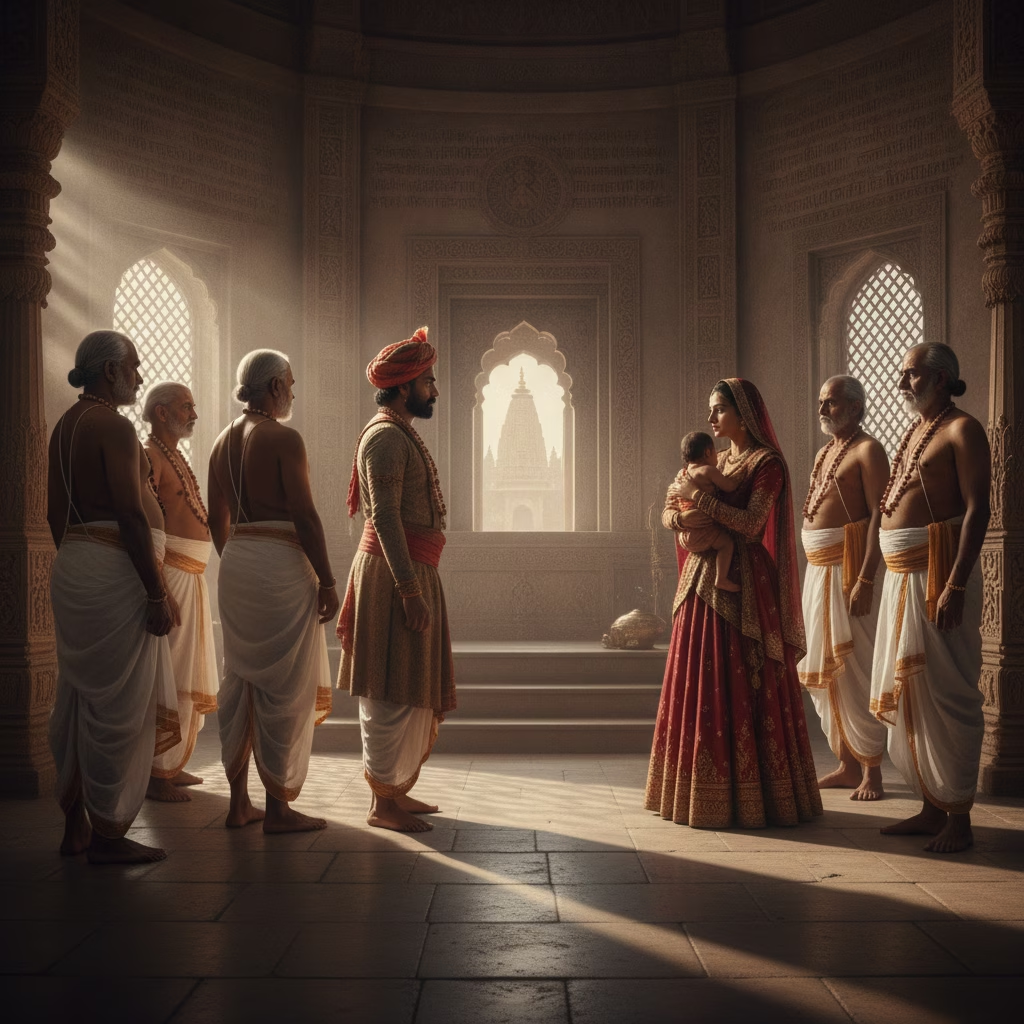
In 1734, Mastani gave birth to a son. Bajirao named him Krishna Rao, after the beloved deity. For any Brahmin family, the birth of a son should have been an occasion for celebration and sacred ritual. The upanayana ceremony—the sacred thread ceremony that marks a boy's formal initiation into Brahmin society—would traditionally follow in due course.
But Krishna Rao's birth certificate carried an indelible mark: his mother was Muslim.
The Hindu priests of Pune faced a theological and social dilemma. Bajirao I was born into the Bhat family, a respected Brahmin lineage. His education, as Wikipedia notes, "included reading, writing and learning Sanskrit" in keeping with Brahmin tradition. He was not merely a warrior but a Brahmin warrior, expected to uphold dharma and tradition.
The priests made their decision: they refused to conduct the upanayana ceremony for Krishna Rao.
The rejection was absolute and humiliating. Without the sacred thread, the boy could not be recognized as a Brahmin. He could not inherit his father's spiritual legacy, even if he might inherit his lands and titles. The child became known instead as Shamsher Bahadur—"Brave Sword"—a Muslim name for a boy caught between worlds.
For Bajirao, this must have been agonizing. He had defied convention for love, but his son would pay the price. The same Brahmin community that had elevated his father Balaji Vishwanath to the position of Peshwa, and that had accepted his own appointment at the age of twenty, now drew a line it would not cross.
The Court's Rebellion
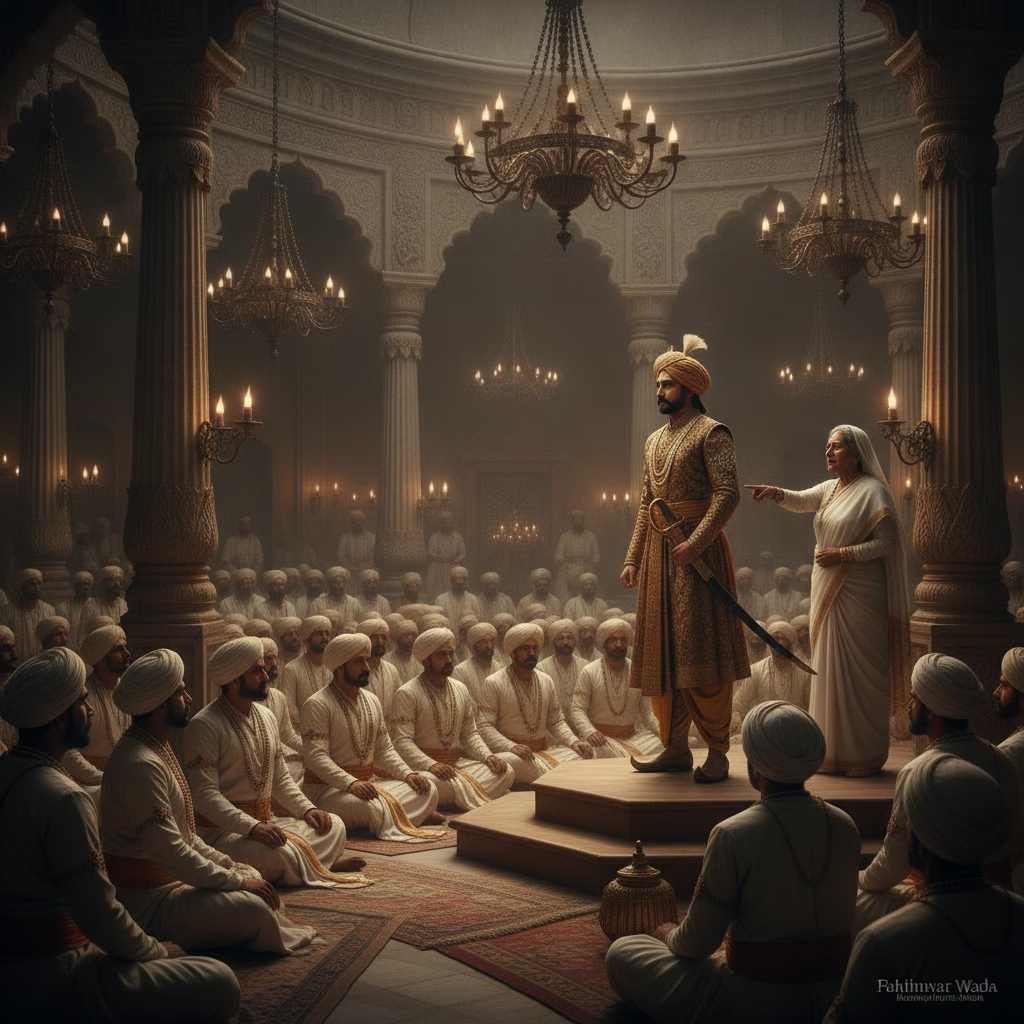
The priests' rejection was merely the opening salvo. Opposition to Bajirao's marriage with Mastani intensified throughout the Maratha court and within his own family. His mother, Radhabai Barve, a widow who had raised Bajirao in strict Brahmin tradition, was reportedly among the most vocal critics.
The controversy went beyond personal disapproval. Wikipedia notes that "Bajirao's relationship with his second wife Mastani is a controversial subject" and that "she was generally referenced cryptically in books, letters or documents from that era." This cryptic treatment suggests how deeply uncomfortable the Maratha establishment was with openly acknowledging her existence.
For the Brahmin courtiers and nobles, Mastani represented a dangerous precedent. If the Peshwa himself could marry outside the faith, what would prevent others from doing the same? The rigid social boundaries that maintained Brahmin authority and Hindu identity were under threat from within their own leadership.
Political opponents seized the opportunity. Bajirao's relationship with Mastani became a weapon to undermine his authority. Whispers in the court suggested that the Peshwa had been bewitched, that he was neglecting his duties, that he was violating sacred law.
The irony was bitter: Bajirao, who had spent his career expanding Maratha power and defending Hindu kingdoms against Mughal authority, now found himself accused of betraying Hindu tradition. The man who had defeated the Nizam at Palkheda, who had marched on Delhi itself in 1737, who had never lost a battle, was losing the war at home.

The Price of Defiance
The pressure on Bajirao intensified. According to various historical accounts, Mastani was at times confined or separated from Bajirao by his family and courtiers. The exact details remain murky—Wikipedia acknowledges that "very little is known with certainty" about their relationship—but the pattern is clear: the Maratha establishment worked systematically to isolate Mastani and pressure Bajirao to renounce her.
Bajirao refused to abandon her. Even as his mother pleaded, as Brahmin priests condemned, as political allies distanced themselves, he would not cast Mastani aside. This was perhaps his greatest act of courage—not charging into battle where glory awaited, but standing firm against his own people for a love they would never accept.
But defiance came at a cost. The political unity of the Maratha court, so essential for the empire's expansion, began to fray. Energy that should have been directed toward military campaigns and administrative reforms was instead consumed by internal conflict.
The Final Campaign
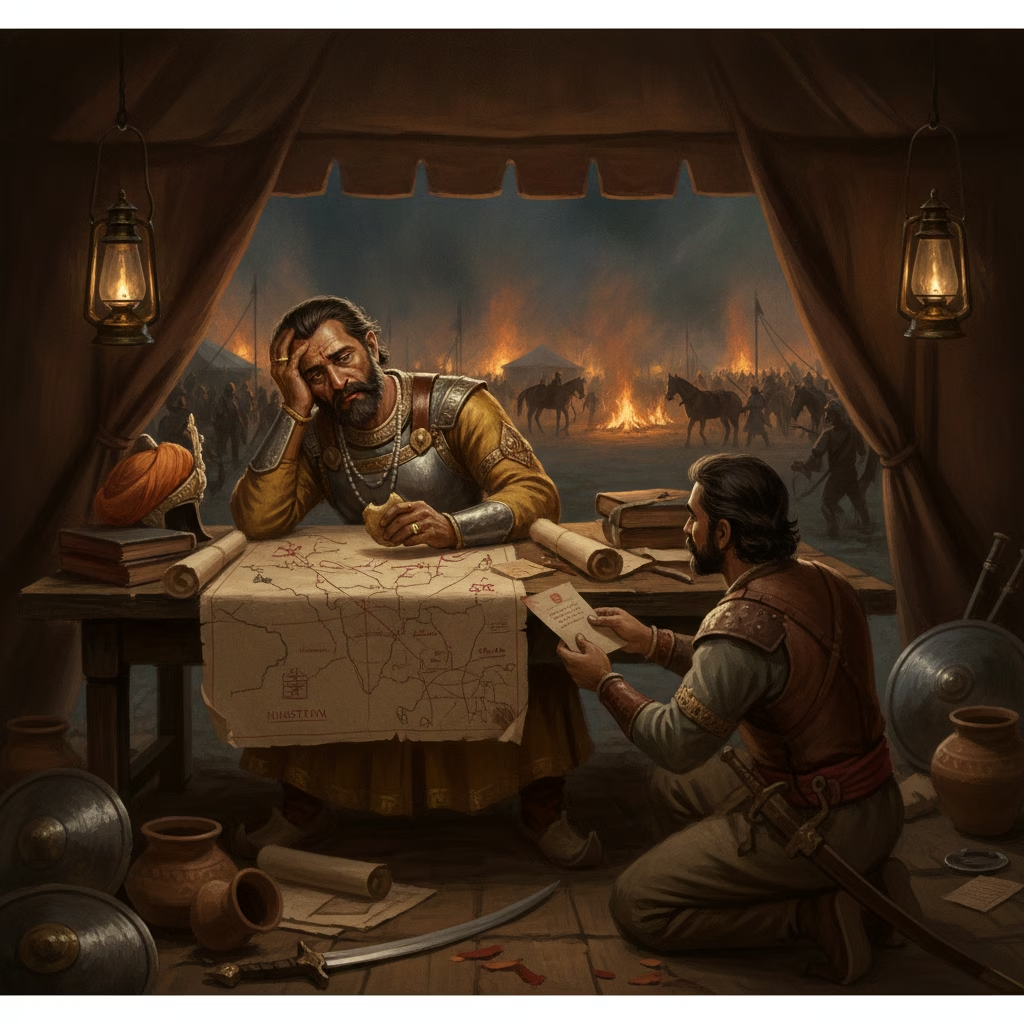
In April 1740, Bajirao set out on what would be his final military campaign. He was only thirty-nine years old but had been Peshwa for twenty years—twenty years of constant warfare, political maneuvering, and now, personal turmoil.
On April 28, 1740, Bajirao I died suddenly, possibly from heat stroke or a fever, while on campaign. He had lived fast and burned bright, compressing a lifetime of achievement into less than four decades.
Mastani's fate remains uncertain, shrouded in the same cryptic silence that surrounded her during Bajirao's life. Some accounts suggest she died shortly after Bajirao, possibly taking her own life. Others suggest she was imprisoned or exiled. History, written by those who disapproved of her, chose to erase her ending as thoroughly as it had tried to erase her existence.
An Unexpected Mother's Love
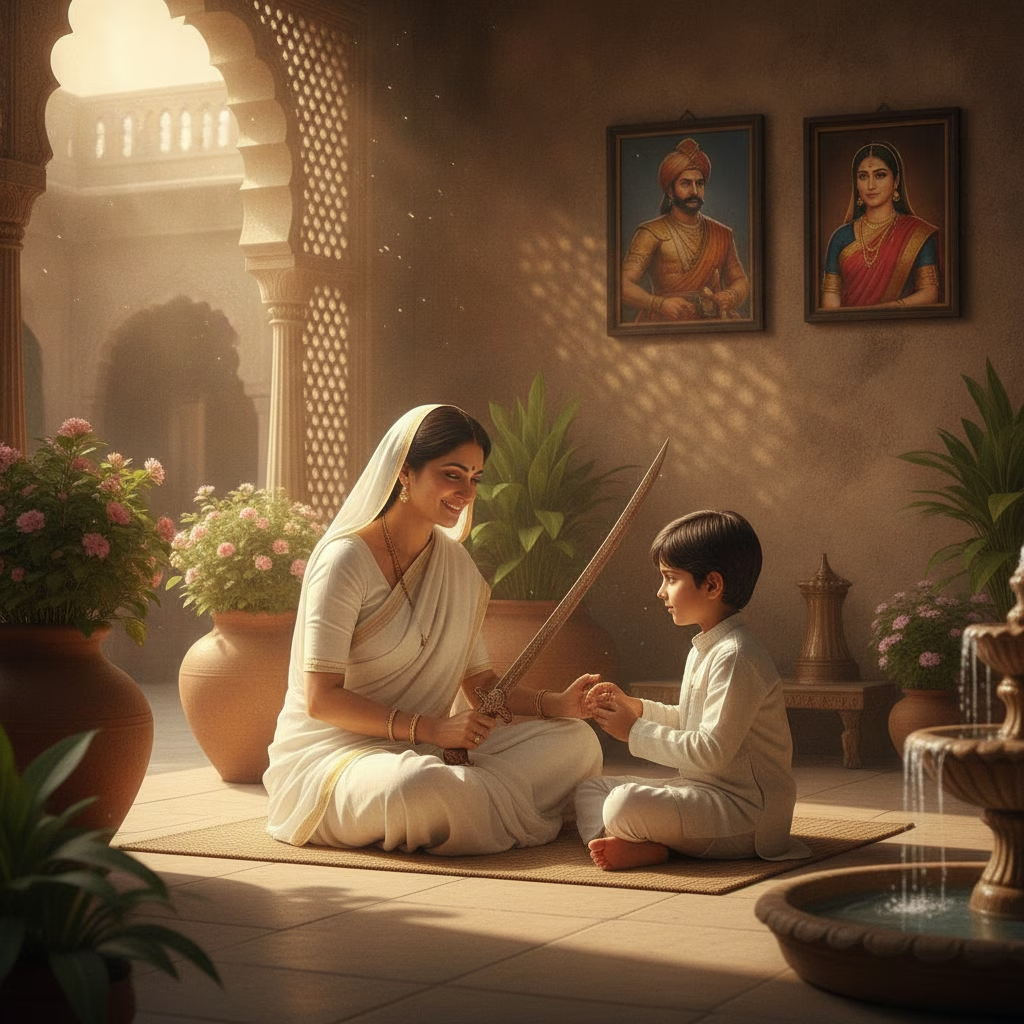
But six-year-old Shamsher Bahadur, the boy without a sacred thread, the son who could not be named Krishna Rao, did not face abandonment. In an act of grace that transcended the bitterness of the conflict, Kashibai—Bajirao's first wife, the woman who had every reason to resent Mastani's son—took the child into her care.
Wikipedia records that "after the deaths of Bajirao and Mastani in 1740, Kashibai raised six-year-old Shamsher Bahadur as her own." She ensured he received his inheritance: "Shamsher received a portion of his father's dominion of Banda and Kalpi."
Shamsher Bahadur grew into a warrior worthy of both his parents. In 1761, he fought alongside the Peshwa in the Third Battle of Panipat, one of the most catastrophic battles in Indian history. There, defending the Maratha cause against Afghan invaders, he was gravely wounded. He died several days later in Deeg, having proven his loyalty to the empire that had once rejected him.
Legacy of Love and Defiance
Bajirao I's military legacy is secure. He expanded the Maratha Empire across the Indian subcontinent, never losing a battle, transforming the Marathas from a regional power into the dominant force in 18th-century India. He moved the Peshwa's base from Saswad to Pune in 1728 and began construction of the magnificent Shaniwar Wada in 1730, laying the foundation for Pune's emergence as a major city.
But his personal legacy—his love for Mastani and his defiance of tradition—remains controversial even today. Was he a romantic hero who chose love over convention? Or was he a Brahmin leader who betrayed his dharma? The answer, perhaps, depends on which tradition you value more: the rigid boundaries of caste and religion, or the human capacity for love that transcends all boundaries.
What remains undeniable is that Bajirao paid dearly for his choice. He faced opposition from his mother, his priests, and his court. His son was denied his rightful place in Brahmin society. His beloved Mastani was erased from official histories, referenced only "cryptically" if at all.
Yet he never wavered. The man who could have had any alliance, any bride that political calculation demanded, chose instead the one woman his world told him he could not have. In doing so, Bajirao I—the undefeated warrior—showed that the greatest battles are sometimes fought not with swords, but with the heart.
His story, and Mastani's, reminds us that history is not merely the chronicle of empires and battles, but also of individuals who dared to love against all odds, and who paid the price for that defiance.