
The mountains of the Western Ghats have always kept secrets. But few secrets burn as brightly in Maratha memory as the letter that never was—the warning Shivaji Maharaj refused to read on the night before he would change the course of history.
When Thunder Rolled From Bijapur
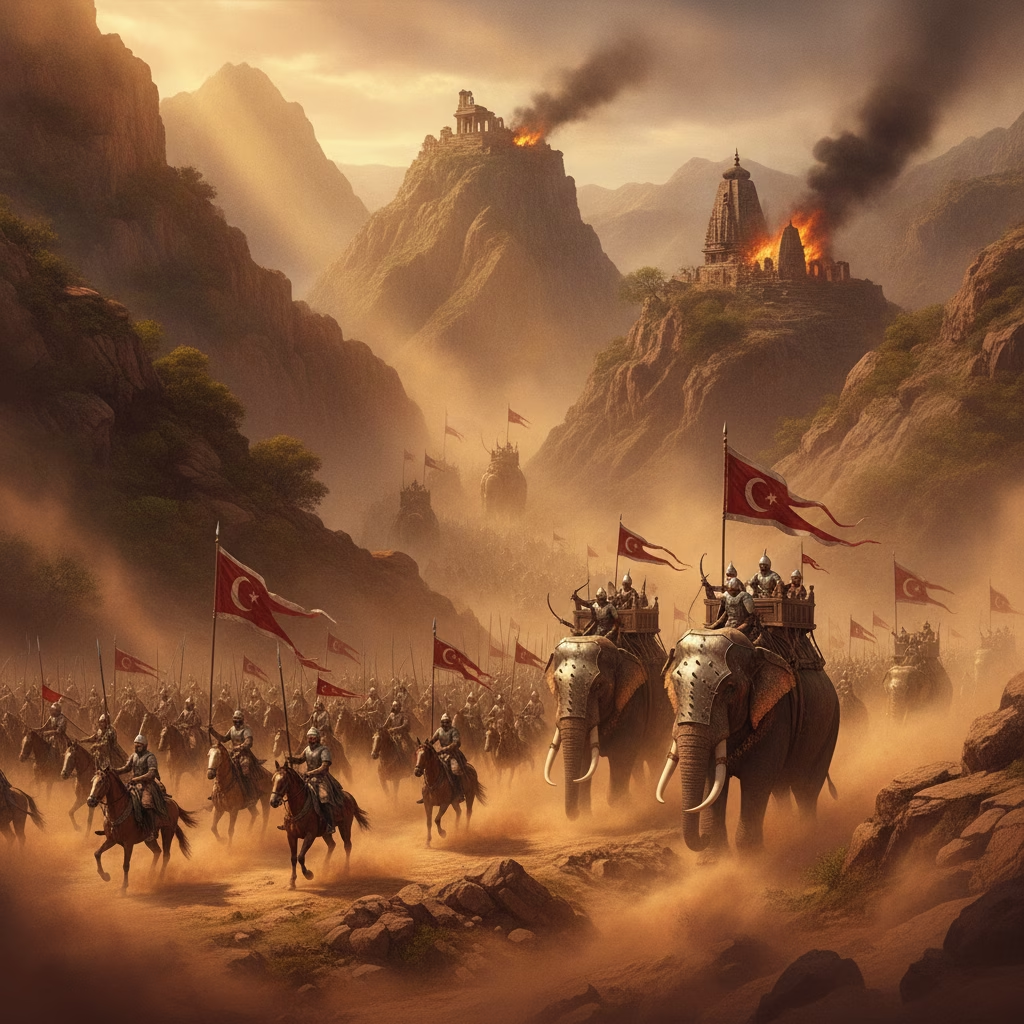
In May 1659, the court of Bijapur stirred with fury. Ali Adil Shah II, ruler of the Sultanate, had grown weary of the young Maratha chieftain who dared to capture forts and challenge his authority in the Konkan region. The solution, he decided, required a man of exceptional confidence and ruthlessness.
Afzal Khan stepped forward. A giant of a man, both in stature and reputation, he commanded respect through fear. When other generals hesitated, Afzal Khan volunteered. He would bring Shivaji to heel—or bring back his head.
The Tarikh-e-Ali, the official chronicle of Ali Adil Shah's reign, leaves little doubt about the mission's intent: eliminate Shivaji, viewed as a threat to Islam itself. With 10,000 horsemen, including nobles like Ambar Khan, Yakut Khan, and Musa Khan, Afzal Khan's army thundered out of Bijapur.
But Afzal Khan understood that war is as much psychological as physical. As his forces wound through the Deccan, he made deliberate stops. At Tuljapur, he desecrated the idol of Bhavani. At Pandharpur, he violated the sanctity of Vithoba's temple. These weren't random acts of vandalism—they were calculated insults, designed to humiliate Shivaji and force him into a rash response.
By the time Afzal Khan established his base at Wai, a town he had possessed since 1649, the message was clear: this was not merely a military campaign. This was personal.
The Chess Game Begins

Shivaji was no novice at this deadly game. While Afzal Khan's drums echoed through the valleys, Shivaji moved his pieces across the board with calculated precision.
On July 12, 1659, Shivaji arrived at Jawali with his infantry. But he didn't simply wait. His cavalry commander, Netaji Palkar, received orders to lay waste to enemy territory—fight fire with fire, terror with terror.
Meanwhile, Ali Adilshah's farmans (royal decrees) flew to every deshmukh (local ruler) in the Maval region: join Afzal Khan or face destruction. One such decree reached Kanhoji Jedhe, a local chieftain with lands, legacy, and everything to lose.
Kanhoji faced an impossible choice. Obey the Sultan and betray the Maratha cause, or stand with Shivaji and lose everything his family had built. He rode to Rajgad with his sons, seeking counsel. Shivaji's response is lost to history, but Kanhoji's decision speaks volumes—he renounced his watan, his ancestral land and property, choosing loyalty over legacy.
Afzal Khan's commanders, meanwhile, launched coordinated strikes into Shivaji's territories. Yadav attacked Supe. Pandhare invaded Shirwal. Kharade advanced into Saswad. Siddi Hilal targeted Pune. Saif Khan penetrated the Konkan. According to the Shivabharat, these assaults reduced Shivaji's provinces to a "distressed state."
But Shivaji had something Afzal Khan didn't: the mountains. And in those mountains, at Pratapgad fort, he prepared for a confrontation that would require not just courage, but cunning of the highest order.
The Dance of Envoys
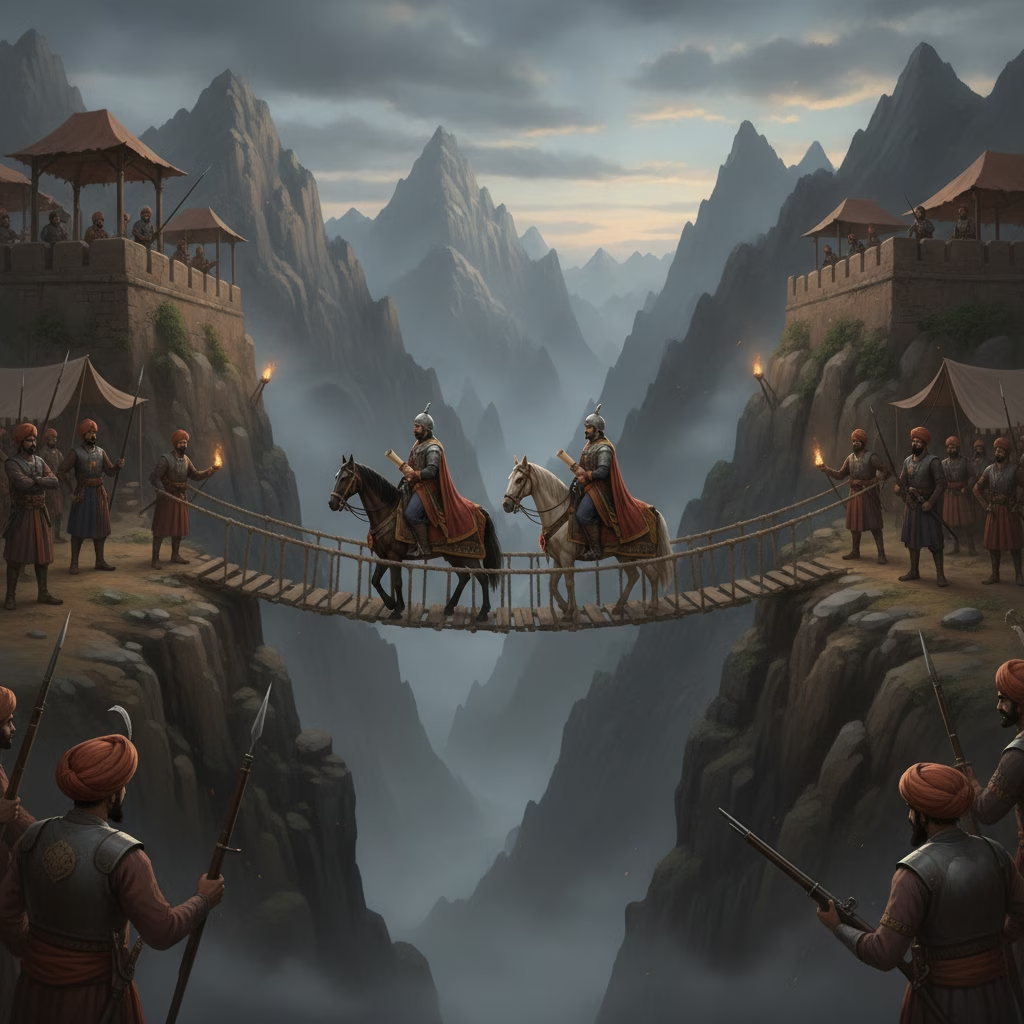
By October 1659, both sides recognized that this stalemate could not continue indefinitely. Afzal Khan, for all his bluster, found the mountain terrain inhospitable to his cavalry. Shivaji, despite his defensive advantages, could not allow his territories to bleed indefinitely.
Envoys began their dangerous dance between the camps. Afzal Khan sent Krishna Rao to Pratapgad. Shivaji dispatched his own envoy, Pant Gopinath, a man whose silver tongue would prove crucial.
The historical sources offer conflicting interpretations of what transpired in these negotiations. Some suggest Shivaji sought pardon, playing the supplicant to draw Afzal Khan into a trap. Others argue he was genuinely forced to negotiate, his position more precarious than legend admits. The Tarikh-e-Ali and later chronicles like the Sabhasad paint different pictures, filtered through the lenses of victor and vanquished.
What we know is this: Afzal Khan agreed to a personal meeting at Jawali, below Pratapgad fort. It was an extraordinary concession—a general of the Sultan meeting face-to-face with a rebel chieftain. Afzal Khan's confidence, perhaps his fatal flaw, convinced him he could handle whatever Shivaji might attempt.
He left part of his army and provisions at Wai and advanced toward the meeting point. The pieces were moving toward their final positions.
The Letter in the Flame
November 9, 1659. The night before everything would change.
Inside Pratapgad fort, Shivaji stood in a chamber lit by a single oil lamp. Outside, his commanders made final preparations. Infantry units received orders to conceal themselves near Afzal Khan's camp. Netaji Palkar positioned cavalry for a decisive strike. Every detail had been considered, every contingency planned.
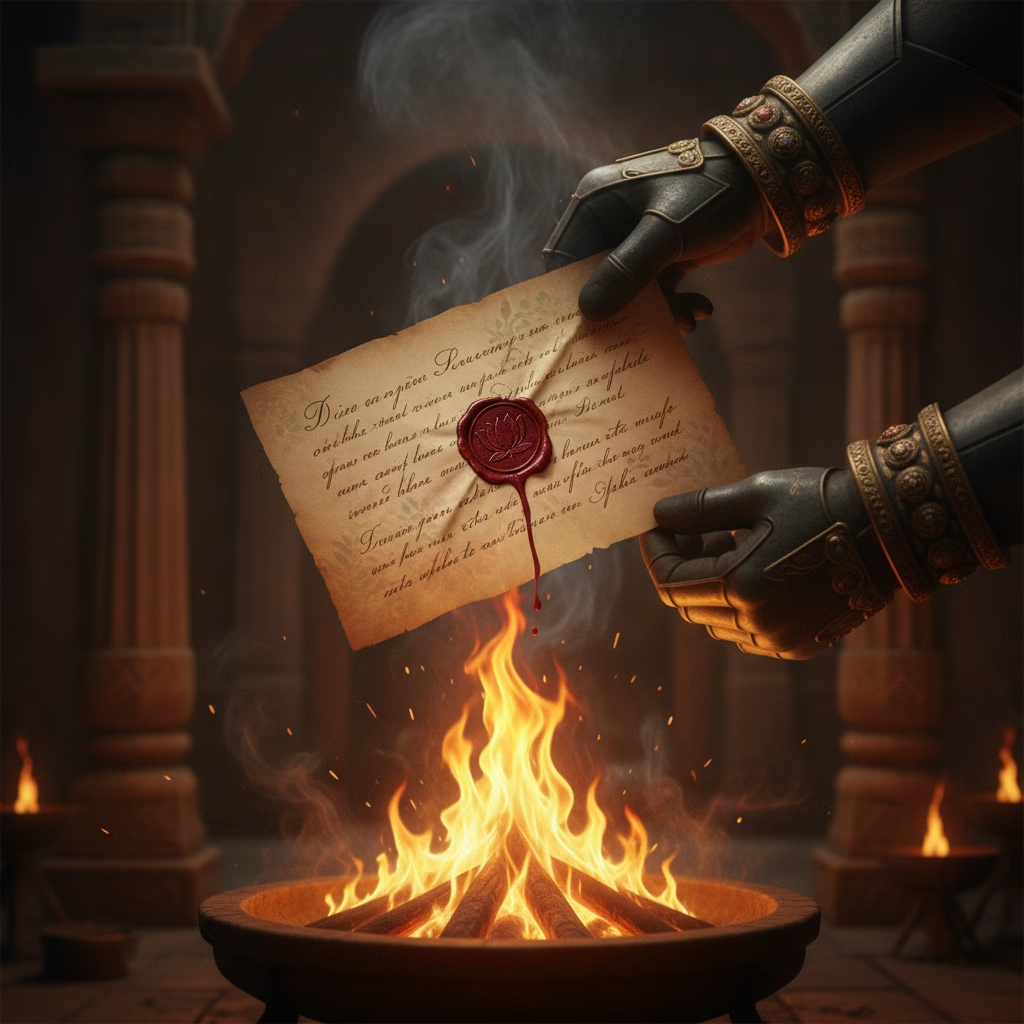
Then a messenger arrived with a letter. The seal bore the mark of his household at Rajgad. The handwriting—Saibai, his wife.
We don't know what Saibai wrote. We never will. But legend tells us she urged caution, perhaps pleaded with him to reconsider this dangerous meeting, to find another way. A wife's warning to a husband walking into the tiger's den.
Shivaji held the sealed letter over the lamp's flame. Those present watched as the wax seal melted, as the paper caught fire, as the words—whatever they were—turned to ash without ever being read.
Was it resolve? A demonstration to his men that he would not waver? Or was it something deeper—a recognition that reading her words might plant seeds of doubt he could not afford? Perhaps it was a kind of love, sparing himself the weight of her fear on the eve of battle.
The letter burned. The decision was made. There would be no turning back.
The Meeting at Pratapgad
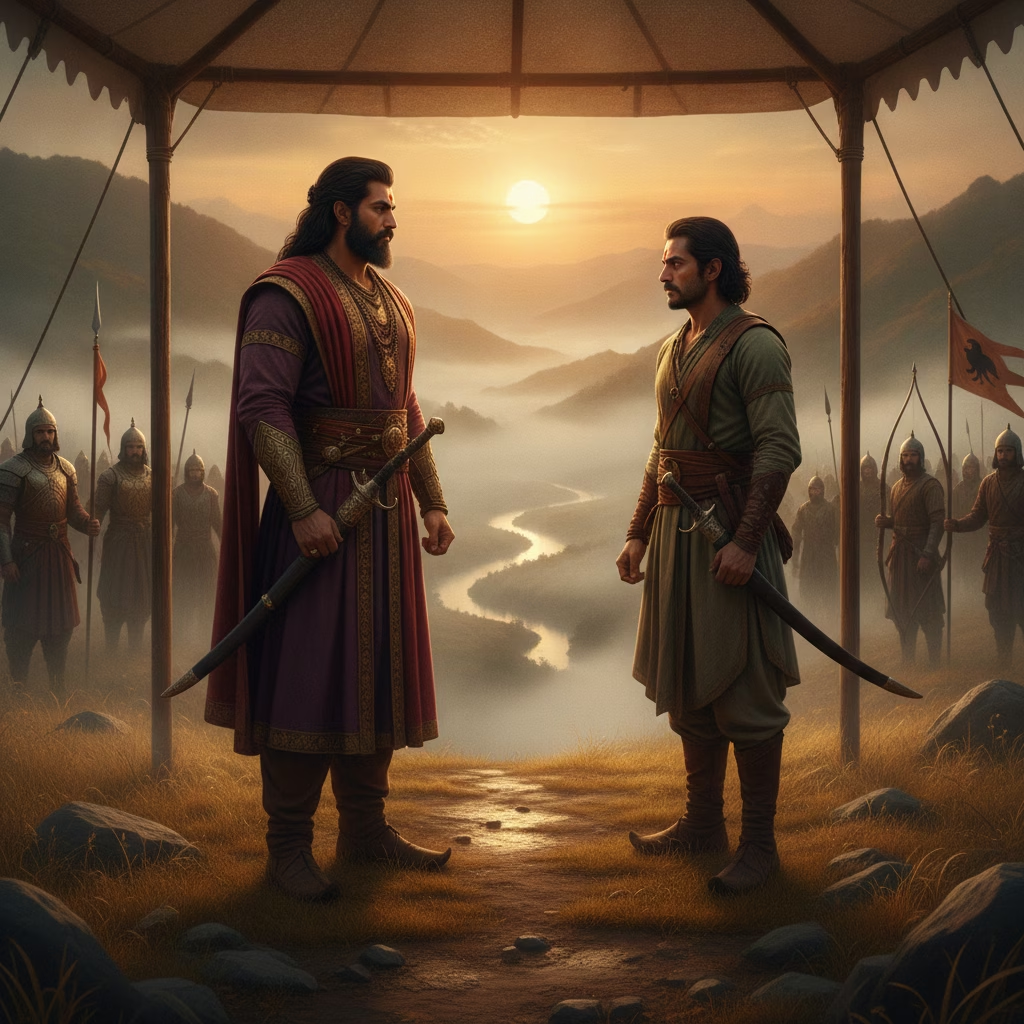
November 10, 1659, dawned with mist clinging to the mountains.
The meeting was arranged with elaborate protocols. Both men would come with minimal retinue. Both would be unarmed—or so the agreement stated. A small tent pavilion was erected on neutral ground below the fort.
Afzal Khan arrived first, his massive frame dominating the space. Contemporary accounts describe him as a giant, towering over most men. He wore the confidence of someone who had crushed rebellions before, who saw this meeting as a formality before Shivaji's inevitable submission.
Shivaji arrived dressed humbly, playing the part of the nervous chieftain seeking accommodation with his Sultan's representative. He was smaller in stature, younger, less imposing. Exactly as Afzal Khan expected.
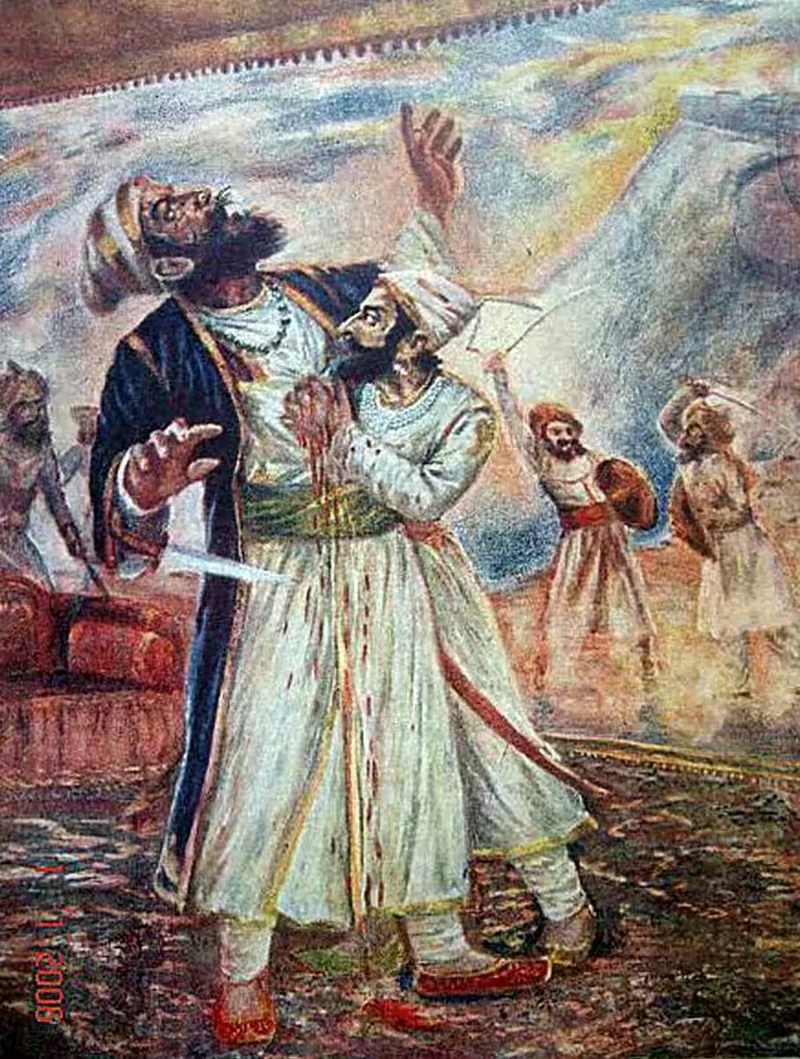
What happened next has been debated by historians for centuries, but the outcome is undisputed. According to most Maratha sources, when Afzal Khan embraced Shivaji—whether in greeting or as a prelude to violence—he discovered that the young Maratha was not as unprepared as he seemed.
Shivaji wore wagh nakh (tiger claws) concealed on his hands and a hidden dagger. Whether Afzal Khan attacked first or Shivaji struck preemptively remains contested. The Tarikh-e-Ali naturally portrays it as treachery. Maratha chronicles present it as self-defense against planned assassination.
Thunder in the Valley
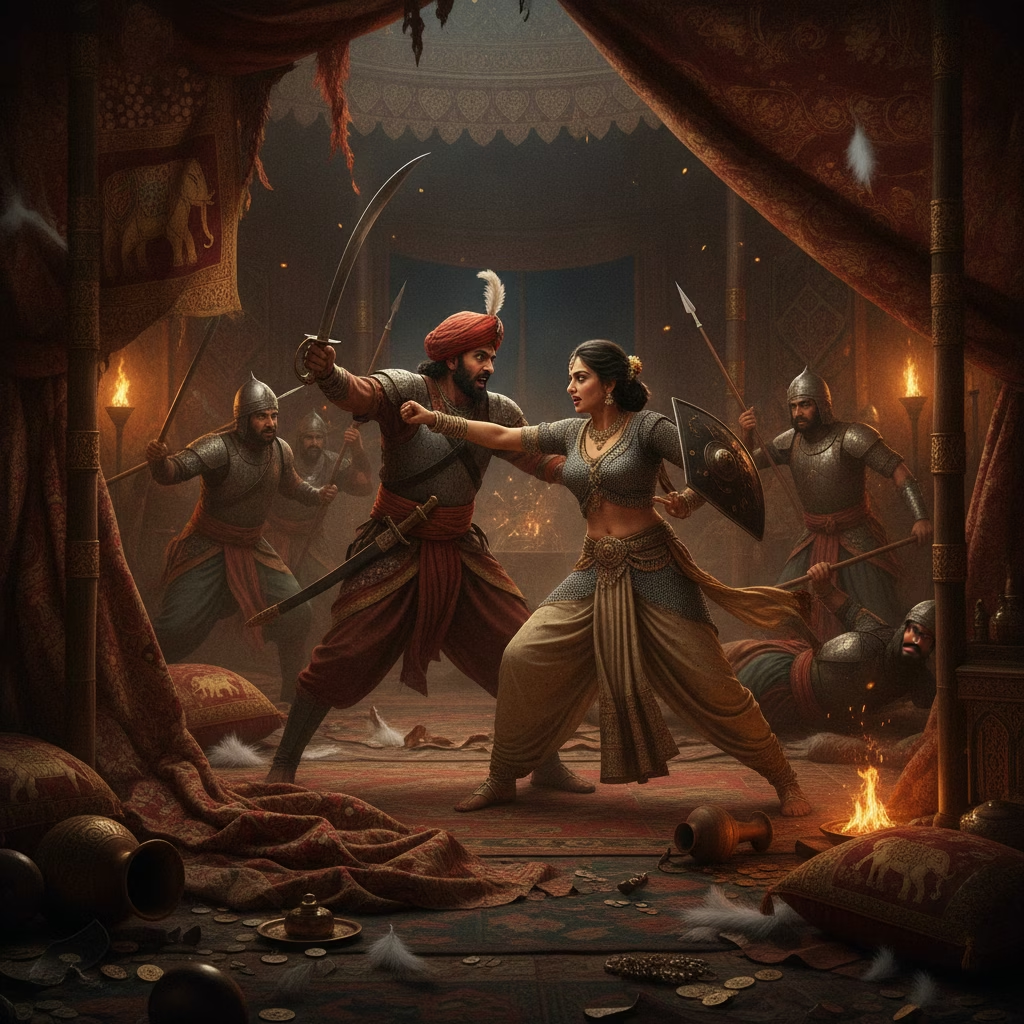
What is certain is that Afzal Khan fell, mortally wounded, and chaos erupted.
Sayyed Banda, Afzal Khan's bodyguard, attacked Shivaji but was cut down by Jiva Mahala, Shivaji's protector. The signal was given. Hidden Maratha infantry emerged from their concealed positions. Netaji Palkar's cavalry thundered down from the heights.
The Bijapur forces, leaderless and caught off-guard, broke. What began as a diplomatic meeting became a rout. According to the Wikipedia article on the Battle of Pratapgad, the Marathas emerged victorious in what became "their first significant military triumph against a major regional power."
The Spoils of Victory
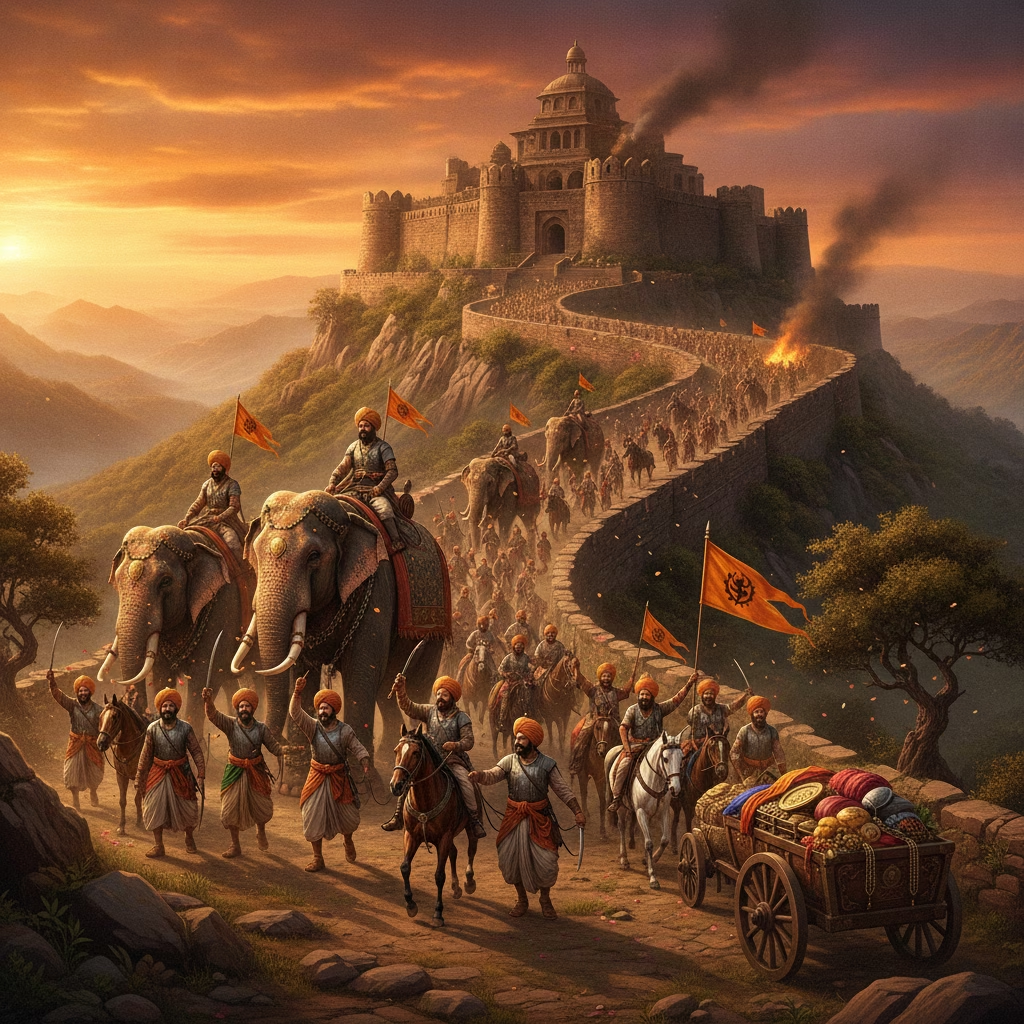
The aftermath of Pratapgad transformed Shivaji from a troublesome chieftain into a power that could not be ignored. The captured bounty told the story: 65 elephants, 4,000 horses, 1,200 camels, and 1,000,000 rupees in cash and jewelry.
But the true prize was intangible—legitimacy. Shivaji had defeated not just any general, but one of the Sultanate's finest, sent specifically to eliminate him. The message resonated across the Deccan: the Marathas were a force to be reckoned with.
And somewhere in the ashes of that burned letter lay an unanswered question. What did Saibai write? What words of caution, what pleas, what wisdom did she offer her husband on that November night?
We'll never know. Perhaps that's fitting. History remembers the bold strokes—the battles won, the empires built, the decisive moments when everything hung in balance. But behind every great decision lies a smaller, more human moment: a letter unread, a warning unheeded, a choice made in firelight.
Shivaji chose to burn that letter, to walk into uncertainty without the weight of doubt. Whether that was wisdom or fatalism, courage or calculation, the mountains of Pratapgad keep that secret still.
What we do know is that the next morning, when mist cleared from the valleys and blood soaked into the earth below the fort, the course of Maratha history had changed forever. And it all began the night before, with a letter turning to ash in the darkness, its words forever unspoken, its warnings forever unheeded.
Sometimes the most important messages are the ones we refuse to read.