
The Seal Three Scholars Cannot Agree On
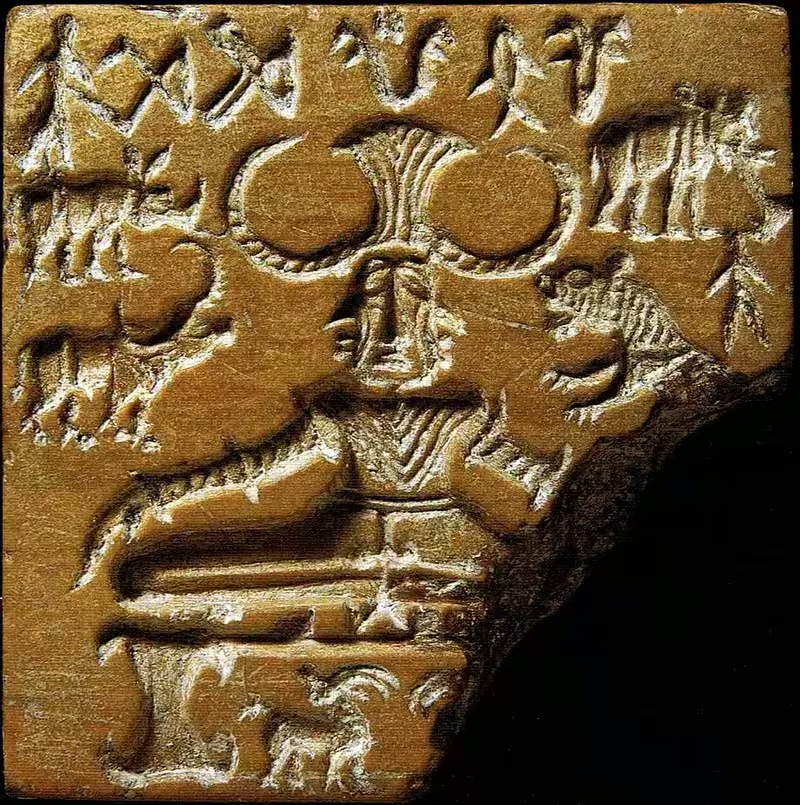
The artifact is smaller than a business card. Carved from steatite 4,000 years ago, it measures just 3.56 centimeters square and 7.6 millimeters thick. Yet this tiny seal from Mohenjo-daro has generated one of archaeology's longest-running interpretive battles—a century-long argument about what, exactly, we're looking at.
The seated figure wears buffalo horns and sits in what appears to be a yogic posture. Animals surround the figure: an elephant, a tiger, a rhinoceros, a water buffalo. Two deer or ibexes crouch beneath the platform, their curved horns nearly touching. Seven Indus script symbols run across the top, their meaning still undeciphered.
Three scholars in three countries have each looked at this seal and seen a completely different deity. Their disagreement reveals something profound about how we interpret the past—and whose past we think we're interpreting.
The Discovery in the Dust
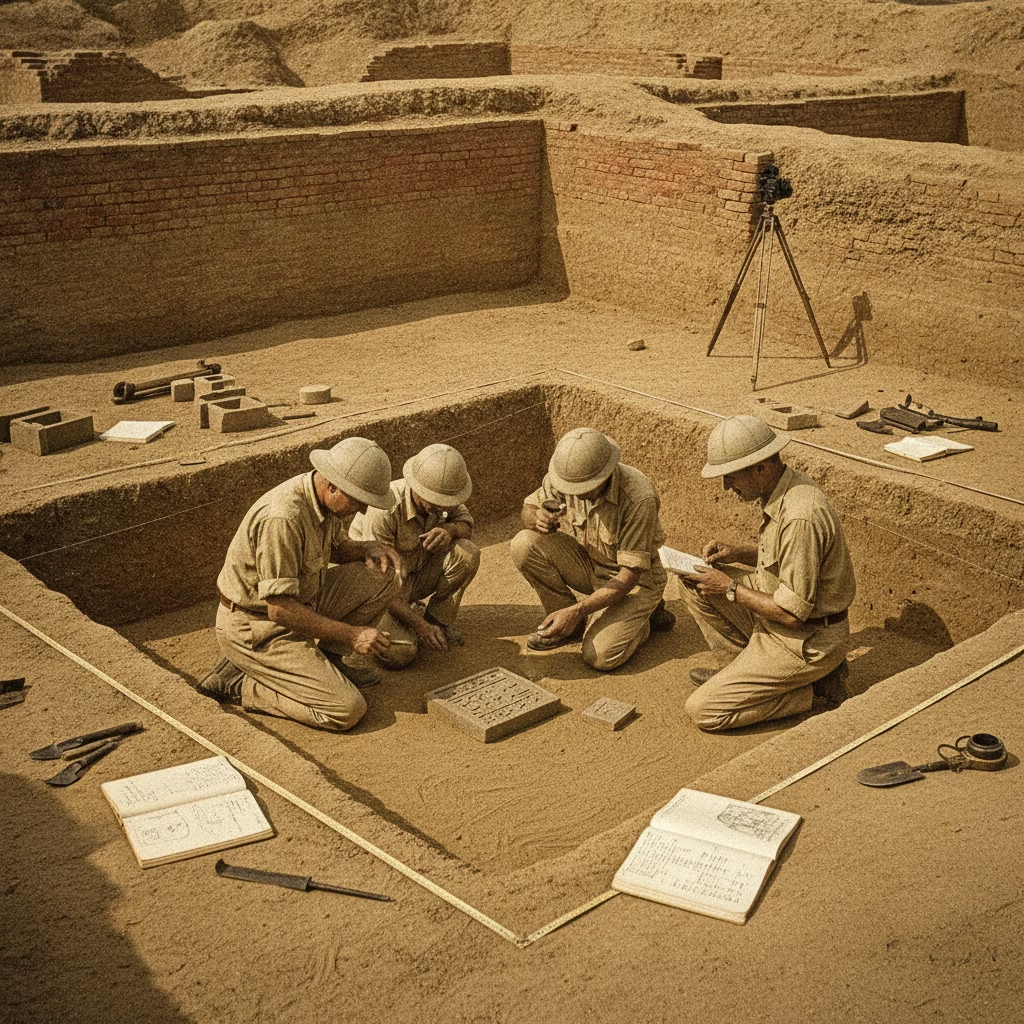
The excavation season of 1928–1929 at Mohenjo-daro proceeded with methodical precision. The Archaeological Survey of India, operating under British colonial administration, had been systematically uncovering one of the Indus Valley Civilization's major urban centers. In Block 1, Southern Portion of the DK-G Area, excavators worked their way down through layers of ancient occupation.
At 3.9 meters below the surface, they found it.
Ernest Mackay, directing the excavations, would later assign it number 420 in his 1937–1938 report. He dated the seal to the Intermediate I Period, placing it around 2350–2000 BCE. The seal was one of thousands recovered from Indus Valley sites—but this one was different. Most seals depicted animals as their main element. This one centered on a human figure, elaborately detailed and surrounded by a menagerie of wild beasts.
The carving was extraordinarily intricate for such a small surface. The figure's legs were bent at the knees, heels touching, toes pointing downward. The arms extended outward, resting lightly on the knees with thumbs facing away from the body. Eight small bangles and three large ones covered the arms. The chest appeared adorned with necklaces, and a double band wrapped the waist. Most striking was the headdress: a tall, elaborate construction with a central fan-shaped structure flanked by two large, striated horns.
No one at the excavation site yet realized they had unearthed an artifact that would still be generating heated academic debate a century later.

Marshall Sees Shiva
John Marshall, Director-General of the Archaeological Survey of India, examined the seal with the eye of a man who had spent decades studying Indian archaeology. What he saw seemed clear: this was proto-Shiva, an early form of the Hindu god, specifically in his aspect as Pashupati—Lord of Animals.
Marshall built his interpretation on four pillars. First, the figure appeared to have three faces, possibly with a fourth facing backward—matching descriptions of Shiva in later Hindu texts. Second, the yogic posture suggested meditative practices associated with Shiva as Mahayogi, the Great Yogi. Third, Marshall identified the figure as ithyphallic, displaying an erect phallus that connected to Shiva's association with fertility and the lingam. Fourth, the surrounding animals—elephant, tiger, water buffalo, rhinoceros, and the two deer beneath—clearly identified the figure as "Lord of Animals."
The interpretation was elegant, connecting the mysterious Indus Valley Civilization to the later Hindu tradition. It suggested cultural continuity stretching back 4,000 years, positioning Hinduism as one of the world's oldest living religions with roots in the Indus Valley.
Marshall's reading became the dominant interpretation, repeated in textbooks and museum labels. The seal acquired its popular name: the Pashupati seal. For decades, it was cited as evidence of proto-Hindu religious practices in the Indus Valley, a tangible link between the mysterious script-using urbanites of Mohenjo-daro and the Vedic traditions that followed.
But Marshall's certainty would not go unchallenged.
The Seal Travels to India
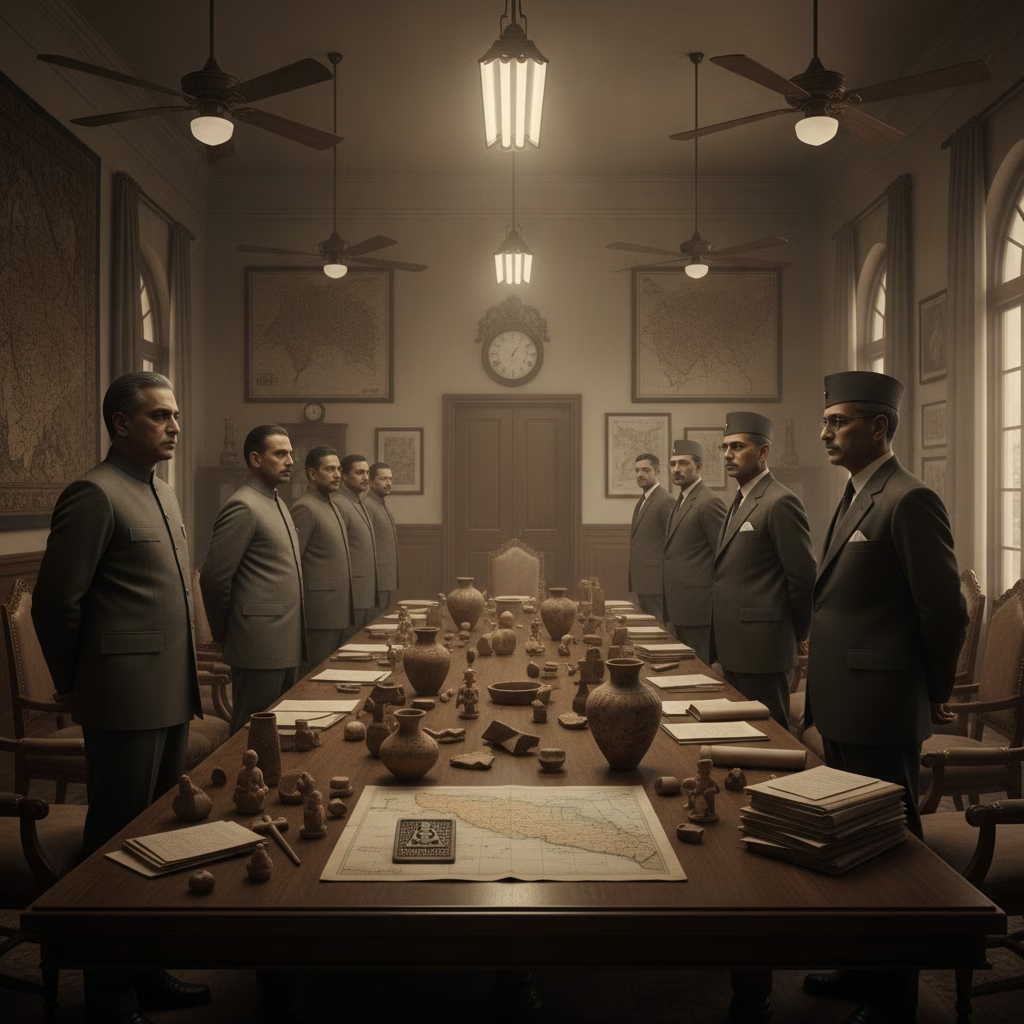
When the British Empire withdrew from the subcontinent in 1947, it left behind a painful question: how do you divide 4,000 years of shared heritage?
The finds from Mohenjo-daro—approximately 12,000 objects—sat in storage, awaiting Solomon's judgment. The site itself lay in what would become Pakistan. But the artifacts had been excavated by the Archaeological Survey of India and moved to Delhi years before independence. Now two new nations each claimed ownership of the ancient past.
The division was accomplished with bureaucratic precision and occasional absurdity. Some necklaces had their beads literally separated into two piles, half for each country. Pakistan received the famous "Priest-King" sculpture. India retained the "Dancing Girl."
And the Pashupati seal? It was allocated to the Dominion of India.
The decision was not merely administrative. The seal's interpretation as proto-Shiva made it symbolically valuable to India, connecting the new nation to an ancient Hindu heritage. Pakistan, meanwhile, would develop its own narratives about the Indus Valley Civilization, sometimes emphasizing pre-Hindu or non-Hindu interpretations of the archaeological evidence.
The seal found its permanent home in the National Museum of India, founded in 1949. But its journey through Partition had added a new layer to its meaning: it was now not just an ancient artifact but a piece of contested heritage, its interpretation freighted with nationalist implications.

The Gender Question
In the late 20th century, scholars began asking an uncomfortable question: had Marshall been so certain he was looking at a male deity that he had seen male anatomy that wasn't there?
The "ithyphallic" interpretation came under sustained scrutiny. When examined closely, what Marshall had identified as an erect phallus might simply be the figure's heel, positioned between the legs in the yogic posture. The "exposed" male anatomy might be an artifact of Marshall's expectations rather than the carver's intentions.
A related seal from Mohenjo-daro (find number DK 12050, now in Islamabad) complicated matters further. It also showed a three-faced horned deity seated in yogic position, wearing bangles. But despite what appeared to be a beard, some scholars disputed the figure's gender. If gender was ambiguous on that seal, why assume certainty about the Pashupati seal?
Some scholars began proposing alternative interpretations. Perhaps the figure was female—a goddess rather than a god. The elaborate jewelry, the seated posture, the association with animals might point to a mother goddess or fertility deity. The bangles, worn by women in many South Asian traditions, supported this reading.
Others suggested the figure might be deliberately androgynous or gender-fluid, representing cosmic unity or shamanic transformation. The horns might indicate not divine status but ritual costume, the attire of a religious specialist rather than a deity.
Jonathan Mark Kenoyer, a leading Indus Valley Civilization specialist, maintained the ithyphallic interpretation as late as 2003. But many of his colleagues had moved on, questioning whether we could determine the figure's gender at all with certainty.
Three Scholars, Three Deities
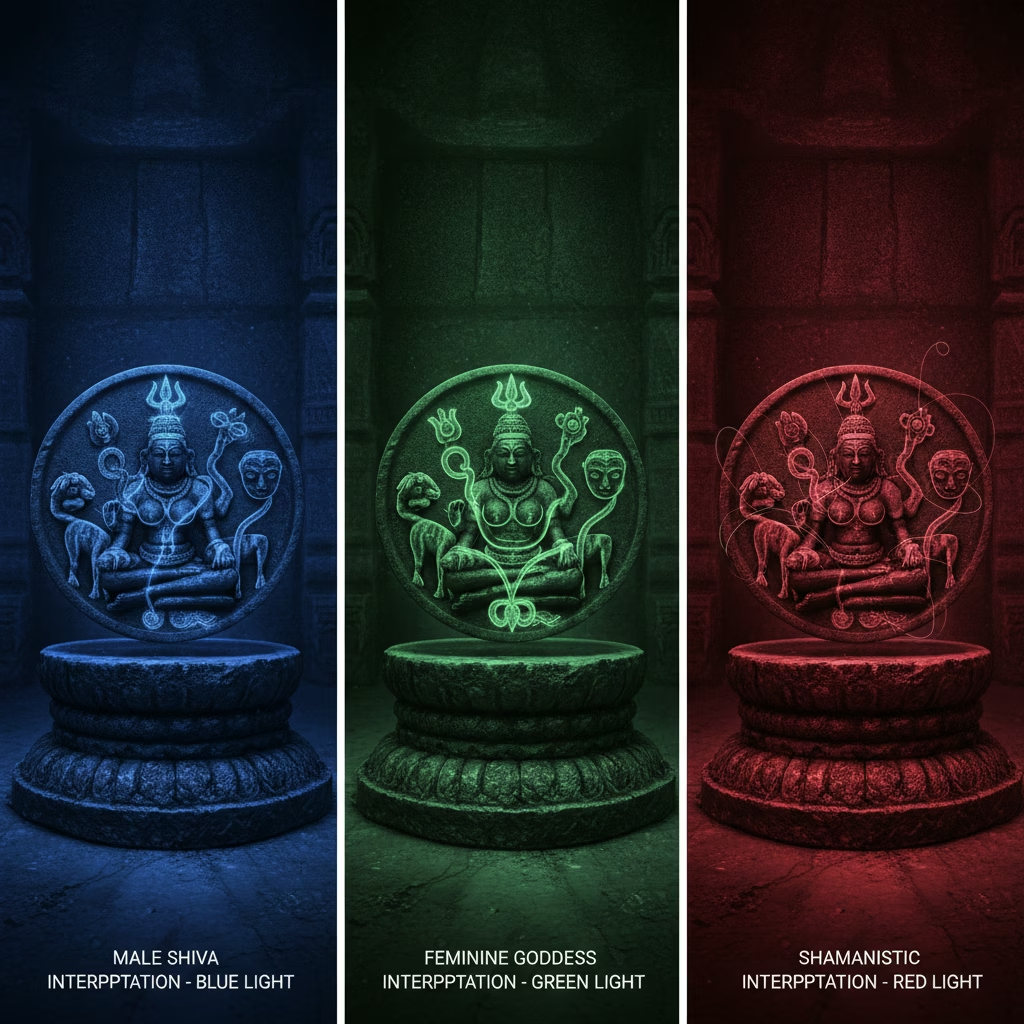
By the 21st century, the interpretive landscape had fractured completely. Three major readings competed, each backed by serious scholars, each reflecting different assumptions about cultural continuity and religious history.
The Hindu Continuity Reading: Primarily advanced by Indian scholars and those sympathetic to cultural continuity theories, this interpretation maintains Marshall's basic framework. The figure is proto-Shiva, evidence of Hindu religious practices in the Indus Valley. The yogic posture, the animals, the horns all point to Shaivite traditions. This reading emphasizes unbroken cultural transmission from the Indus Valley to modern Hinduism.
The Goddess Reading: Proposed by feminist archaeologists and scholars skeptical of male-centered interpretations, this sees a female deity, possibly a mother goddess or fertility figure. The jewelry, the seated posture, the life-giving associations with animals suggest feminine divine power. This reading challenges both Marshall's gender assumptions and the projection of later patriarchal Hindu structures onto Indus Valley religion.
The Agnostic Reading: Advanced by archaeologists who emphasize the dangers of over-interpretation, this approach argues we simply don't know what the seal represents. Without deciphered text, without contemporary written descriptions, without clear cultural continuity, we're projecting later religious concepts onto an artifact from a civilization that left no readable records. The figure might be a deity, a king, a priest, or a mythological character. The animals might be symbolic, decorative, or narrative. We're seeing what we want to see.
Each interpretation carries methodological and political implications. The Hindu continuity reading supports nationalist narratives about ancient Indian civilization. The goddess reading challenges patriarchal assumptions in archaeology. The agnostic reading questions whether we can know the ancient past at all without imposing our own categories.
The Seal Today
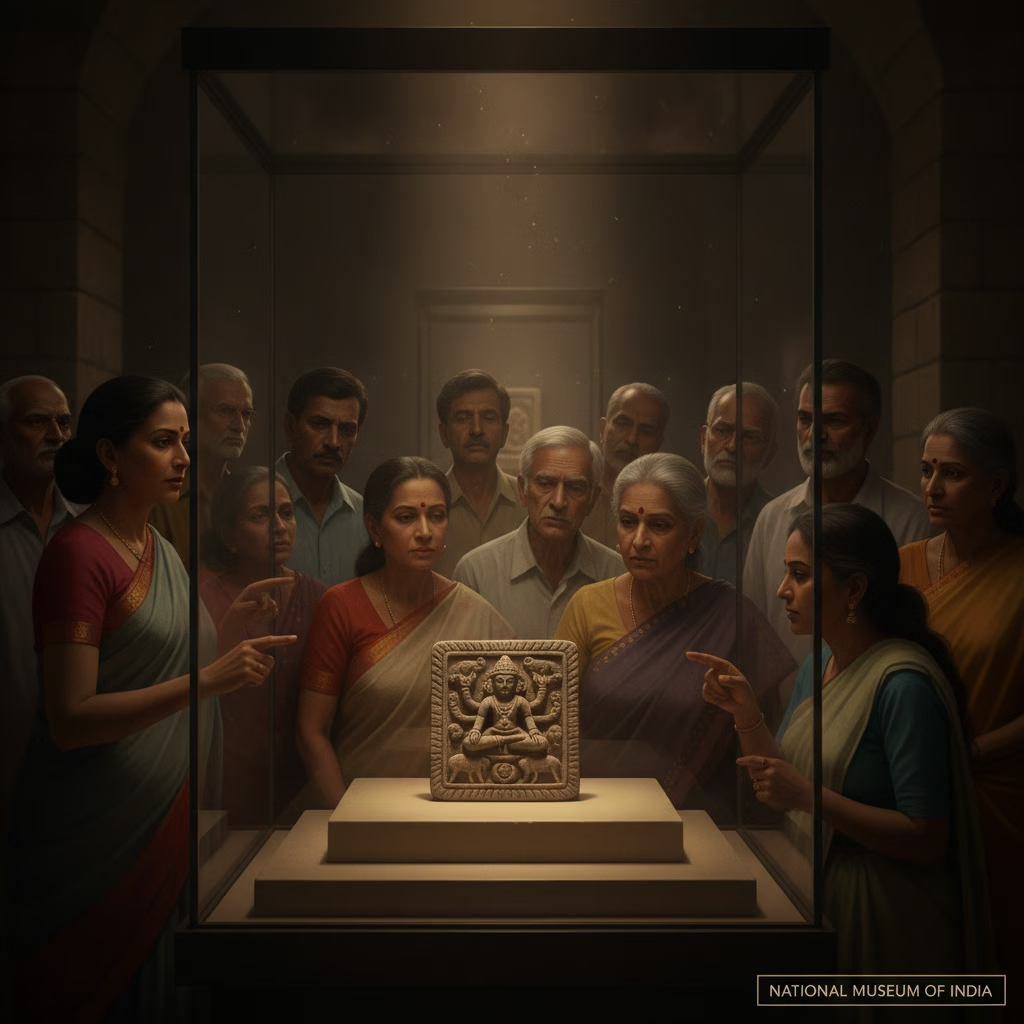
The Pashupati seal rests in its climate-controlled case in the National Museum of India, a tiny square of carved stone that has generated thousands of pages of scholarly debate. Visitors pause before it, reading the label that carefully hedges: the figure "may represent" a horned deity, "possibly" connected to later Shiva worship, "sometimes called" Pashupati.
The seal's ambiguity is, perhaps, its most important quality. It reminds us that the past doesn't speak with a single voice. Every interpretation requires choices about what to emphasize, what to connect, what to see as significant. Marshall saw Shiva because he expected cultural continuity and recognized yogic postures. Later scholars saw a goddess because they questioned gendered assumptions. Still others see only mystery, a carved figure from a lost civilization that we cannot fully recover.
The Indus Valley Civilization left thousands of seals but no deciphered writing. We have their cities, their weights and measures, their drainage systems—but not their stories, not their myths, not their names for their gods. The script symbols at the top of the Pashupati seal remain unread. Whatever the figure meant to the person who carved it around 2000 BCE, whatever the seal's owner understood when they pressed it into wet clay, remains locked in those undeciphered signs.
Three scholars in three countries each see a different deity. Perhaps they're all wrong. Perhaps they're all partially right. Or perhaps the seal's greatest lesson is about the limits of interpretation, the distance between ancient intention and modern understanding, the gap that no amount of scholarly ingenuity can fully bridge.
The horned figure sits in eternal meditation, surrounded by animals, keeping its secrets for another four thousand years.